

‘I feel like we’re just getting started’ – David Flack joins 30UNDER30 as a judge and mentor

Share

Despite only founding his studio in 2014, David Flack’s profile and reputation in the Australian design industry have soared in the intervening years. Australian Design Review is delighted to announce that he will be among the judges and mentors for the 2026/2027 cohort of the 30UNDER30 program.
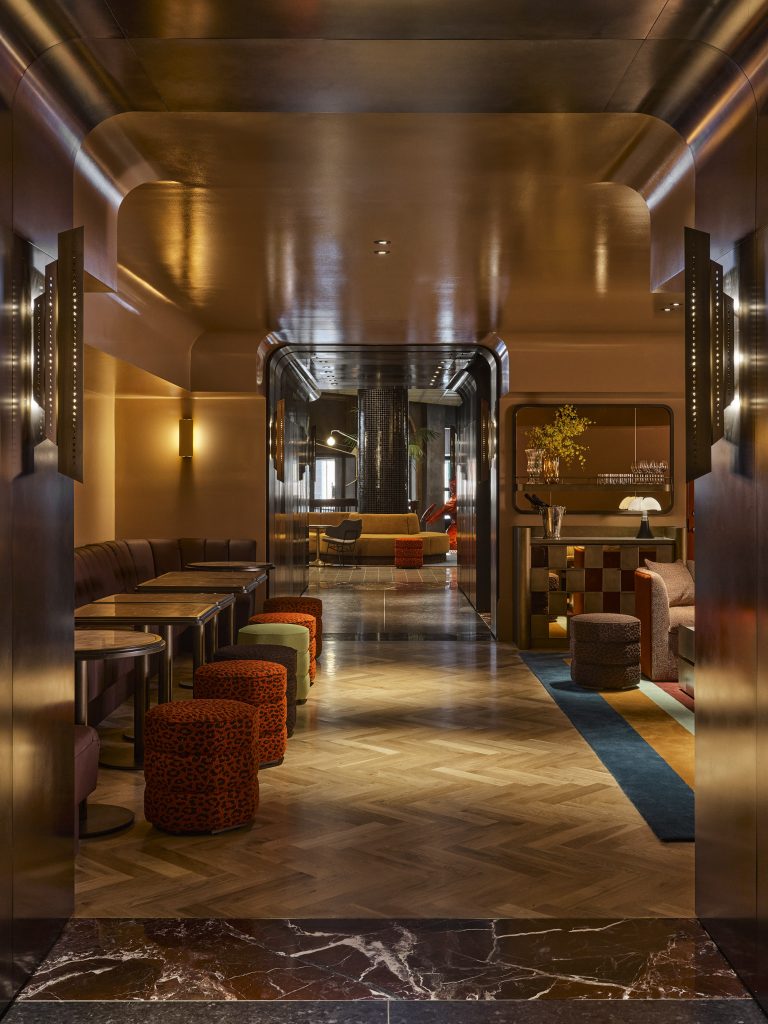
Multi award-winner and designer of such acclaimed projects as Ace Hotel, Troye Sivan’s residence and, more recently, Hannah St Hotel, Flack leads a team of 22 at his eponymous studio, based in the Melbourne suburb of Fitzroy. Here the new judge and mentor of Australian Design Review‘s 30UNDER30 program talks to ADR about mentorship, the challenges currently facing the A+D industry and what traits he believes emerging designers need to develop in order to succeed.
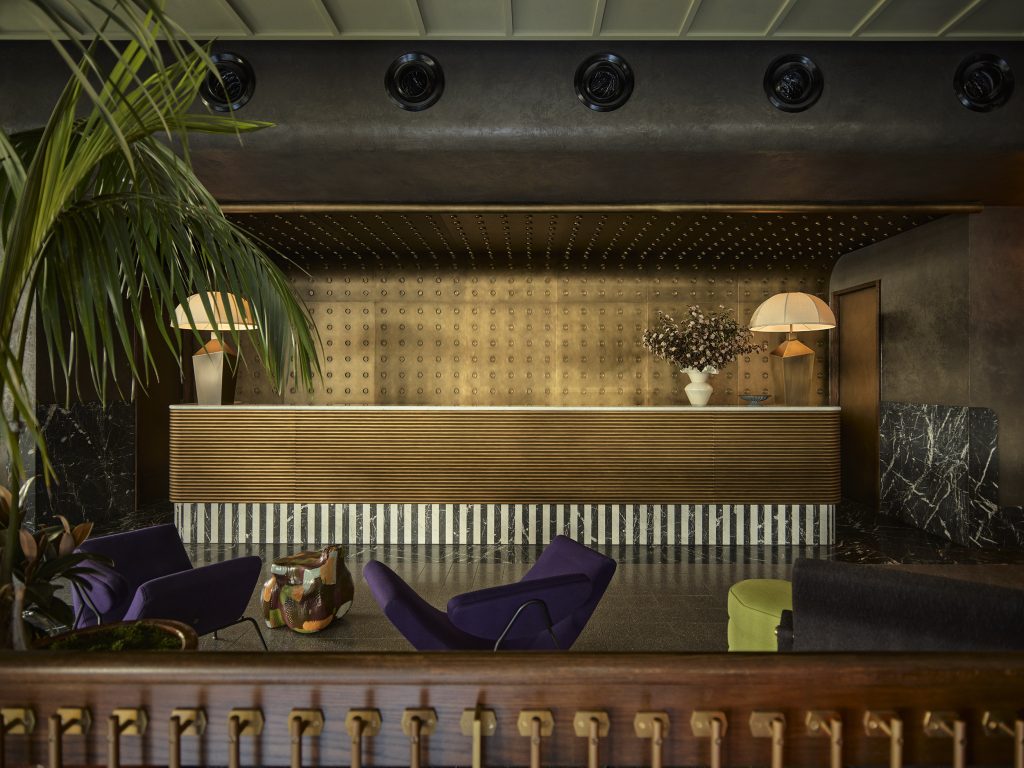
Australian Design Review: What motivated you to become a mentor for the 30UNDER30 program?
David Flack: I’m excited that I’m entering my mentoring years now! I’m surrounded by a young team with our studio and I’d say they’re one of my greatest sources of inspiration. So, for me to see a cross-discipline of people and have that one-on-one engagement, is great. I think that the industry is at its best when we’re sharing knowledge and being kind and generous. To be able to have that on an existing platform, that benefits them even more, is super exciting.
You say you have reached the point of being a mentor, but comparatively you’re still young. Was there anyone that mentored you back in the day?
It’s funny. I started the business quite young and I probably didn’t have that much experience. To be honest, I would say I haven’t had a direct mentor, but I’ve definitely surrounded myself with people that care. And I’m always open to advice or seeking advice. I’m also one of those people that, if I don’t know how to do something, I’m very happy to wave my flag and seek help.
Along the way there have been so many people. I would say it’s a broad spectrum of the whole industry that I feel mentored or supported by. But as my business changes and it’s a much more established studio – and we’re working internationally – I’m seeking a different type of mentor myself. So it’s something that I’ve been thinking about – how do I grow as a leader?
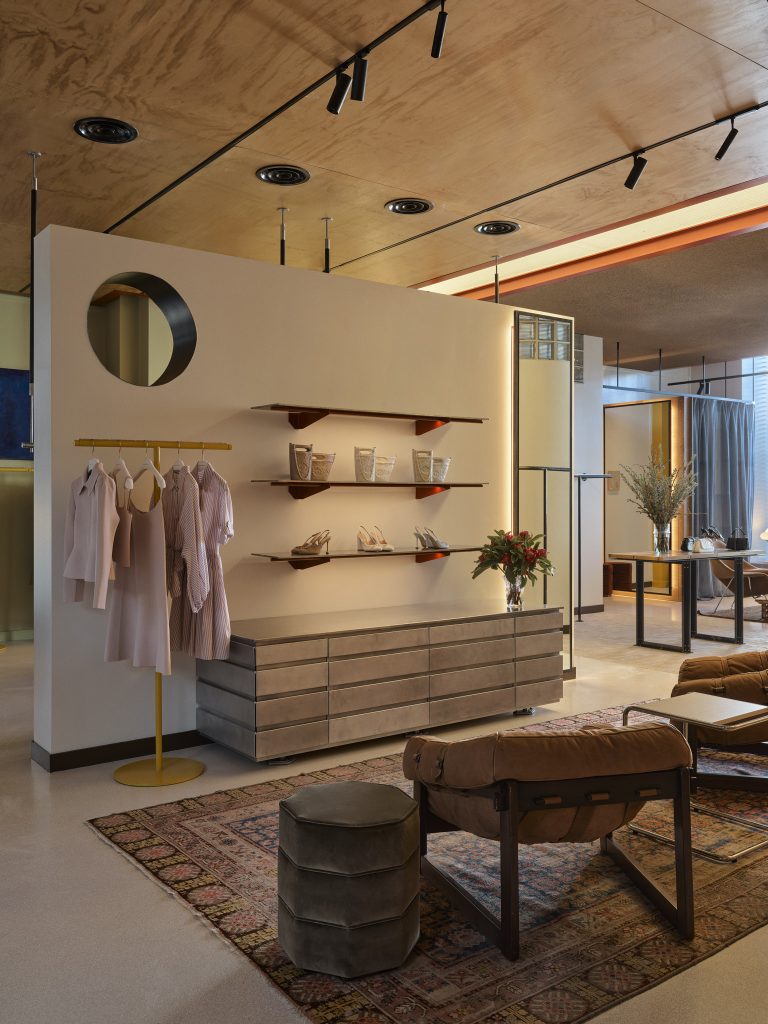
Our impression of you is that you’re very personable and good at making connections. How important is this when growing a business?
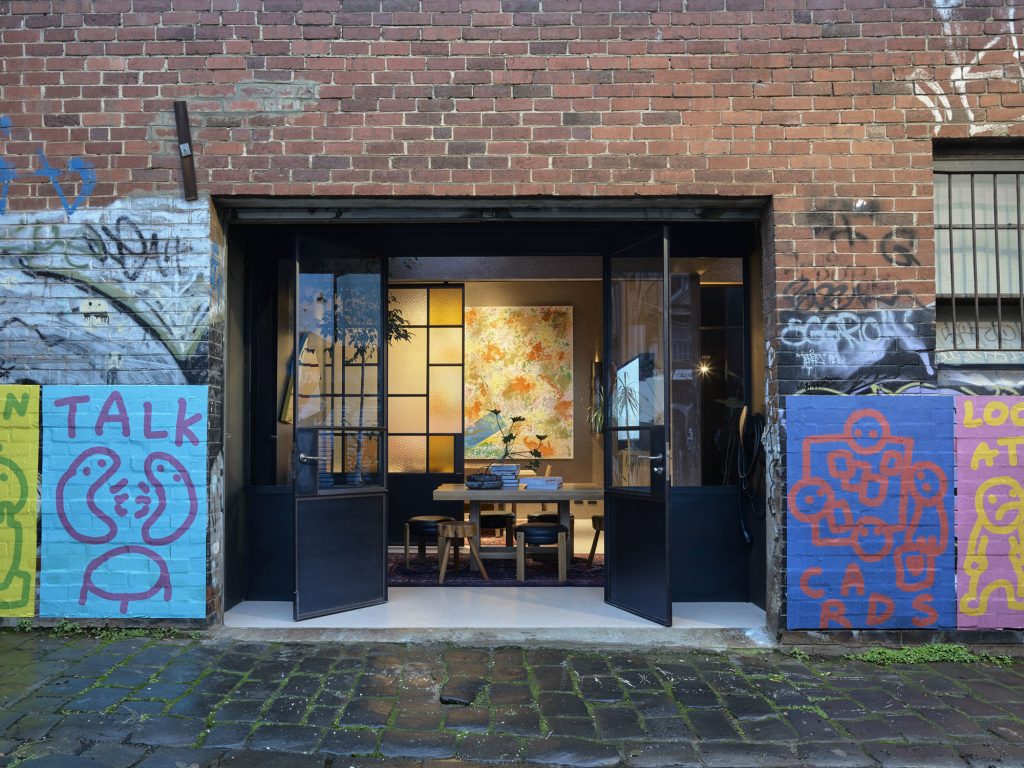
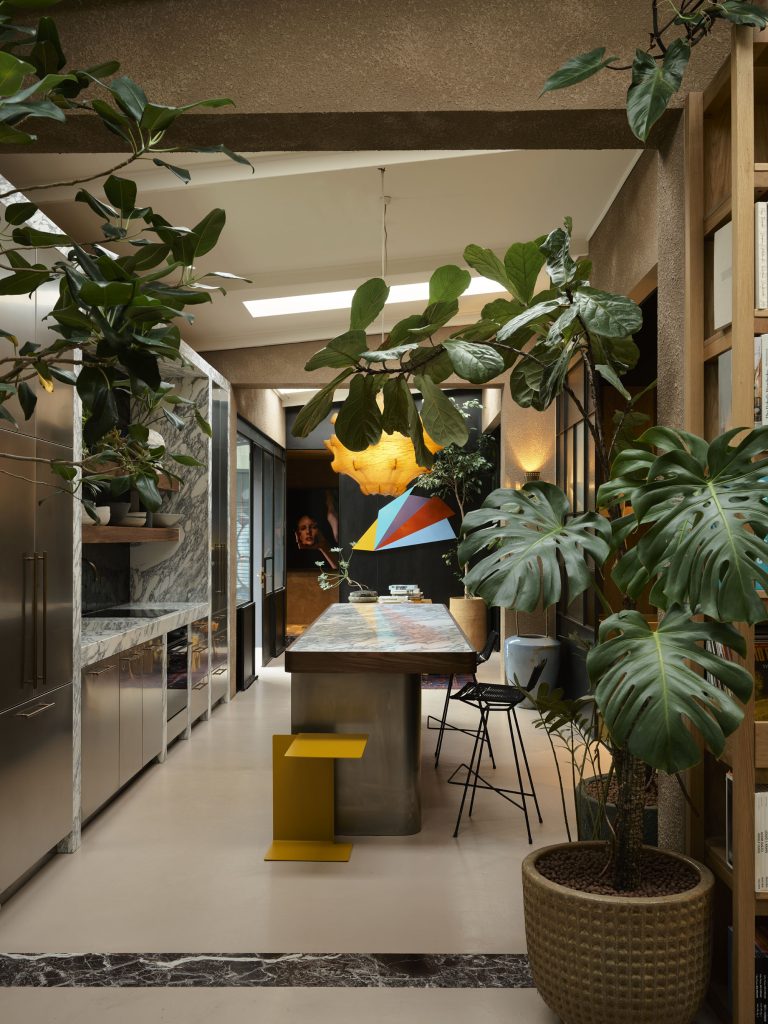
Oh, 100 percent. I think, yes, that’s the core root of business, isn’t it? Networking and talking. And I think sharing is an equally measurable part of success too. When you have a closed door, it easily appears that way. I don’t know how far or how stimulating that would be if you had that mentality. So we’ve always had a bit of an open door policy here. I think it’s important for to you feel attainable. We do our Open Library here. We’ve been a little inconsistent this year unfortunately, which has been a bit sad, but every two months we open the door and share our library with everyone. We’ll have a talk with different designers or artists or whoever that may be, and we always get around 120 or 150 people coming each time. For us it’s just such a beautiful thing. People come and talk to you and we’ve actually hired a couple people from those events.
And we’ve given advice, but I think the fact that people know this exists and that they can come and feel welcome is part of our philosophy.
What qualities stand out for you when you’re looking at emerging designers?
For me I’m always looking for authenticity. I think that stems from general passion – you can feel it in the work or their energy. I think curiosity is a wonderful trait. There’s a humbleness to a lot of great people that I have met. One thing I love about having [the studio is] I get to meet people that I’ve idolised. I think, ‘Oh wow they’re such rock stars’ and then you meet them and they’re so humble and delightful. And they’re also the ones who share knowledge.
So, yes, all those sort of qualities and traits, but I think genuine authenticity and passion is probably what I’m looking for.
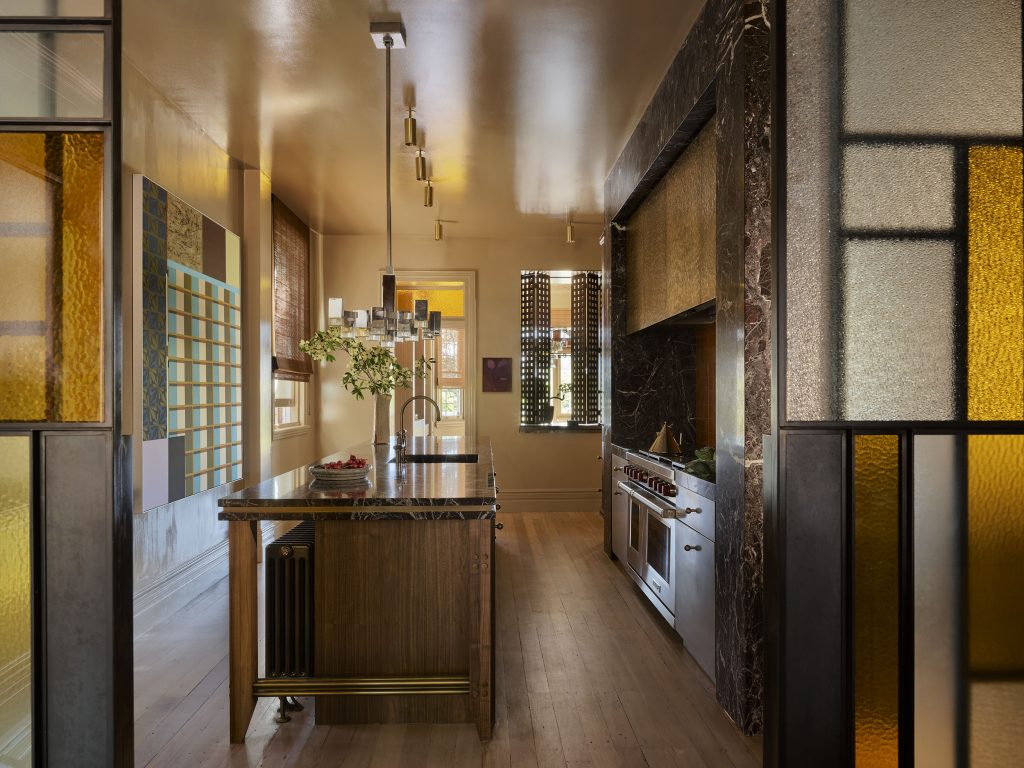
Talking about curiosity, how do you encourage young designers to keep curious, to keep questioning and exploring?
I think the world is shifting a lot, even this year with the onset of AI and how crazy things are politically. And so curiosity is probably higher at the moment. The need to harness creativity and skills is something that we’re probably all grappling with or wanting to fight. But we’re also working towards a whole new set of skills and how AI may help us and how we can work with technology rather than fight against it.
Then also the economy is driving a lot of curiosity, because we can’t build what we used to build. So we’re really curious about sustainable measures – how we can put together a building, and what we can and can’t do now. Whereas money was much more available five years ago than what it is now.
Generally, in summary, our whole studio is curious. We finish a project and each project’s different and we’re not resting on our laurels after any of them. We’re so curious about what we learned from one project and how we can take it to the next is exciting for us.
One of the dangers, of course, of AI and technology is that homogenisation of design.
Your studio is known for having a unique and creative approach to the work, but how do you encourage young designers to have the confidence in their own creativity – to back themselves if they have an original idea?
You just have to put yourself out there. I’ve never actually really cared what anyone thought about me or the studio, you know? I care that they know that we care – from a design perspective. But I’m not afraid of judgement. And I think you have to put yourself out there and produce what you think is authentic. You have to want that. A true artist does this. And I think design is like art, too. If you really love what you do, you can’t help it. It’s an innate feeling where you’re constantly pushing yourself.
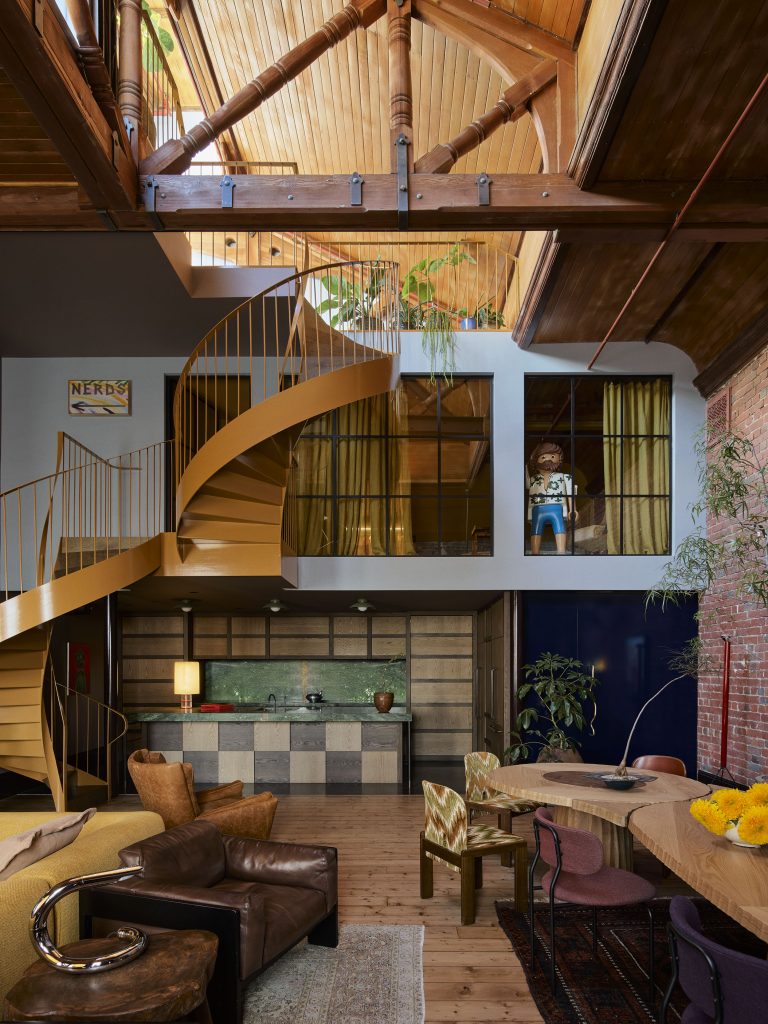
You talked about the the economy and the pressures that are on the design industry today, but conversely what opportunities do you think there are for emerging designers and practitioners?
I remember when I set up the studio, I don’t think there were as many smaller players and I think the landscape of how many designers exists now is huge. That to me shows how strong the design landscape is in Australia – the fact that so many people of all varying scales can be commissioned to complete work. Once upon a time, hiring a designer or an architect was more for your upper echelon sorts of projects. But now so many people are hiring designers. It’s amazing for the overall industry, because there’s something for everyone, right?
One thing I always say is ‘what’s your point of view?’ Sometimes when I’m at a speaking event, or we have an Open Library, really young designers come to me and ask, ‘How do I become you? How do I get clients like yours?’ My answer is, ‘I’ve been doing this for 20 years and every project has led to the next commission. I didn’t just wake up and have those clients. It’s all hard work and every milestone leads to something else.’ That’s how it is unless you’re a rich kid and just designing for all your friends – which does happen and that’s fine!
You mentioned there being a lot of new practices on the horizon, but can you talk about the importance of resilience when it comes to sustaining a career?
It’s hard work. You need that resilience. I feel very fortunate now, but I remember the first 10 years. It was amazing, but it was also hell! I was working seven days a week. I remember 2019, 2020, a bit before COVID, when we started designing the Ace Hotel. And then the studio shifted from little things to a bit bigger and it was a real learning curve for me, it was the baptism of fire. I remember I thought, ‘I don’t know if I can do this. This is so hard.’ But you just get through it and then you finish it and then you learn so much from that experience and it galvanises you.
Now we’re a bigger team. We have established designers that have been with the studio for a few years now and they’re running their own projects. And, for me, it’s so exciting because it’s this new chapter of what the studio is. It’s not just centralised to you as a figure; it’s about the studio. So that builds a whole other level of resilience. It’s a whole new engine that’s built inside the studio, because you’re supporting them, and it’s a whole new dialogue. If you’d asked me if we could have done this three years ago, I would have said, ‘No way.’
But the capacity of the team now and how incredible they are, for me, it’s, “Wow, I feel like we’re just getting started.”
The 30UNDER30 program revolves around not just mentorship, but also promoting leadership and helping the cohort grow into leadership. What do you think leadership in design looks like today?
Leadership’s a wonderful thing to talk about. Being a leader is more than ticking a box. It’s about how you share your knowledge, how you lead by example in all sort of facets of of the design process. There’s a responsibility to care for others, to guide others. In our studio you’re not just doing the physical job, you’re mentoring our team and it’s about how you represent the studio globally or locally, how you interact with our clients – the philosophy of how we speak and engage. It’s about research of both history and new materials. I mean it’s everything! And not everyone wants to be a leader, but I think a true leader has a whole other set of skills that are walking beside design.
If you could give every 30UNDER30 participant one piece of advice to carry throughout their careers, what would that be?
Don’t give up on your dreams basically. It’s all worth it, but time is a virtue, isn’t it? It doesn’t all have to happen straightaway. I think [a lack of patience for success is] a result of social media too. I’m curious now about how people are pulling back from social media or their smartphones. I think there’s a shift and if you just focus on what you love, then I think that will build resilience and that will build success.
Are you looking forward to the creative retreat in Bali?
Yes! I love Potato Head. So I think it’s going to be awesome. What a great venue to have it at, because it’s incredible in its own regard from a philosophical point of view.
Last question – what are you excited about for the future of Australian design?
As I said, we’re practising globally a lot now– half of our work is overseas primarily. So, for me, I’m loving being an advocate of Australian design and I love being an Australian practising in Australia and globally, because I think that’s our advantage. Honestly, how highly regarded Australian design is from the perception of the world is changing dramatically. It’s not just Europe-centric any more, they actually have eyes on our industry. And so it should be, because the calibre of work I look at each year on the awards short lists – I’ve been a judge before – and there’s so much incredible work.
Entries for the 2026/2027 30UNDER30 program open on 31 August 2026. Click here for more information.
ADR’s 30UNDER30 program is brought to you by co-major sponsors Neolith and King Living, alongside partners Designer Rugs, LAUFEN, Krost, Miele, Signature Appliances powered by Miele and Tongue & Groove.
ADR is also grateful to our 30UNDER30 practice partners AJC Architects, BLP, BVN, Cera Stribley, COX Architecture, Design by WBL, DKO, Genton, GroupGSA, Gray Puksand, Hare + Klein, Hassell, HDR, Lawless & Meyerson, Luchetti Krelle, Made For, Mim Design, Richards Stanisich, RIZEN Atelier, Rothelowman, SJB, T. Black and Tom Mark Henry for helping us foster the future of Australian design.
Follow @ausdesignreview and @adr30under30 and subscribe to ADR’s newsletter to stay up-to-date with the program.

© Niche Media 2026