

Designing Your Career: values, adaptability and the future of design
Designing Your Career: values, adaptability and the future of design

Share
A career in design rarely follows a straight line. It develops through unexpected opportunities, challenging projects, changing priorities and a growing understanding of what matters.
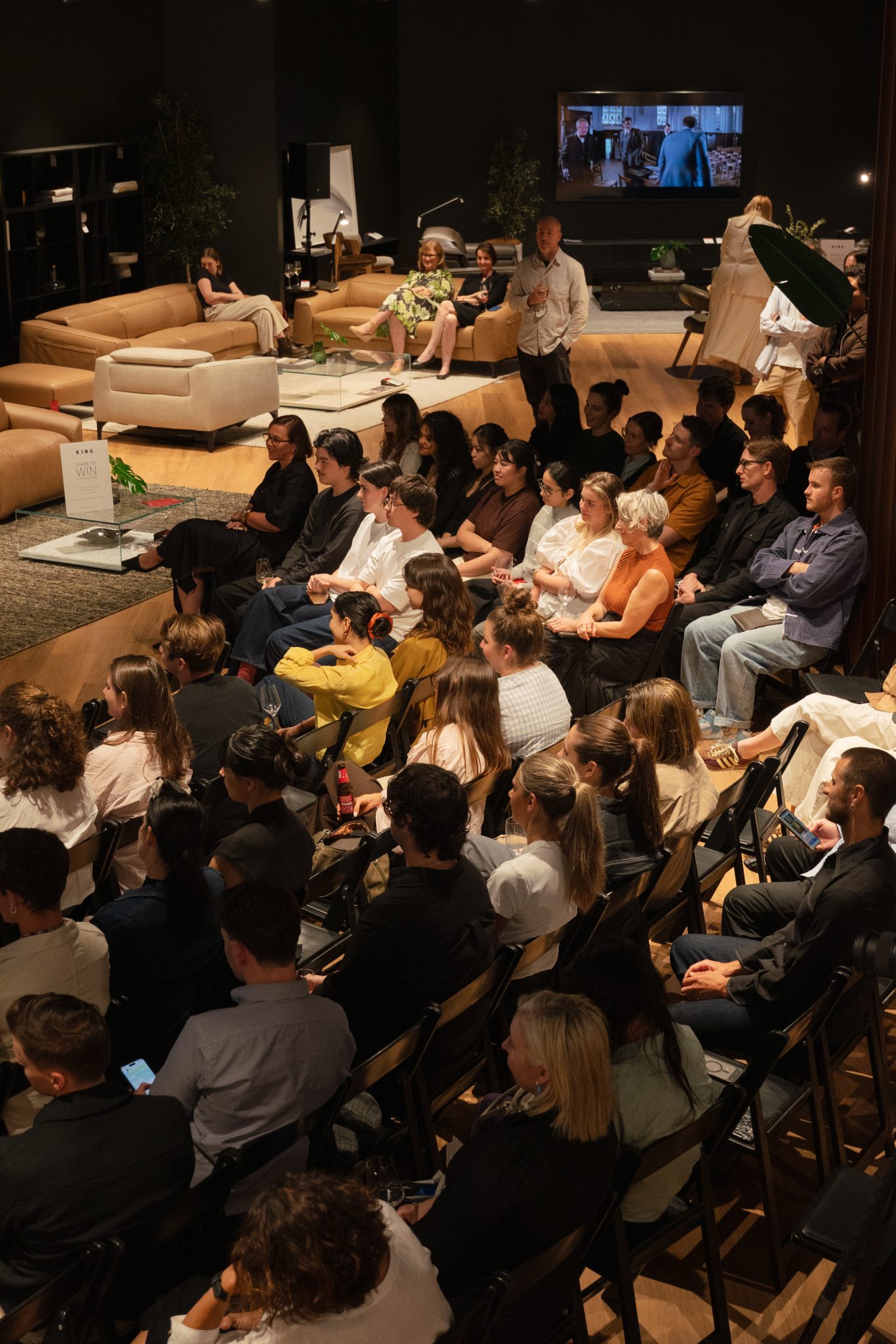
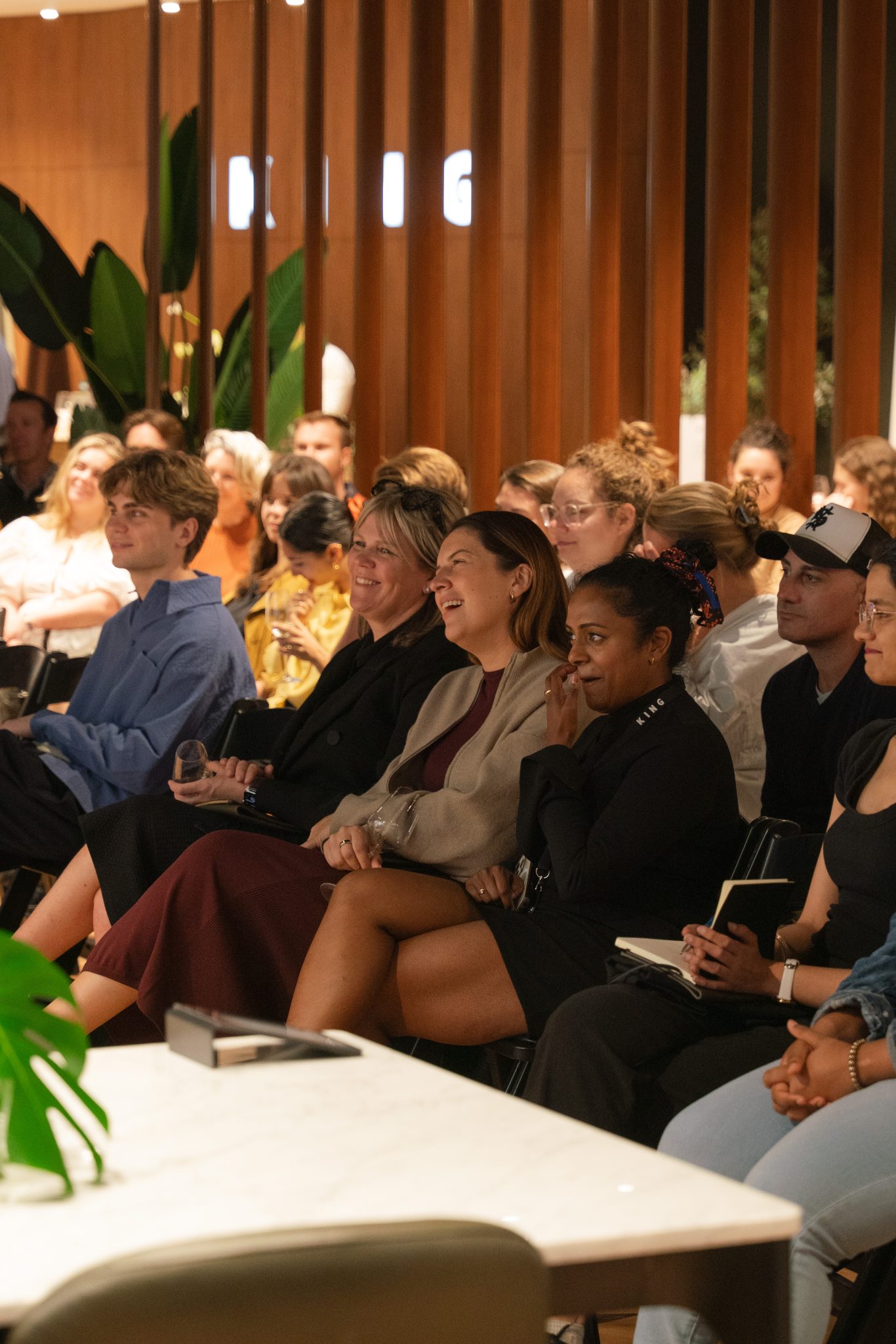
Last Thursday, King Living and Australian Design Review hosted the ‘Designing Your Career’ panel discussion at the furniture brand’s Annandale, NSW showroom, in which four practitioners explored how their experiences have shaped their values, their approach to collaboration and their ideas about the future of the profession.
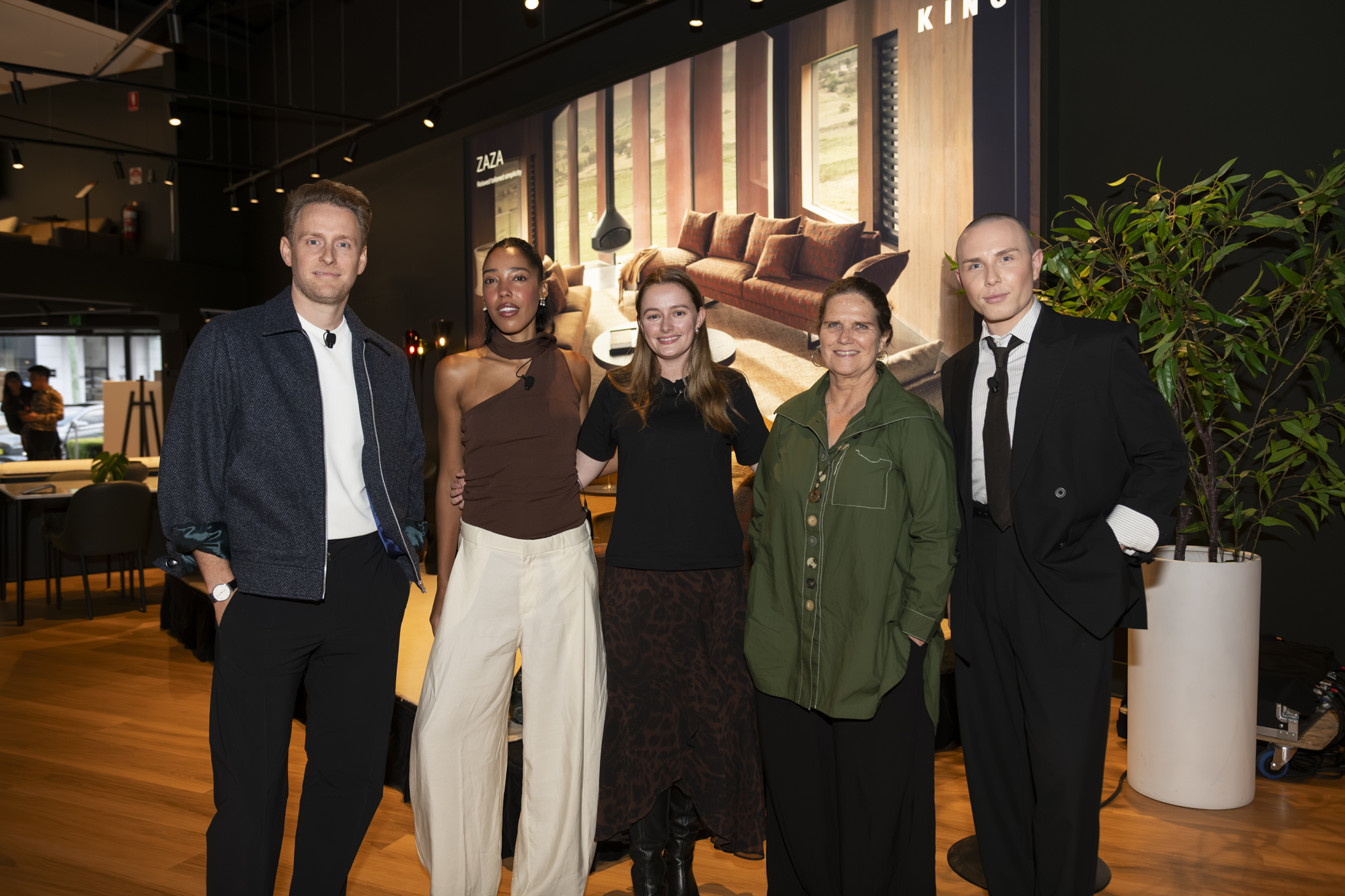
Moderated by ADR‘s managing editor, Madeleine Swain, the conversation brought together Lucy Sharman, associate at Hassell; Mariah Burton, creative director and co-founder of Folk Studio; Joss Knight, founder of Studiojos; and Chris Cooke, head of design at King Living. Working across architecture, interiors and product design, the panellists offered different perspectives on building a meaningful career while navigating the commercial, ethical and creative realities of practice.
Finding your own direction
For Knight, the decision to establish his own practice came out of necessity. He started his business during the uncertainty of the COVID-19 pandemic, after losing his job at a time when few employers were hiring.
“I was fired, so everyone was getting let go. No one was hiring,” he recalled. “And so the decision that I had was to start a business and hopefully make money.”
The experience became a defining moment, but his subsequent growth as a business owner has also taught him that progress is not always linear. Expanding a practice can bring new opportunities, but it also brings financial and personal responsibilities.
“When I first started, I thought more staff is the way to go – expand, expand, get more projects, make more money,” Knight said. “And then that was my downfall because I expanded too quickly.”
The lesson was to keep moving, reassess decisions and recognise that what works at one stage of a career may not be right at another. For Knight, adaptability is not simply a creative skill; it is essential to running a sustainable business.
Burton too recognised that flexibility, but also a willingness to go against the grain, could be the right path for her. “I was working for quite a few different design firms over the years in my early stages of design, and it became quite apparent to me that some of the cultures within design felt very transactional or people were designing around these transactions or around awards, not around people,” she said.
She wanted Folk Studio to take a different approach. “I want it always to be focused around how people interact with the space and for them to be the core of what we do,” she said.
That commitment now informs how she chooses clients and collaborators. As a practice grows, Burton believes it becomes increasingly important to recognise when a relationship is the right fit.
“The joy in design and the way that we keep it sustainable and the way that we feel passionate about design is working with the right people,” she said.
Cooke’s career has also been shaped by a willingness to move between disciplines. After building his career across automotive and lifestyle design at Bentley Motors in the UK, he relocated to Sydney and joined King Living, bringing a cross-disciplinary perspective to furniture and product design. While these disciplines differ, he sees a common foundation in understanding form, materiality and composition.
“Your job as a designer is to come up with that vision and to sell that design,” he said. “Ultimately, you’re selling something to someone you’ve never met. You’re trying to create an emotional reaction in a person you will never meet.”
For Cooke, the ability to carry core design principles into new contexts has made it possible to explore different fields without losing sight of what makes good design.
Sharman described architecture as a longer process of learning. Even after a decade in the profession, she feels there is still much to discover.
“Architecture is like a marathon, not a sprint,” she said. “It’s a long degree and you can continue with your master’s after spending three years grinding through architecture school. And then you go into your first job and you have no idea what’s going on and you realise you don’t know anything. I feel like I’m only at the early stages of my career now really, even though I’ve been doing it for 10 years and I still feel like there’s so much to learn.”
Each project, she explained, adds to a designer’s knowledge and confidence, gradually helping to clarify their values and interests.
Learning what matters
For Sharman, one of the most significant projects in her career has been the adaptive reuse of Sydney’s historic Department of Lands building, now known as The Lands by Capella. Working on the transformation of the 19th century building gave her a deeper appreciation of architecture’s relationship with history, material and time.
“It was like an archaeological dig a lot of the time,” she said. “It’s one of those buildings that has a lot of secrets. So, as you started to peel the layers away, you started to reveal these layers of history.”
The project demonstrated how thoughtful design can extend the life of an existing building while allowing it to accommodate new uses. For Sharman, it also made the impact of her work tangible: “This is a building that’s really stood the test of time and by giving it the kind of love and care it deserved, we were able to extend its life by maybe hopefully another hundred years.”
That sense of purpose is not necessarily something designers establish at the beginning of their careers. Cooke suggested that values develop through experience and exposure to the world.
“I don’t think you’re really born with inherent design values. You kind of grow them throughout your career,” he said. “You’re born with a moral compass and you know right from wrong. I think a designer is like a sponge. You’re just constantly soaking things up in your subconscious.”
Balancing ambition and responsibility
The discussion also explored how designers can reconcile their values with the commercial and environmental realities of practice. Sustainability, the panellists agreed, is rarely a simple question of choosing one material or approach over another. Decisions must account for a project’s purpose, lifespan, budget and wider impact.
Sharman pointed to the complexity of assessing embodied carbon across a building’s life. A lightweight structure may require fewer resources initially, but its shorter lifespan could change the overall environmental equation.
“You can lose yourself in this mathematical equation,” she said, describing the tension between designing for disassembly and creating buildings that can be adapted and reused over generations.
For her, the priorities will differ from one project to the next. A warehouse may benefit from a lightweight, recyclable structure, while a home may justify investing in durable materials intended to last.
Cooke acknowledged that the industry still has considerable work to do. Reflecting on his own career, he said sustainability had not always been at the forefront of his thinking. Earlier, he had been focused on making beautiful work and winning design competitions. His perspective shifted as he learned more about the environmental and social context of design.
He now sees longevity as central to the values that attracted him to King Living. “We don’t have to live with temporary furniture,” he recalled of the founding principle behind the company. “We can do better.”
The challenge is to translate those intentions into practical decisions rather than treating sustainability as a claim or a marketing message. Burton described her approach as doing what she can within the realities of each project: explaining the reasons for material choices, weighing up cost and impact, and working towards outcomes that reflect both the client and her own values.
Keeping the human perspective
Looking ahead, the panellists considered the role of emerging technologies, including artificial intelligence and the importance of maintaining the human judgement that underpins creative work.
For Cooke, design still depends on a clear vision, an understanding of materials and the ability to make decisions that create an emotional response. Technology may change the process, but it does not remove the need for designers to understand what they are trying to achieve.
The conversation also returned to the importance of mastering fundamentals before pushing beyond them. Burton recalled advice from a university lecturer who challenged her tendency to break the rules before fully understanding them.
“You actually need to be a good designer, need to learn the rules, master the rules of design, and then once you’ve done that, you can break them,” she said, quoting the lesson that has stayed with her.
It is a reminder that experimentation is most meaningful when it grows from knowledge, skill and considered intent.
Ultimately, the discussion suggested that a successful design career is built as much on reflection as achievement. It requires technical capability and creative ambition, but also a willingness to question assumptions, learn from mistakes and adapt to changing circumstances.

For Sharman, each project builds a designer’s toolkit. For Burton, running a practice means recognising when to change direction and who to work with. For Knight, experience continues to shape the decisions he makes as a business owner, while Cooke’s career demonstrates how design principles can travel across disciplines.
Their experiences point to a profession in which values are not fixed at graduation. They are tested and refined through projects, relationships and the realities of practice. The challenge is to remain curious and open to change while holding on to the purpose that brought each designer to the work in the first place.
Top image: Narrative Post/Matthias Engesser.

© Niche Media 2026