

Akin for the win: Kelvin Ho joins the IDEA jury for 2026
Akin for the win: Kelvin Ho joins the IDEA jury for 2026

Share

From one of the gentlest and most considerate firings in history, Kelvin Ho went on to found and run his own practice, the Sydney-based Akin Atelier. Over 21 years later, the self-described ‘very good delegator’ likes to give back to the industry regularly. And that includes joining the jury for the Interior Design Excellence Awards (IDEA) for 2026.
Kelvin Ho has been around architecture and design for as long as he can remember. He says his parents weren’t particularly creative but, as an engineer, his father was very hands-on and liked to build things. “I was always around him problem-solving, building furniture, fixing the car…” he recalls. “I guess it was more practical, but problem solving was a big part of my childhood. But I was also very interested in drawing and painting.”
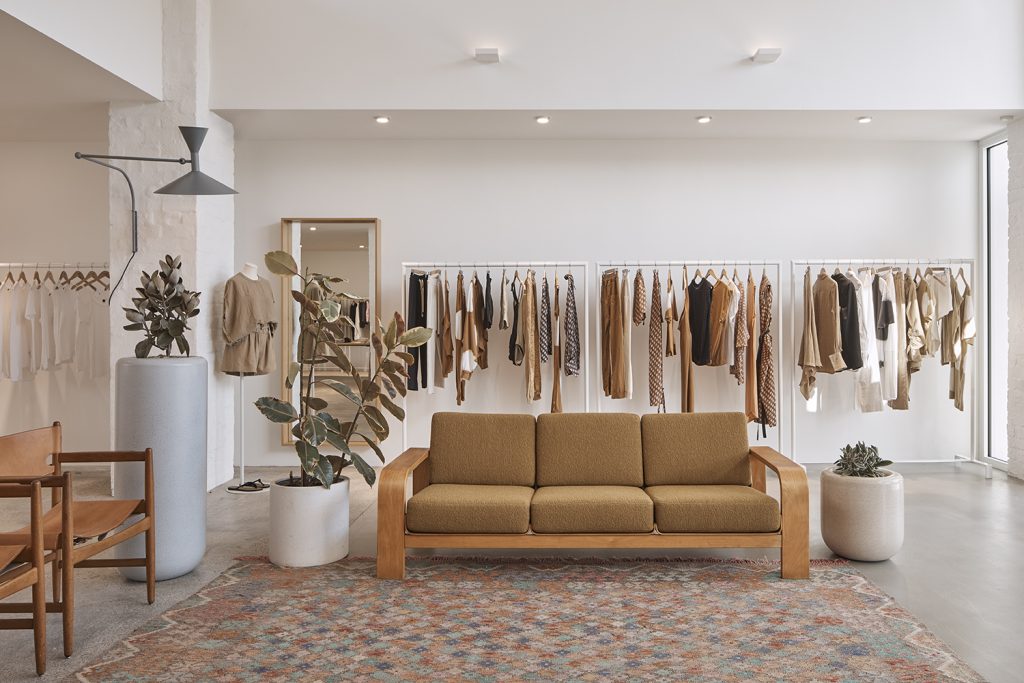
Through extended family members he was introduced to the world of architecture and “from the age of about 14 I would spend my summer holidays working with architects, interning,” he explains.
By the end of high school his future was already mapped out, with him enrolling in architecture at the University of Sydney. More surprising perhaps is what happened on graduation. After spending about a year with Andrew Burges and nine months at Woods Bagot, Ho established his own studio, Akin Atelier. He may not have been pushed into doing so at such an early stage of his career, but he was certainly given a gentle nudge in that direction by Burges.
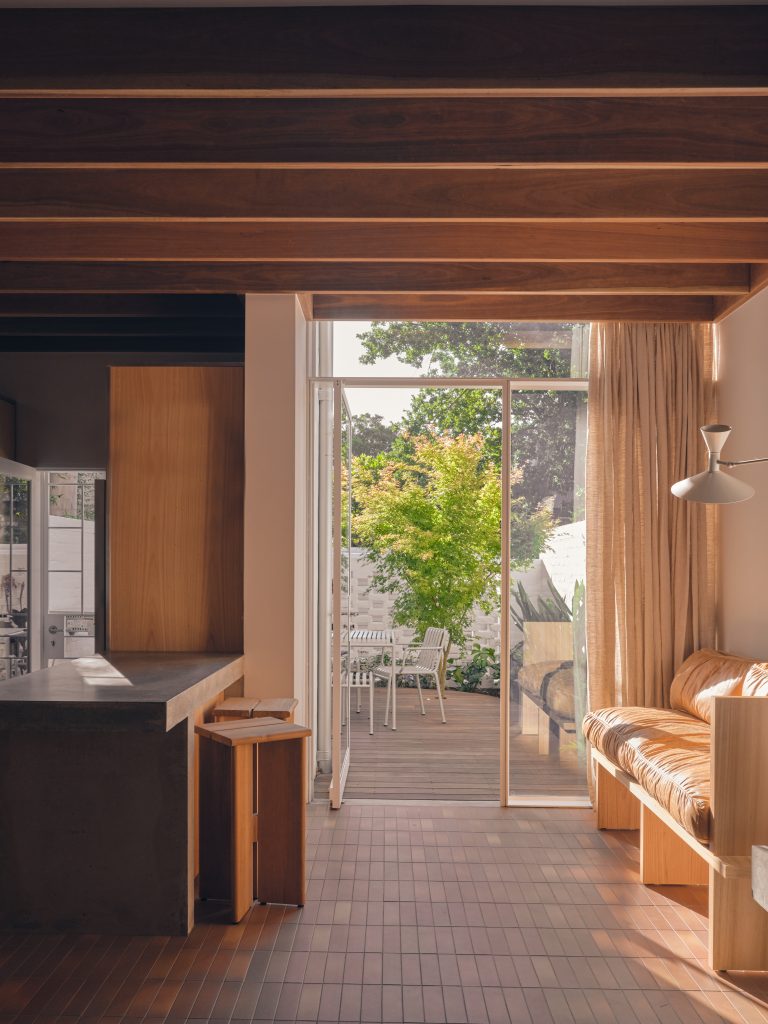
Setting up on his own
“Andrew sat me down at the end of year one and said, ‘Kelvin, you would be better at running your own business, because you’re very motivated and you’re a great designer’.
“I think I was a bit distracted because I was working in a practice that was doing beautiful residential homes, but I was much more interested in retail and fashion and hospitality because, as a 25-year-old designing million-dollar homes wasn’t really my world. So Andrew was providing a lot of guidance and wisdom, but he was also firing me at the same time, which I only came to realise further down the track!”
Ho adds that this was actually a great way to fire someone, as it gave him the confidence in his own abilities. This, combined with the optimism of youth, meant that he could establish Akin Atelier with little over two years’ experience of working as a professional architect.
“I’m probably not a great employee,” he laughs. “I definitely would have fired me because I was very motivated when I had tasks that I was interested in or excited about… but if there were things like admin… well, that wasn’t really my strength.”
Akin Atelier
Founding his own practice meant that he could focus on the parts of the job that really excite him. “So I became a really good delegator,” he says. Starting so young was a double-edged sword, however, with naivety leading to challenges with stakeholder relationships and responsibilities like human resources to navigate. On the plus side, it also meant he was freer to take risks, having little to lose.
“I think if I were to start a business now, with a family and much different circumstances, it would be very different,” he says. “But at the time my main goal was just to work on interesting projects and have a good design outcome. I was happy to lose money on projects because it was about having those opportunities.”
Fortunately, sacrificing the business side of the equation for “hopefully having a happy client or a nice design outcome” actually paid off, with the practice ending up with a large number of long-term client relationships. Ho says some have been with the practice since day one, and up to 75 percent of those on the books are return clients.
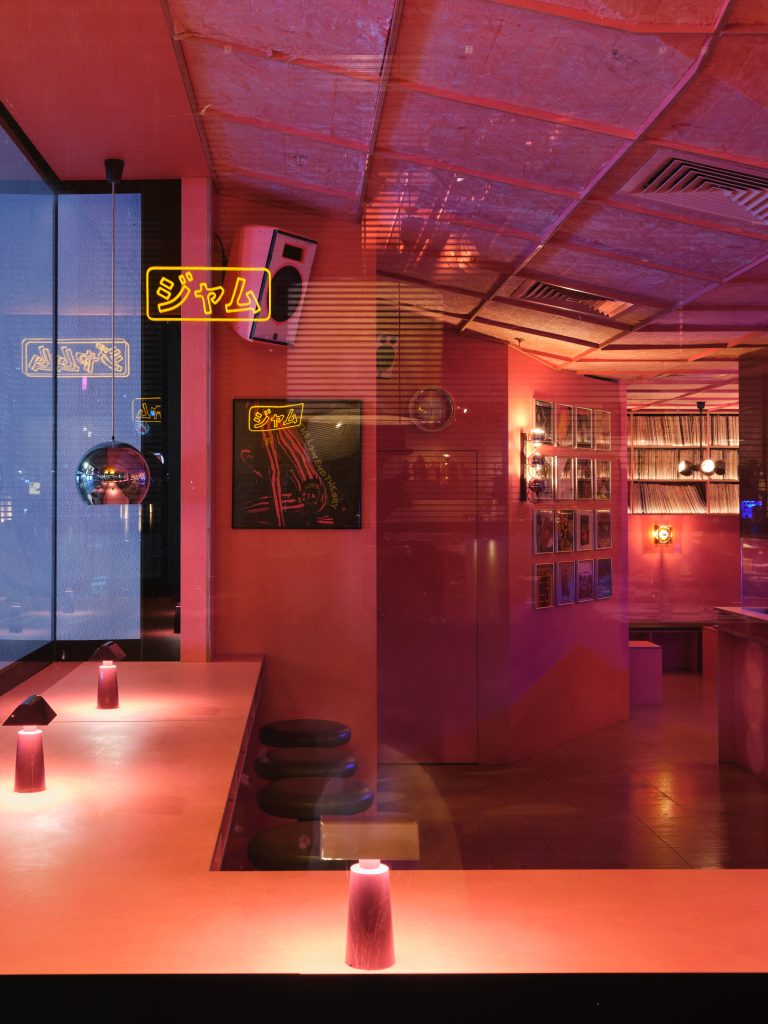
And that emphasis on client satisfaction has been a through line for both the practice’s external relationships and the internal ones too. The practice currently numbers around two dozen staff members. “I always talk about sustainability in the office and we do a lot of things with the team… knowledge sharing is a framework where we work a reduced week so that people have 26 long weekends every year.
“I think this makes our practice sustainable in terms of mental health and long-term relationships, and having a stable pipeline of work.”
Ho says it’s not always been easy over the years. “I’ve had crazy HR issues and I’ve learned a lot, but I look back over 20 years and I still come to work every day positive and really excited. I think all the challenges help shape better decision-making.”
Projects in hand
Ho says the practice is currently “busier than ever” with a 50/50 split between residential and commercial. There are a number of private homes on the go on the east coast along with a couple in Perth. “Hospitality-wise we’re working on a big project for Qantas that we’ve been working on since pre-COVID. It’s a new business class lounge at Sydney Airport and it’s our fourth or fifth project with Qantas.”
Due to launch at the end of the year, it’ll be something of a flagship for the airline, he adds.
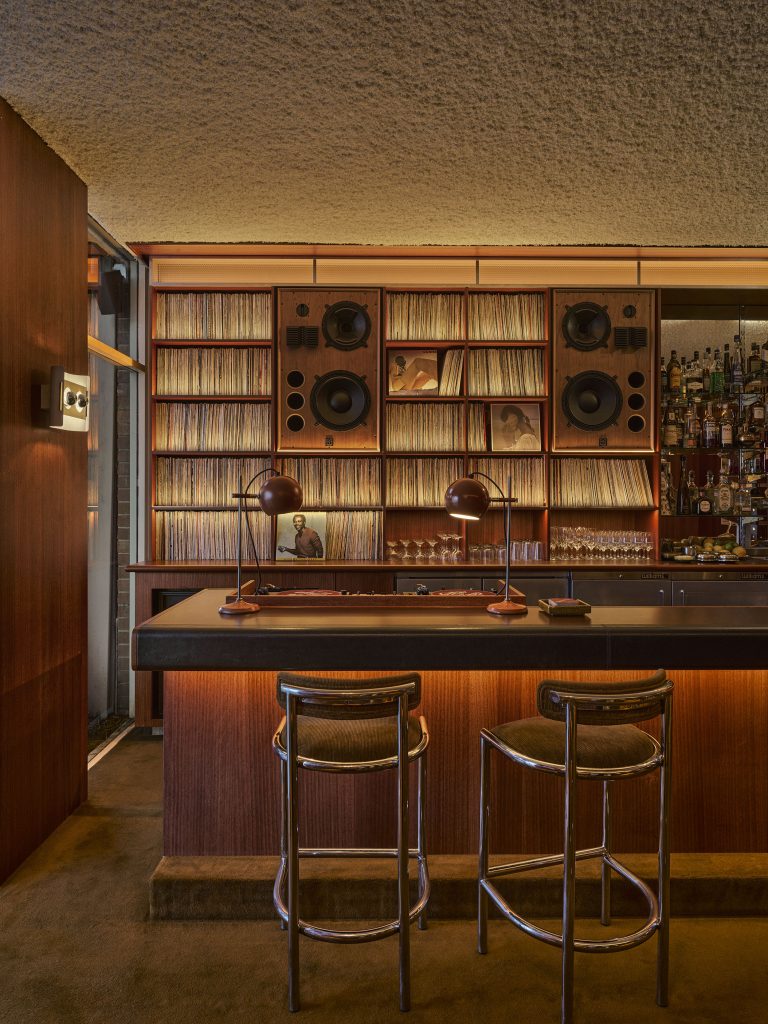
There are further hospitality projects in Byron Bay and Melbourne, plus a recently completed RSL – Club Rose Bay in Sydney. “They’re always nice projects creatively, but I also like working with the RSL. It was a really satisfying opportunity to help preserve a legacy and create a space for a whole new generation of community members to join, and blend that with a great hospitality offering as well.”
Ho is also working on his own house… but priorities will out.
“It’s really exciting but I think we started working on it about 10 years ago,” he says ruefully. “On the project list it’s number 400 and we’re up to something like project number 690.
“We’ve been quite busy, so we haven’t really had the time or resources to work on it but, yes, it’s probably also that internal paralysis of thinking about how to design your own space and what that means.”
Award-winning work
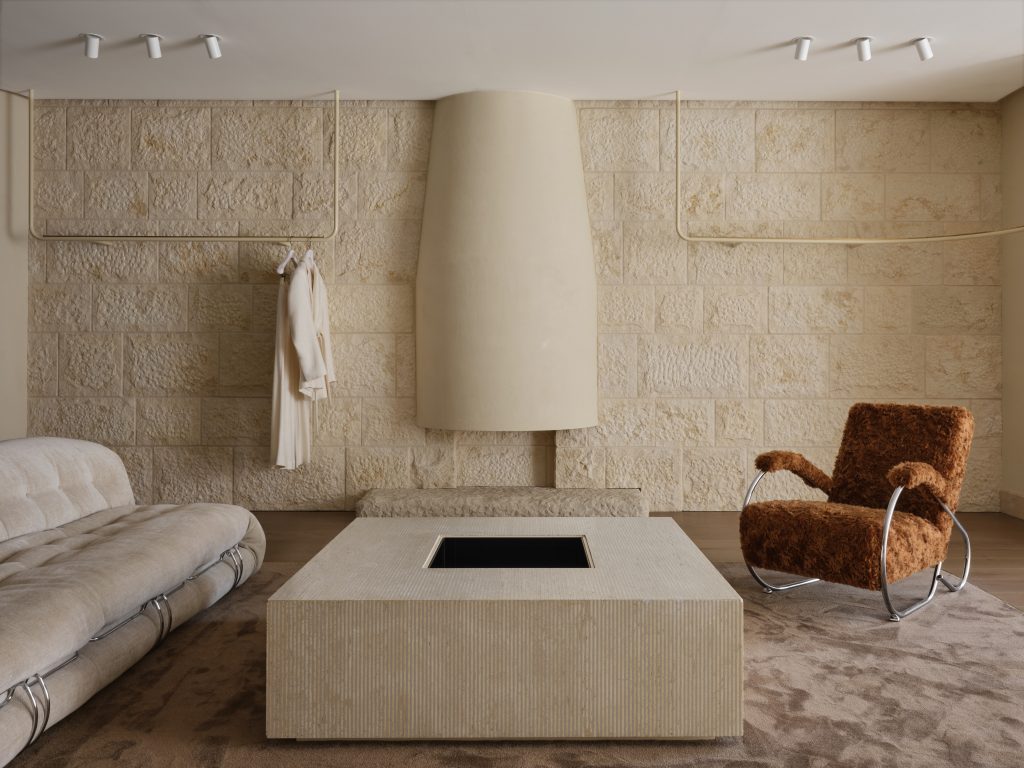
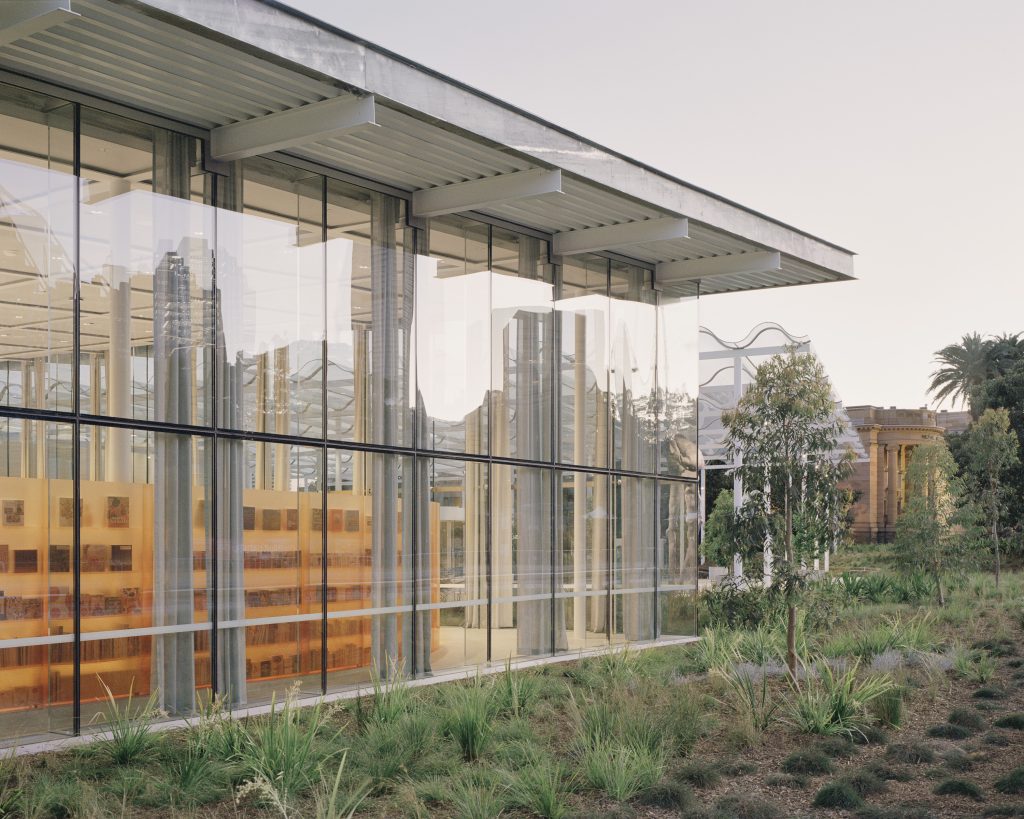
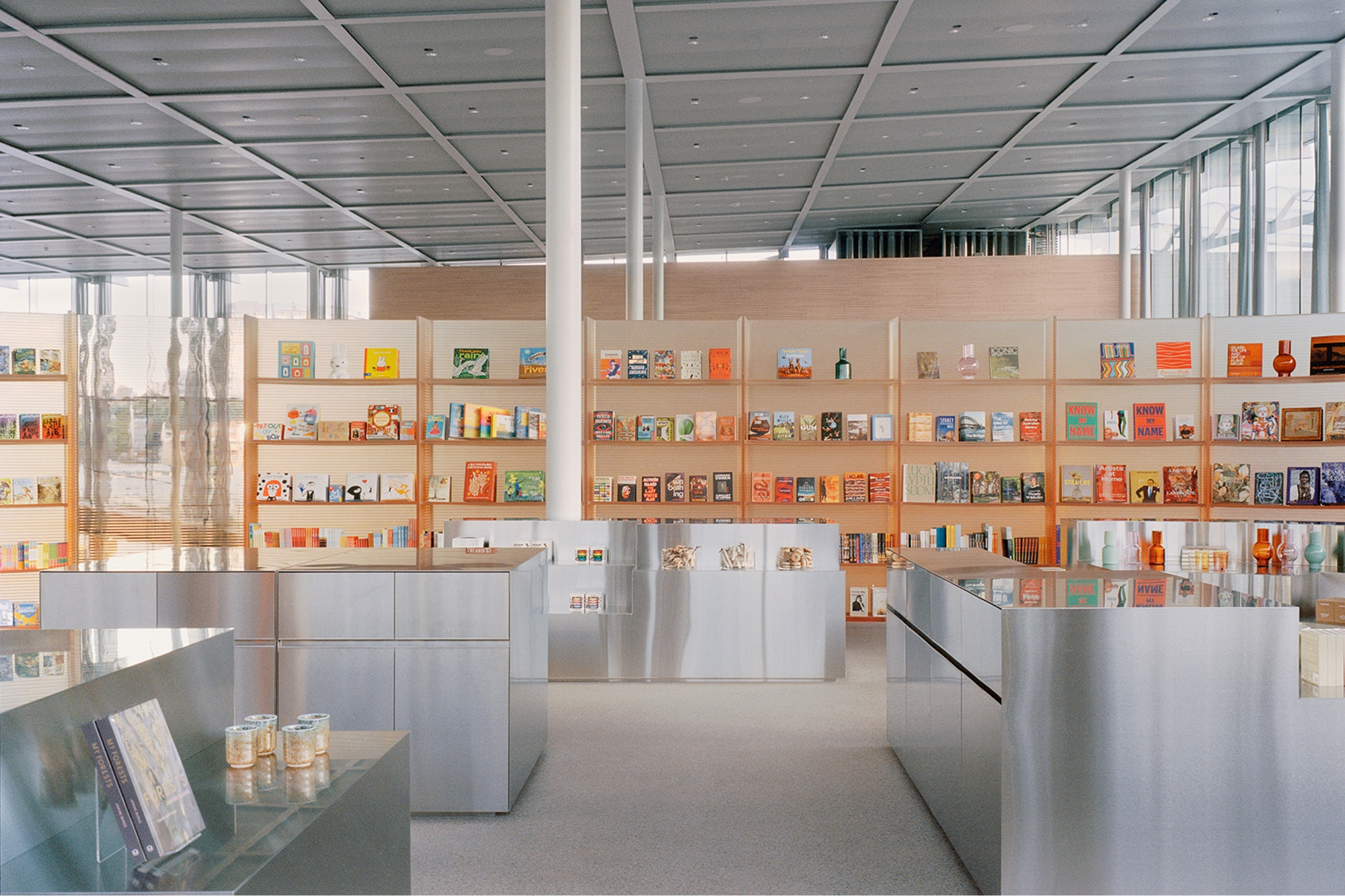
This year, Ho is joining the Interior Design Excellence Awards (IDEA) jury, but Akin Atelier is no stranger to the program. The practice won the Retail category at IDEA 2023 for its project, the Gallery Shop at the National Gallery of NSW.
“It was a huge project for our studio,” recalls Ho. “It was one of those projects where it was a lot of hard work, but we had an amazing team. The client, our team working on it, the builders. Every step of the way was really challenging because it was during COVID and we were using a product that hadn’t been tested before. So there were a lot of challenges structurally and materially. And in an environment like the Gallery, the risk threshold is pretty low.”
That product was a bioresin, which Ho describes as a “really temperamental material to work with”. It’s a durable material but the team had to conduct custom testing with the University of Technology Sydney in order to get structural sign-offs. Significant research into the chemical and scientific properties of the material was required and, when it came to application, the team had 12 tonnes to apply, but could only cure about two litres at a time.
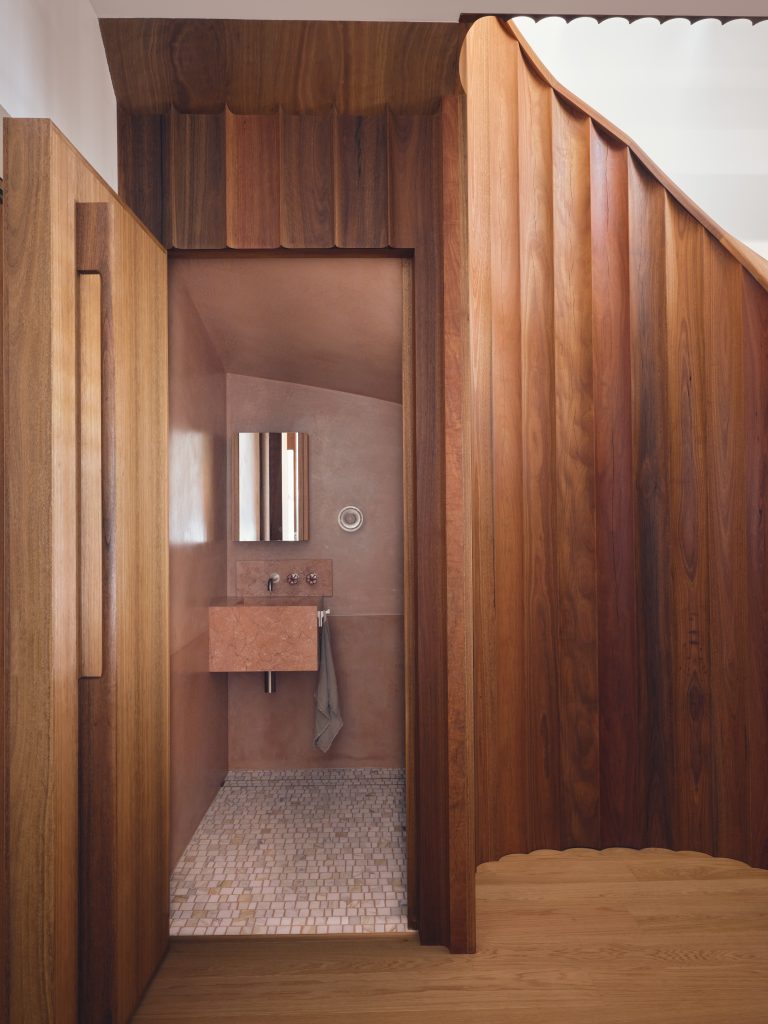
The product was so innovative that Akin Atelier has since been approached by students and overseas practitioners also experimenting with resin. “As a community it’s been interesting to then use our knowledge and talk to an architect or designer in Germany and say, ‘Yes, we did this, but look out for these issues.’ [It was good] to be able to help guide other designers about the material properties or challenges, because in any other situation, this project wouldn’t have existed – with it being in an art gallery, being climate-controlled, UV-controlled, dust-free. That’s where a resin project works really well, because it doesn’t fade, it doesn’t have huge temperature variations. You put resin into a house or anywhere else, it’s going to crack or discolour.
“The brief from the client was to produce a shop that almost felt like an art installation itself,” Ho adds. “So, yes, we took the hard road with that one!”
The success at IDEA made it all worthwhile, however. “Awards are a wonderful part of the A+D community,” he says, “and obviously IDEA is one of the best, so it was great to get that recognition.”
While many practices may consider entering awards for the heightened profile and knock-on effects of more commissions, Ho identifies another benefit.
“It’s easy for me because I’m the one who’s with the clients a lot; however, it’s also important for the team that are working on the project but don’t get as much tangible feedback,” he says. “To see the recognition is really valuable, so they can go home and show their parents or their grandmother or their partner or whoever that they’ve won an award. And it’s a really great thing for studio morale. I think I underestimated how awards can bring that sort of motivation and excitement to the studio.”
Future thoughts
Like many in the industry, Ho points to AI as one of the most significant challenges currently. But mostly insofar as how it can deaden creativity but also potentially give false confidence to users.
“AI is just an amplified version of any other challenge,” he says. “I think the laziness is a challenge. Critical thinking is such an important part of our practice. The value that a good designer has when it comes to assessing decisions, the abstract, the conceptual… all those important things are so powerful and are probably undervalued or aren’t nurtured as much.
“It’s easy to get swayed,” he adds. And there’s the tricky task of conversing with non-designers getting, perhaps, a little carried away by the possibilities.
“We’re even getting some of our long-time clients saying, ‘Oh, look what I did with AI. I bought this. I’ve got this new space and I did this in AI…” He doesn’t need to complete the thought to make the meaning clear.
“I worry a lot about our industry and I say to my team, ‘I don’t know what our role will look like in five years’ time.’ I’ve been doing this since I was 14. I’ve been working in the industry for a very long time. I feel like I’ll be able to survive and then become extinct. But I do worry about the younger people and how they are positioning themselves.
“I do spend a lot of time trying to think about how to maintain a level of relevance and how to position ourselves to ensure the sustainability of our business.”
Ending with a glimmer of that optimism that saw him take such a leap of faith and establish his own practice all those years ago, Ho does suggest a positive spin on the technology by looking back to another great upheaval – the Industrial Revolution.
“When things started getting manufactured in mass production, there was an amazing leap forward for construction, but there was a point when that became the standard and the more traditional handmade processes became much more valuable and sought after.
“Because they were rarer and more bespoke. I hope in some way AI will streamline things and make things more efficient and smarter, but the value of real craft in every industry – whether that be writing or design – will still have a place and become more valuable and more appreciated.”
Amen to that…
Entries for this year’s IDEA program close on 30 June with no extensions. To learn more and enter.
IDEA 2026 would not be possible without our overall sponsor Miele, alongside sponsors Crafted Hardwoods, Clipsal, Cult, Designer Rugs, ForestOne, Herman Miller, Roche Bobois, Laufen, Signature Appliances powered by Miele and Zenith. We are eternally grateful for their continued support of IDEA and of Australia’s design community. We are also hugely thankful to our event partner Axolotl, which helps the IDEA gala sparkle even brighter.
You Might also Like


Related Stories

© Niche Media 2026