

A book light… made from a pile of books
A book light… made from a pile of books

Share
Edward Linacre Studio specialises in adaptive reuse, but for its recent collaboration with Kerstin Thompson Architects the team needed to learn a whole new set of paper-making skills.
One of the big surprises – certainly for those involved – at 2025’s Interior Design Excellence Awards (IDEA) was the winning project selected in the Sustainability category, sponsored by Crafted Hardwoods. Up against a host of impressive builds and renovations, it was a simple paper lantern that took home the prize.
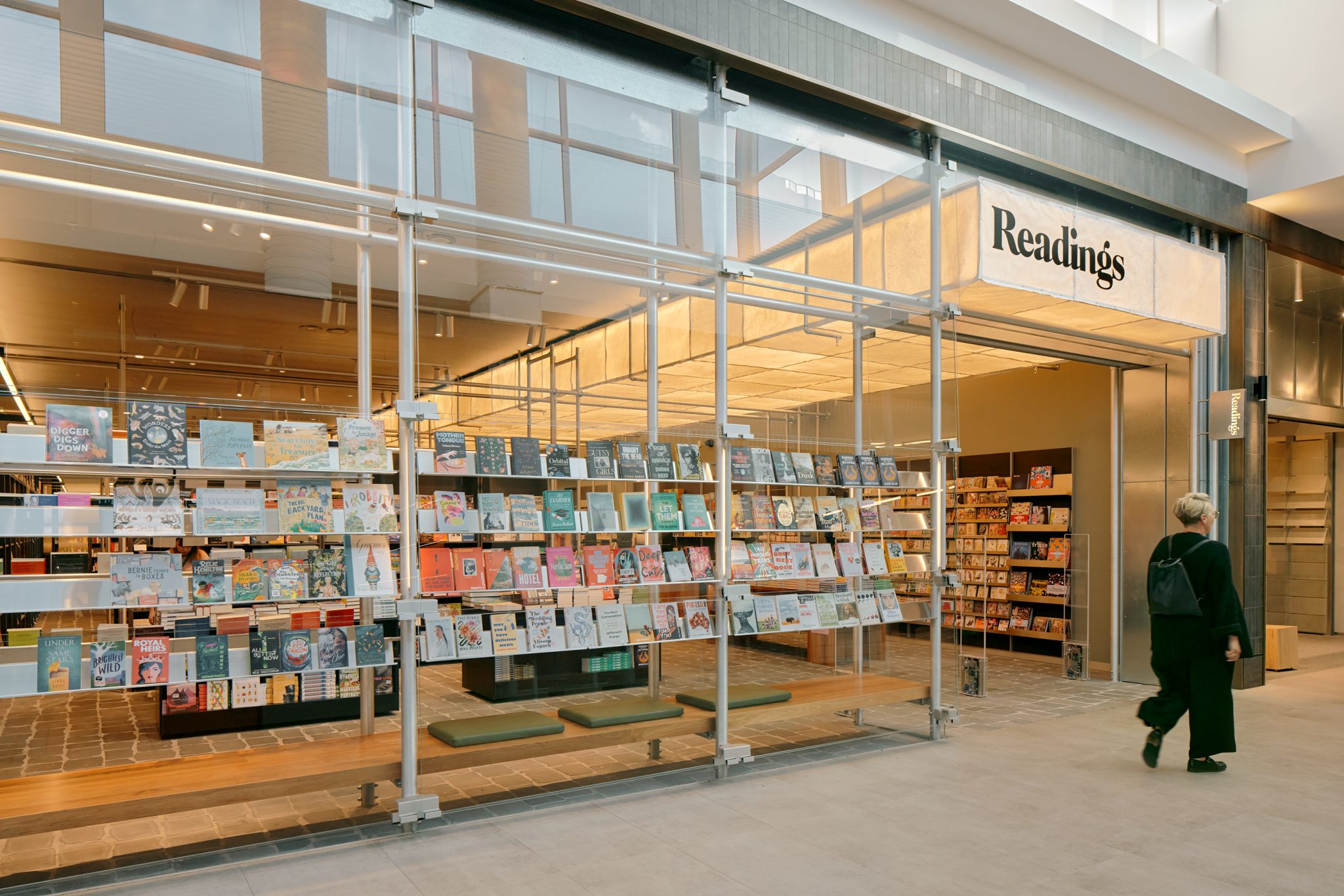
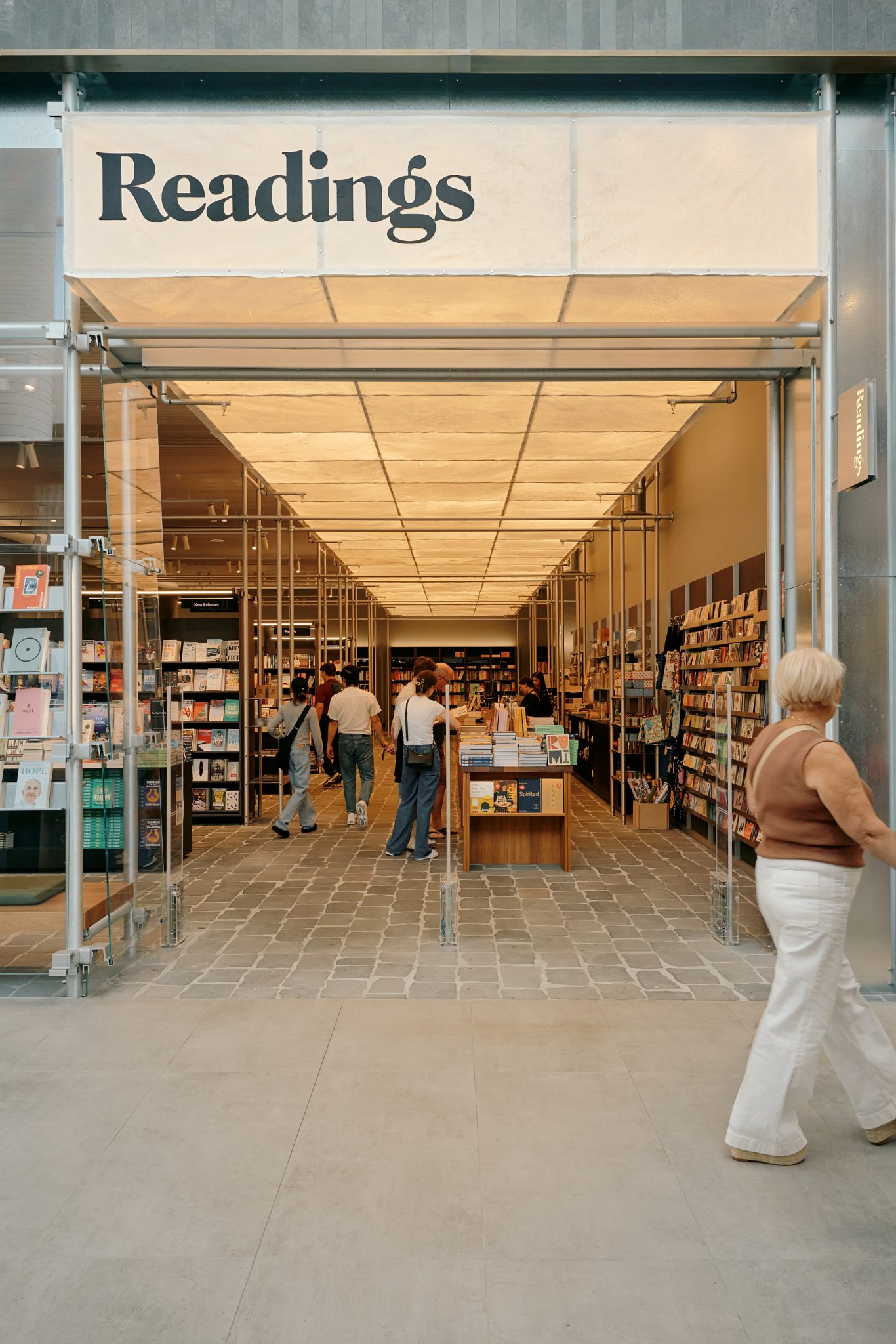
Well, perhaps simple at face value, but there’s a lot more going on behind the surface in this lighting project, which was designed for Readings bookshop in Chadstone by Edward Linacre Studio and Kerstin Thompson Architects (KTA).
Linacre and KTA’s Sarah Cooper say they were nonetheless thrilled with the recognition, even though Linacre was so certain the shortlist was as far as they would get that he didn’t even go to Sydney for the awards gala, and learned about his success in a cab on the way to a gig. “I was just gobsmacked,” he says succinctly.
Cooper explains that KTA had a prior relationship with Readings and together they had already been evolving a design language that could be used across all of the bookstore chain’s sites.
Designing with an adaptable reuse mindset
“The idea has always been with them, ‘let’s make a kit of parts that we can transform and could even be taken from one store to another and be reused, but that was just the joinery units,” she says.
This time, however, the request from Readings’ Joe Rubbo was for a truly sustainable lighting solution. It also needed to be functional, not merely decorative, a lantern that “serves a purpose and creates a magical and calm environment,” says Cooper.
Rubbo even had an idea for appropriate resource material. “We thought it would be cardboard, but it’s so common that entire runs of books get sent back because of something as simple as a printing error or pages that are not quite aligned,” Cooper adds. “Joe said, ‘We pull so many books. What can we do with the paper pulp from them?’ And so we said, ‘Well, that’s what we need to do.’”
Finding the right design partner
With that decision made, Cooper knew just the man for the job. KTA had collaborated with Edward Linacre on several previous projects and loved working with him. “I said, ‘Here’s our problem; can you make paper?’ He said, ‘No, but I’ll try,’” she laughs.
“We’re specialists in using recycled materials, but we’ve never worked with paper before,” says Linacre.
A huge pallet of books was dropped off at the Linacre Studio warehouse and he and his team got to work. It was a puzzle to be solved, he says, but ‘reduce, adaptive reuse, recycle’ is in his blood. His grandfather, David Linacre, started manufacturing plastics in Port Melbourne in the 1970s, but was also recycling them by collecting waste from construction sites and creating polyethylene to sell back to the industry. Linacre believes his forebear was an absolute pioneer in that respect and one of the first in Australia to do so.
“I’m a very well-known hoarder in my circles,” he adds. “And then Joe comes in and he’s almost more passionate than all of us about making use of this waste issue that they have.”
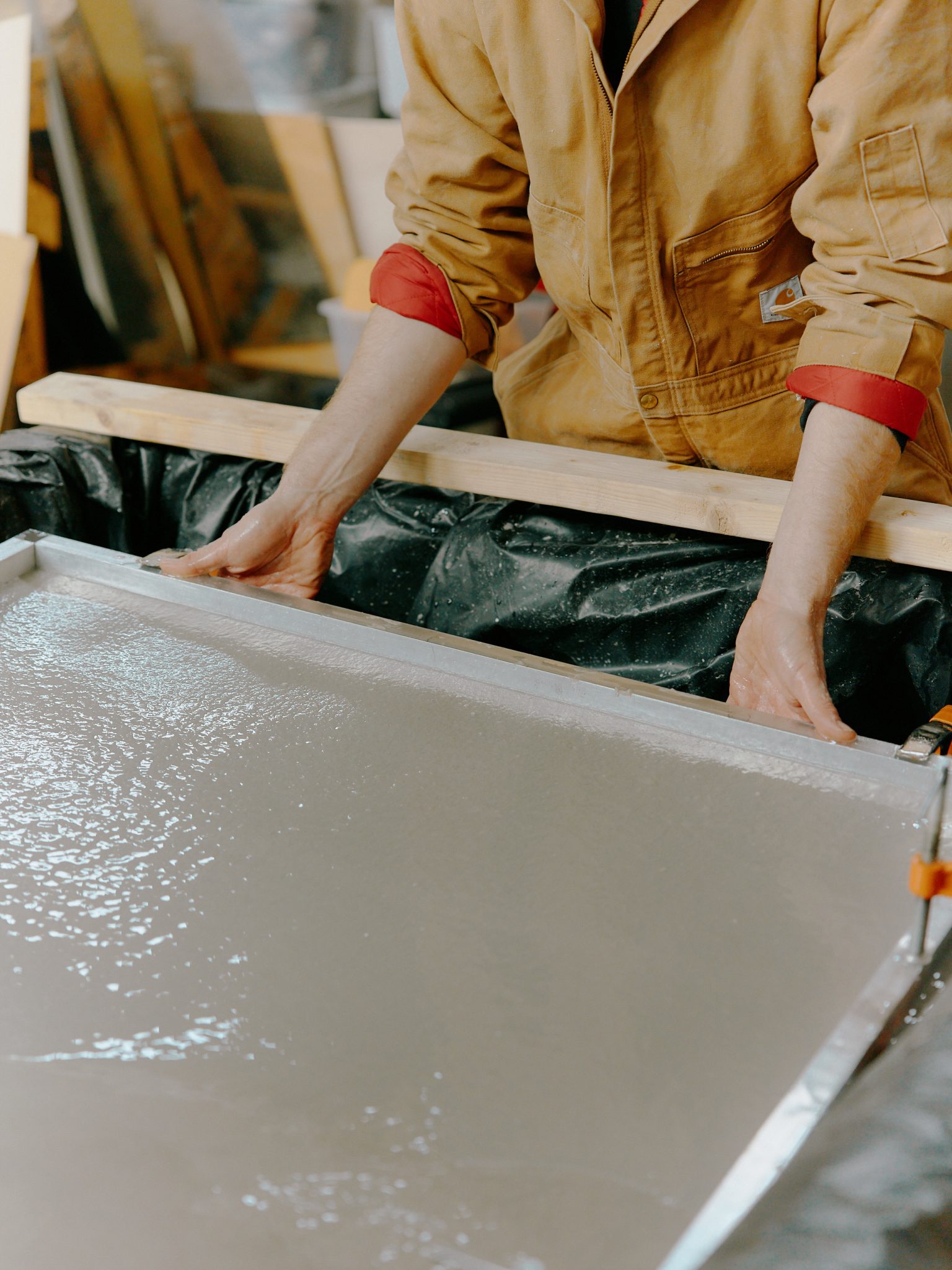
Much trial and error followed, utilising a process similar to the Japanese art of washi paper-making, creating palm size samples for proof of concept.
“I tasked my staff and myself with becoming experts at Nagashi-zuki (流し漉き). This is a hand-scooped process where fibres are suspended in water and gently flowed back and forth across a bamboo screen to build up the sheet in thin layers. [We used] a pour and drain technique with a mesh screen, but even then we had to invent our own way to do it,” says Linacre.
Scaling up
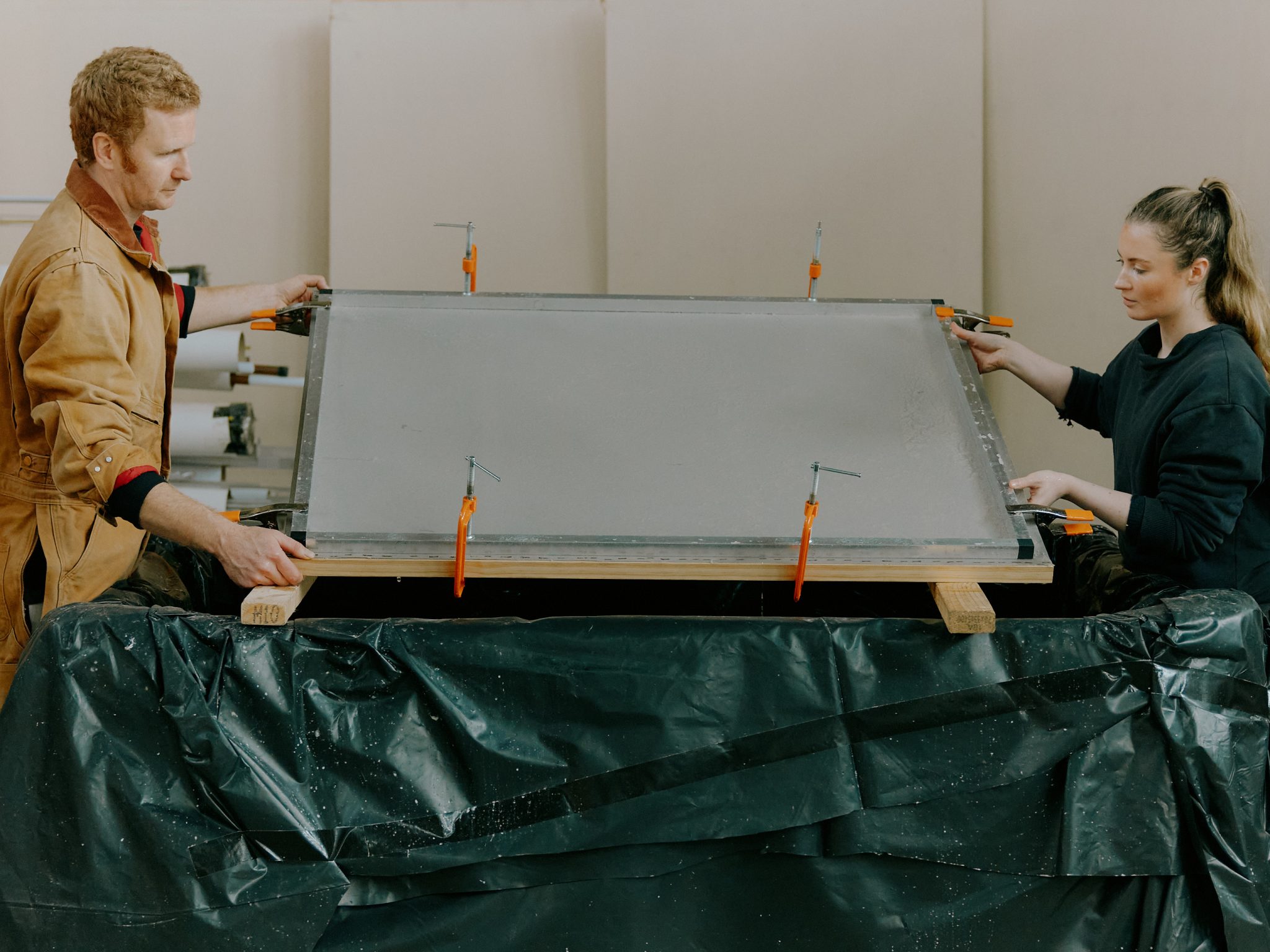
The next challenge was scale, with the final lantern needing to be around 23 by three metres. They looked at collaborating with existing paper-makers in Australia, but none of them had big enough washi screens. “So, we had to actually create all our own tooling and our own bath, which was the biggest for this technique.”
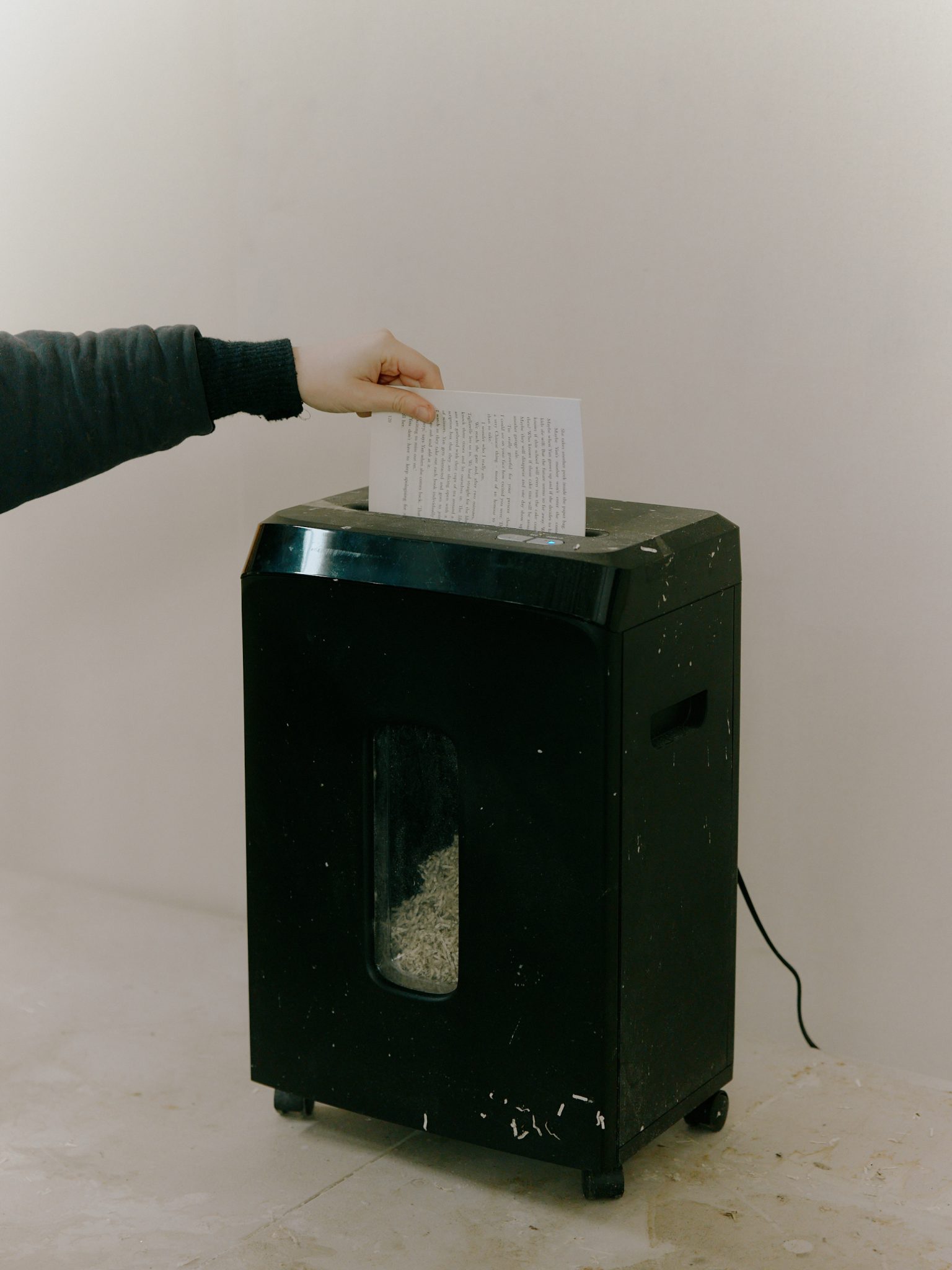
Those palm size samples grew from A5 sheets to A4, then A2 and beyond. “It was a deeply investigative process,” says Linacre. “And the major thing that blew our minds was the [small amount of] paper that we recycled to create such a massive output. Also, that the entire paper didn’t need any glues or bonding or anything. It’s literally just paper. All we did was shred and mulch the paper in a very extensive process that made it very fine silt, and then used that.”
The whole thing took just 20 to 30 books.
Linacre describes the process: “The creation of paper was a very traditional process and simple in a sense. But actually refining the material to achieve a balance of strength and light transmission was very hard… It was back and forth for so long to really cultivate the perfect material for this purpose. Because, as Sarah said, this is not just an art installation.”
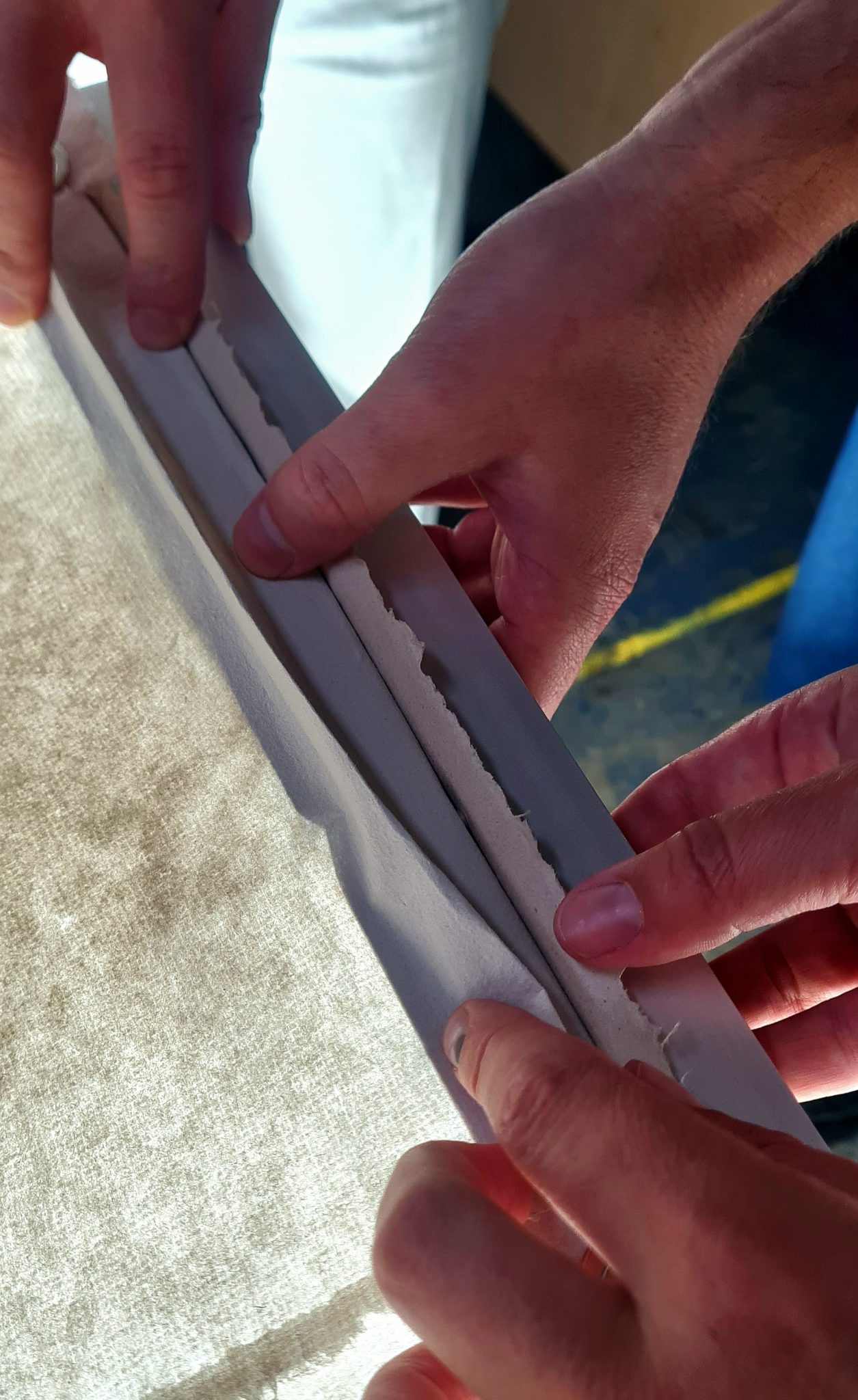
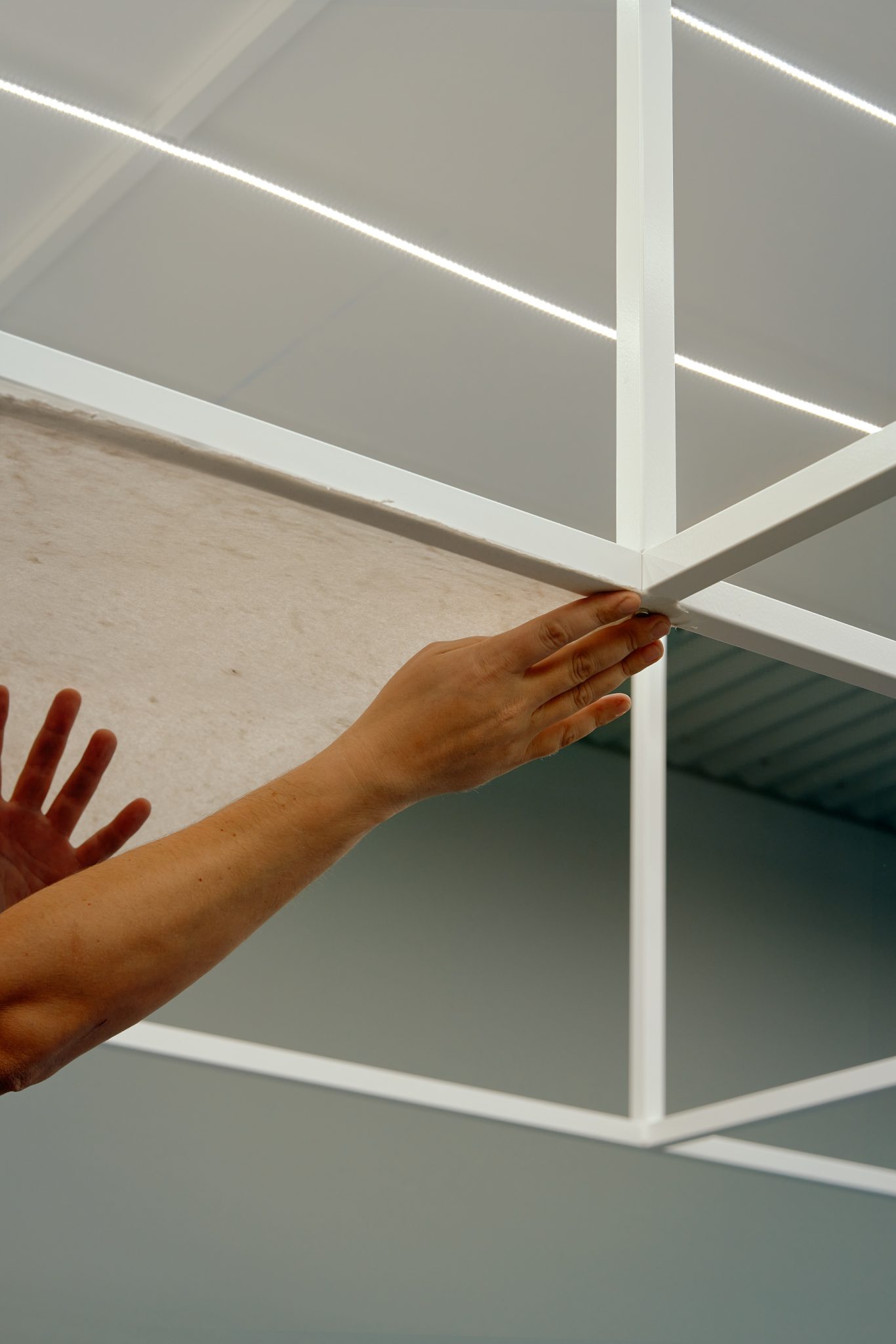
But it wasn’t just the source material that saw the lantern win the Sustainable award at IDEA. Its installation was pivotal too, because, after experimenting with sewing, the team decided to hold the whole thing together with magnets, meaning it can be fully disassembled.
“We were testing everything,” says Cooper. “We were asking questions like, ‘what happens if a bird flies in?’ It was really hands-on and I think it’s just amazing that the whole lantern was installed in around six hours.”
Collaboration and cooperation
Cooper and Linacre note how the project is genuinely a sign of a successful collaboration across the board, giving credit to frame builder Emac, Ambience for the light installation and the retail team at Chadstone for their flexibility.
“I think for me the biggest moment was when we took it into the store. We installed it right up to turning on the lights. The builders said, ‘This is never going to work. What’s your plan B?’ And we said, ‘There is no plan B. This is going to be great.’ Everyone was there. It turned on, and I think Ed and I almost burst into tears, because we were so anxious about it being a viable light source, as well as just being this sort of dull glow box. So when we were actually testing it in store in the real conditions and it worked and the builders, the lighting [team] and the client were all there, there was suddenly that ‘aha!’ moment.
“It’s all in components and we can take it out tomorrow,” adds Cooper. “So, to get [Chadstone] over the line on that, it was just [terrific]. Probably why we’re so proud is that I think it has become something that could be so simple and we would love to see it become simpler from this collaboration.”
And the result…
And now the lantern is complete and installed, Linacre says he couldn’t be happier with the project. “One of my favourite photos is of a customer in Readings using the light to read a book underneath. That to me is full circle. That is somebody reading from a light source that was made with the waste from a book and that book might ultimately end up in the next paper lantern.”
And what if a bird does fly into it? “It would probably buckle a bit and then you could stretch it out again,” says Linacre. “The edges are protected and reinforced.”
“It’s actually pretty taut,” adds Cooper. “It’s held with some really strong magnets – we went for maximum strength, but minimum material.”
For Linacre, the last word is all about the closed loop. “This is what the project does. It identifies a waste stream and it creates a carbon negative solution and carbon negative is where we need to be. We need to be taking carbon out of the system. [There is a] necessity of a whole rethink of the industry of waste. Humanity should not be considering waste as waste. It shouldn’t be called waste. It is valuable materials. And so I applaud KTA for addressing that and I think that’s the message this project really sends,” he concludes.
You Might also Like


Related Stories

© Niche Media 2026