

Get to know IDEA 2024 Outdoor Design winner Splinter Society
Get to know IDEA 2024 Outdoor Design winner Splinter Society

Share
Fitzroy architecture and interior design studio Splinter Society has cultivated a reputation for designing and delivering projects that seamlessly fuse the natural environment with the built world.
The Outdoor Design category recognises the importance of exterior spaces and outdoor environments for the contribution they make to the physical experience and mental wellbeing of the people who live, work and play in the interior realm. Splinter Society’s IDEA 2024 winning project, Monash University Pharmacy Pavilion, created in collaboration with Mala Landscape, does exactly this and more.
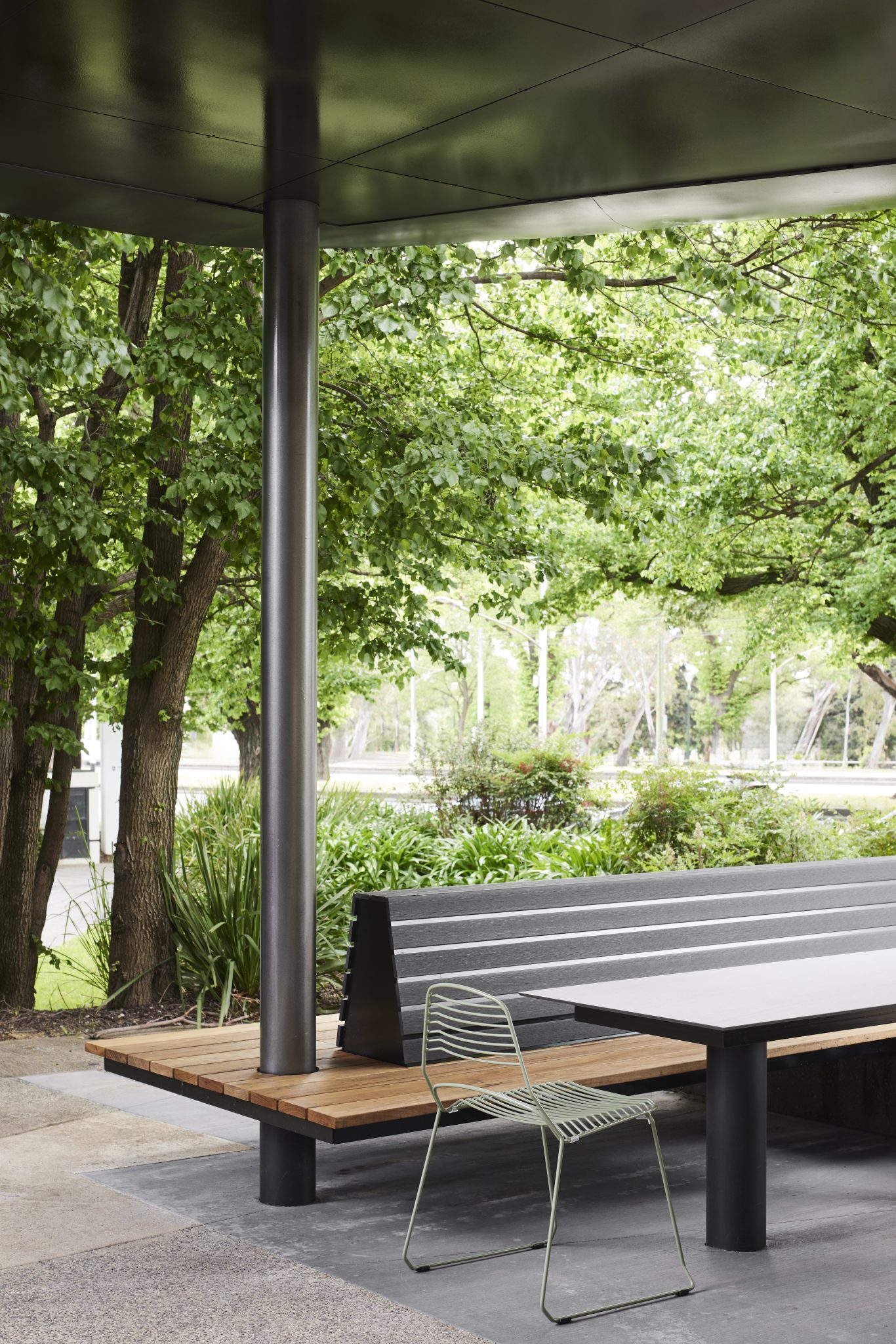
Drawing on more than 350 years of physic garden philosophy and design, and thousands of years of First Nations medicinal garden knowledge and tradition, the sculptural form of the pavilion canopy creates a space for students to gather and find respite from the intensity of the lab.
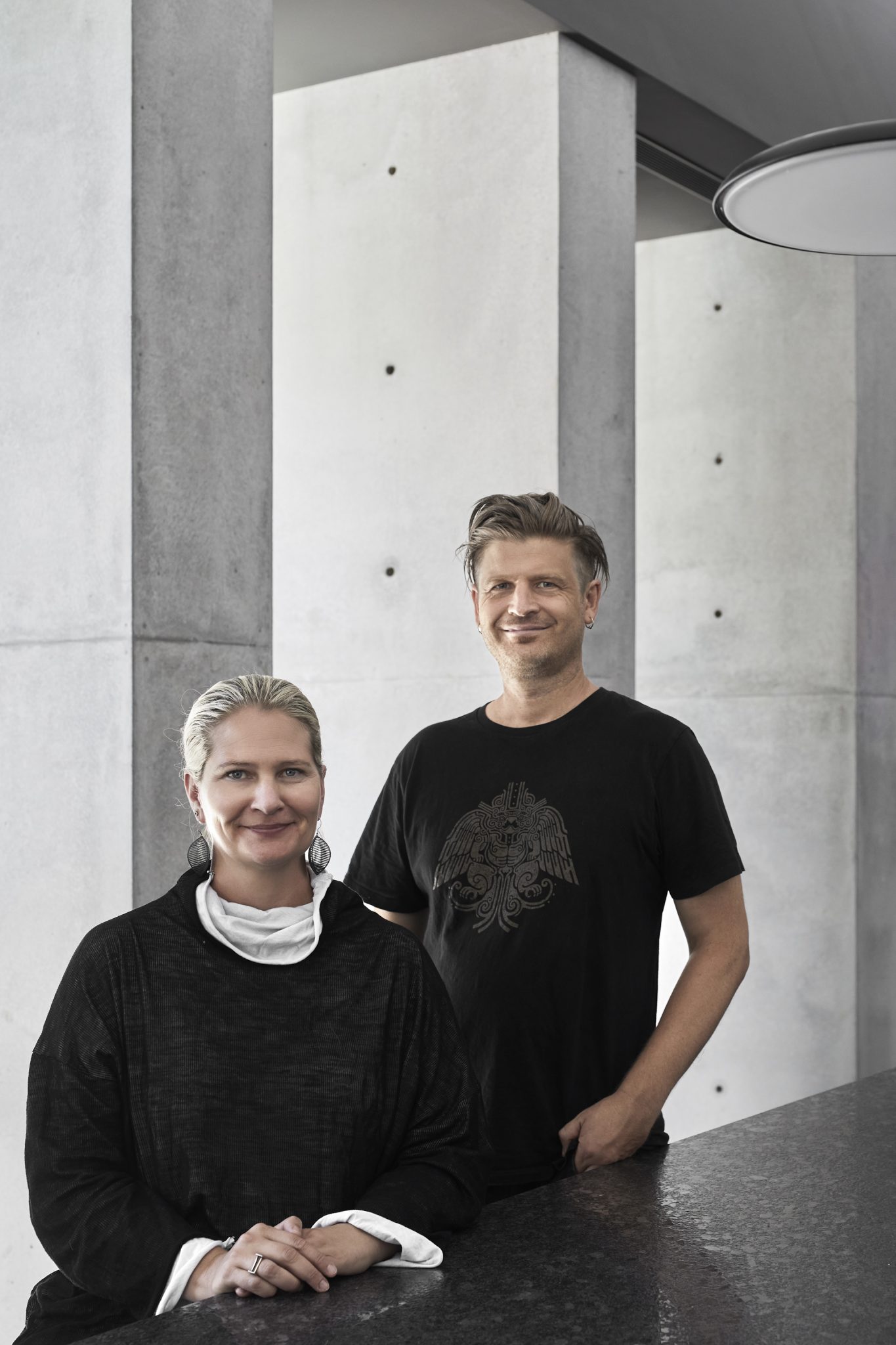
Australian Design Review: What did it mean for you to win your category?
Splinter Society: Knowing the calibre of firms who are involved with the IDEA awards every year, and the quality of judges assessing the works, it was quite exciting for our small firm to win a category. Being recognised for the hard work we put in makes the late nights and tough times worth it, both for us as directors and for the huge dedication our staff make to the studio.
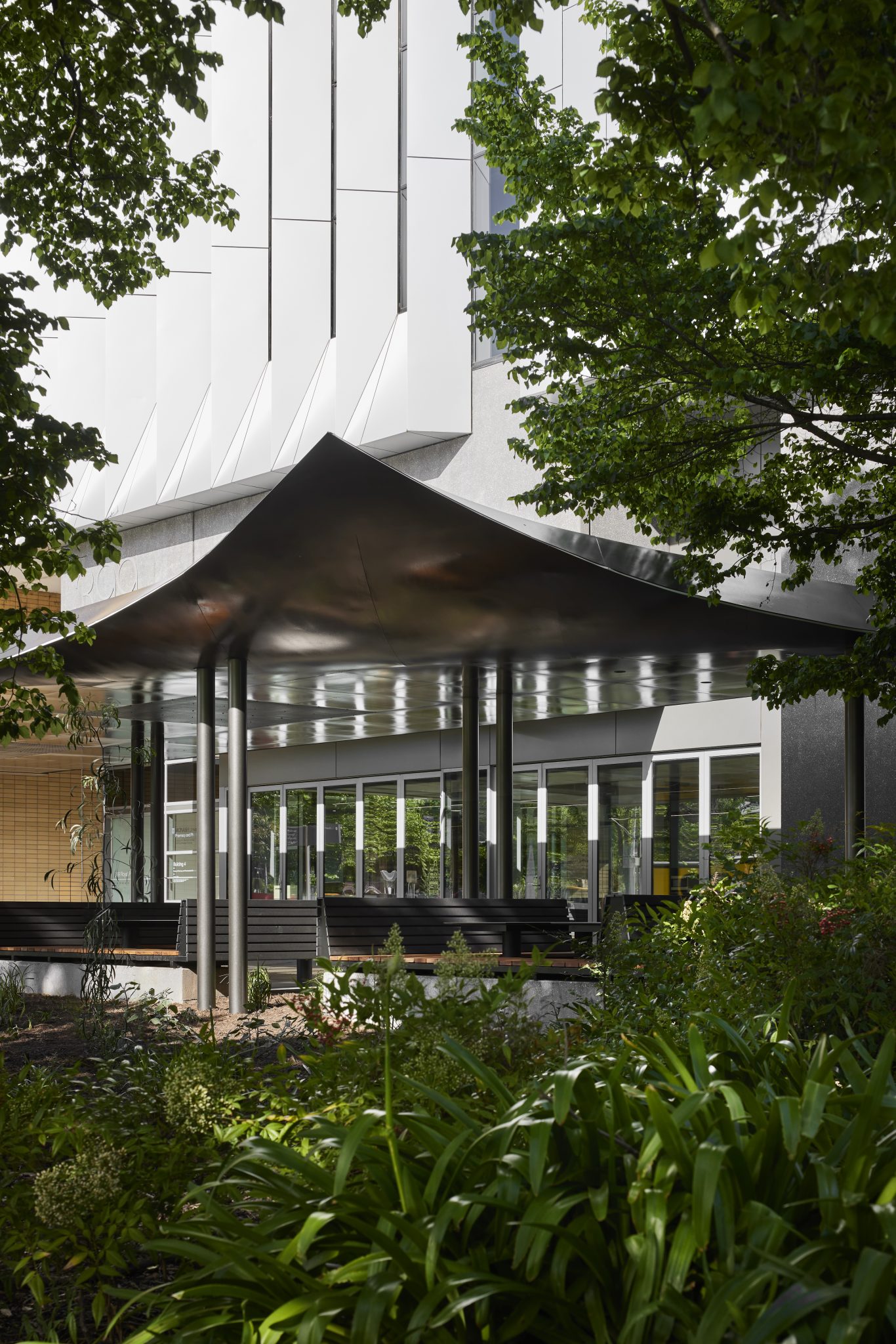
ADR: Tell us about your winning project. What was its inspiration and how did you achieve the outcome that you did?
SS: While modest at first appearance, this sophisticated pavilion and Indigenous medicinal plant garden creates a powerful place to facilitate formal and informal education. Located in Parkville, at the entrance to Monash University’s Pharmacy faculty, students and research and academic staff are invited to connect with each other and with external partners, along with the broader public. Here, both planned and incidental exchanges of ideas and knowledge occur in this technology-enabled education space without walls.
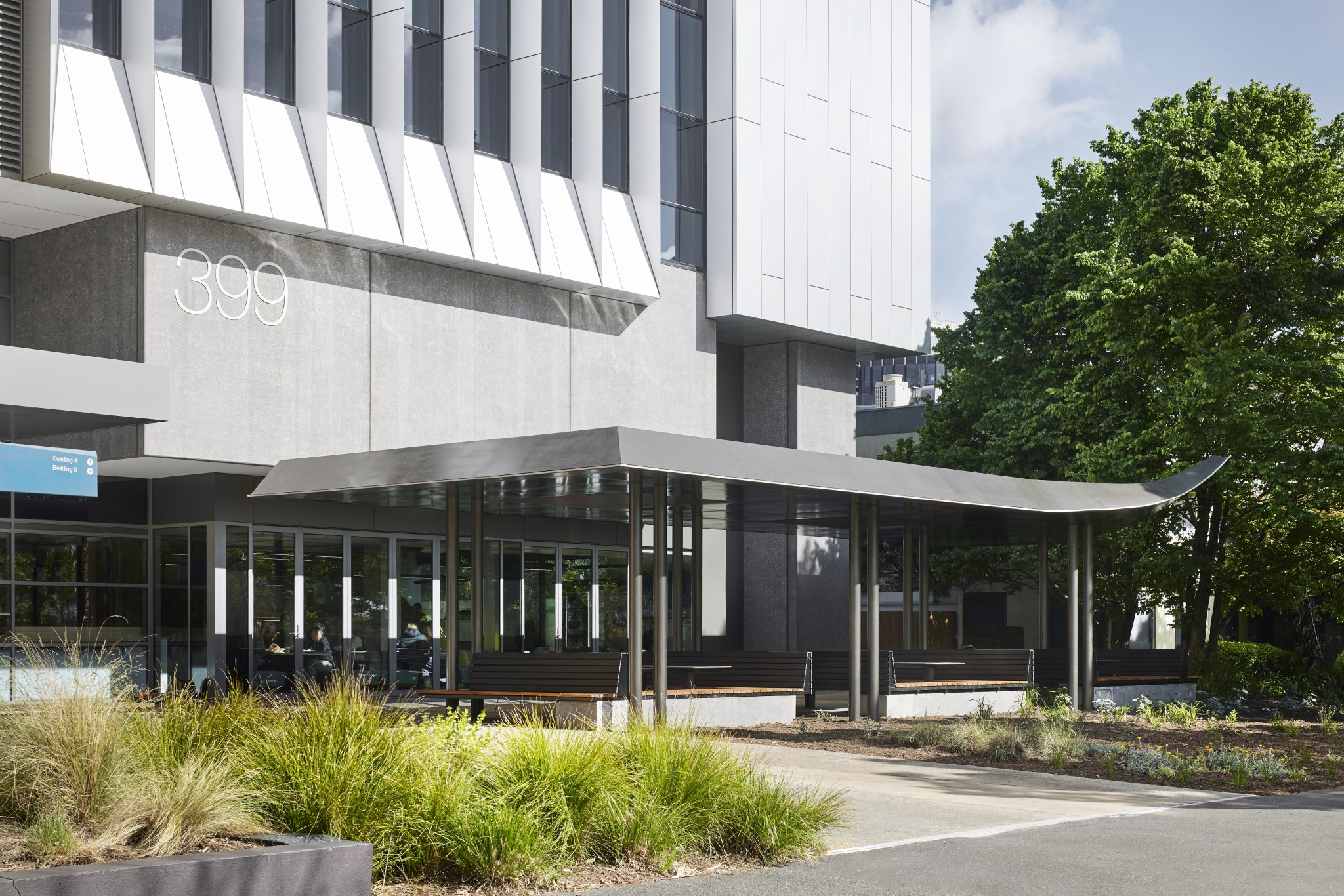
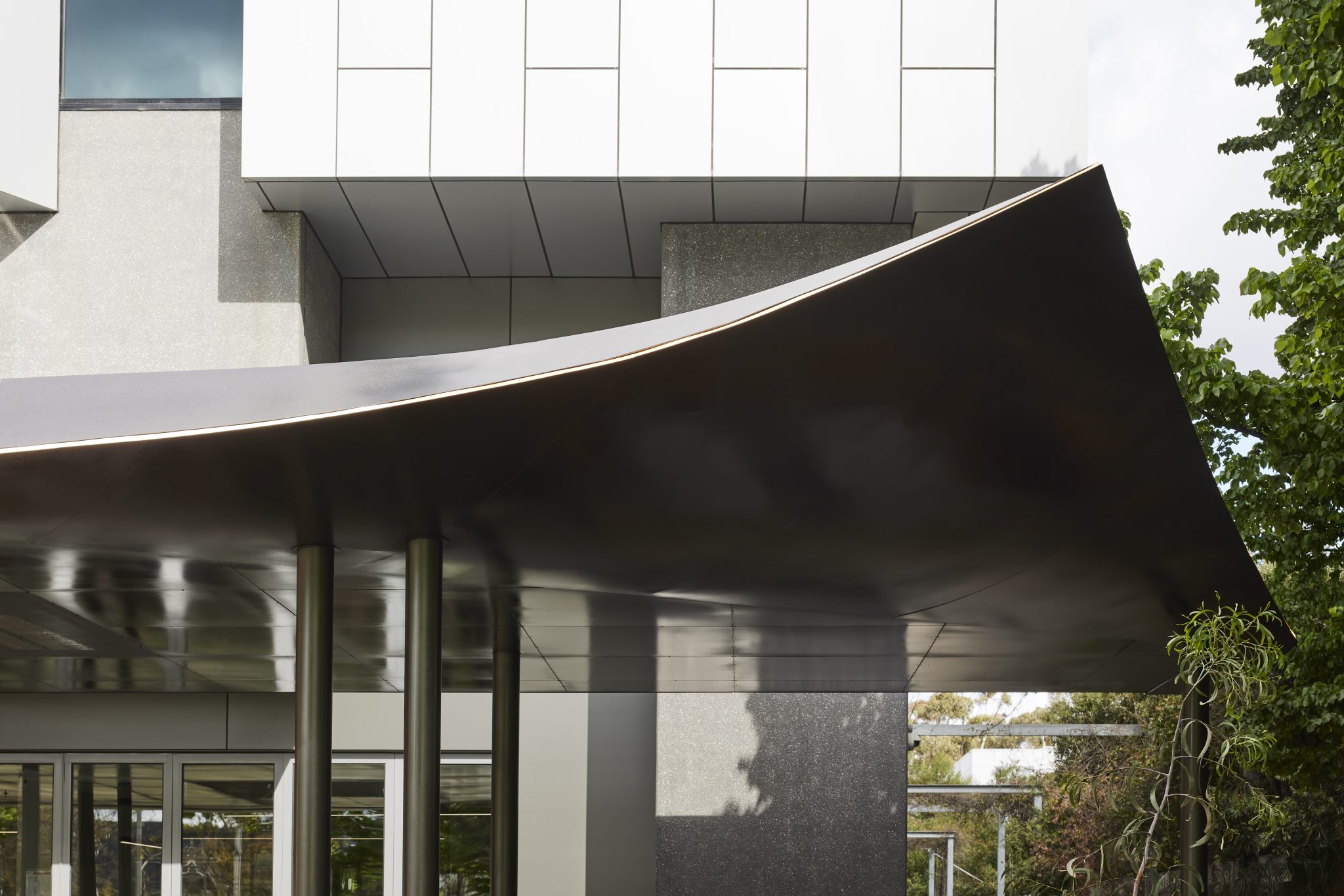
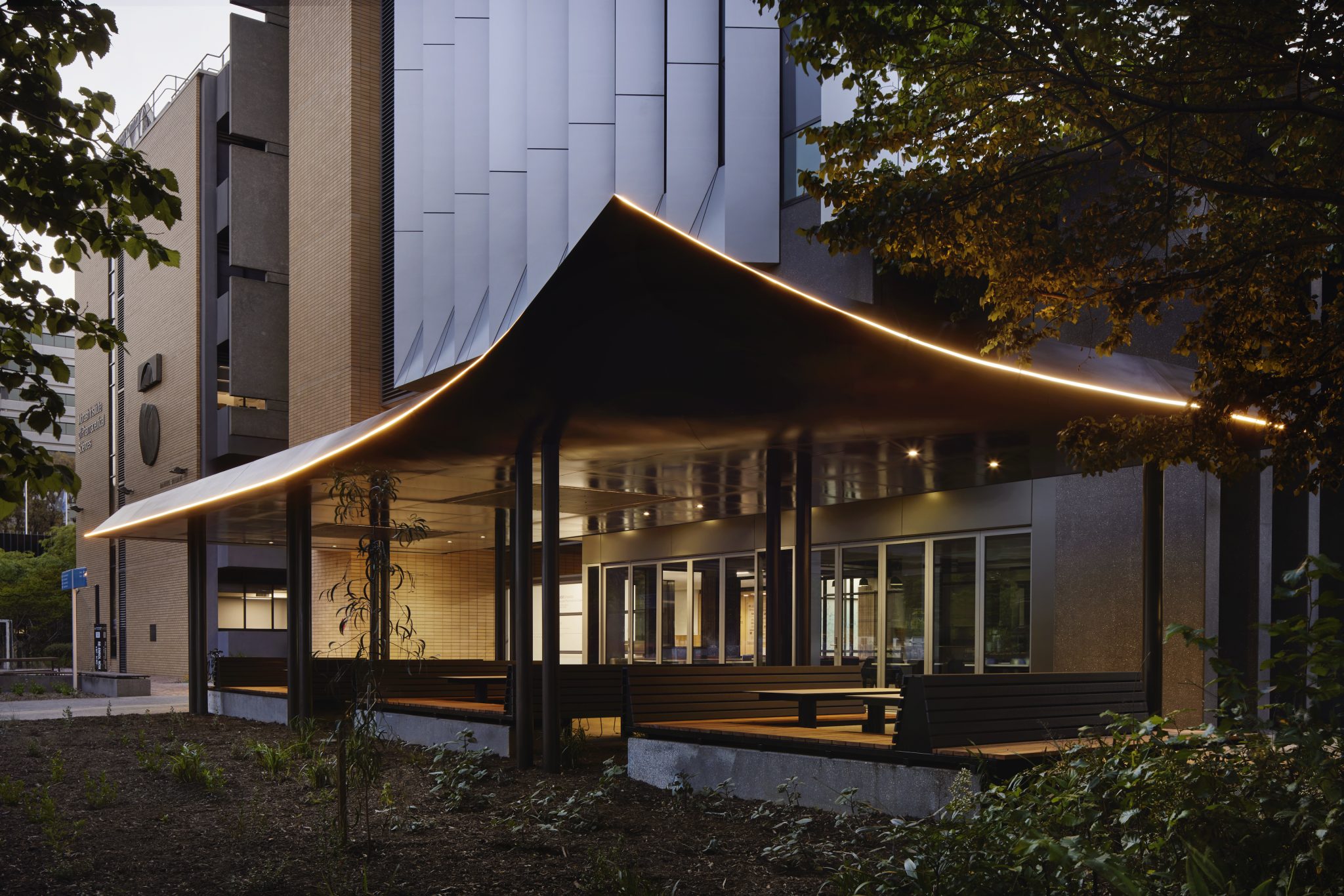
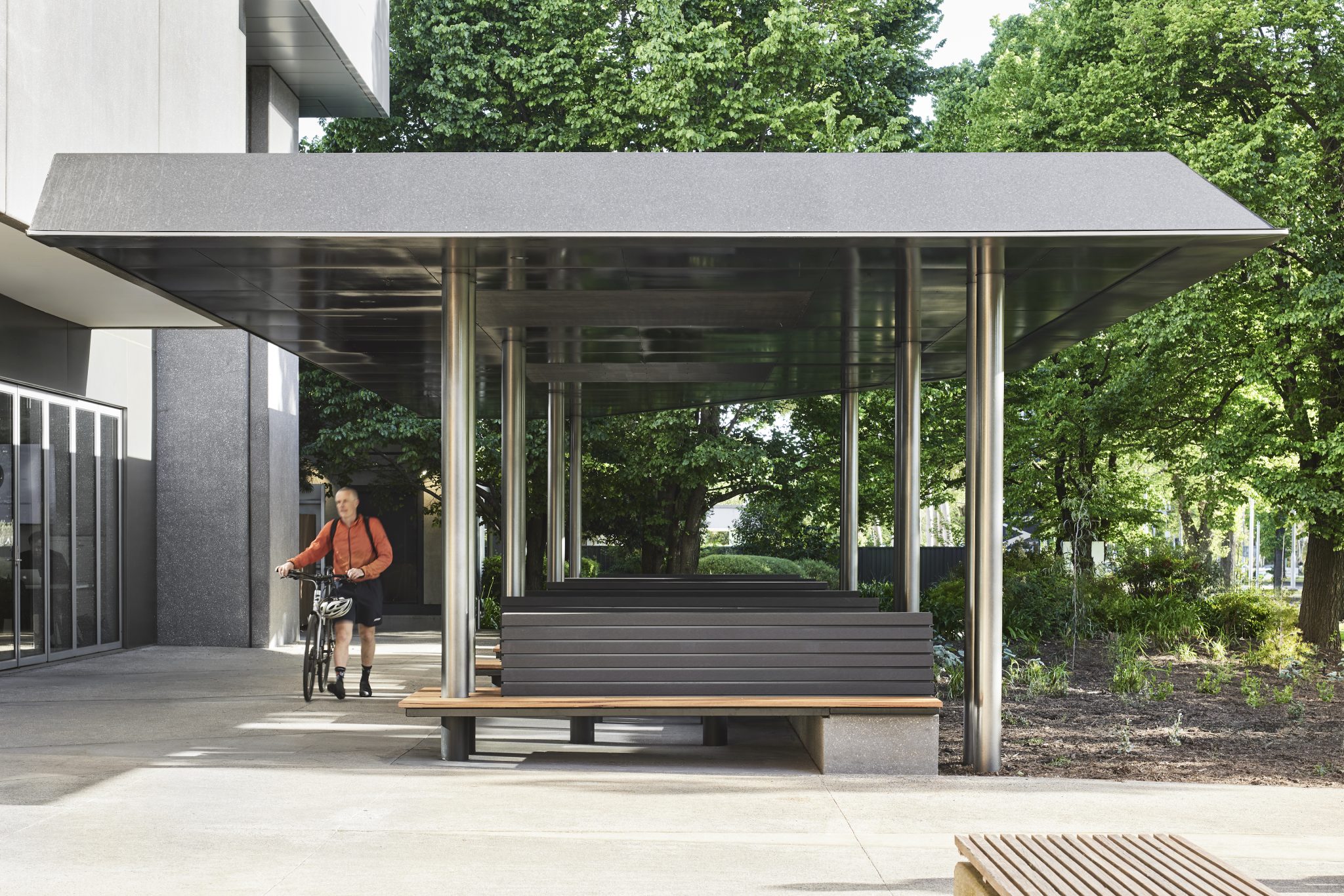
Functionally, this steel structure provides shelter and technology to accommodate varied groups and individuals. The expression was designed to be both strong and subtle and to sit comfortably alongside the existing monolithic building it serves, reflecting its rhythms and fenestration, while subtly manipulating them to create its own expression. It sits as a foreground shadow, creating a floating sculptural form that provides an intimate environment beneath it. Painted in gloss metallic black, it reflects the surrounding greenery, making it both bold and hidden at varying times of the day.
Sunlight penetrates the structure through skylights and beneath the folded raised corner, creating light, protected, comfortable, communal workspaces. Additionally, the design is embedded within a significant Indigenous medicinal plant garden, sharing the wealth of knowledge it contains.
ADR: Did you set out to design something ambitious and award-winning from the beginning?
SS: While not a big project, this site, being the entrance to Monash University’s Parkville campus, and their world-leading pharmacy faculty, we were aware of the importance of producing something of high quality.
The project had to be highly sympathetic to the surrounding architecture and landscape, be sophisticated and professional in outcome, but also do something in its own right as a piece of design. To do all of those things wasn’t easy and we really appreciate that the judging panel could understand that balance of complexity in purpose, but simplicity in execution.
ADR: What did you learn from this project that you hope to bring to future designs?
SS: As we are always told, the simple things are often the hardest to achieve. The intent was for this canopy to look and feel effortless so it didn’t compete aesthetically with its complex surrounds, both built and landscape. In reality, there are many aspects that made this project complicated to resolve.
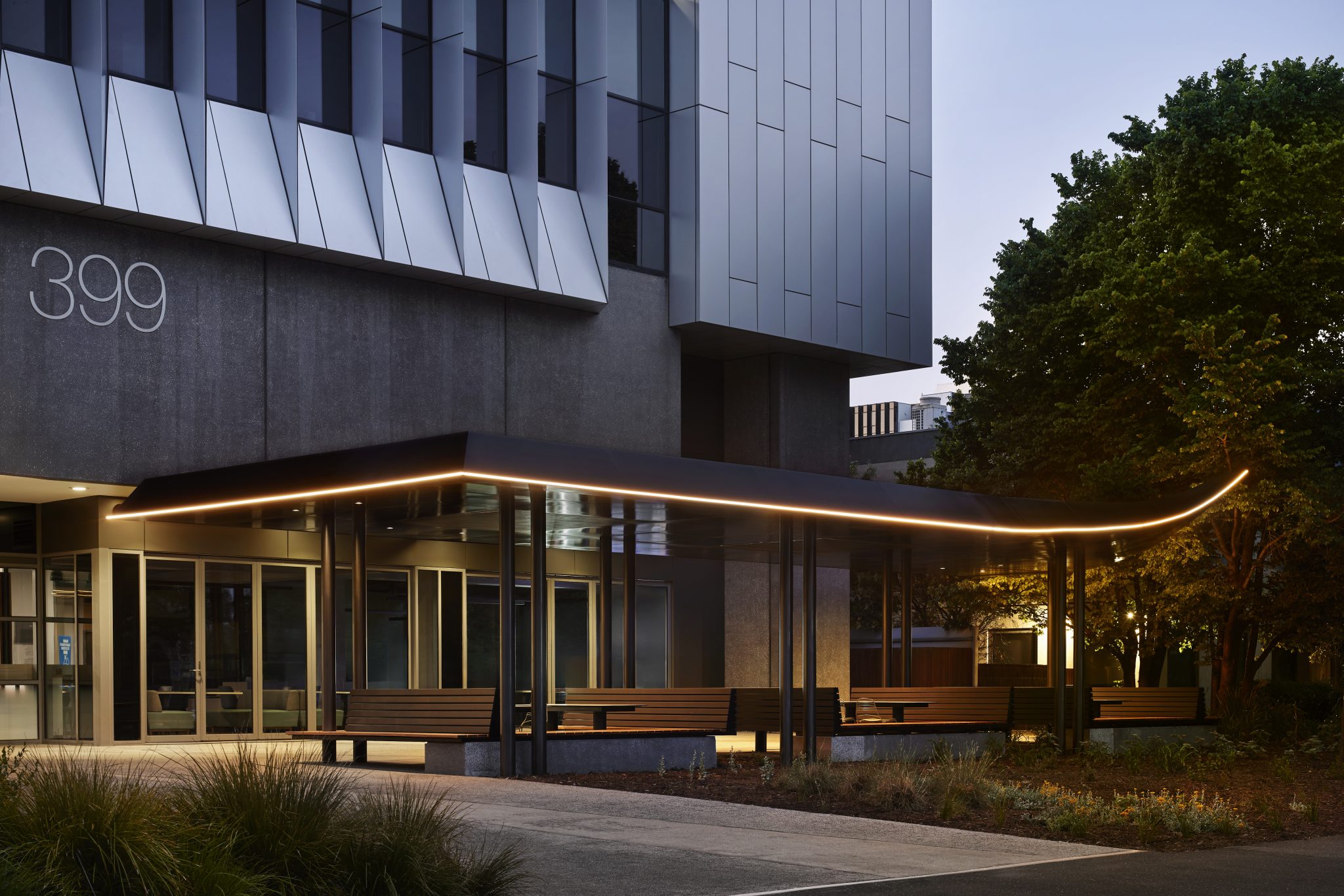
The canopy is located directly above a basement car park, and structurally it cantilevers in multiple directions making its design and engineering complicated. The project couldn’t be built off site for various reasons, including access, so shaping plate steel and then undertaking an industrial metallic painting process on site had its complications, particularly in a live environment.
Undertaking this project off the back of Covid-19 and the resultant budget cuts at that time was an additional ever-changing condition that required a fluid approach. We would like to think we will learn from this, but it wasn’t the first time we have walked into this scenario, and no doubt it won’t be the last.
ADR: How would you describe 2024 for your and/or your studio?
SS: We are lucky in that, for a small office, we tackle many typologies. While we have all witnessed some industries, like hospitality and retail, slow down, others such as multi-residential, adaptation projects and the wellness industry are growing strongly. Having that ability to move in a range of directions means 2024 was a very busy year for us, and this year is looking the same.
We are fortunate to have a strong collection of aspirational clients across many sectors who continue to push us to produce our best work, and who we get along with very well. That means we spend a lot of time evolving creative ideas and hanging out with people who make our job a pleasure.
ADR: What’s next for you? Can you share any upcoming or current projects you’re working on?
SS: We have a number of wellness projects that we are really excited to be working on. These projects are spread around regional areas in Australia and give us the chance to work in an industry in which we have long been participants of ourselves. We love a hot bath, sometimes a cold bath, and trying new ideas that clients are developing in the industry. In addition, we can regularly hit the road and escape the city in the name of work!
IDEA 2024 was proudly brought to you by our sponsors Miele, Cult, Crafted Hardwoods, Neolith, Halliday + Baillie, Krost, MillerKnoll, Laufen, ForestOne, Zenith, Designer Rugs, and supported by our event partners Axolotl, Four Pillars Gin, Moo Brew Beer and Artfull.
A special thank you to our jury chair Clare Cousins, and our jury members Brooke Lloyd, Davina Bester, Graham Charbonneau, Melissa Bright, Michael Alvisse and Manuela Millan.
Photography: Sharyn Cairns.
You Might also Like


© Niche Media 2026