

Waste to wonder: Crafted Hardwoods and the future of sustainable timber
Waste to wonder: Crafted Hardwoods and the future of sustainable timber

Share
With innovation at its core, Crafted Hardwoods is showing how circular design and regenerative thinking can reshape the future of architecture and design.
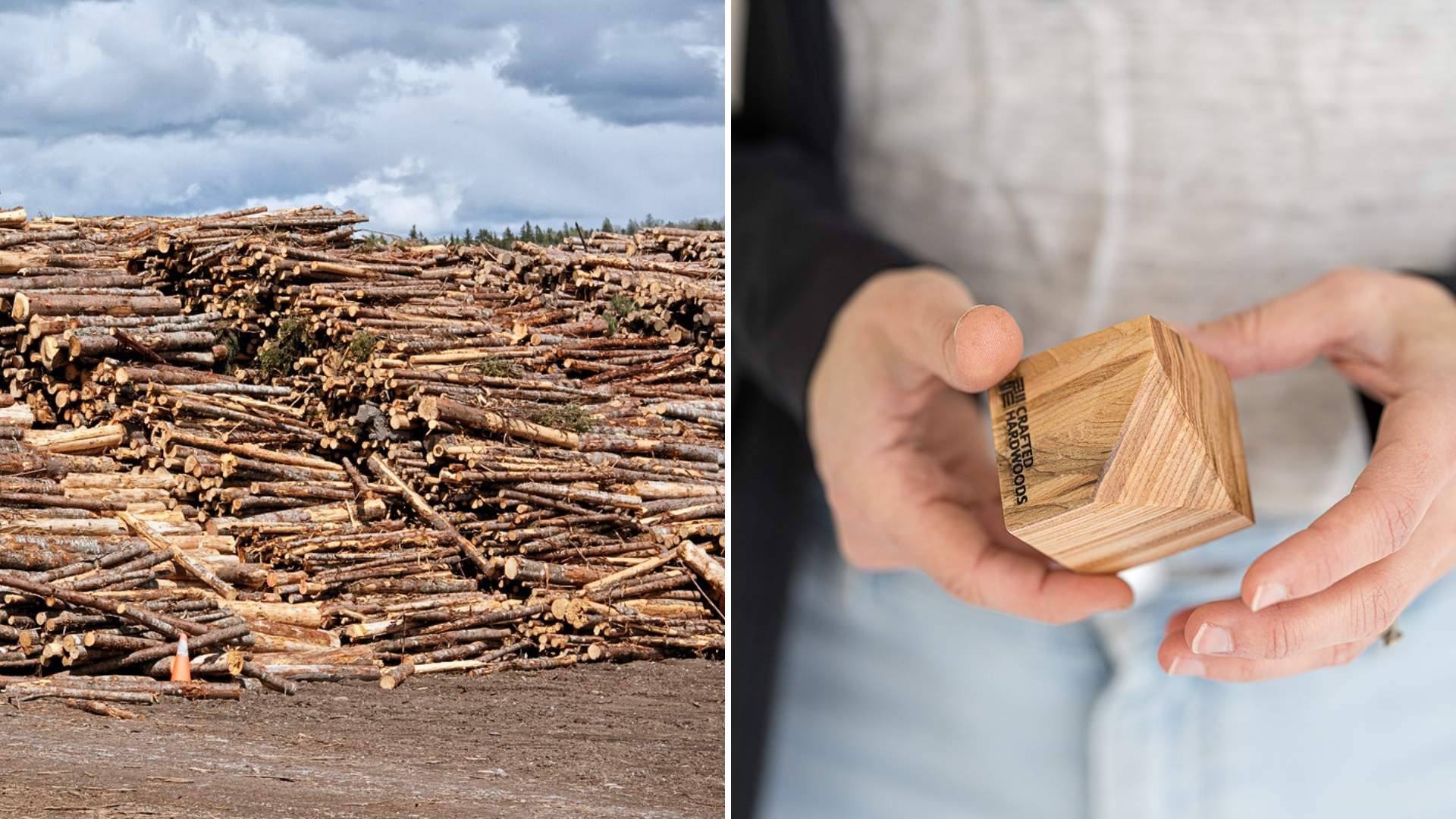
Wood has always been the darling of architecture and design. It features in almost every project brief and remains a hero material in sustainable design awards year after year. Yet the realities of the timber supply chain often go unseen. In traditional hardwood milling, only about 40 percent of a log is turned into usable timber. The rest is lost to the process, and much of the lower-grade harvest never makes it into design at all.
This is where Crafted Hardwoods has taken a bold step forward. Founded by Geoff Swinbourne, the company is applying a breakthrough technology to transform undervalued timber into architectural-grade material. By maximising recovery from every log and upcycling resources that conventional processing leaves behind, Crafted Hardwoods ensures more timber is produced from fewer trees harvested. The result is not just higher recovery, but a regenerative approach: preventing valuable timber from being down-cycled into short-lived products, keeping carbon locked in buildings for longer, and creating more value from the same finite resource.
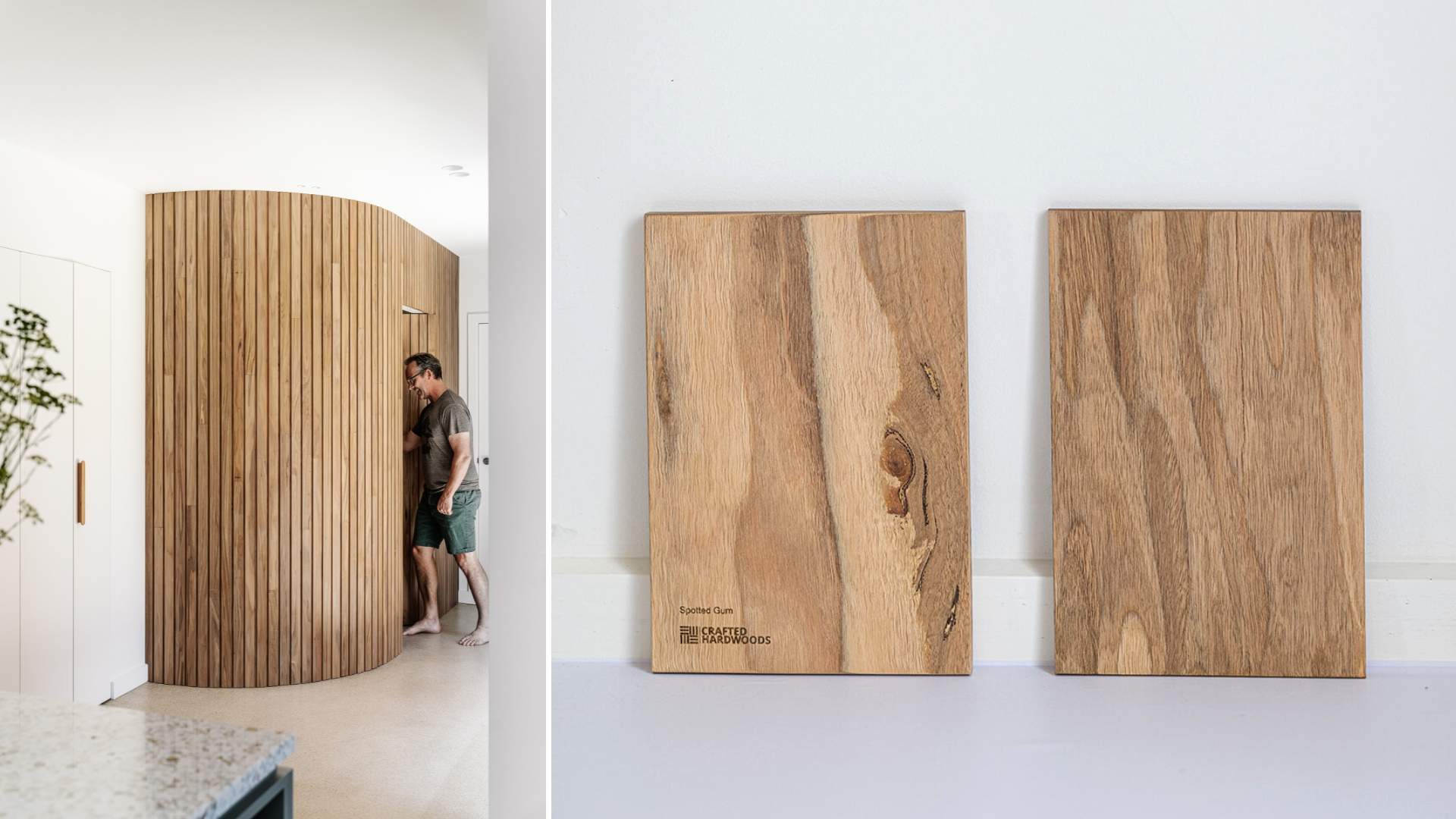
“We are showing how low-grade resources can become part of a regenerative system with forestry, manufacturing and design all connected,” Crafted Hardwoods brand manager Cristel Morin says. “With that mindset, timber becomes more than just another material — it becomes a way to create impact that outlives the project.”
Circular design in practice
That unique narrative is what makes Crafted Hardwoods so memorable, and it found powerful expression in NEWNEW – a circular pavilion developed for the Green Design Show in collaboration with leading design studio Nexus Designs, sustainable furniture curator Cultivated, and renowned maker Mark Tuckey.
The overall brief was ambitious: to design an entirely circular pavilion, built so every element could be disassembled and reused. The result was a large-scale timber structure with a luminescent quality, where the exposed frame and fabric-lined walls showed how architectural ambition, circular design and environmental responsibility can come together in a way that is both practical and inspiring.
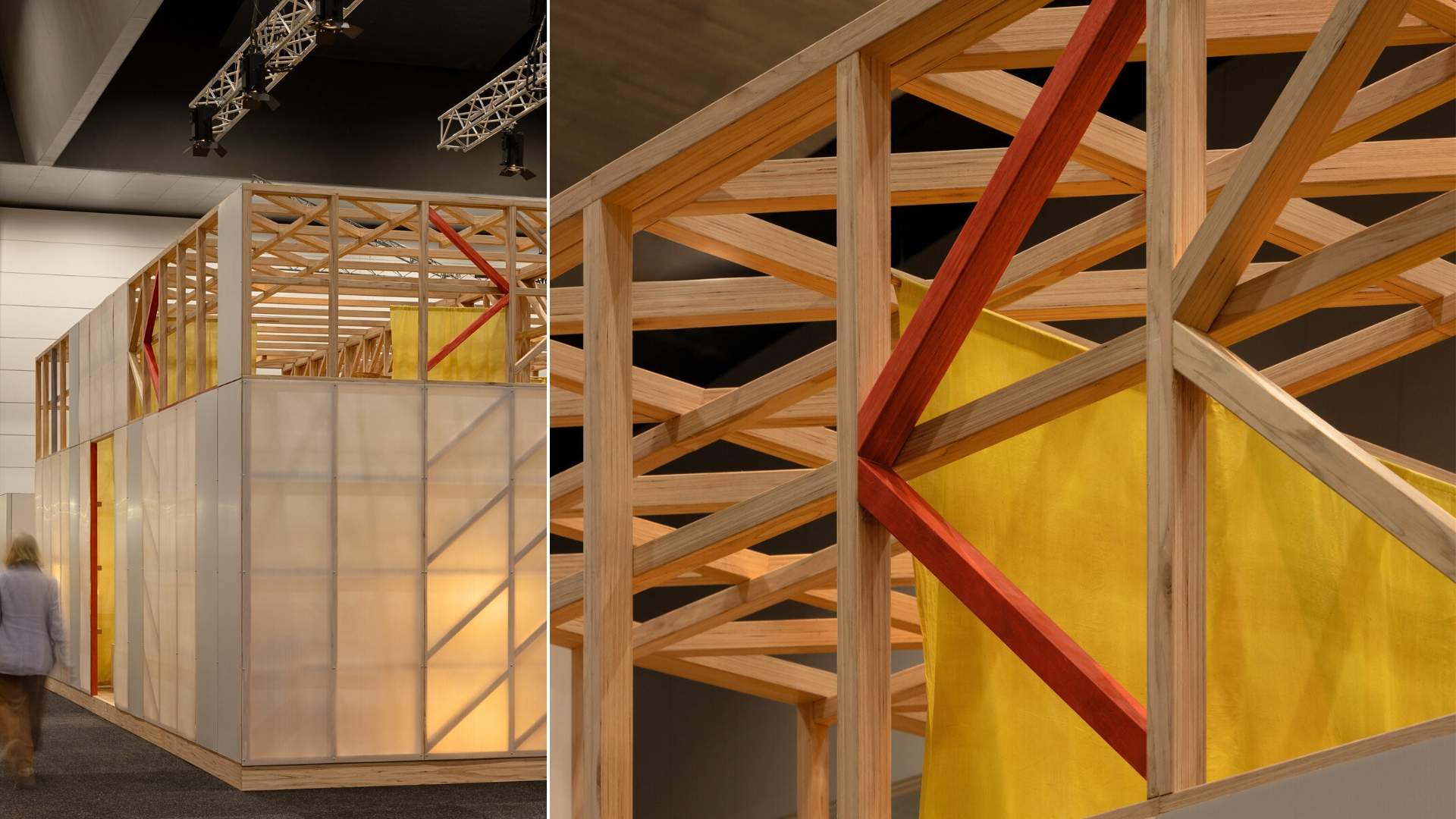
“Every decision was considered, every material was chosen with multiple criteria in mind, and we were able to bring our story into that mix,” Morin explains. “Our timber doesn’t just fill a role, it carries meaning. It speaks of upcycling and circularity in a way that gives designers a richer story to embed into their projects.”
What NEWNEW showcased on stage, other projects have confirmed in practice. Crafted Hardwoods has played a part in a vast number of projects, from residential retrofits to large-scale commercial work. The material proves its worth in a wide range of applications, where even modest shifts in specification can deliver outsized benefits when scaled across the built environment.
Sustainability to regeneration
Looking ahead, Crafted Hardwoods sees the next decade of architecture defined by a shift from sustainability to regeneration. It’s a transition the company is eager to embrace, given how closely it aligns with its ethos and expertise. Designers and specifiers are demanding transparency from suppliers, and the company is preparing with life cycle assessments and environmental product declarations to back up its claims.

For designers, that level of clarity sits alongside another growing priority: the rise of bio-based materials as renewable, carbon-storing resources that reconnect buildings with natural systems. Timber, when sourced responsibly and designed for longevity, stands out as a leading example. Yet Morin stresses that not all bio-based materials are automatically regenerative. Their impact depends on certification, durability and circularity. “The trend we want to see isn’t just ‘bio-based’, but ‘bio-based done well’,” she says.
In a landscape crowded with sustainability claims, Swinbourne emphasises that transparency and education are what really matter. “I have been through large manufacturing facilities that talk about sustainability yet don’t even have a recycling bin,” he says. “That kind of contradiction undermines trust.” It’s why Crafted Hardwoods has taken a different approach. “On the surface, what we do seems simple: we take low-value resources and turn them into engineered timber. But behind that simplicity is years of research, testing and refinement. With an innovative material like ours, transparency and education go hand in hand, to help designers understand and trust what they’re specifying.”
Ultimately, the company views its mission as rethinking materials at the systems level. It is not just about how timber performs within a building, but how it is sourced, manufactured and kept in circulation. “True regeneration means supply chains that restore ecosystems and materials that stay in use for decades,” Morin says. “By upcycling undervalued resources into high-value timber, we are taking a practical, scalable step toward that future.”
Want to read more on Crafted Hardwood? Read about their collaboration with Skeehan on ADR.
You Might also Like
Related Stories

© Niche Media 2026