

Co-design on display at Twelve Apostles Visitor Centre
Co-design on display at Twelve Apostles Visitor Centre

Share
On Victoria’s world-famous Great Ocean Road, a new pitstop has taken shape. Led by Grimshaw, the multidisciplinary design for the Twelve Apostles Keerray Woorroong Visitor Centre has been co-designed with Eastern Maar Aboriginal Corporation, and with landscape architects ASPECT Studios.
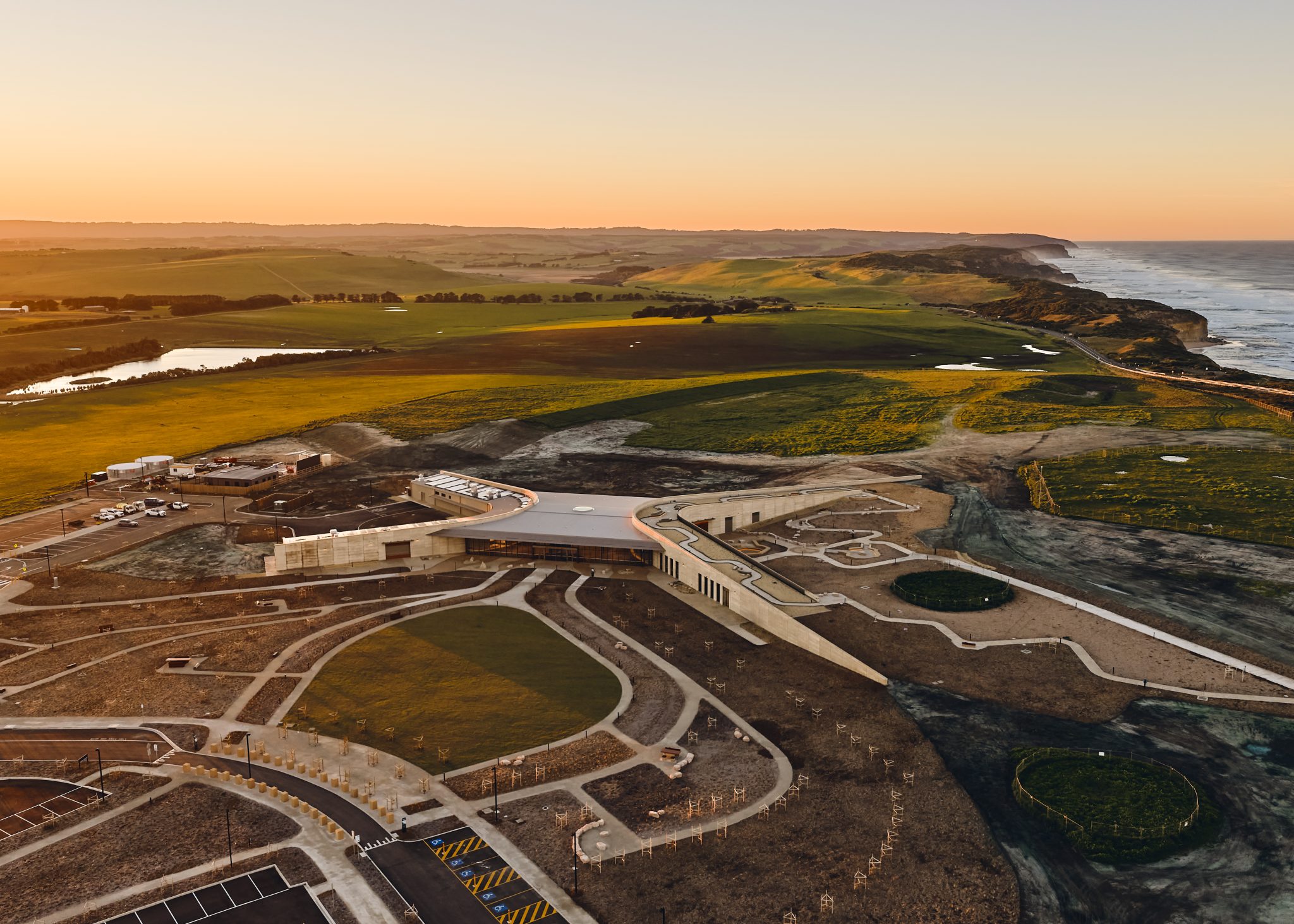
The project unites a new Visitor Experience Centre, Welcome Garden, extensive revegetation, landscaped parking, and a reorganisation of pedestrian and vehicle movement to choreograph a new visitor experience at one of Australia’s most visited natural landmarks.
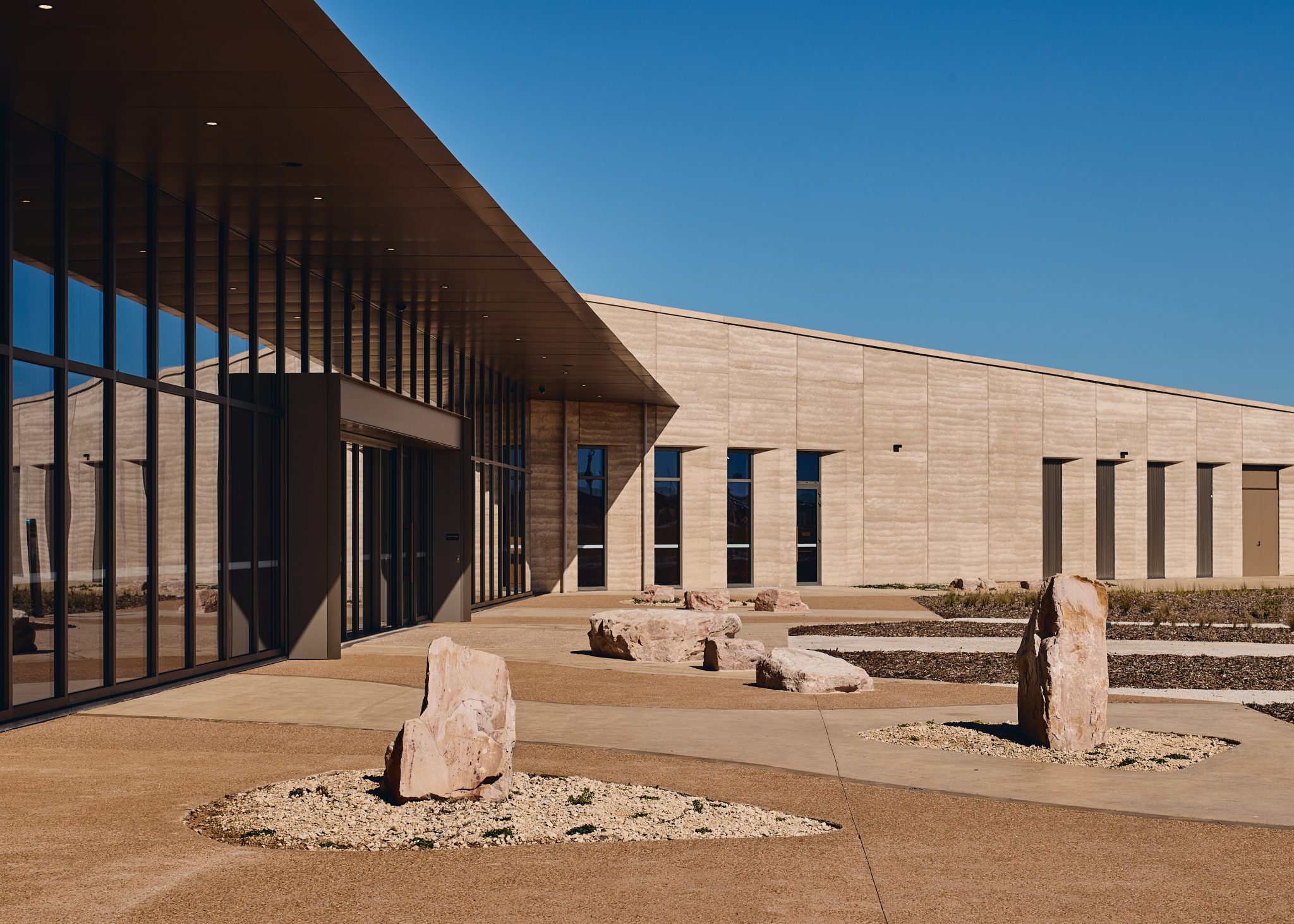
Rather than treating the Visitor Experience Centre as an isolated building, the project integrates landscape, architecture and movement through the site to establish an arrival journey to Country and the iconic coastline.
The ambition for the precinct is to move beyond the logistics of processing large numbers of visitors and create a slower, more connected, experience of Country. Developed through a Traditional Owner-led co-design process with Eastern Maar, the project embeds First Nations’ knowledge, culture and understanding of Country as an interconnected system that forms the biocultural foundation for the design.
Just as attention has been paid to the native planting and coastal habitat in the landscape design, the architectural approach also responds to the local context. Conceived as a landform, the architecture appears to emerge from the landscape and become one with its surroundings.
The building’s position and orientation also respond to the site, taking into account the historic ecological vegetation classes, topography, universal access, solar and wind conditions, areas of cultural significance and the presence of rare river swamp wallaby grass.
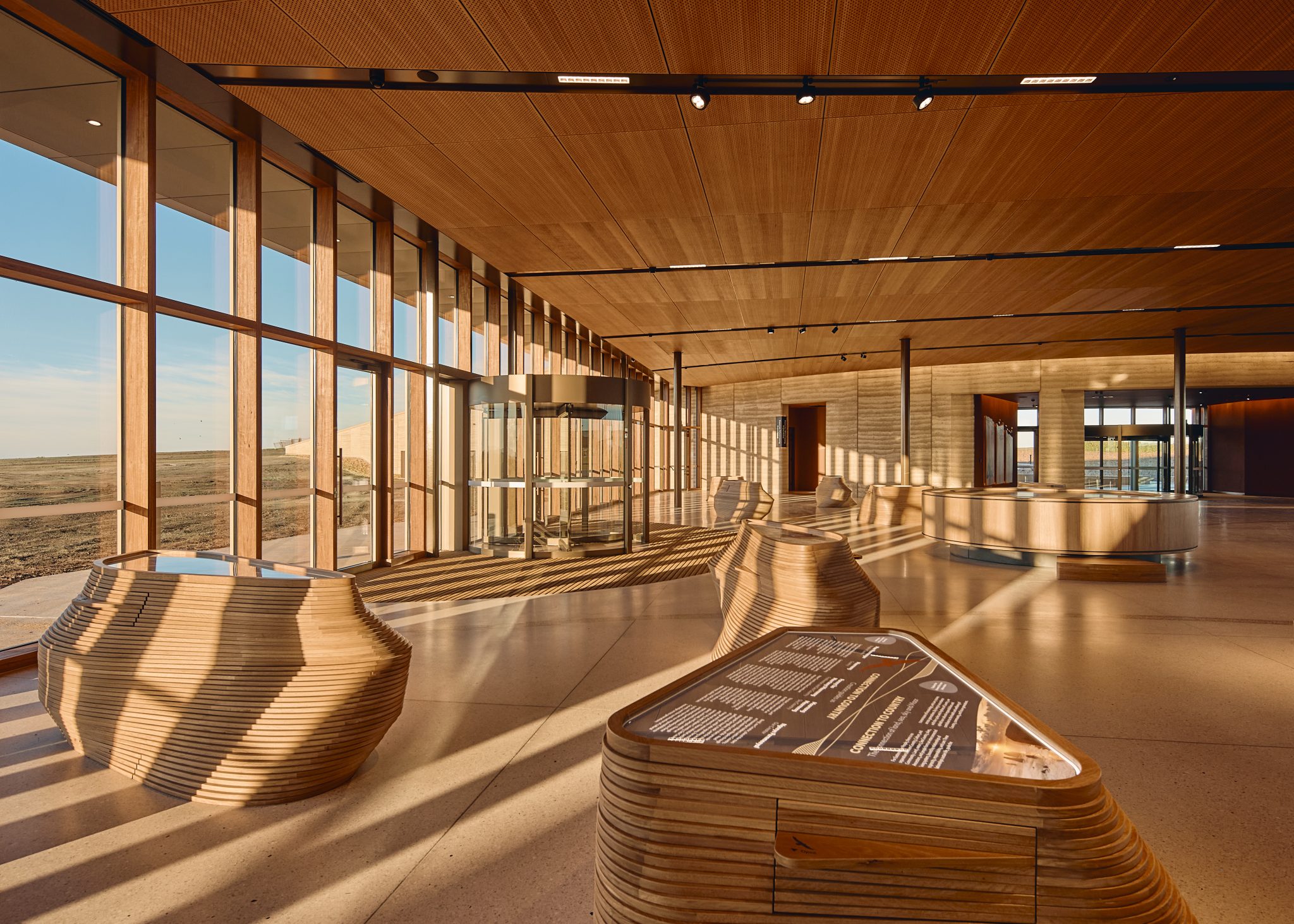
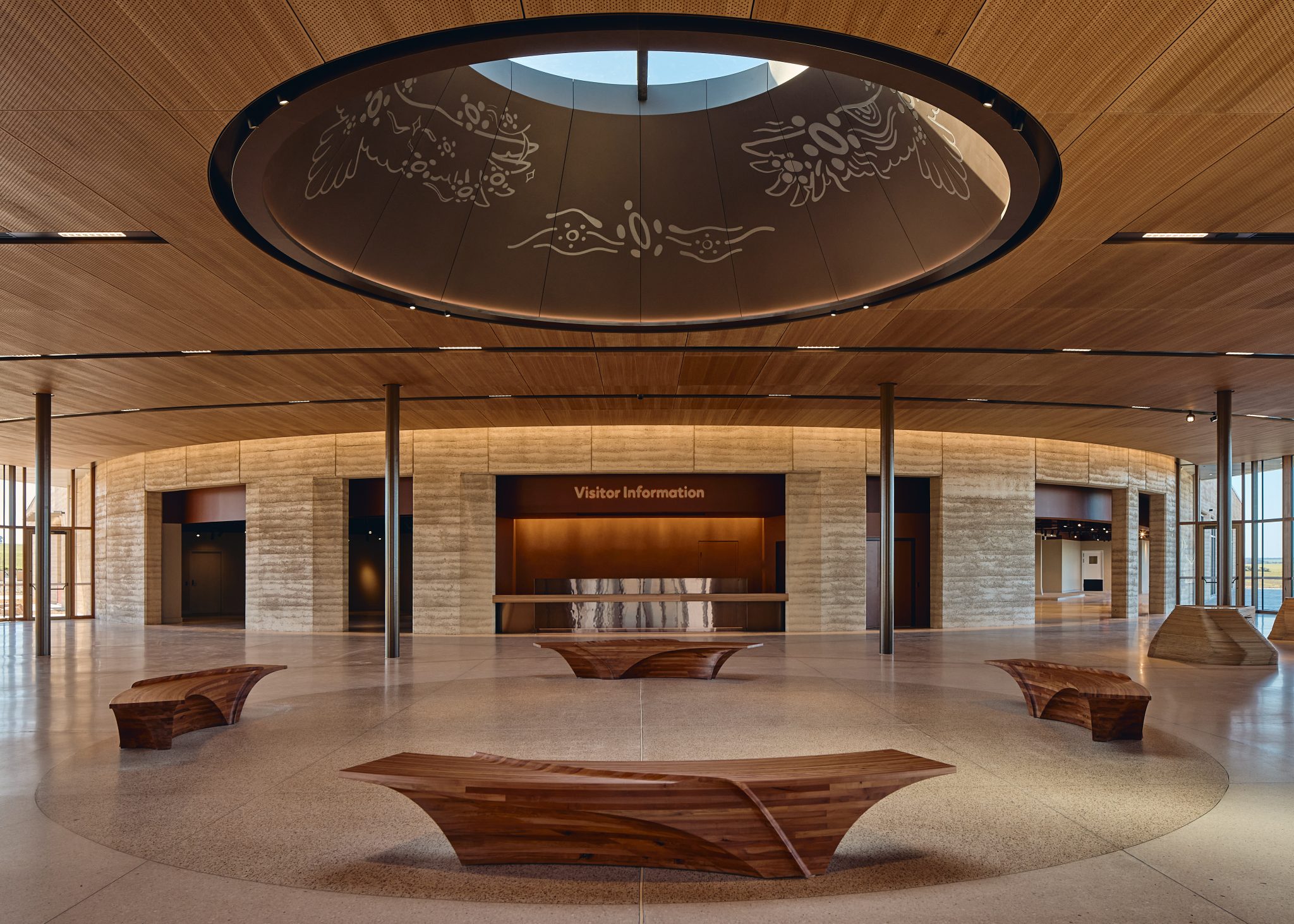
Not just a photo opportunity, the whole experience is rooted in connection and respect for Country. The Visitor Experience Centre is organised as two connected spaces: the Coastal Building and the Hinterland Building. The former contains the principal public-facing spaces and orientation area, while the latter houses the café, retail space and servicing functions. In the main orientation space, visitors are invited to learn about the natural and cultural landscape, as well as the responsibilities associated with moving through Country, before proceeding into the coastal zone.
On the roof, the relationship between architecture and landscape continues with the publicly accessible Great Ocean Lookout. The lookout creates another landscape where visitors can appreciate an elevated vantage point. Fully accessible, the rooftop has an all-abilities route incorporating gathering areas, places to pause and opportunities for interpretation, before visitors continue towards the Twelve Apostles themselves.

“Grimshaw has been privileged to work collaboratively with Eastern Maar Aboriginal Corporation and our landscape architecture partners, ASPECT Studios, on a project that begins with a profound respect for this extraordinary place,” says Andrew Perez, Grimshaw’s Melbourne managing partner.
“The Twelve Apostles Visitor Precinct presented an opportunity to create a more considered relationship between visitors, Country and this extraordinary coastal landscape,” says Matthew Mackay, studio director at ASPECT Studios. “Working closely with Eastern Maar Aboriginal Corporation, the design brings together the Welcome Garden, arrival landscape, trails and pedestrian network to create a connected journey through the precinct and creating opportunities for visitors to engage with Country, culture and place. A regenerative design approach has been embedded throughout the project, with a focus on reducing harm to Country, restoring the existing farmland through indigenous revegetation and incorporating Eastern Maar knowledge and plant use into the visitor experience.”
Images: Peter Bennetts.
You Might also Like


Related Stories

© Niche Media 2026