

Three lessons from Sydney Design Week, with YSG’s Jacob Stavrakis
Three lessons from Sydney Design Week, with YSG’s Jacob Stavrakis

Share
Jacob Stavrakis, an architect working at Sydney-based interior design and architecture studio YSG, shares his reflections from Sydney Design Week, held from 12 to 24 September 2025.
As an architect, I’ve learnt that sometimes too much attention to detail can blur the bigger picture. This year for Sydney Design Week, organisers Powerhouse invited us to take a step back and gain a better perspective from a range of local and international leaders in their field on how design shapes our communities and the way we live together.
The program wove together keynotes, panel discussions and workshops into a rich tapestry of ideas that stretched from Broadway to Bonnyrigg, from which I took away these three valuable insights on community-based design seldom taught in day-to-day practice:
Nature has an ability to connect community and self
The week opened with warmth and humour from Li Hu and Huang Wenjing, founding partners of Beijing-based architecture office Open Architecture. They presented Co-existence, showcasing selected works, including their signature Sun Tower. Rising from the shoreline of Yantai, a Chinese coastal city with ancient ties to sun worship, the tower demonstrates how architecture can harness nature to restore ritual to urban life and draw communities into public space.
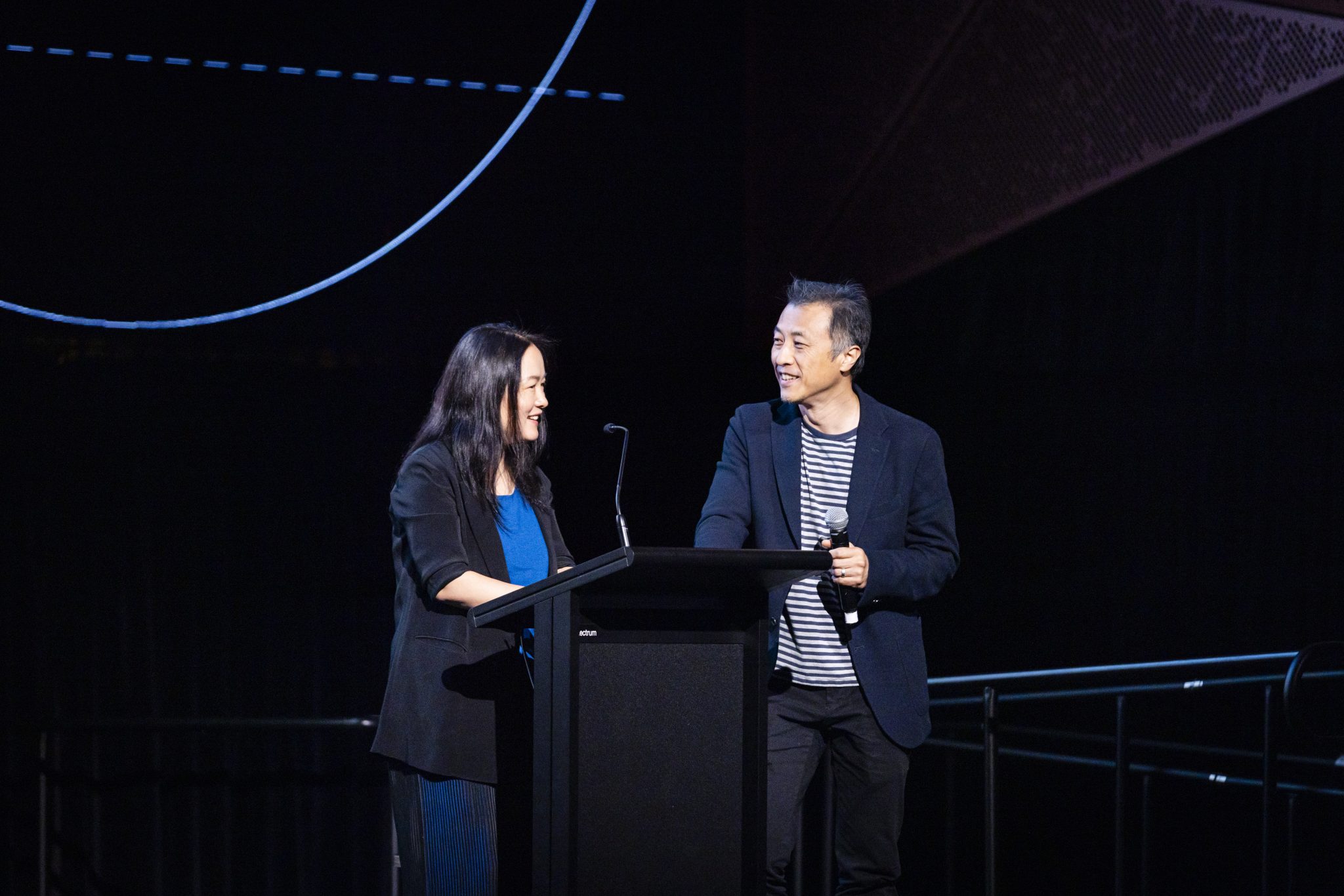
Left to right: Huang Wenjing and Li Hu, founding partners of Open Architecture. Photo: Andy Roberts.
They explained how its conical form amplifies the sound of ocean waves, while other geometries work to tell celestial time. Crowds gathered on the spring equinox to see the tower’s shadow align with a channel in the plaza outside, while on the winter solstice the setting sun beams directly through a concrete tunnel in the form. Li and Huang described how together these events orient us in time and space, gently reminding us of a great universal order.
This architectural theme was deepened by Sites of Ritual, an event which unfolded across religious and community spaces in Bonnyrigg. Venerable Giac Anh illuminated how design principles can bow to Buddhist teachings and create space for ritualistic practice at Phap Bao Buddhist Temple.
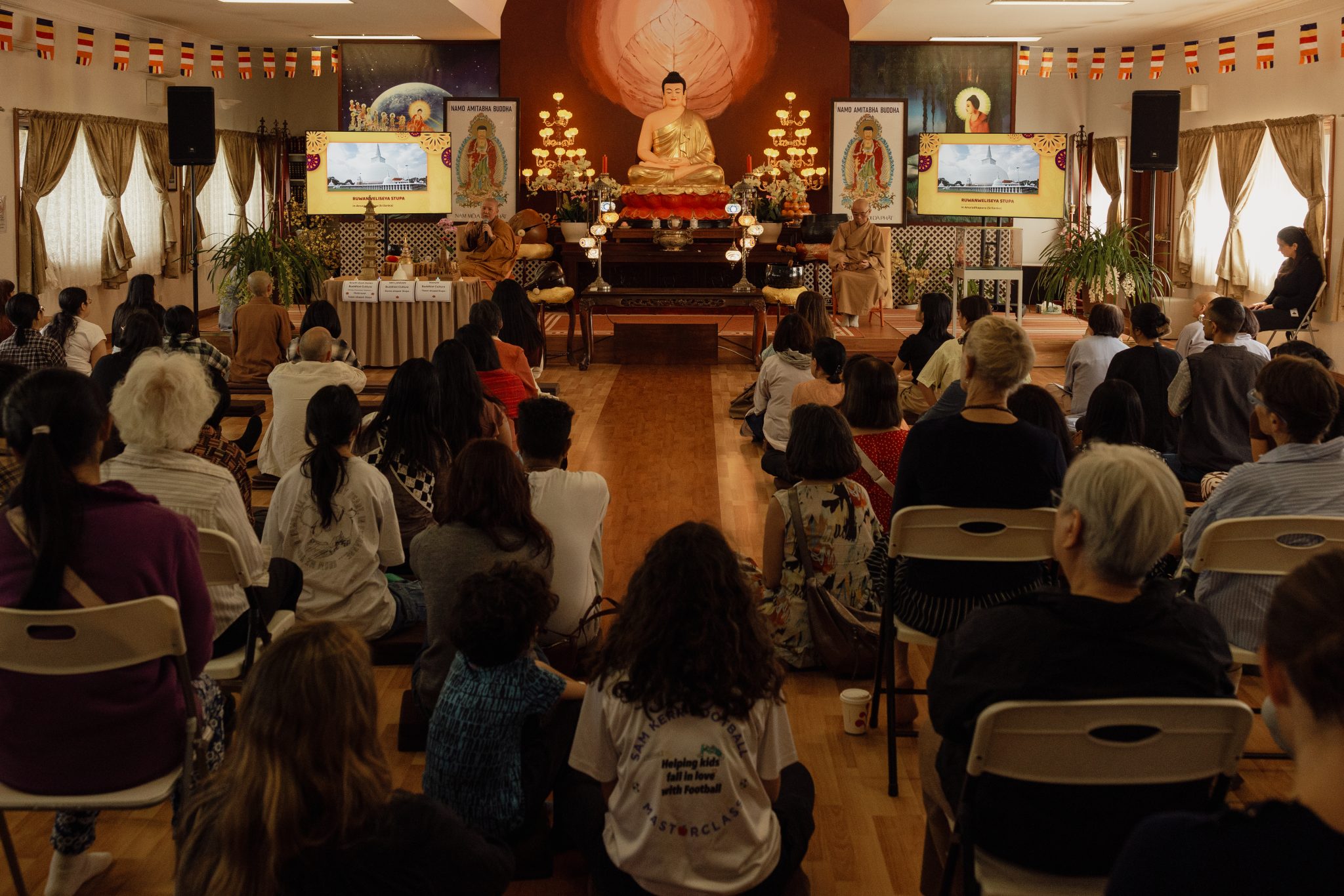
Sites of Ritual. Photo: Clinton Nguyen.
The audience was moved outside to hear more from Venerable Pho Huan, led past a koi pond and stupa still in construction, to gather for lunch beneath a Bodhi tree. It was again clear how nature, together with architecture, can guide us through spaces and encourage pauses of self-reflection and connection to something greater.
Materiality is just one way to strengthen a building
Western Sydney students researching how passive design could improve their schools were prominent among the crowd at Francis Kéré’s keynote presentation Heat and Resilience. There, they heard stories of how a burning curiosity and self-belief could cool down their classrooms and create meaningful spaces.
Kéré spoke openly about the rejection he faced in his hometown of Gando after returning from a carpentry scholarship in Berlin with the vision to build a school out of mud – it was a hard sell for a community where the material had failed time and time again. He went back to his studies to build his knowledge of the material to prove that mud could hold more than just the weight of a building.
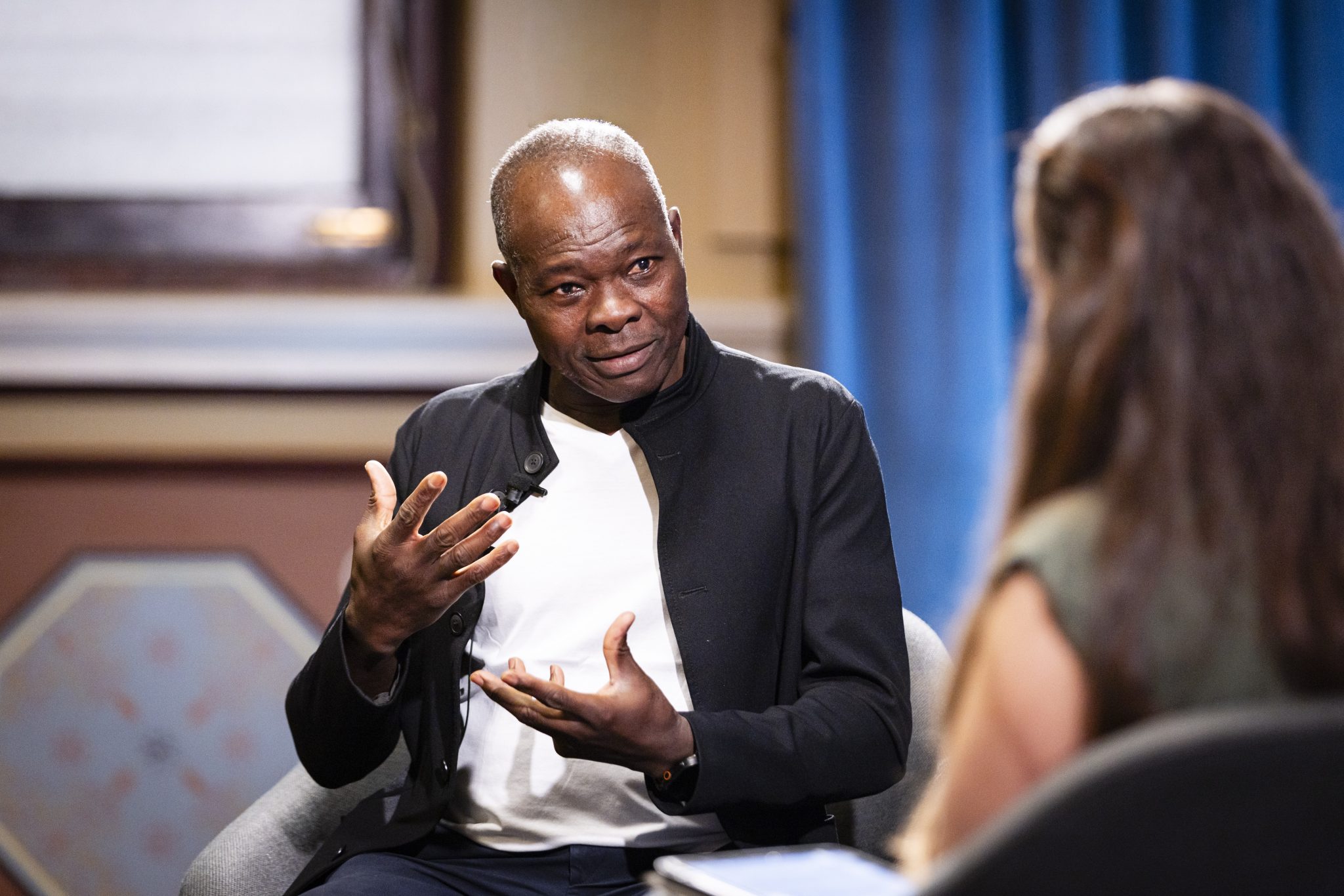

Francis Kéré. Photo: Andy Roberts.
Returning with a renewed conviction and an architecture degree, Kéré now had the community on his side. Building the school became a shared ritual, turning dance into construction as they stamped the earth beneath their feet into cool, textured surfaces. As the completed building stared back at them, it became more than a school made of mud, it was a story of resilience.
Releasing control can allow design to better flow
At the Porous Cities event, landscape architect Kotchakorn Voraakhom spoke of a deep cultural connection between water and the people of Thailand, and how Bangkok’s rapid urbanisation had disconnected the city from its floodplain, worsening the effects of flooding. She explained that survival amid rising sea levels would hinge on living and designing in harmony with water, rather than seeking to work against it. She explored this principle through the dramatic planar tilt of the Chulalongkorn University Centenary Park, showing how landscape architecture can simultaneously mitigate flooding and create celebrated community spaces.
Giving way to greater forces also echoed in Iwan Baan’s presentation Shared Spaces, where his photography revealed the unpredictable life that unfolds in and around architecture, shaping new meaning beyond an architect’s original intent. Juxtaposing the intimacy of human interaction with space, Baan takes to the sky to frame architectural buildings within the scale and texture of their urban landscapes.
This shifting gaze was a powerful reminder that architecture can take on new meaning when we step back and forth between detail and a bigger picture.
Lead image from Sites of Ritual by Clinton Nguyen.
Related: Read Alice Blackwood’s reflections from Adelaide’s inaugural design week in 2025.
You Might also Like
Related Stories

© Niche Media 2026