

Melbourne architect earns global recognition for bold imagining of Dubai public spaces
Melbourne architect earns global recognition for bold imagining of Dubai public spaces

Share
Hamza Khan, a Melbourne architect with Cox Architecture, has been shortlisted among the top 100 entries in an international design competition by Dubai’s Roads and Transport Authority and architectural awards body Buildner.
Drawing entrants from 91 countries – and offering a range of prizes worth a combined cash pool of €500,000 ($890,000) – the Dubai Urban Elements Design Challenge asked designers to reimagine civic architecture within Dubai’s public spaces.
Addressing the region’s challenging environmental conditions and high temperatures, Khan’s reimagining of the desert city incorporates a visionary transformation of Dubai’s 14-lane Sheikh Zayed Road. Khan seeks to reposition the enormous highway underground to make room for a central green corridor, lined by a central canal.
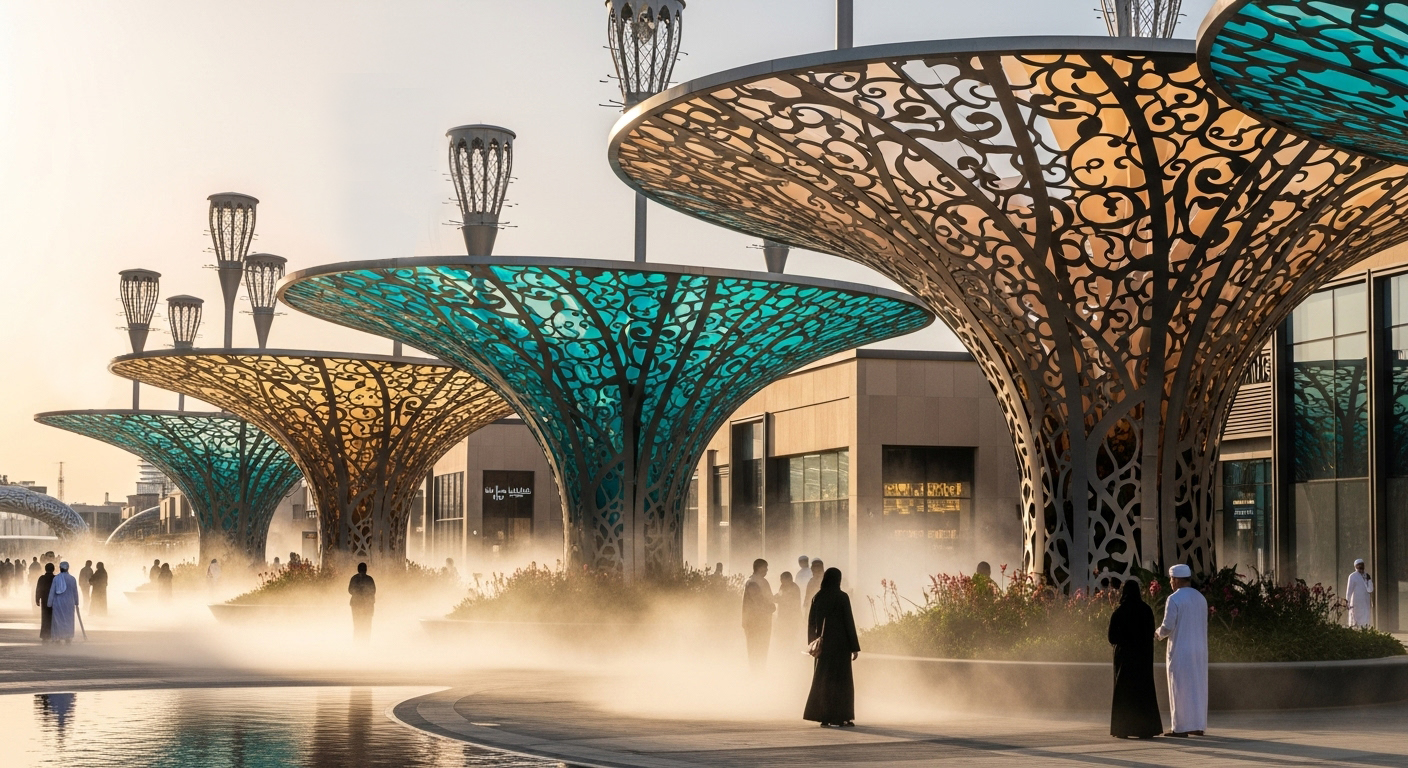
Khan’s proposed Zephyr Peta ‘petals’, which will provide shade and convert canal water into cooling mists.
The proposed green artery aligns with Dubai’s 2040 vision of increased liveability and diminished reliance on cars, providing enclosed pathways for e-bikes and scooters as well as shading systems that innovatively convert canal water into a cooling mist.
A holistic approach to climate, mobility and urban life
Khan’s holistic solution to making Dubai more pedestrian-friendly goes beyond simply placing trees along the pavements. “For me, it was about envisioning urban elements that foster vibrant urban life and show how it can flourish in such a climate,” Khan says.
Chief among his concerns was the unforgiving desert heat. To address this, Khan has innovated a number of climate-responsive solutions that he hopes will reimagine urban life in Dubai. An elevated e-bike expressway will provide a temperature-controlled cycle network, maintaining temperatures at a comfortable 28 degrees Celsius and linking different parts of the city in a sustainable alternative to automotive highways.
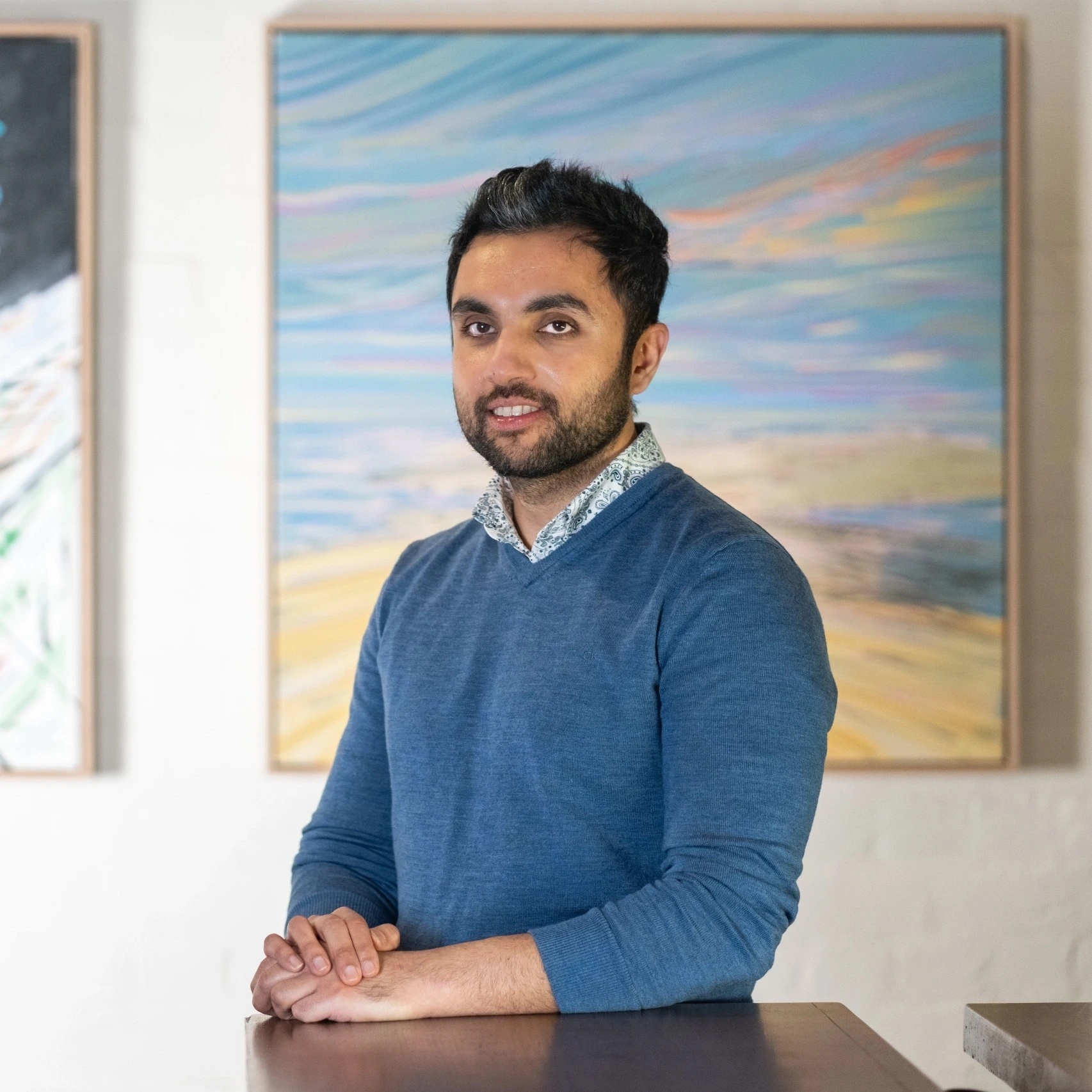
Cox Architecture architect Hamza Khan.
Khan also envisions ‘dunes of play’ – hybrid indoor-outdoor parks that will enable families to gather at all times of the year, regardless of the extreme temperatures in the region’s peak seasons.
Another unique innovation is Khan’s striking Zephyr Peta design, an AI-controlled, water-fed shading system inspired by desert blooms and traditional wind catchers. Measuring four metres in height, the latticed aluminium ‘petals’ provide shade and release cooling mist to keep street temperatures regulated to 28 degrees Celsius.
“Together, these interventions move beyond infrastructure,” Khan says. “They choreograph a new way of living in the desert. They make the streets breathable, the parks liveable and the city itself an invitation to vibrant urban life.”
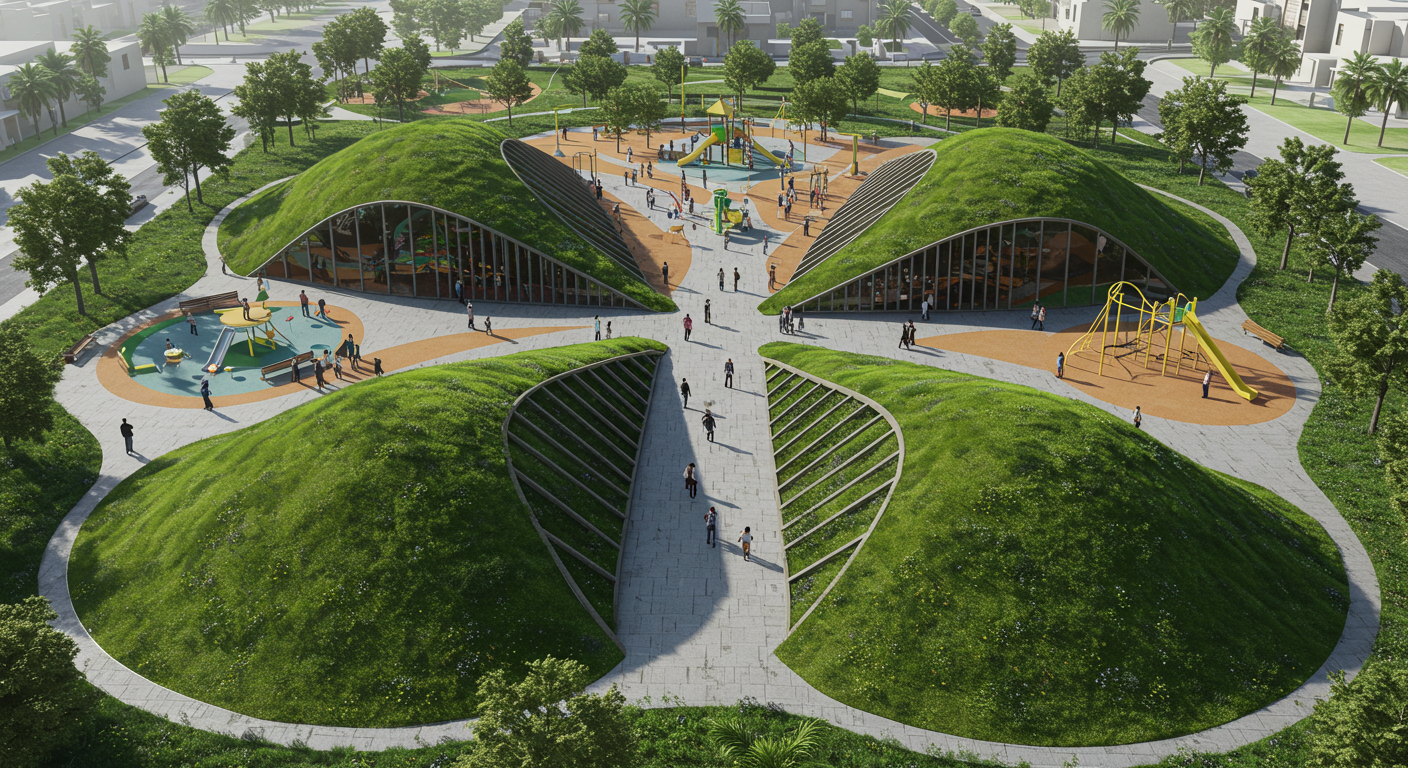
Khan’s vision for ‘dunes of play’, accomodating social meeting places that protect citizens from extreme heat.
‘It doesn’t have to hurt to do good’
While the original competition brief called for designs that would make Dubai more pedestrian- and cyclist-friendly, Khan recognised more was required than adopting a street-level perspective on the issue. The real challenge, he believed, was structural.
“Dubai is a metropolis divided by vast highways, with the 14-lane Sheikh Zayed Road at its centre,” he explains. “Rather than proposing isolated interventions, I reframed the problem at a metropolitan scale. Drawing inspiration from Boston’s ‘Big Dig’, I envisioned moving the highway underground to reclaim the surface for people.”
Creating a network of plazas and tree-lined boulevards in such a way will herald deeper cultural shifts in how extreme-heat built environments are conceived and constructed, Khan says. The end goal is to place human experience, rather than vehicles, at the heart of urban life.
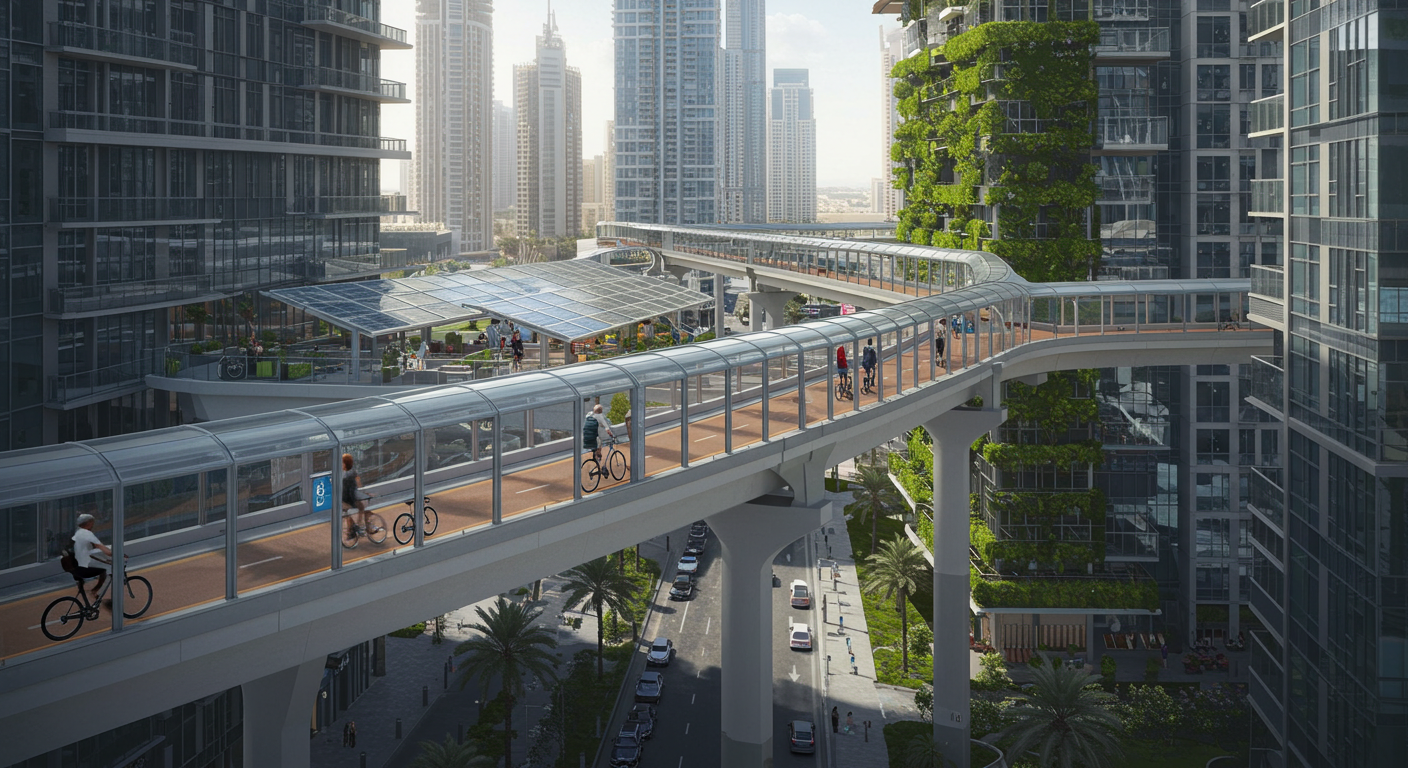

Khan’s vision for Dubai features an elevated, temperature-controlled cycle laneway to reduce the city’s reliance on cars.
“It doesn’t have to hurt to do good,” Khan says. “This proposal shows that sustainability can be playful, inspiring and human-centred by creating vibrant urban spaces that connect communities and celebrate city life.”
It is this close awareness of the human experience that Khan feels the judges most keenly responded to: an ambitious and forward-thinking proposal of how the city’s urban development challenges can be met at their root. As Khan says, his design proposal shows how to “rethink the city’s DNA, not its furniture”.
“It’s a vision that is both transformative and scalable, capable of changing habits, reclaiming civic space and redefining urban life,” he concludes.
The final results of the Dubai Urban Elements Design Challenge will be announced in November.
Imagery supplied.

© Niche Media 2026