

A new Cultural Centre by Architectus hits all the right notes
A new Cultural Centre by Architectus hits all the right notes

Share
A new world-class cultural centre by Architectus has been unveiled at Santa Maria College in Perth, adding to the city’s reputation for delivering leading performing arts education.
Perth has some prestigious theatre chops thanks to the Western Australian Academy of Performing Arts, affectionately known as WAAPA, the alumni of which includes the likes of Hugh Jackman, Tim Minchin, Eddie Perfect, Lucy Durack and Frances O’Connor. Now, thanks to the new Cultural Centre at Santa Maria College, the city’s renowned arts education is reaching a younger cohort.
A world-class facility
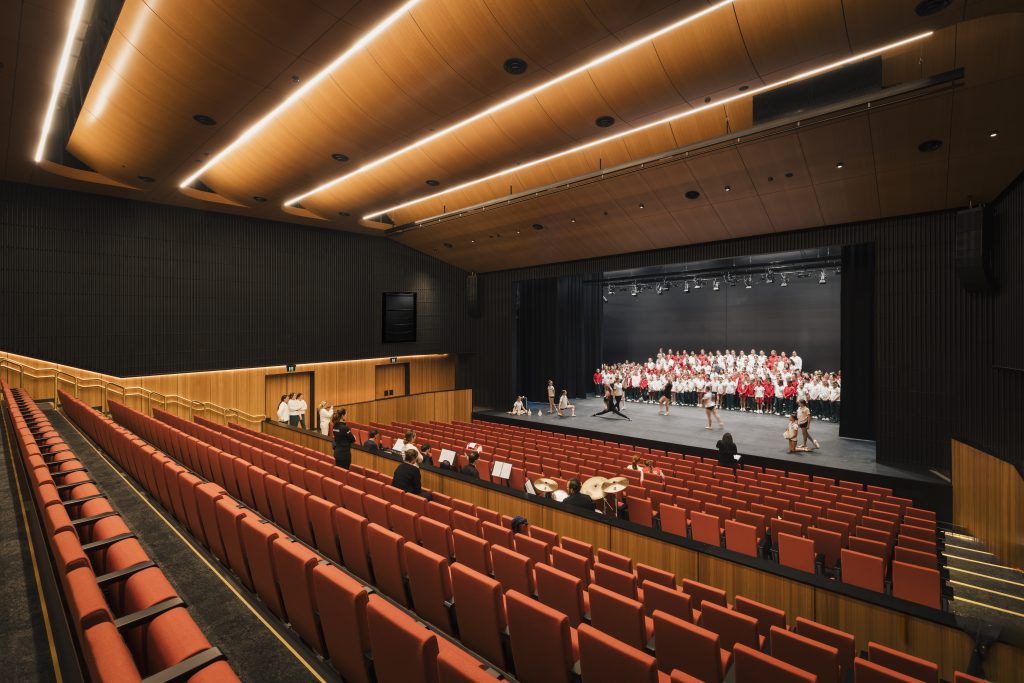
The new purpose-built centre delivers a professional-level theatre experience for all students, whether they’re on stage, backstage or in the audience. Designed to meet the school’s current and future needs, the Cultural Centre has a 642-seat theatre, professional-grade technical equipment – including lighting bars, follow spot platforms and rigging hardware – and supports a fully immersive theatre environment. With multiple uses in mind, Architectus delivered a flexible design that’s equipped for anything: from school productions and music concerts to public speaking and assemblies.
Multifunctional, interdisciplinary spaces – comprising a dance studio with a fully sprung floor, a flexible 140-seat black box theatre, a green room that doubles as a classroom and back-of-house areas – complement the main theatre offering. Each space has been carefully designed to maximise adaptability, providing a triple-threat setting for teaching, learning and gathering. The Cultural Centre will also be used for staff, parent and alumni events.
Shining a spotlight on hands-on learning
Destined to be the envy of theatre kids the world over, the new Cultural Centre is designed for immersive learning, creating, rehearsing and performing, giving students the ideal environment to learn practical industry skills. The school’s investment recognises that participation in the arts is critical to building students’ confidence, creative problem-solving and leadership skills.
Santa Maria College principal Jennifer Oaten says the 30 July opening of the Cultural Centre marked a significant moment in the school’s future. “While our new Cultural Centre provides excellent performance facilities, this space provides opportunities for all our students. The building honours our history and those who have come before us, connects well with our current campus buildings and is a space that has warmth and will inspire a sense of wonder and possibility. As our opening night theme ‘Dreaming to Light’ reflects, our dream has now become a reality.”
Act 1 in a campus masterplan
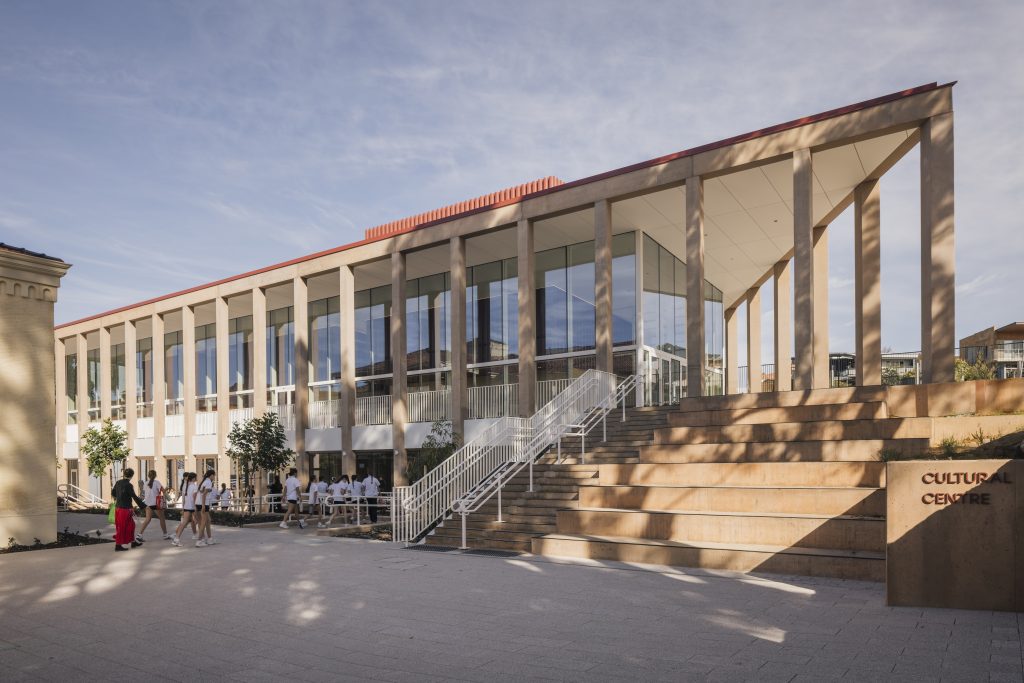
The Cultural Centre is the first major building to be completed as part of a campus-wide masterplan. Set into the sloping grounds of the college, the two-storey building features a single-pitch roof that creates a modest profile against neighbouring residential buildings to the south. In contrast, the northern side of the building creates an impressive tripe-height connection to existing school buildings.
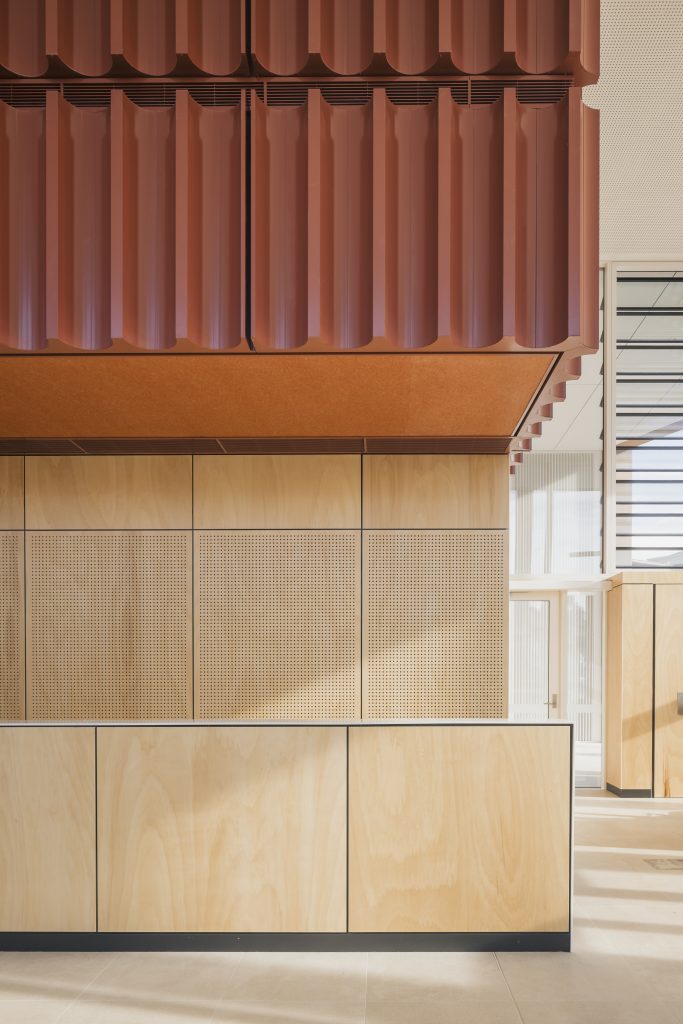
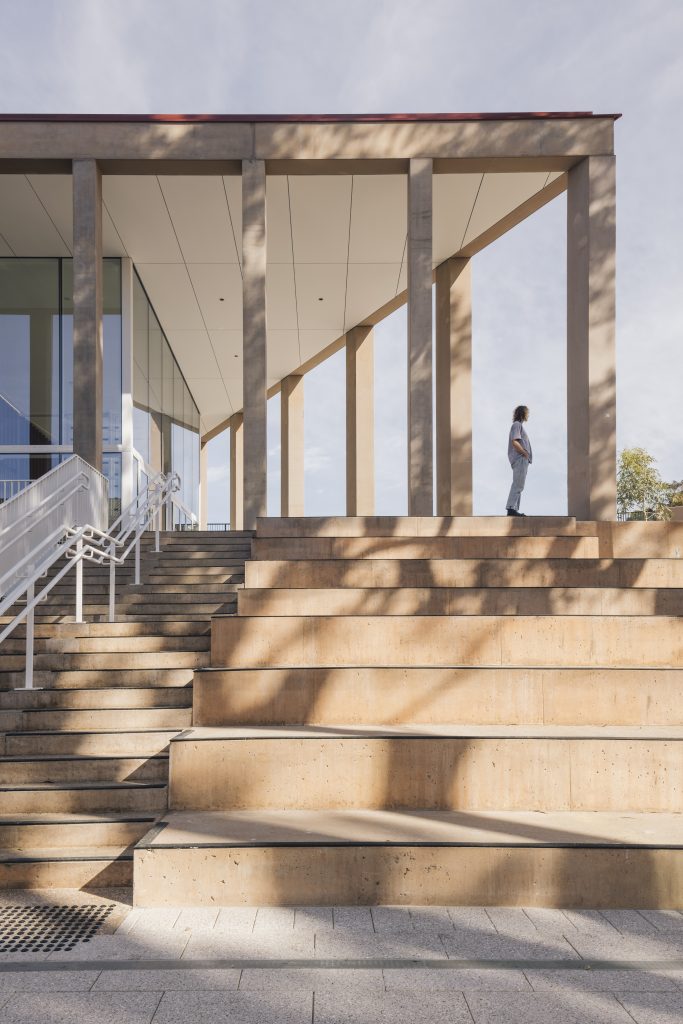
Located behind the historic McAuley building, which houses the reception and college chapel, the new facility draws on the College’s village-like campus character for its design inspiration. Sweeping colonnades of pumice-pigmented precast concrete offer a nod to the existing verandahs and covered walkways, while the two terracotta-toned theatre volumes are wrapped in ribbed aluminium – a reference to both the folds of a stage curtain and surrounding terracotta roof tiles.
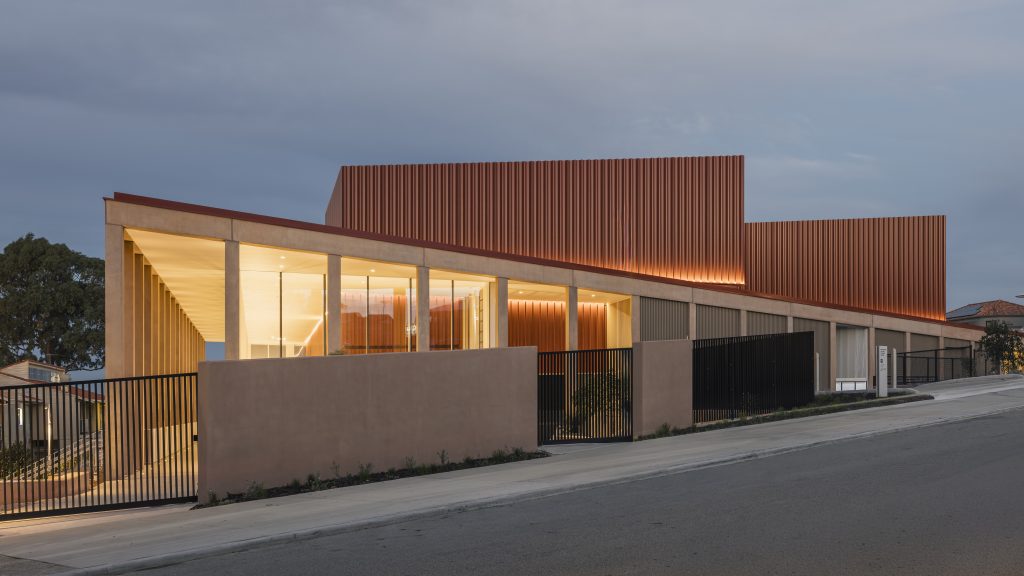
Complementing the design, public art by Santa Maria College alumna Ellen Norrish is woven through the entrance spaces. Drawing on the school’s archives and local stories, and developed in consultation with a First Nations representative, her hand-drawn studies of historical and landscape objects have been translated into delicate etchings that trace their way along circulation routes and reveal elements of the College’s decades-long history. By integrating the work of a former student, the design is both an inspiring reminder of what the students are capable of and a celebration of where they’ve come from.
Images: Nicholas Putrasia.
You Might also Like

Related Stories

© Niche Media 2026