

30UNDER30 shortlist judge Steven Toia understands the power of peer support
30UNDER30 shortlist judge Steven Toia understands the power of peer support

Share
Now in its fourth year, Australian Design Review’s 30UNDER30 program has established itself as the leading mentorship and career development program in the architecture and design industry. The unique program brings together game changers, industry leaders, practice founders, product manufacturers, suppliers and sponsors to celebrate and empower the young interior and product designers of the future.
Steve Toia started his own award-winning practice, Genton, in 2010, when he was just 30 years old. He says his formative experiences within a dynamic peer group, undertaking a couple of hugely influential university exchanges and being given leadership responsibilities as a young man gave him the confidence to branch out on his own. And he’s passionate about the next generation following his lead… while learning from them too.
Australian Design Review: When young new designers come to Genton, what are the most important things you tell them about the A+D industry?
Steve Toia: To engage and enjoy the work. The more they do that and get themselves proactively engaged in their work, the more they will learn from it and from others. And the more rewarding they will find the process. I tend to find that action leads to success, because when you act and move ahead with a design, you get feedback and that will either reinforce that what you’re doing is successful or it will show you how you may improve.
With younger designers, such as those who will make up the 30UNDER30 cohort, do you see any elements that may have been lacking in their education? Are they missing anything?
We get students through and the first thing I should say is that they are absolutely talented for the level they are at. It has to be acknowledged, however, that they’re still on their learning pathway, because architecture is such a long learning process, and because of the nature of the work and the designs and how long feedback takes from the time that you do a design to actually seeing it come to fruition.
I do feel that young architects have to realise that it will take that time to learn and understand such things as ‘why are we drawing what we’re drawing before we go in?’ In the past, when it was more laborious to produce a drawing, it meant we stopped and paused and thought more about why we were drawing what we were drawing – to communicate what we needed our stakeholders to understand. Now it’s so quick that you can jump in and start a model, but we need to stop and pause, and think about the ‘why’.
Conversely, what do you think established practices can learn from the new talent coming through?
I think it’s the energy and enthusiasm and new creativity that they can bring to the culture of the practice and the team. Plus, it’s just more dynamic and iterative ways of working – keeping the robustness of the processes of the past, but finding new agile ways of working, because we’ve got to become more dynamic and move with the times. I think that’s the balance between my first and second answers.
Digital natives have a whole different way of approaching processes, don’t they?
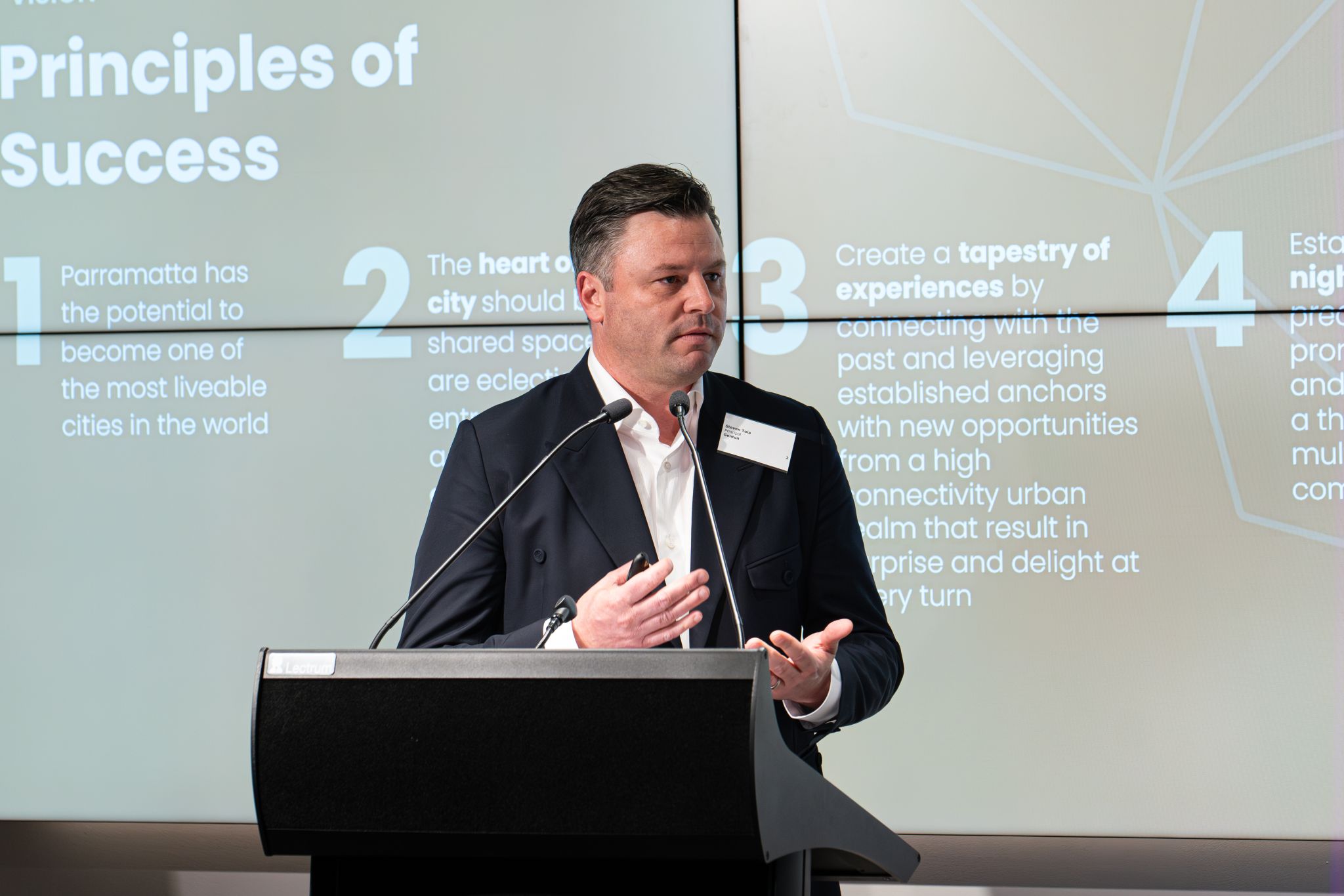
Yes, and we’ve grappled with that ourselves in our practice – how digital the design process is and how I like a tangible design process that enables more people to see it than are actually involved in the process… The models of old and pin-ups around the studio make things more visible, which means that other mentors and senior members can get involved, saying, ‘Oh have you considered this?’ to the younger architects. So we try and keep the design process as visible and tangible as possible to enable more points of mentorship and reference around the studio.
Talking about mentorship, what were your first thoughts when you heard about the 30UNDER30 program?
I thought it was great! In architecture you can often become absorbed in your projects and then you become busy with your practice. But then there’s this other whole layer of industry and design and the built environment. I think when you can find the time to be involved at that level, it is hugely rewarding. And every time I have become involved, I always learn something. And so, selfishly, I’ve always gained a lot out of that.
Why did you want to become a shortlist judge?
I tend to find I get more out of it than what I could even give! I’m not sure if that sounds right as an answer, but I just love being involved. I think the community’s great. I think the more that the architecture community can help support each other, the better all of us will be and our built environment will become. I’m just passionate about the industry, design and the built environment together.
Did you do anything similar when you were a young architect?
I was involved in the New South Wales Young Architects Committee. It was then called DARCH. And that was such a great cohort of people to be involved with. It was very energetic and exciting.
So I think that, yes, these younger architects can learn from mentors, but they can also learn from each other, because what they’re going to be experiencing in one practice maybe different to another. So I think there are also learning opportunities horizontally among themselves.
I also did two exchanges while at university. I really thought university should be a place to research and test without the constraints of the commercial environment. So I was fortunate to do an architecture exchange from the University of New South Wales to KTH in Stockholm. That really helped me develop my design thinking, because it took me out of my usual context. It also enabled me to travel and visit first-hand a number of architectural projects, cities and public projects. And then subsequently I enjoyed that so much I did another exchange to the Netherlands, to Erasmus University in Rotterdam.
Were there any other formative experiences?
I think the other thing was being asked to go and take on the role of general manager of the Kannfinch Melbourne office, when I was in Sydney. This meant moving interstate, taking up the leadership of an office at a fairly young age and really learning through trial and error about what works and what doesn’t in architectural practice at the pointy end of an office. That was a great confidence-building exercise for me when I took that on.
What skills and traits are you looking for when you’re hiring new staff?
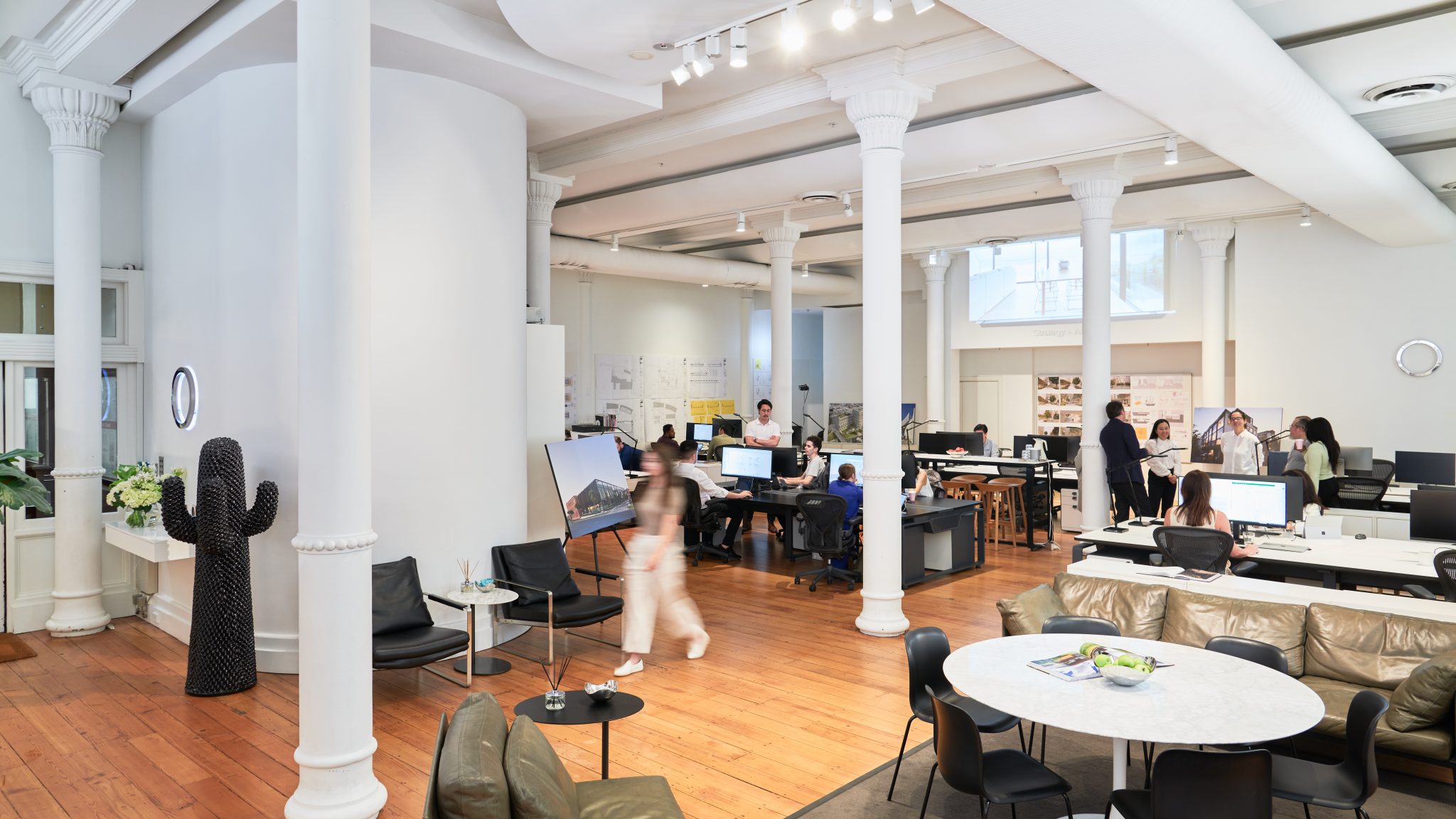
Obviously, you want to see natural talent, but it’s really that personal drive, that personal perspective and drive, and that passion. We look for people who are willing to engage, get involved and put themselves out there… they’re proactive, creative, they can move across different design tools, they can articulate a design narrative and an approach, and they can get involved in a critique and a conversation. And they can build their confidence to do so with our support and really have a sense of ownership of seeking out the answers, asking ‘why?’, so we really encourage them to be vocal and get involved.
And what will you be looking for in the candidates for the 30UNDER30 shortlist?
Understanding what people are trying to explore and research in their work beyond the traditional expectations – what is it that they’re doing over and above? Though I’m not really sure exactly what I’m going to be seeing yet to be honest!
To finish with a curly one… can you tell when an application has been generated by AI?
You can certainly tell if you do engage with that person and it doesn’t match what they sent you in the first place. So even if you were to miss it on the first pass, you certainly know when you speak with the person, so the [application] still needs to be personally reflective because it’s a representation of yourself.

Important dates for ADR‘s 30UNDER30 program:
- 26 October 2025 Entries close
- 4 December 2025 Shortlist announced
- 18 January 2026 Shortlist video submission
- 12 February 2026 Final 30 announced
- May 2026 High-performance leadership and creativity retreat in Bali
You Might also Like

Related Stories

© Niche Media 2026