

30UNDER30 practice partner Bradhly Le on the power of crafting by hand
30UNDER30 practice partner Bradhly Le on the power of crafting by hand

Share
Now in its fourth year, Australian Design Review’s 30UNDER30 program continues to champion the next generation of Australian design talent. Bringing together industry leaders, practice founders and emerging voices, the program celebrates comprehensive mentorship across all areas of the interior design and architecture industry.
Rizen Atelier has come aboard as the latest 30UNDER30 practice partner, with a studio philosophy rooted in collaboration. For founder Bradhly Le, the partnership felt like a natural fit.
“It’s about time we celebrated the youth and the future of the design industry,” he says. “We all started there once and this program helps elevate the emerging designers who will shape what’s next.”
Equally important to Rizen’s bespoke design philosophy is its respect for analogue craft and digital innovation. While the studio openly embraces technology, it still celebrates the tactile, hand-drawn process of design.
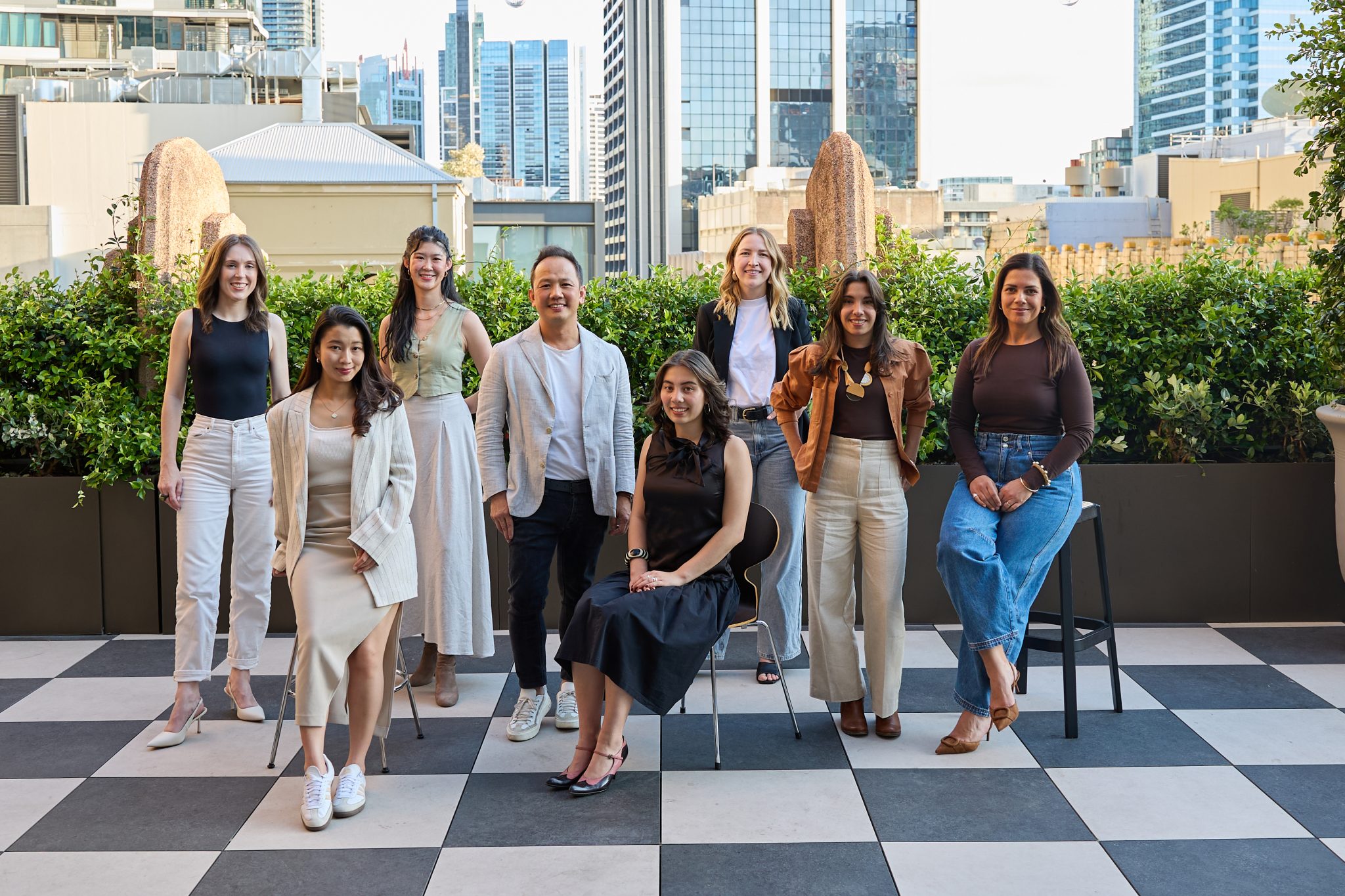
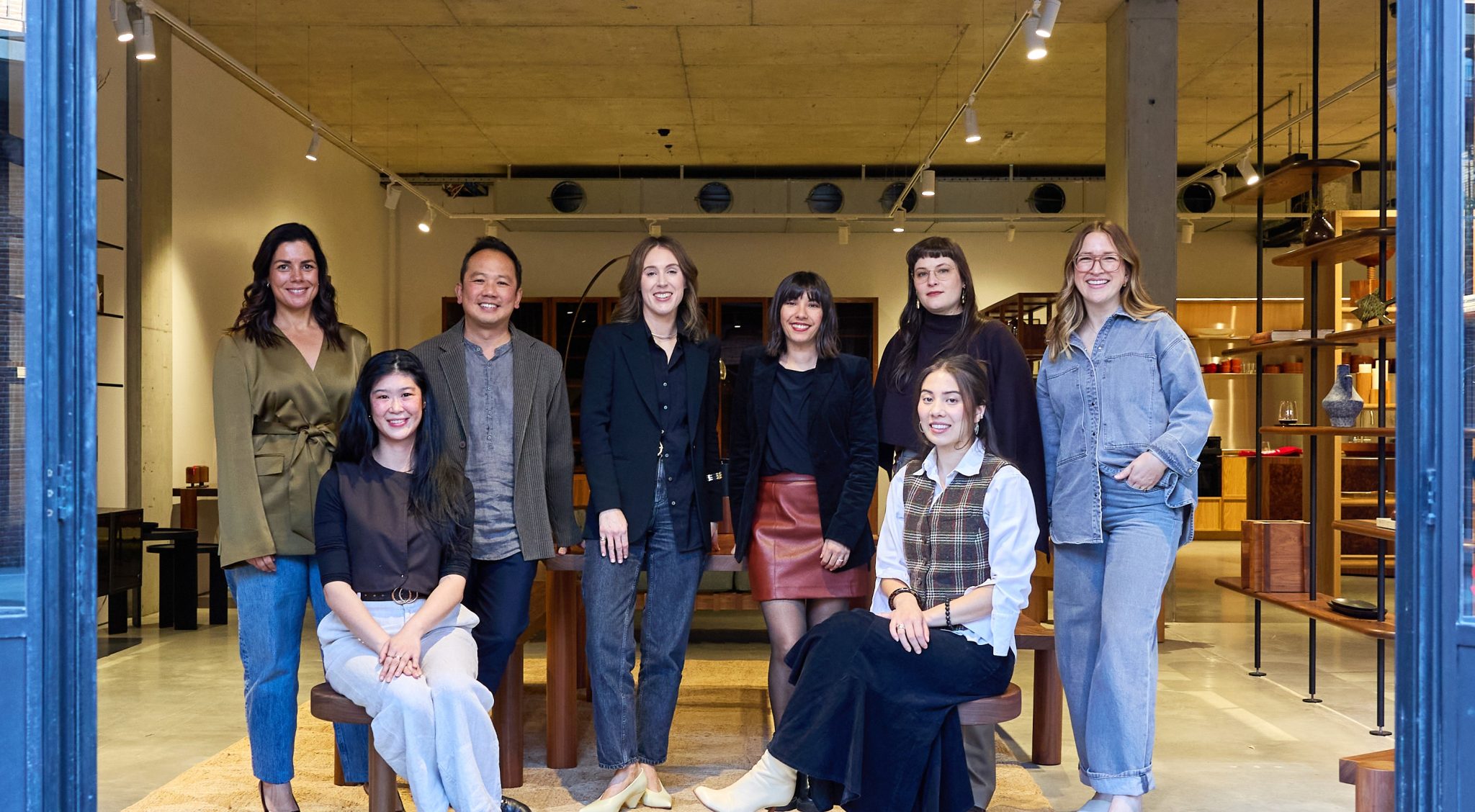
The Rizen Atelier team.
As the latest practice partner to join 30UNDER30, Le welcomes the program’s potential to nurture curiosity and confidence within the next generation of designers. “Don’t hesitate to register,” he says. “This is your platform to share your ideas, your perspective and your passion. You’re unique, and that’s exactly what the industry needs.”
Australian Design Review: The interior and product design landscape is constantly evolving, particularly with social media. What do you think emerging creatives should be working on, not just to develop their skills but to get their voice heard?
Bradhly Le: It’s so true, isn’t it? There is so much more visibility that young designers have access to compared to what we had as emerging creatives. I believe that as designers progress in their careers, it is important for them to work out authentically what they want to say about themselves and not be inundated with all the noise and trends they see on social media. There’s a lot of content out there.
So if designers can find that passion or the area of design that really excites them, and use social media as a platform to connect and communicate, I think everyone should be doing it.
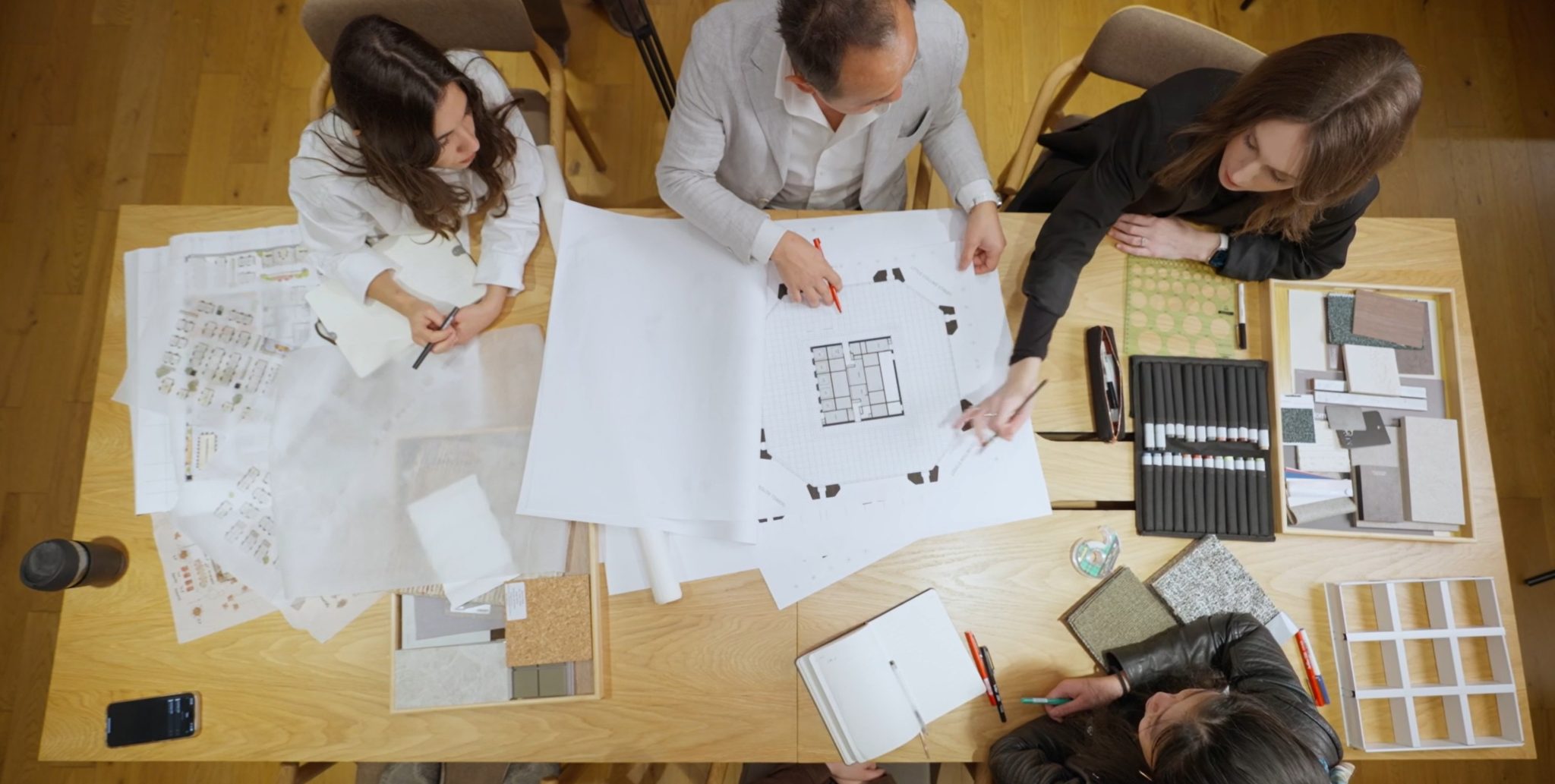
Rizen adopts a keenly handmade approach, with team-building dialogue at its core.
We use social media within our studio because we would fall behind if we didn’t. With a large business, and as an individual, it’s important to be able to convey your message to a wider audience, and I think social media is a good way of doing that.
ADR: A key component of successful design projects is collaboration, often across many different disciplines. How does Rizen approach the need for collaboration, both within your practice and externally?
BL: We’re very collaborative because we know we can’t possibly understand everything on a project by ourselves. We wouldn’t build an airport without an aviation expert; we wouldn’t design a hospital without a health planner.
So respecting and acknowledging each other’s skills and expertise, and good communication, is something that we do a lot of. We want to know that what we have been asked to create is possible, and this simply means collaborating with all the subject matter experts on the project.
Collaboration, for us, is the core of how we operate as a studio. It’s how we maintain our relationships, and we respect others in the collaboration process. It actually is a really good outcome in the end when contributions are shared, so that everyone wins.
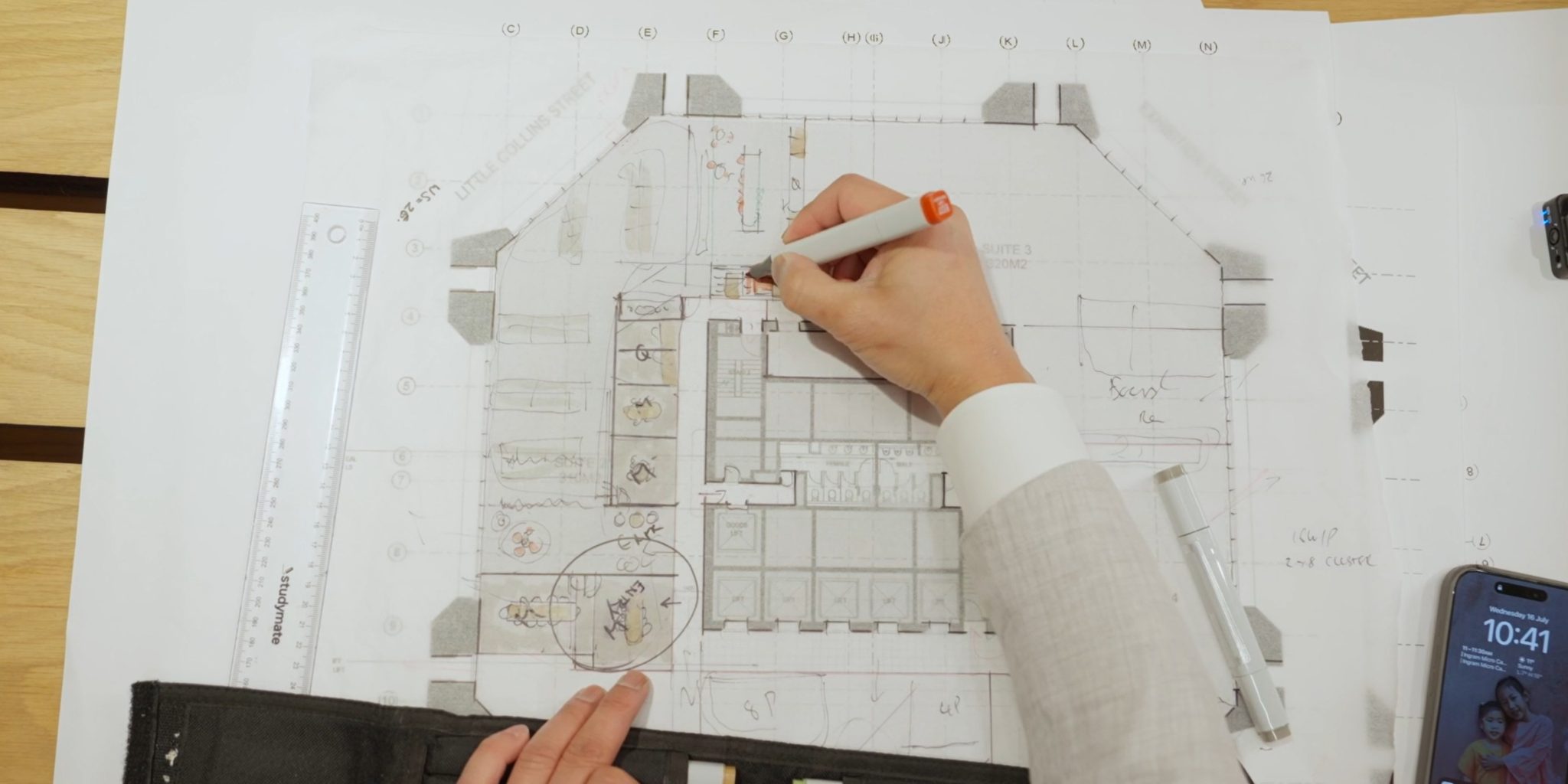
The art of hand-drawn design is passionately practiced at Rizen Atelier.
ADR: What are the guiding design philosophies within your practice, and what qualities help you stand out within the Australian interior design and architecture industry?
BL: I think the key for us, and the reason we can remain boutique, is that everyone in the studio can actually do a lot of everything. Which means we’re able to provide much better communication, in terms of the design; being able to present technically as well as creatively; present a budget; present documentation; and ultimately share different loads on a project.
Every one of our designers is able to do that cohesively and this is an important part of building team resilience. There’s always a particular strength everyone comes with naturally that is either shaped by their history or in their DNA, but there’s also an innate part of the design process that designers want to develop or grow into.
Sometimes you just like to do the things you’re comfortable with, but there is always a part of you that wants to get better at something else. Designers who work with us will have an opportunity to get their hands across all levels of a project.
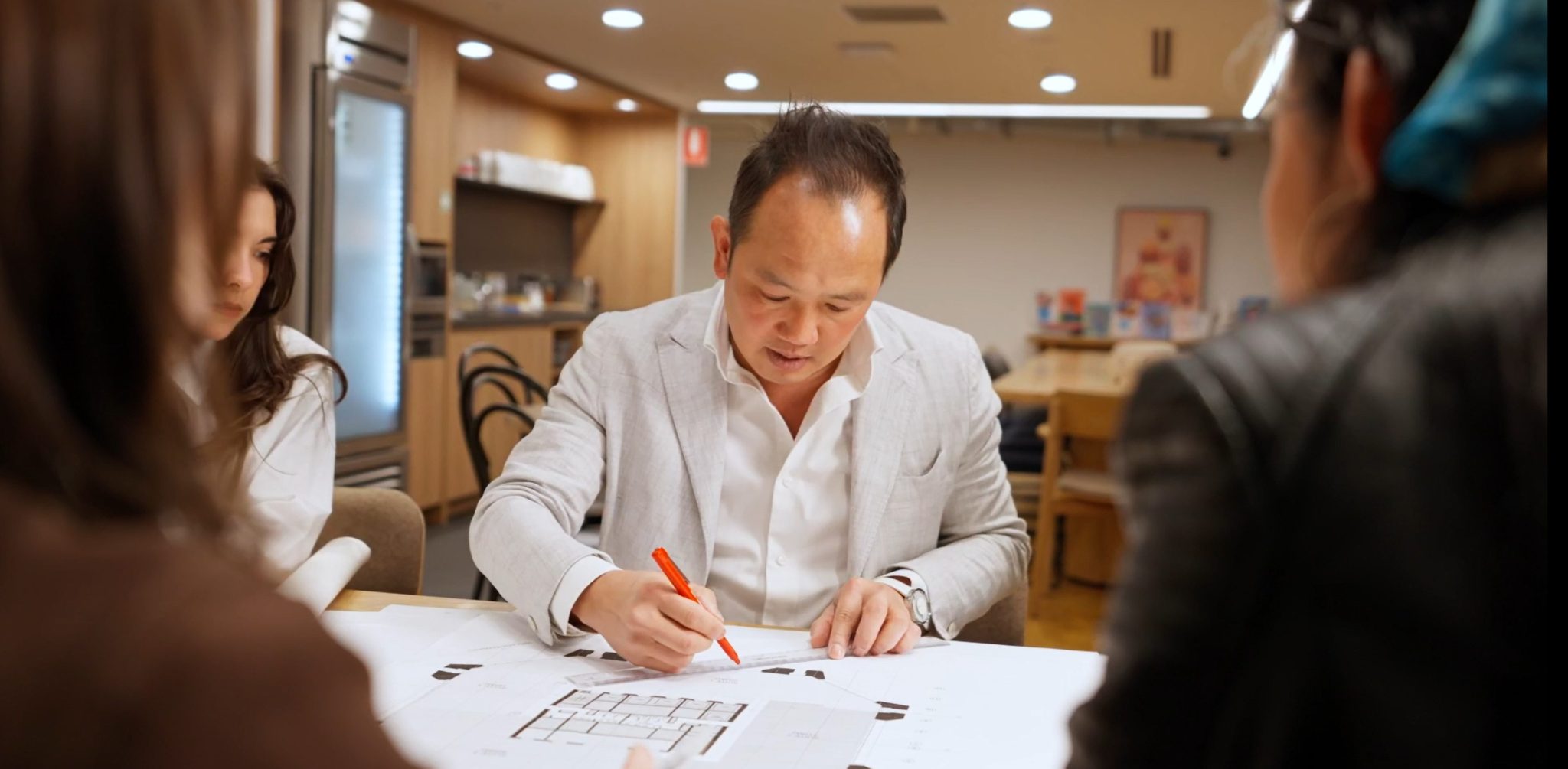
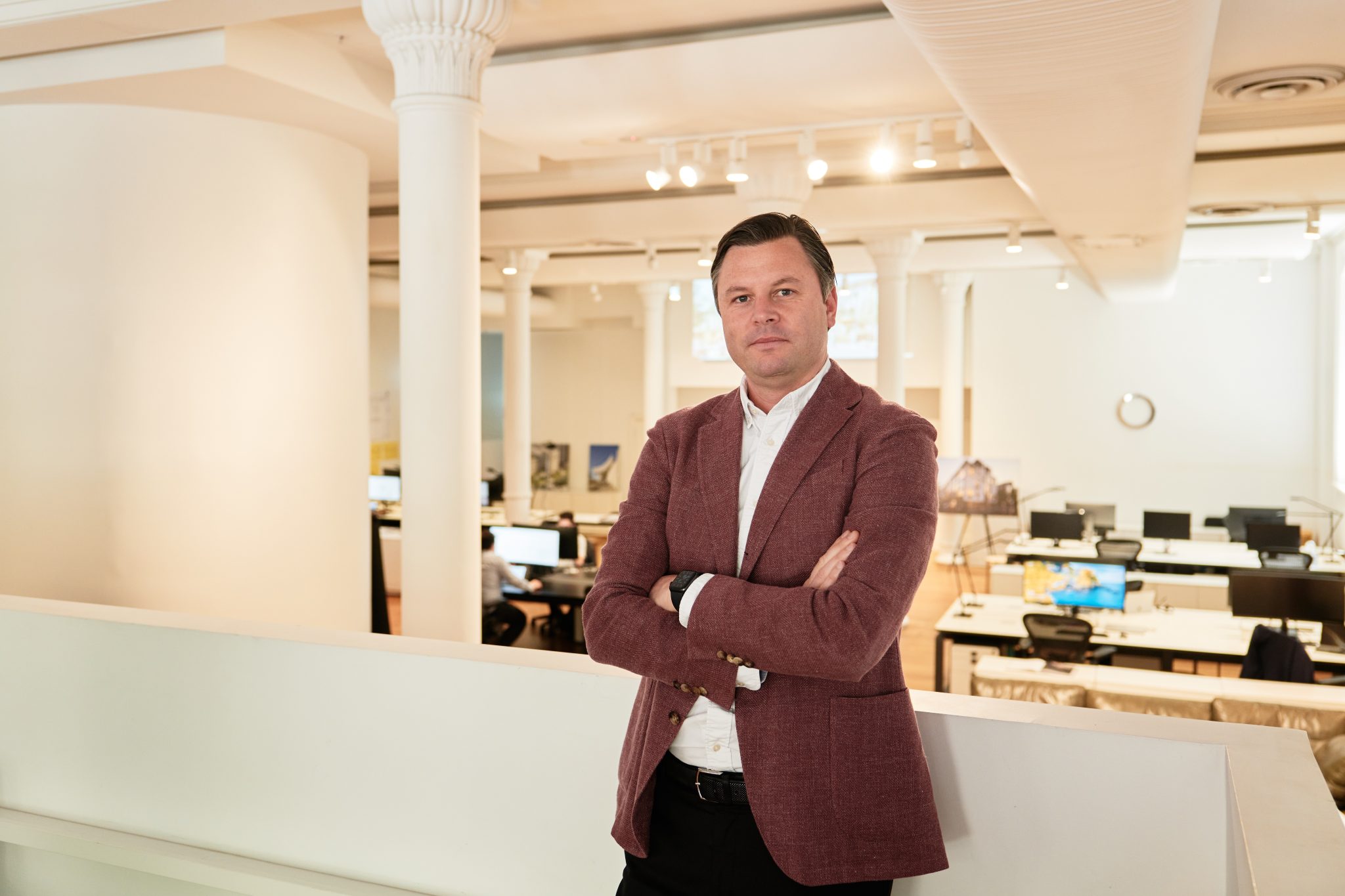
Bradhly Le at the Rizen studio.
The design process starts from when you have your first conversation with a client to the time you carry them through the front door. Our designers love all parts of this design process, and that’s what we look for.
ADR: When did you first become aware of ADR’s 30UNDER30 program, and what drove your decision to become a practice partner?
BL: This was a few years ago. I thought it was about time that we celebrated the youth and the future of the industry, and the fact that ADR decided to do this is fantastic. It’s elevating the designers of the future, and they are going to be a massive part of the future that’s evolving so quickly.
In the program itself, the things that we would look for are something quite progressive, someone who’s thought outside of the box. The work that they present is something that actually solves a real problem; it’s not credited purely on how it looks, but on the real issues that are addressed and solved. That’s key.
ADR: Do you have any staff members who are aged 30 and under? If so, what would you say these designers bring to your practice?
BL: Yes, we have a young graduate architect who is under 30. Even having an architect graduate in an interior design practice has been quite good, because she brings a different level of perspective and conversation to interior design.
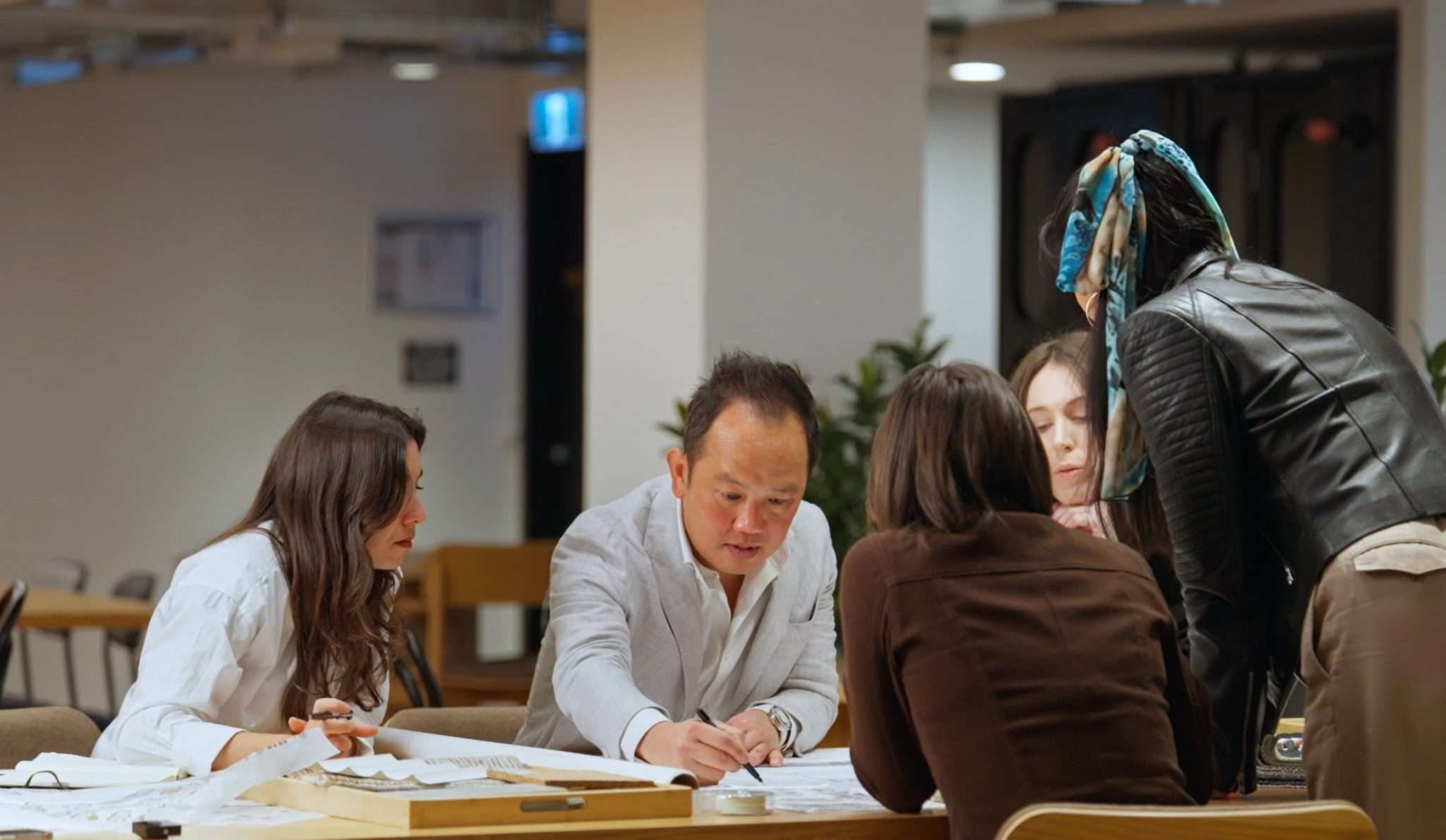
Shaping the future of young Australian designers begins with first-hand experience.
This is about elevating experiences within a building, being equally as important as the shell that embraces the interiors. Having Paris Dickins, as a 21-year-old architect, curious about everything we do – in terms of interiors will help shape her to be a better architect – is actually quite special.
We also have another young designer who’s turning 30, who is also participating in the 30UNDER30 program. Having someone in the early parts of her career, able to adapt and jump across all different aspects of the design process, has been a really good way for her to develop diverse thinking and gain robust skills.
Young designers have a fresh outlook on things and they ask really simple questions about the things that we have been talking about for years. You know, why is a brick a certain dimension? Why is a brick that shape?
It has been great to have really simple questions challenge us again. That’s the beauty of under-30 designers.
ADR: How do you imagine the next generation of designers will shape their industry in the future, and what does Rizen contribute to this up-and-coming influx of interior designers and architects?
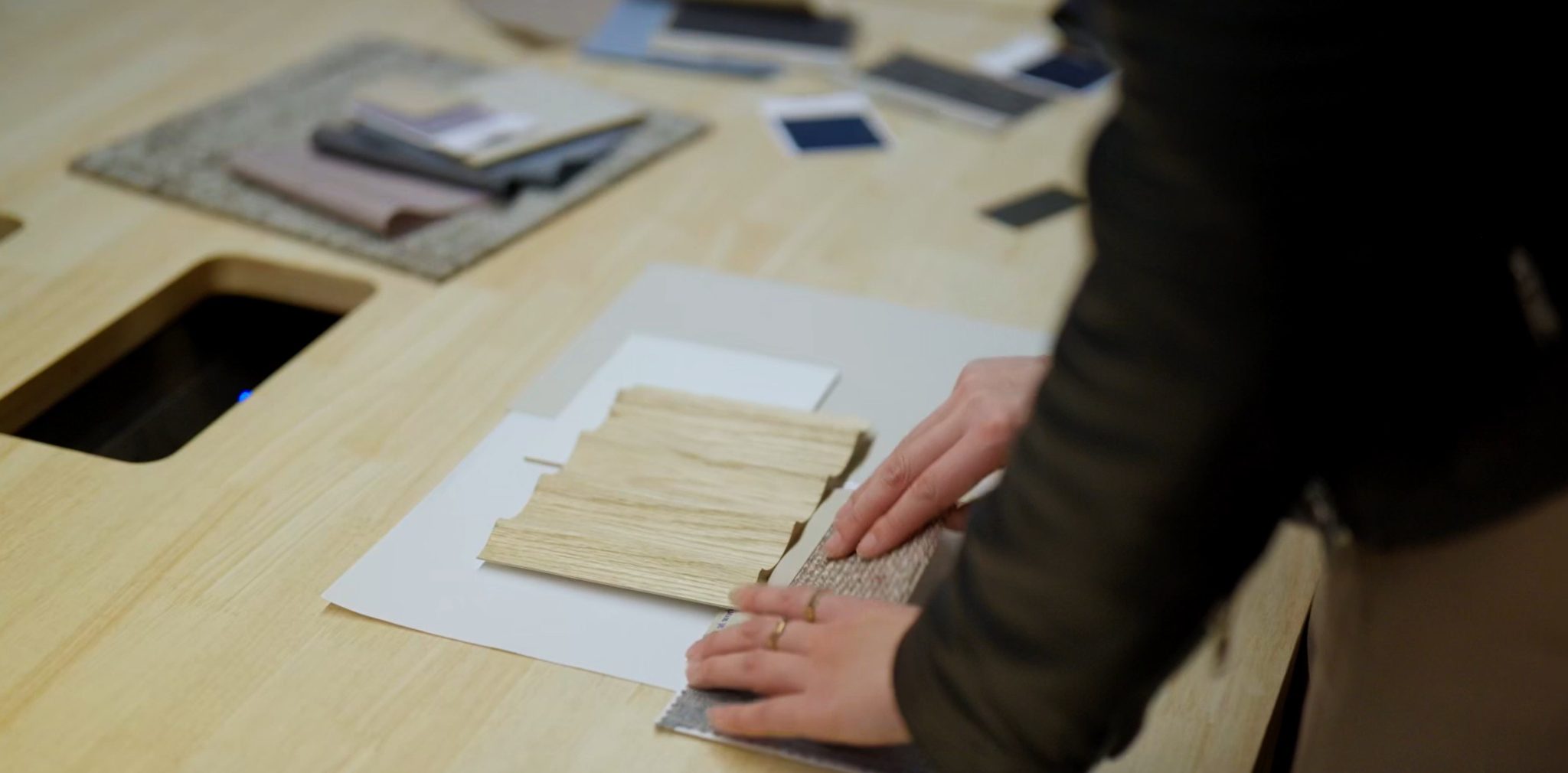
Handmade techniques emphasise the importance of human-led, tactile design solutions.
BL: The ability to produce designs really quickly with AI has been fantastic, and I think everyone’s trying to tap into that, but it also has left a bit of a gap in the education process for young designers. There are some things that can only be learned through time and experience, and rushing to learn and progress in a fast manner may not always be the answer.
With AI, some of the analogue processes – the manual things that you learn as a young designer – are starting to get lost. So, in our business, we still celebrate the creative process of sketching and hand drawing. We still draw 90 percent of our concepts and plans by hand.
It allows designers to really get into the nitty-gritty of a project or a floor plan, as your analogue mind-and-hand connection is really important. This brings an implicit level of uniqueness to a project.
That’s what we’re doing differently, because I think it’s important to embrace technology, but to also embrace the exploration process through hand drawing so you can become a much more complete designer.
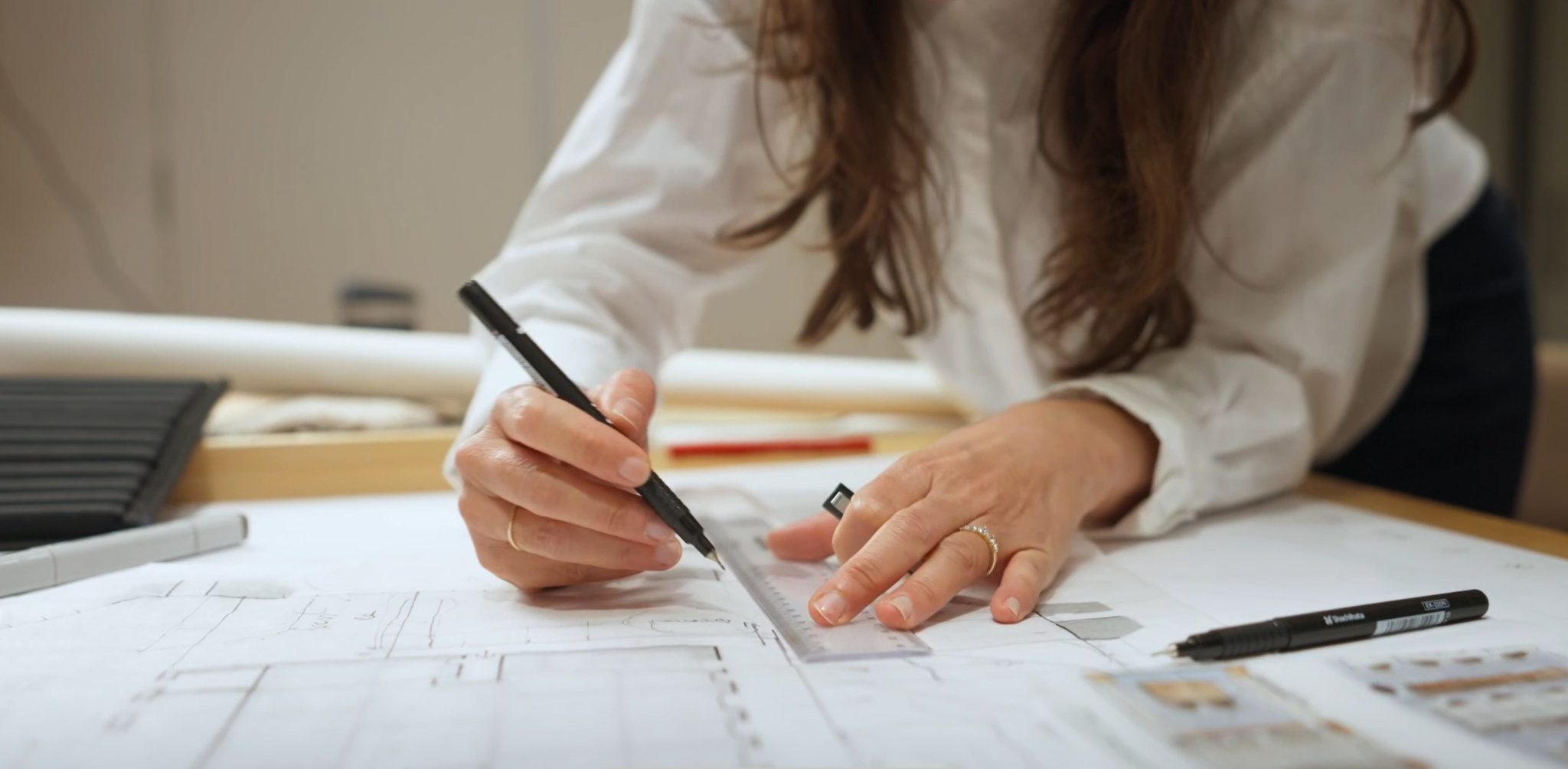
Where technology meets traditional design practices.
One of the challenges for young designers is, if they haven’t really developed the work themselves by relying on AI, they’re not able to articulate what they’ve done or the process they took to get there. That can be an inherent problem in the future. I perceive AI being a great way to improve processes, but some of the analogue processes cannot be lost.
It’s still so important in our businesses to do that, and this has given us a lot of traction with clients and a point of difference. Clients want to be able to understand what we’ve done. They’re thirsty, and they want uniqueness.
ADR: Why would you encourage young designers to join 30UNDER30, and what would you say to those who are hesitant about putting their work forward?
BL: Don’t be hesitant! This is a platform for you to talk about the things that you are passionate about. You have a unique perspective as a young designer; you are a unique individual with a creative mind. The work that you’ve created is something that should be celebrated.
It’s not about winning, it’s about being able to share your work and really get some feedback on that. Don’t wait and don’t be hesitant because life is too short for that.
Imagery supplied.
Related: 30UNDER30 practice partner RMA on collaboration, mentorship and the future of architecture
You Might also Like


Related Stories

© Niche Media 2026