

COX designers Maeve Mullane, Rhiana Roberts and Nissie Bungbrakearti on the importance of creativity and connection
COX designers Maeve Mullane, Rhiana Roberts and Nissie Bungbrakearti on the importance of creativity and connection

Share
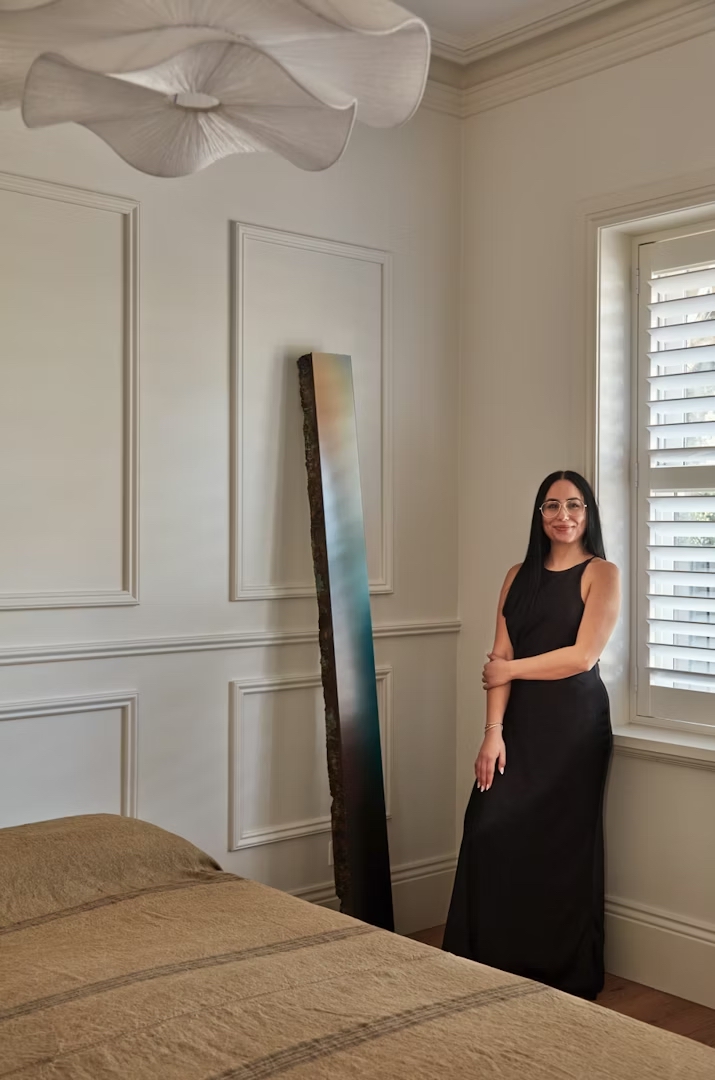
If there’s anything that excites three of this year’s 30UNDER30, all members of the COX Architecture team, it is the chance to work on projects with an impact that reaches beyond the people who use them.
“Because build-to-rent (BTR) is so new in Sydney, to have the opportunity to set a new standard is really exciting,” says Maeve Mullane. As part of a large team, the interior designer is currently working on Precinct 75, a creative mixed-use precinct on the site of the former Taubmans Paint factory in St Peters.
“There are not too many projects where you’re coming up with best practice. Creatively, I have such a passion for this project, but I’ve grown up in Sydney, so it’s incredibly empowering to have an input on the built environment at such an early point in my career.”

Her colleague Rhiana Roberts, an interior designer who works on commercial projects and workspaces, thrives on delving into the latest ways design can positively impact wellbeing. “The wellness trend in the workplace, and the commercial sector, in particular, has a lot of momentum,” she says. “As a WELL Accredited Professional, it is exciting to see the increase in interest from stakeholders, developers and clients in embedding wellness into the design, and not just in a way that ticks a box for third-party certifications.”
Roberts brings aspects of her previous career – four years in the military – to her previously unexplored creative practice, where she uses play as inspiration.
“Particularly in the early design phases of a project, I try to let go of the rules and create without having a predefined outcome,” she says. “It’s that time when you switch off the brain and say, just explore, where I find you can really create unique outcomes specific to each project.”

It’s then the discipline and rigour she learned in her previous life that kicks in. “A lot of the process-driven side of me, that left-sided brain, really comes from those formative years being in the military.”
Canberra-based Nissie Bungbrakearti is a problem solver. She was interested in architecture, engineering and game design, and a degree in computational design from UNSW (the University of New South Wales) touched on all three. Her role involves “being able to help propose designs that are performance-driven rather than just design-driven and create a more dynamic narrative to explain why we do what we do”.
One of her favourite projects has been the Snow Concert Hall at Canberra Grammar School. “It was a competition I helped deliver at a very early stage,” she explains. “It was unique, because the brief was to propose a 1300-seat auditorium while respecting the heritage of buildings that were already in place, as well as sight lines and pedestrian walkways. Basically, trying not to interfere with everyday movements around the school.”

The solution was to have the auditorium sit underground. “I was able to show, through computational studies, an undulating roof that would sit within the landscape quite seamlessly. It was a design and a form I was very happy to help the team deliver and create.”
For Maeve, it’s the storytelling aspect of residential design that pushes her to excel. “I always like having a deep human connection to all my projects, which is something you inherently find in residential work,” she says. “You have these long projects where you get to know the people – the ins and outs of their lives – then you come up with a creative vision for how they can live.
“There’s a storytelling nature to it, because no one is the same. You’re always meeting different people on different sites. It’s an understanding that this is a space and experience, but it is inherently narrative-rich as well. You’re always thinking about how you can make a space the best possible.”
As part of ADR‘s 30UNDER30 cohort this year, the three designers will spend a year receiving mentorship from leading industry figures and attend a leadership and creative retreat in Bali. “I’m really excited about the mentoring aspect of the program and connecting with experienced designers that you don’t really have the exposure to engage with day-to-day,” says Roberts. “Having the opportunity to connect and learn from industry leaders who have navigated this early time in their career and worked to build such successful careers will be an insightful and invaluable experience.”
To learn more about ADR’s 30UNDER30
Top image: Dining, Precinct 75 designed by COX. Photo: Supplied.
You Might also Like



Related Stories

© Niche Media 2026