

30UNDER30’s Angela Liang’s influences extend past architecture to the Golden Age of Hollywood
30UNDER30’s Angela Liang’s influences extend past architecture to the Golden Age of Hollywood

Share
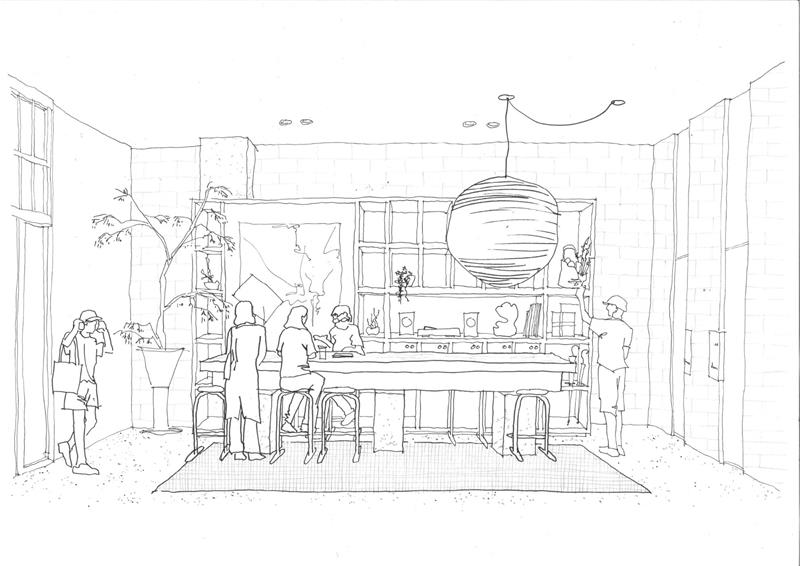
Angela Liang’s work explores how people, place and culture shape the spaces we create. Through residential projects, she uses drawing as an influential problem-solving design method and a framework for collaboration. The Rothelowman team member is now looking forward to putting this into practice as one of Australian Design Review’s 30UNDER30 for 2025/26.
Why did you enter the 30UNDER30 program?
I am incredibly excited to be recognised this early in my career. I see this as a perfect opportunity for me to reflect on what I’ve been putting my time and energy into for the past two years. But more than that, this is an incredible opportunity to understand how other people are problem-solving and creating across different industries.
What do you think are the benefits of mingling with professionals from different disciplines – architects with interior designers with product designers etc?
I’m very grateful to be able to see what others have accomplished. I genuinely believe that there are no harsh boundaries in between architecture, interior design and product design. I think in the wider context of creativity, these fields are so entangled and so often inspire each other.

What do you think are the most pressing challenges for designers coming up to 2030?
I do think the automation is going to gradually affect what we do as designers, and it will in a way homogenise what we do, and make every ‘innovation’ to look somehow similar. I also do believe there are creative tools to help us visualise and make decisions faster, but I do think they are still without the creative power to create nuances and frictions etc.
What has been a highlight in your career so far? (e.g. a project, collaboration, workplace, client, mentor, trip, award, realisation etc.)
Chapel Street has definitely been the highlight of my career so far. It was a project that I think would always give me confidence to explore firsts despite my insecurities. Especially because it was the first time I had been mentored by so many incredible people in the workplace. I was given the opportunity to express my creativity in both the message and the medium.
What do you do to kickstart your creativity when you’re in a rut?
Get up, make myself a cup of tea and look into some precedents/inspirations to recharge.
What’s the movie that you’ve watched most often?
I’m torn between Vertigo by Hitchcock and Witness for the Prosecution by Billy Wilder. Vertigo is such a masterclass on colour and composition and Witness for the Prosecution is all for the fascinating way of creating narrative tension while unpacking the story.
Australian Design Review’s 30UNDER30 is brought to you by major sponsor Neolith, alongside partners Designer Rugs, Laufen, Krost, Miele, Signature Appliances powered by Miele and Tongue & Groove.
Australian Design Review is also grateful to our 30UNDER30 practice partners AJC Architects, BVN, Cera Stribley, COX Architecture, Genton, GroupGSA, HDR, Richards Stanisich, RIZEN Atelier, Rob Mills Architects, Rothelowman, SJB and Design by WBL for helping us foster the future of Australian design.
Learn more about ADR’s 30UNDER30 here.

© Niche Media 2026