

Neuroarchitecture has a credibility problem – designers can fix it
Neuroarchitecture has a credibility problem – designers can fix it

Share

Cortisol has somehow found its way into the interior design presentation. We now hear about spaces ‘regulating the nervous system’, wall colours influencing dopamine, curves reducing stress and finishes described in language that sometimes sounds closer to a prescription than a specification.
In this article for The Podium, Australian Design Review‘s new thought leadership series, Cocoplum Design Studio founder Ozge Fettahlioglu outlines how designers can harness research to challenge their designs thinking while acknowledging the difference between evidence and research…
For most of my career, I have argued that spatial design touches far more than optics. Light plays a critical role in circadian regulation, noise affects concentration and recovery, and spatial layouts influence how people gather, retreat and connect. Asking ‘What does this space do to people?’ alongside ‘How does it look?’ is progress.
But our enthusiasm has started to outrun the evidence. Somewhere along the way, an interesting finding becomes a design principle, then a universal rule, then a sentence in a client presentation beginning with ‘the brain needs…’. If we are going to call our work evidence-informed, we need to be equally interested in the limits of that evidence.

The problem is not neuroarchitecture
Neuroarchitecture itself is a promising field where researchers use environmental psychology, behavioural observation, electroencephalogram (EEG), eye tracking and immersive virtual environments to explore how humans experience space. The research is compelling. The evidence base is still developing.
A recent systematic review describes a field that remains methodologically fragmented, with relatively limited real-world validation. That is not surprising. Controlled research often needs to isolate variables, while architecture refuses to behave so neatly. A laboratory can isolate curvature; a designer cannot. Walk into a hotel lobby and you encounter light, acoustic conditions, scent, temperature, texture, spatial proportion, other people, personal memories and whatever happened to you five minutes before you walked through the door. Real life is a sensory soup. Science studies isolate ingredients; architecture serves the entire meal. Problems begin when we translate one as though it were the other.
What did the study actually say?
Consider our fascination with curves. A widely cited 2013 study exposed participants to images of curvilinear and rectilinear interiors while researchers recorded aesthetic judgements and brain activity. Participants were more likely to rate curvilinear interiors as beautiful, but curvature did not have a statistically significant effect on whether they said they would enter the spaces.
Watch what can happen as a finding travels. ‘Participants showed greater aesthetic preference for curvilinear interiors’ becomes ‘the brain prefers curves’. That becomes ‘curves make us feel safe’ and, eventually, somewhere in a presentation, ‘curves reduce cortisol’. It is a little like a game of telephone played between the research paper, keynote presentation, client deck and Instagram carousel. By the time the message reaches the other end, it can sound wonderfully convincing while bearing surprisingly little resemblance to where it began.
Subsequent research into architectural form and physiological stress makes the picture more complicated. A systematic review found only a small body of eligible studies and concluded that although architectural form may influence physiological stress, considerably more research is needed. That is how science works. One study creates a question, another tests it, findings disagree, methods improve and context changes results. Over time, the picture becomes clearer. Design practice should preserve some of that uncertainty, rather than polishing it away before the client meeting.
Scientific language is not scientific evidence
I am not particularly concerned when someone scrolling Pinterest reads that blue paint is calming. Popular culture has always simplified complicated ideas. We casually talk about dopamine hits, comfort foods and colours changing our mood. A homeowner experimenting with their bedroom is not publishing a scientific paper, nor should we expect every YouTuber discussing interiors to provide a systematic review before recommending a paint colour.
Professional practice carries a different responsibility. The moment we tell a client that a specification is backed by neuroscience, we have moved beyond personal preference. We are using scientific evidence as professional justification, and that raises the standard.
Colour shows how easily this happens. A 2025 systematic review examined 128 years of psychological research into relationships between colour and emotion. It found recurring associations, but also something considerably less convenient than a colour chart labelled ‘calm’, ‘creative’ and ‘productive’. Hue, saturation, ambient light, cultural background, surrounding colours and task can all alter the response.
The assertion that ‘green calms the brain’ compresses a complicated body of research into a certainty the evidence does not necessarily give us. ‘Research has found associations between colour and emotional response under particular conditions’ is less seductive, but considerably more accurate. Accuracy may not always make the best Instagram caption. It makes better professional practice.

A brainwave is not a design brief
The same rigour should apply to biological measures. EEG, heart-rate variability and cortisol measurements can give researchers fascinating information about human responses, and these tools are expanding what we can investigate about architectural experience. But measurement still requires interpretation.
Neural activity in a particular region does not automatically tell us that an environment is beneficial. A physiological response does not necessarily tell us why it occurred, and an average response across a study population does not establish how every future occupant will respond. Heart rate alone makes the point. It can rise because I am frightened; it can also rise because I have just seen someone I love. The number is real. Its meaning depends on context.
Neurodiversity exposes the contradiction particularly well. We celebrate the enormous variation of human brains while simultaneously declaring that ‘the human brain’ universally wants a particular wall finish, light level or spatial condition. Human beings are not light switches that produce identical responses when someone flicks the same design trigger.
Perhaps we want too much certainty
Why has neuroscience become so attractive to designers? I suspect part of the answer has little to do with neuroscience and a great deal to do with us.
Design has always had an uneasy relationship with authority. We make expensive, consequential decisions under conditions of uncertainty. We determine how light falls, where voices carry, where bodies move and where people can retreat, yet we often have to defend those decisions through a mixture of research, precedent, professional experience and judgement.
Neuroscience seems to offer something our profession rarely gets: certainty. A brain scan looks authoritative, a percentage feels difficult to argue with, and ‘research shows’ can close a conversation remarkably quickly. But science should help us ask sharper questions, not stop questions being asked.
Sometimes we are also reaching for neuroscience to explain what other disciplines already explain perfectly well. We have decades of research in daylighting, acoustics, building science, environmental psychology and biophilic research. We do not need an fMRI (functional magnetic resonance imaging) machine to tell us that acoustic chaos can make concentration difficult. Not every sensible spatial decision requires a neuron attached to it.
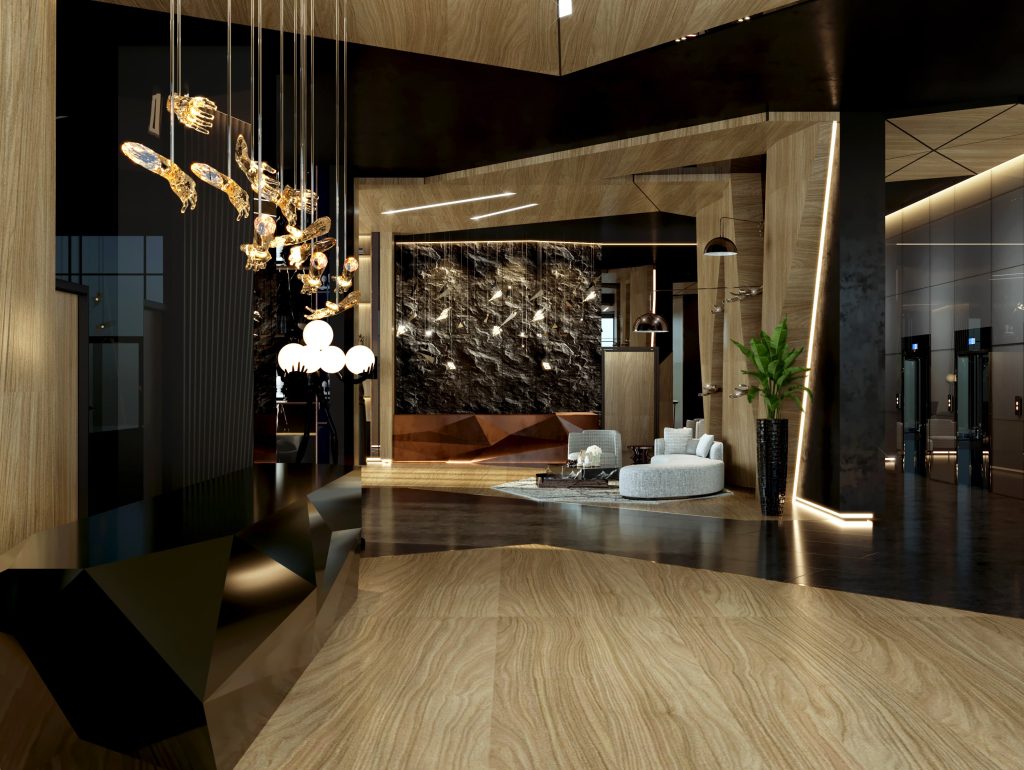
What happens after the photographer leaves?
One of the simplest ways to close this gap is also one designers routinely neglect: go back. Post-occupancy evaluation rarely produces the seductive image that gets a project published, but asking what happened after people began living, working, sleeping or recovering in a space can tell us something a laboratory study cannot.
Did people actually use the retreat spaces? Could hotel guests sleep? Was the restaurant still acoustically comfortable when it was full? Did staff override the lighting because the specified settings did not work in practice? We should measure what can sensibly be measured, listen carefully to what cannot, and compare design intention with actual outcomes.
That helps close some of the distance between controlled research and lived architecture. More importantly, instead of borrowing scientific authority to demonstrate that our design decisions must be right, we start using evidence to discover whether they were. That turns evidence from a sales argument into a feedback loop.
Then you have to explain it to the client
I recognise this temptation because I do it too. Working between research and practice means I can spend weeks interrogating evidence, then sit across from a hotel operator or investor who has neither the time nor the reason to read the studies behind a design decision. They need to understand what it means for their guests, their operations and their asset. So we translate. We simplify. That is part of our job. The risk comes when simplification quietly becomes certainty.
But we can overcorrect. Evidence cannot design the building for us. Neuroarchitecture is one input among many. Human psychology, biophilic principles, acoustics, light, materiality, operations, construction, maintenance, cost and context all compete for attention. These requirements collide in real projects, and improving one can compromise another. This is where professional judgement earns its place. No research paper can simultaneously resolve all these competing factors. The designer’s responsibility is to understand the evidence, recognise its limits and make a considered decision across the whole system.
Clients do not need every design decision dressed in neuroscience to make it legitimate. Sometimes the evidence is strong. Sometimes it is emerging. Sometimes several valid priorities conflict and something has to give. Good design lies in knowing what evidence applies, what it cannot tell us and how to balance those competing demands responsibly.
Science does not get the final say – neither does the designer
Evidence should also change our language. ‘Research suggests’ is sometimes more accurate than ‘research proves’. ‘Associated with’ does not mean ’caused by’. And ‘this evidence informed our design response’ is very different from declaring ‘this is how the brain responds’.
None of those distinctions weakens neuroarchitecture. They protect its credibility. If we want to take human response as seriously as budget, program, construction and form, we also have to accept that evidence will sometimes contradict the design decision we want to make.
That is the point.
The goal was never to make design sound more scientific. It was to make design better. And that begins when we stop asking science to validate our choices and allow it to challenge them.
Ozge Fettahlioglu is the founder of Cocoplum Design Studio, a research-informed practice working across wellness interiors, neuroarchitecture and biophilic design. She is a Lecturer at Western Sydney University, a Board Director at Biophilic Cities Australia, and a member of the Academy of Neuroscience for Architecture. She is the author of Designing for Health and Wealth: Architecture as a Compounding Mechanism (2026).
The Podium is ADR’s op-ed and thought leadership series providing a platform for some of Australia’s leading designers and built environment professionals to share their views on the topics that matter to the A+D sector. If you’d like to submit an article, reach out to us at ausdesignreview@niche.com.au with the subject line ‘The Podium’.

© Niche Media 2026