

Meet Jo Lawless – creative director at Lawless and Meyerson

Share

She may have a surname that speaks to a touch of anarchy, but Jo Lawless is a hugely experienced and talented interior designer who learned her trade working for two giants of the Australian industry.
Following a decade at BKH, she spent a period as associate director – Interiors at MHNDU, where she was introduced to Brian Meyerson. Together, they established Lawless and Meyerson as the interiors part of the architecture practice in 2015. These days the two strands are separate companies that retain a strong bond. And, after 11 years as a studio, Lawless feels it’s a perfect time to give back to the industry by signing up as a practice partner for Australian Design Review‘s 30UNDER30.
Australian Design Review: How long have you been aware of 30UNDER30?
Jo Lawless: I probably heard about it about three years ago. [Publicist] Kat Vidovic said, “Maybe a couple of your staff might be interested.” So, that’s when it came on my radar. I suggested one of my staff enter it and she was selected last year. That was Morgan Wolpers.
Excellent. What did she say about the experience so far?
She loved it. I think she’s been to a few different events and catch-ups with people that she’s met. But actually she’s just left us – she got poached!
But you still decided to join as a partner? We’re very happy you did, but what led to that decision?
Well, a couple of reasons. I think she had a really good experience. I’m also friends with Kirsten Stanisich [who was a judge and mentor for the 2024/2025 cohort] and she has really enjoyed doing it. I think, also, I’ve been doing this [work] for almost 30 years and I’ve been thinking about what’s next.
And I was wanting to get involved because I’ve spent the last 10 or 11 years just concentrating on my practice and building that up, and making sure everyone else is happy and good, and growing, and learning. And I thought, ‘I’ve reached that stage where I feel that I want to give back and just try some different things and meet some different people.’
I think being around all that young energy is really important as well. It works both ways. I think you can give something, but you get something as well.
We’ve heard our mentors and judges talk about an infusion of young energy that they take back to their own practices, which is fantastic. How many are there in your team now?
We have nine – me, plus eight.
You’ve been working as a designer for 30 years, but Lawless and Meyerson was established just over a decade ago. How did that come about?
I had worked at BKH for 10 years. After that I thought I needed to do something else. [MHNDU principal] Brian Meyerson and I had done a project together and we were chatting one day and he said, ‘Would you be interested in setting up an interior design studio within the architectural firm?’ And eventually I did that and we ran it for three years as a separate business unit to see if it had legs financially on its own, which it did. So after three years we carved it off as a separate company, hence the name Lawless and Meyerson.
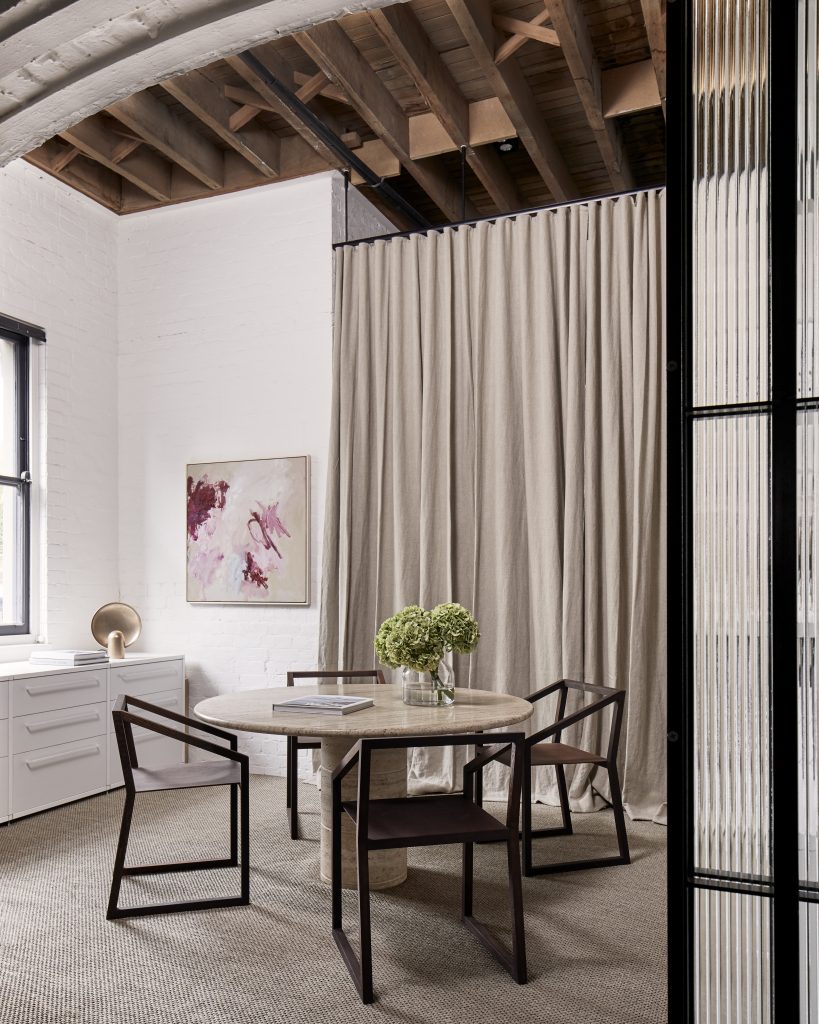
Brian is the M of MHNDU and they’re a big studio with 60-plus people. So we created two separate brands basically, but it’s co-owned. This is nice because it means that we do a lot of work together, but we can also work with other architects; and they can work with other designers.
It’s been good having a business partner that gives me some security and a good constant flow of work – someone with a bit of business gravitas behind them, because I studied interior design, not business!
How important do you think a program like 30UNDER30 is for young designers?
I think it’s great because, number one, just meeting people is always important. When I think of all the people I’ve met over the years – and it could be just a random conversation and then it ends up leading to something else – you never know where things are going to lead. The more conversations you have and the more people you meet, it opens your world and expands your horizons. Also, having new experiences and being curious… creativity breeds more creativity. And connections are really important. Pretty much everything I’ve done, everyone I’ve met, has led me to where I am now.
It’s not until you look back that you realise this. Because when you’re in it, you don’t know that it’s happening. You can’t underestimate that stuff.
The 30UNDER30 program has a focus on mentorship. Did you have mentors earlier in your career?
Not in a formal way, but when I was at BKH I was working for arguably two of the most creative people in the industry at the time – Ian Halliday and David Katon. And having them as creative mentors was invaluable. I had the most amazing design education working there and from everyone that I worked with there as well. It was a unique time. And from a design point of view, they taught us about art and they taught us about beauty, so indirectly we got this amazing mentorship from them. Back in the 1990s, early 2000s it was the place to be. To spend 10 years there was great.
If there was one piece of advice you could give to young designers – apart from work for a legendary firm when starting out(!) – what would it be?
I think you’ve got to trust your gut and be curious and get out there and try things and make mistakes. You’re not going to get it right every time. Be resilient. You’ve got to work hard. Always ask questions. Being creative, you do trust your gut. You know when you’ve got it right and when you’ve got it wrong. There are a lot of influences and noise around, but you need to learn how to filter that out, and really do what makes your heart sing. Do what feels right for you, not what feels right for someone else. And it takes a while to find that.
You don’t find it straightaway. I mean, I’m still trying to find it! It’s constant. But you just keep coming back to what it is that you’re trying to do. What’s your point of view? What are you trying to achieve here?
What do you see as the biggest challenges for the industry currently and in the near future?
From my perspective, the industry is incredibly buoyant. I think we’re lucky we’re in Sydney. Everyone’s talking about AI at the moment, but I think it’s another tool that we will end up using, which we all are using. If you’re creative, people can’t take that away from you. We’ll just work differently.
I think the biggest challenge being a designer is always that everyone else thinks they can do it and you’re constantly having to explain why you do what you do and it’s hard to put a price on that sometimes. I read this quote the other day and it was “Design is not subjective. Proportion, hierarchy and contrast. These are not opinions.” It’s from Massimo Vignelli (1913–2014), an Italian graphic designer who did a lot of the Olivetti graphics.
And it’s true. Picking things is not being a designer. If you’ve had a design education, it’s more than that. It’s a lot more than that.
But I thought that was a great quote. It just nails it. As for other challenges for the industry, there’s nothing that comes to mind really.
Conversely, what excites you about the industry right now?
I think AI again. It’s a challenge and it’s a possibility. We’re at the very beginning of it. We’re all trying to work out what it does, and how can we use it? And so I actually find it fun because it does some amazing stuff and it can help us. Is it saving us time? I don’t know yet. We’re all fumbling through it at the moment. But I’m always excited about what’s next. That’s what makes the industry so great. You don’t get bored because it keeps changing. There are always new things and new products and new people. I don’t have time to get bored. There are too many things to do.
That’s a wonderful position to be in. What have you been working on recently?
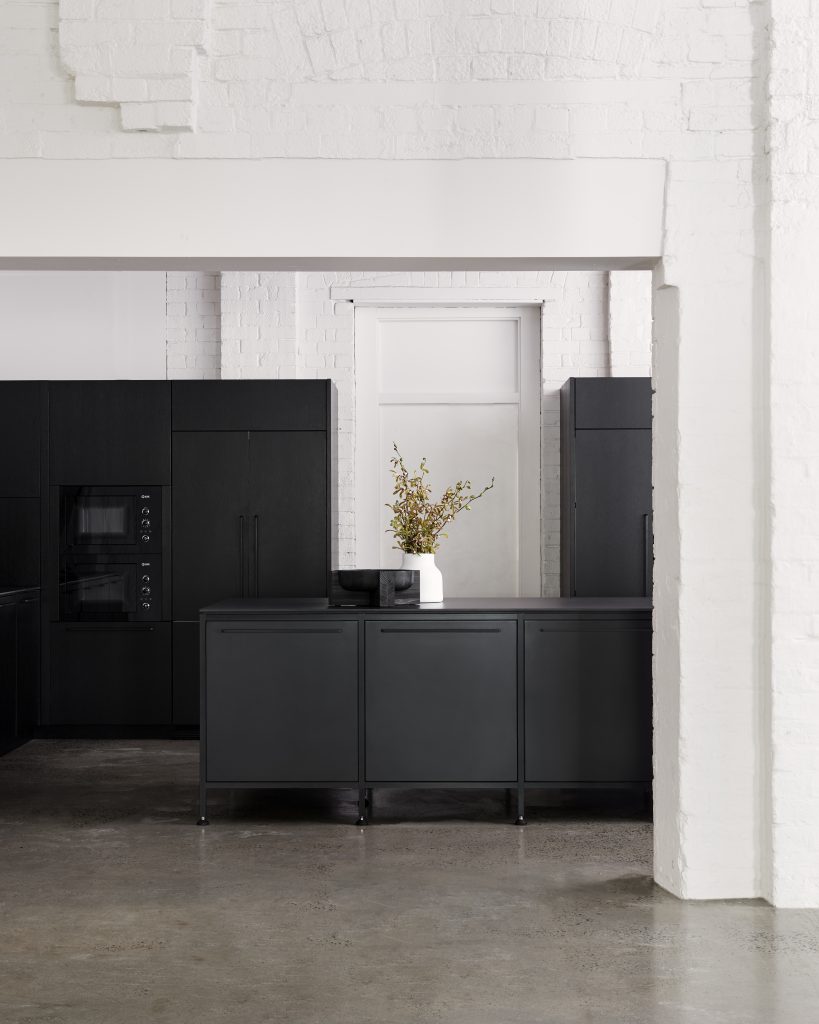
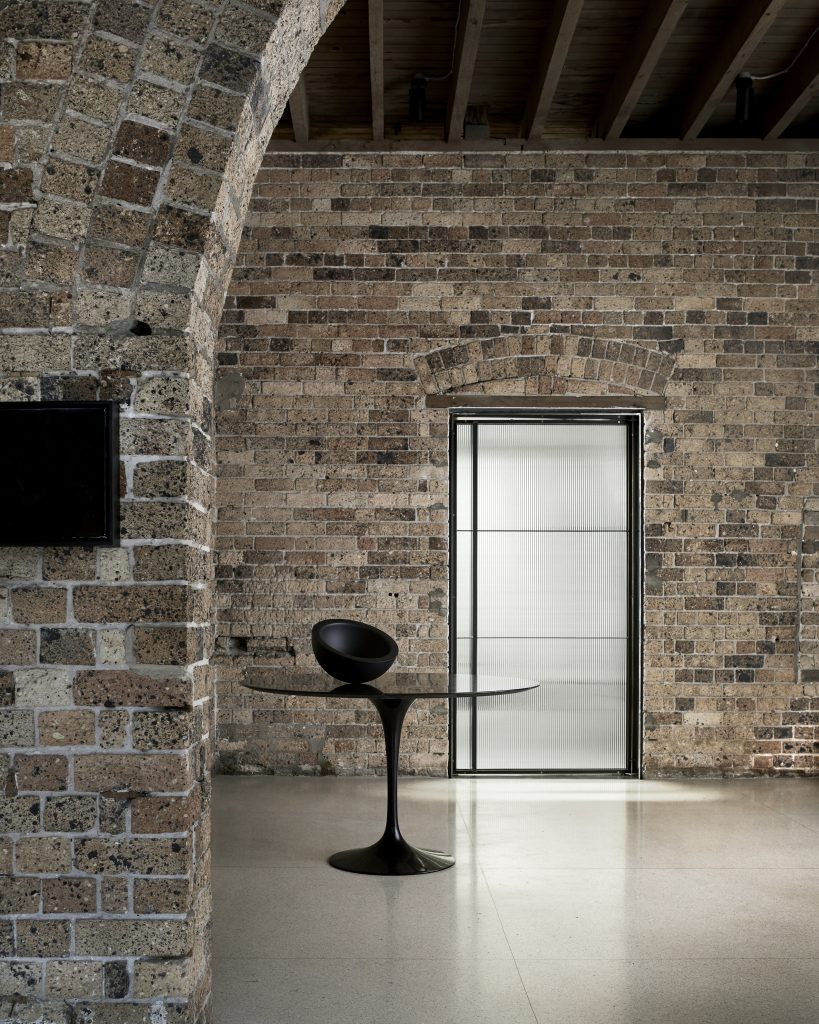
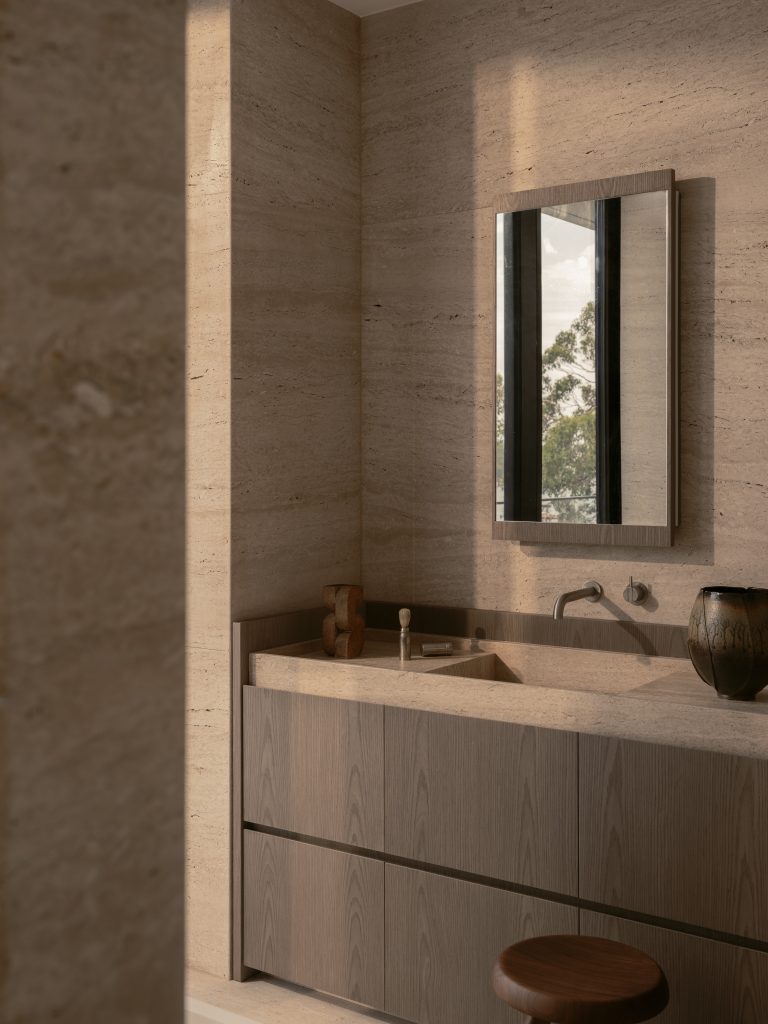
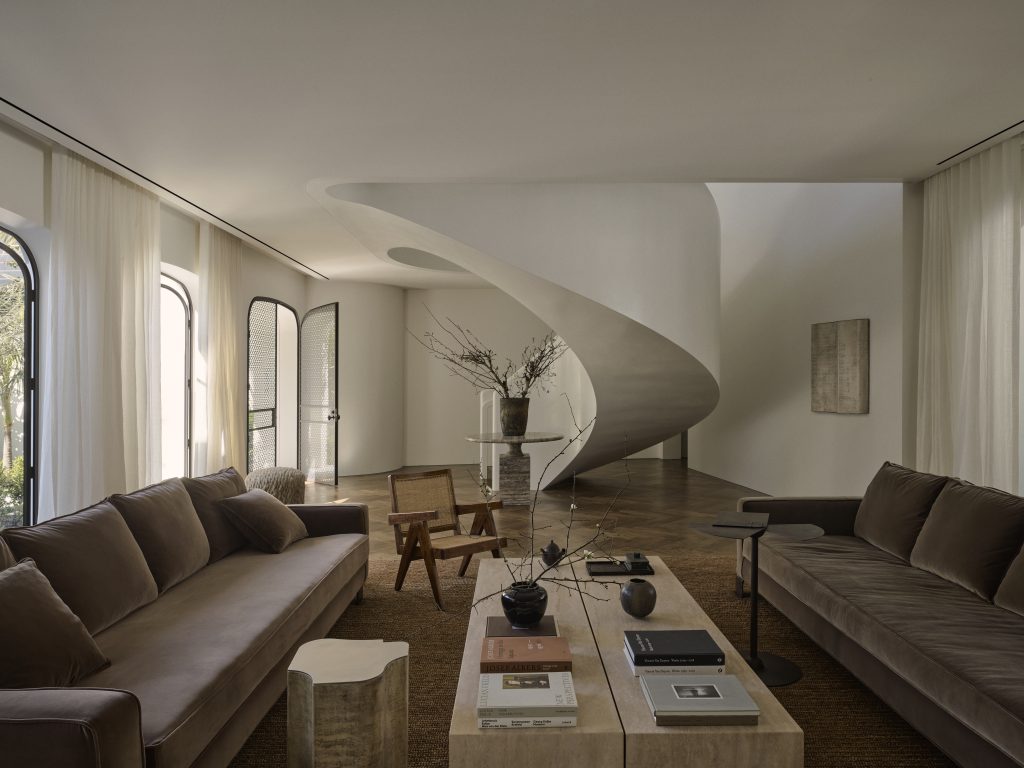
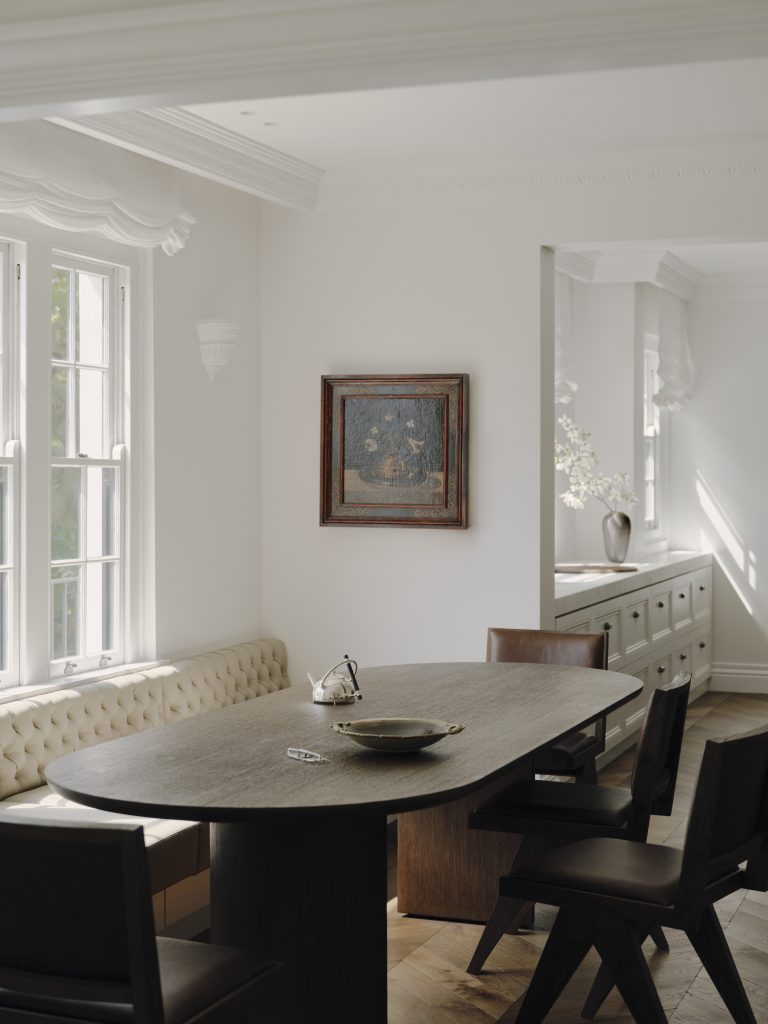
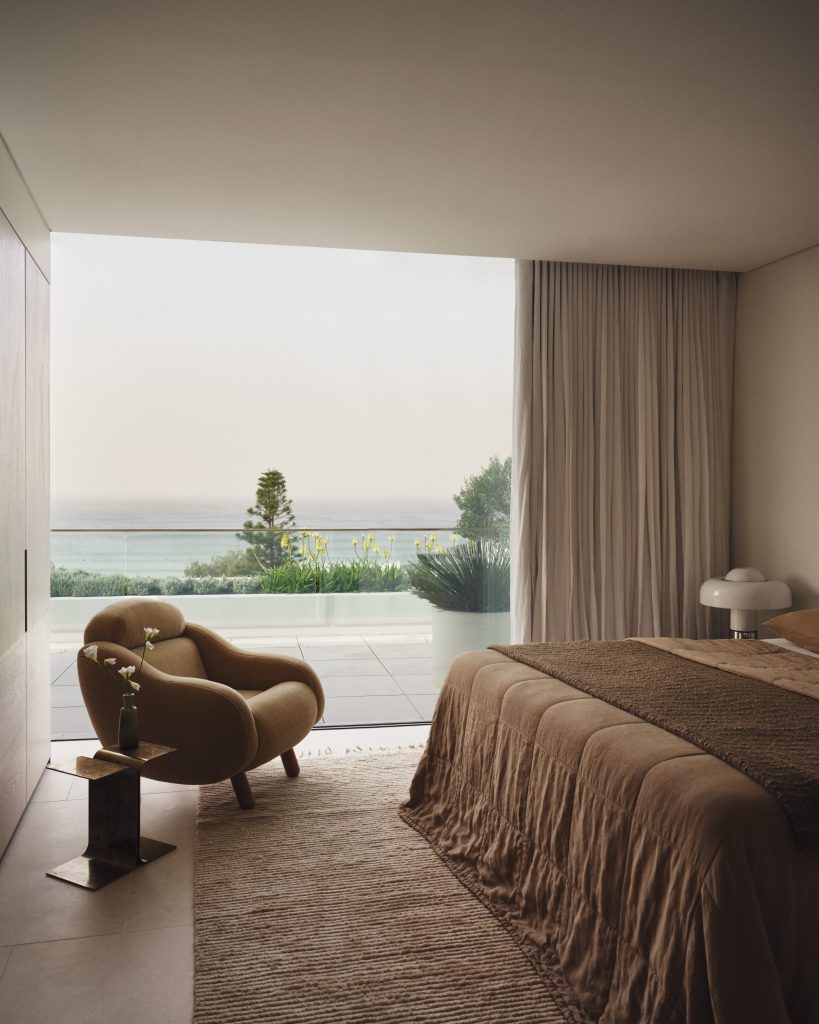
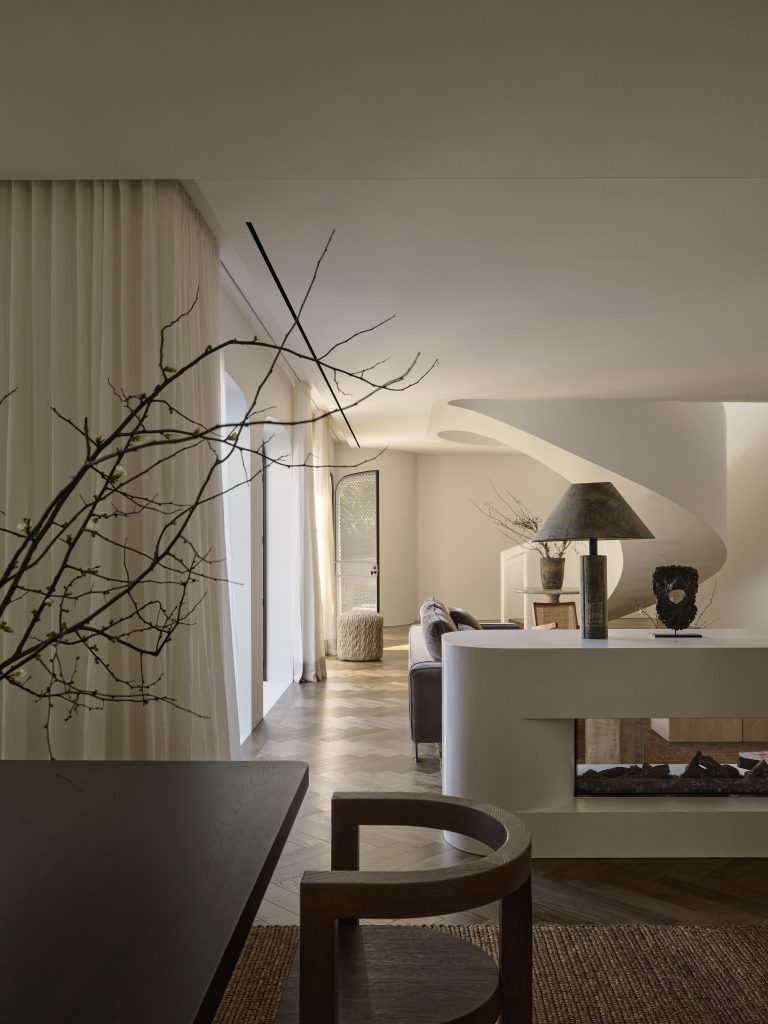
We’re working on a big house on the Harbour at the moment, which has been going for years and years and years. We have a few months left of that. Then there’s another house we’re finishing up in Castle Cove. It feels as if it’s in the bush, but it’s in a suburb. The house is built on a rock and it overlooks the river. It’s beautiful and it’s a bit mid-century. It’s all very concrete and off-form and we’re doing all the furniture for that.
We’re doing another apartment renovation, which is really nice. It’s a minimal, really pared back, kind of John Pawsonesque thing, which is nice. The client’s very committed to the cause of not seeing everything, which I quite love. We’ve also done a couple of overseas projects. We’re doing a bit of a house in Dubai at the moment and we did a penthouse in Taipei a few years ago, which was pretty interesting.
As we mentioned, this is your first time getting involved with 30UNDER30, isn’t it? Did you have any other reasons for getting involved?
I like to keep fresh and I don’t want to stagnate. As you get older, you wonder whether you’re getting stuck in your ways. And I don’t want to be that person. I want to stay connected and I’m quite interested to see what the next generation are doing and how they think.
Even over the last 10 years the industry has really changed. But the last 15, 20, 25 years, it has changed a huge amount.
OK, last question. I think we know the answer to this, but you’re no relation to Lucy, are you? Did you get a lot of Xena references when that show came out?
I still do to this day, always! It’s bizarre. And it doesn’t matter where I go in the world as well. That show was really badly produced, but everyone watched it.
It was a sensational show. And Lucy Lawless in particular is a really good woman. So, if you’re going to share anybody’s surname, I think you’ve picked a good one.
Totally, I know. And but no relation unfortunately…
Top image: Jo Lawless portrait: Supplied.

© Niche Media 2026