

Nau Design has a soft spot for Copenhagen’s 3daysofdesign
Nau Design has a soft spot for Copenhagen’s 3daysofdesign

Share
NAU’s European debut at Copenhagen’s 3daysofdesign signals a new chapter for Australian furniture on the world stage
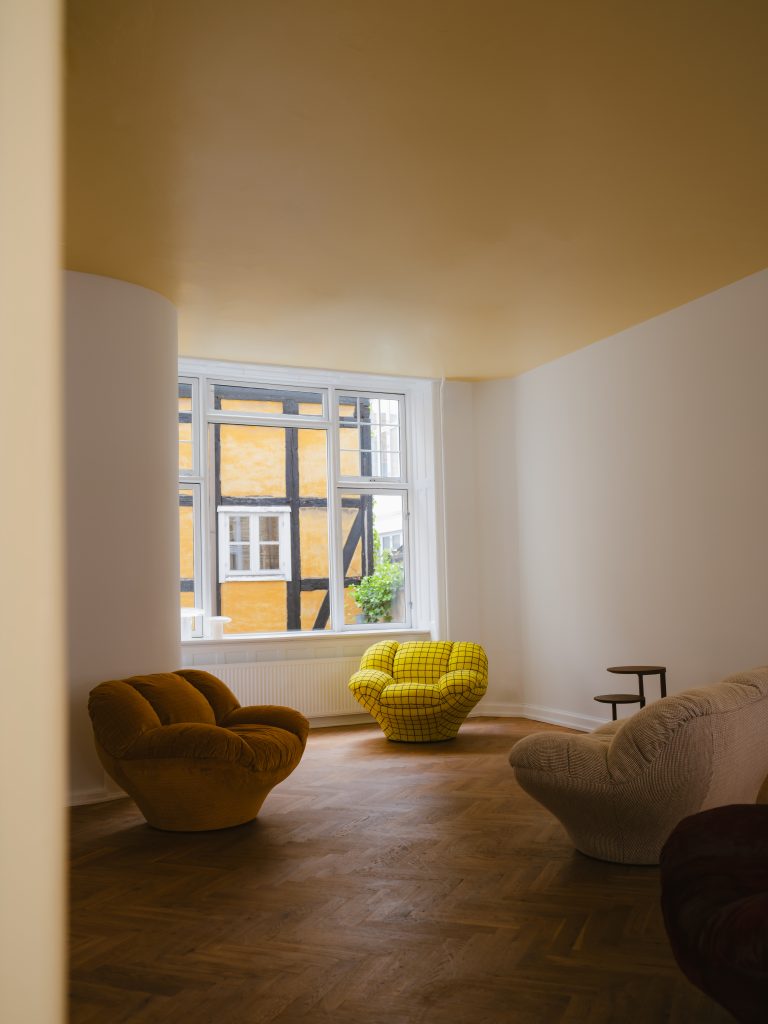
When NAU, the furniture label born from Richard Munao’s Cult stable, landed in Copenhagen for 3daysofdesign, it arrived with intention, presenting a carefully curated exhibition of Australian design at Galerie Mikael Andersen to an audience of architects, designers and media from across the globe.
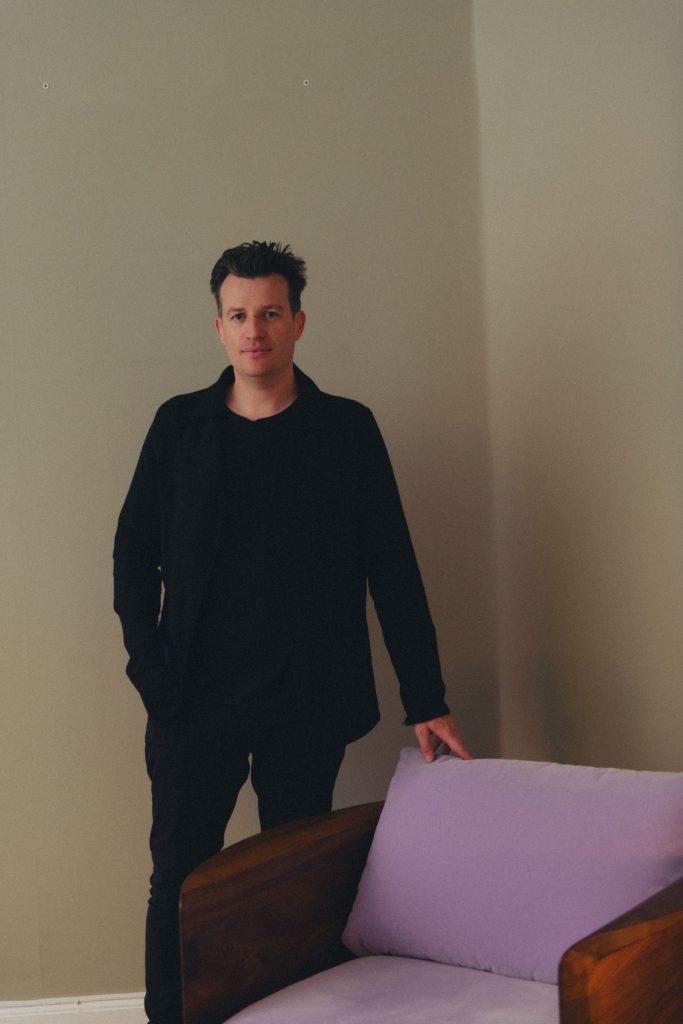
The timing couldn’t have been better, with Copenhagen’s annual design festival running across three days in June, distinguishing itself from the scale and spectacle of Milan Design Week through its emphasis on intimacy, conversation and genuine human connection. Rebecca Fox, marketing manager at Cult Design, says 3daysofdesign feels considerably more intimate and accessible than its Italian counterpart. “It has a stronger emphasis on meaningful conversations, hospitality and relationship building,” she says.
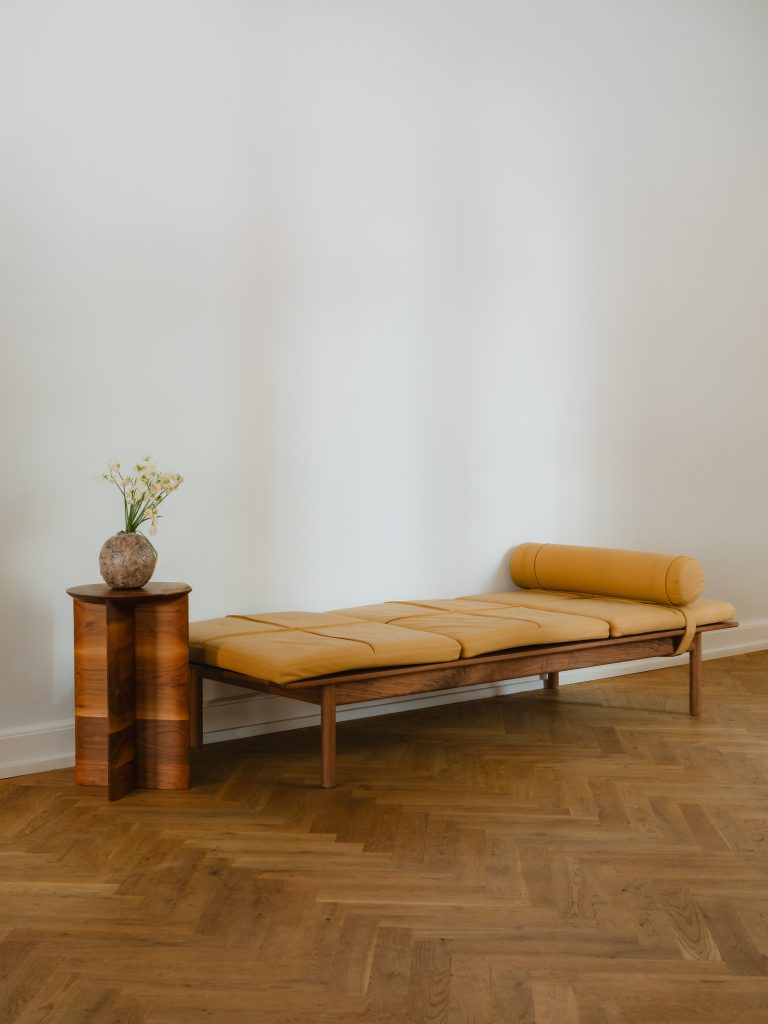
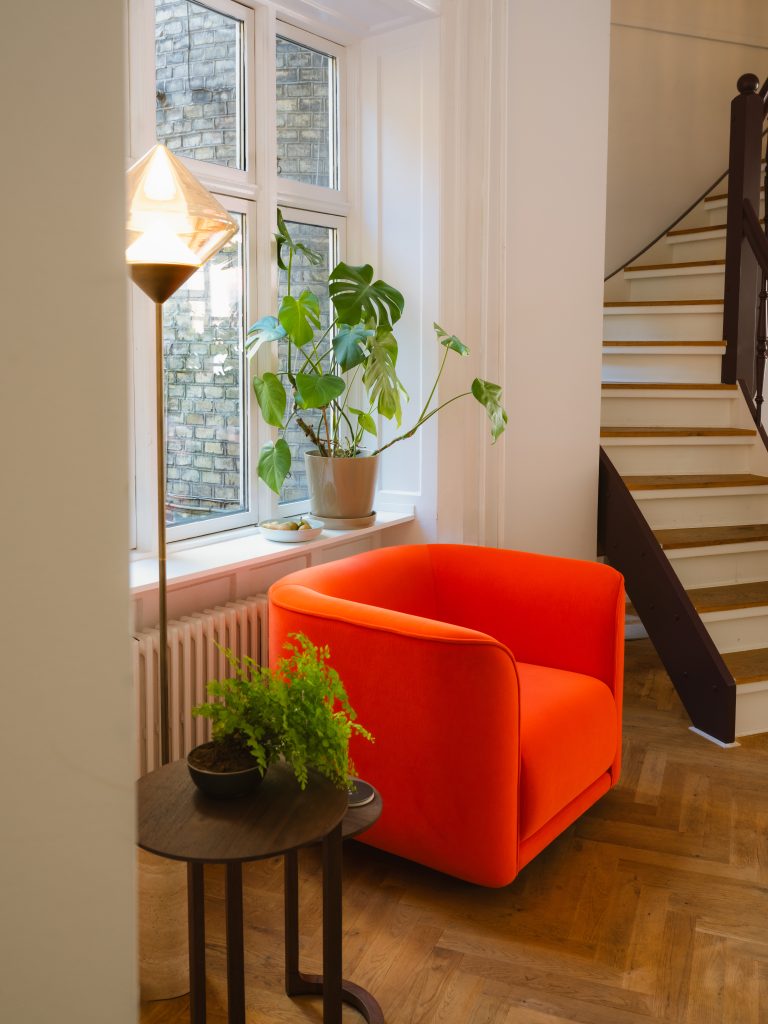
The exhibition presented iconic works alongside two significant launches from designer Tom Fereday: the Cove Collection and the Nola table light. The Cove armchair and sofa, defined by sweeping timber curves and a sculptural elegance drawn from architectural references, drew considerable attention, while the Nola light, hand-cast from crystal glass and honed stone, shone a warm ambient glow throughout the gallery that invited visitors to linger.
A dialogue between legacies
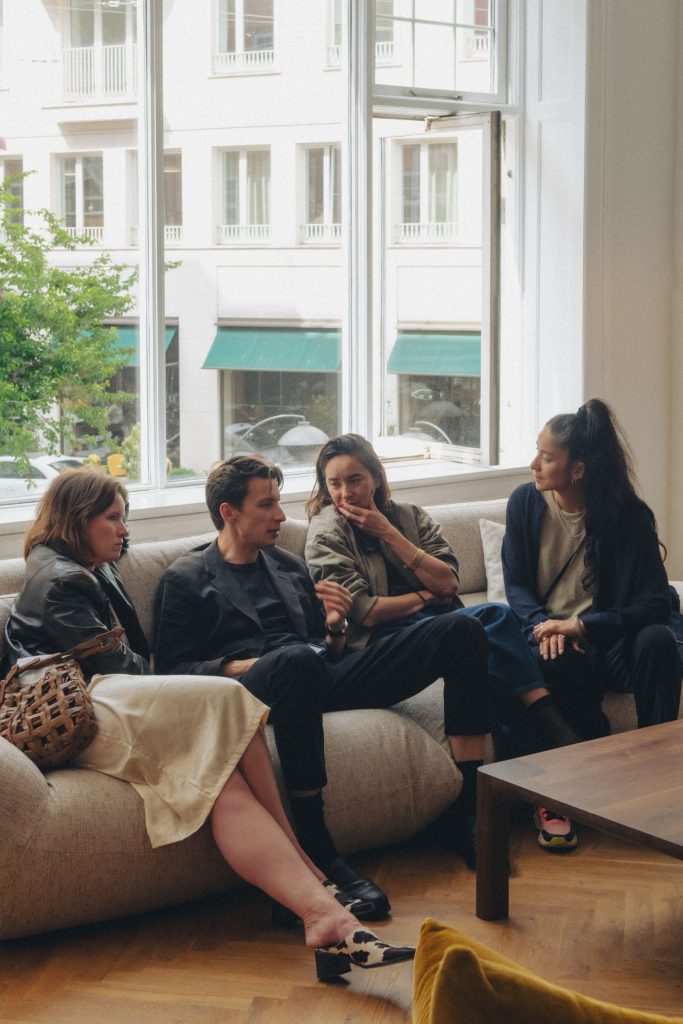
To complement the exhibition, NAU hosted a panel discussion titled, ‘A Dialogue Between Legacy and Contemporary’, which gathered Munao, NAU designer Adam Goodrum and Anders Byriel, CEO of Danish textile house Kvadrat, moderated by Copenhagen-based writer and ARK Journal editor Alisa Larsen. The conversation toggled through the enduring influence of Danish modernism to the integrity of materials and the responsibility that brands carry to balance commercial realities with cultural and environmental consideration.
What emerged most clearly was the thread connecting Scandinavian and Australian design thinking, with Fox noting the panel’s observation that “Australian designers interpret the principles of Danish design through their own lens, highlighting the shared values of simplicity, honesty and longevity while acknowledging distinctly Australian perspectives on materiality and place.” NAU’s collection, grounded in relaxed proportions, warm timbers and a connection to landscape, shares the underlying values of Nordic design without imitating its aesthetic.
The evening event, titled ‘NAU, Later’, promoted informal networking, merging Australian and international architects, designers and industry professionals in a format reflecting the brand’s broader ambition. Rather than scheduled presentations, the gathering centred on dialogue, reinforcing NAU’s intent to build an international community around Australian design beyond simply selling the products.
The broader conversation in Copenhagen
Across the wider festival, several clear themes distinguished some of the strongest presentations. “There was a continued emphasis on longevity over novelty,” Fox notes, “with brands gravitating toward timeless craftsmanship and products intended to endure rather than follow seasonal trends.” Natural materials, particularly timber, appeared with striking consistency across furniture, interiors and exhibition architecture, while warm, earthy colour palettes, punctuated by burgundy and rich yellows, set the tonal register of the week.
According to Fox, the most noticeable shift was in how brands chose to frame their presence. The exhibitions that left the deepest impressions, included Fritz Hansen’s Sound Club, which blurred the boundary between product display and cultural experience, and GUBI Scenes, which presented furniture within layered, aspirational residential interiors. “The strongest presentations,” Fox observes, “were those that created complete experiences rather than simply displaying products.”
The Galerie Mikael Andersen space was hung with paintings by Philip Groezinger, floral arrangements by Karens Bord framed the room, and a selection of Australian wines curated by Simply Grapes accompanied the launch evening, lending the exhibition a warmth and cultural specificity that extended well beyond furniture.
The response to NAU’s Copenhagen presence reinforced something that has been building for some years now. “Australian design, at its best, carries a perspective genuinely distinctive in the global conversation,” Fox says. “The international reception is an affirmation of the growing interest in Australian designers and evidence that our perspective offers something genuinely distinctive.”
Images: Armin Tehrani.
You Might also Like


© Niche Media 2026