

Reviving the age-old craft of architectural glass design
Reviving the age-old craft of architectural glass design

Share
One woman and her growing community of protégés are leading a renaissance of architectural glass design in Melbourne.
Architectural glass design was an endangered sector in Australia after the turn of the century. Veteran Melbourne-based practitioners Donna Kennedy and Dr Bronwyn Hughes conducted a survey on leadlighters in 2012 that revealed an ageing workforce.
“The average age at that time was 58,” Kennedy tells Australian Design Review.
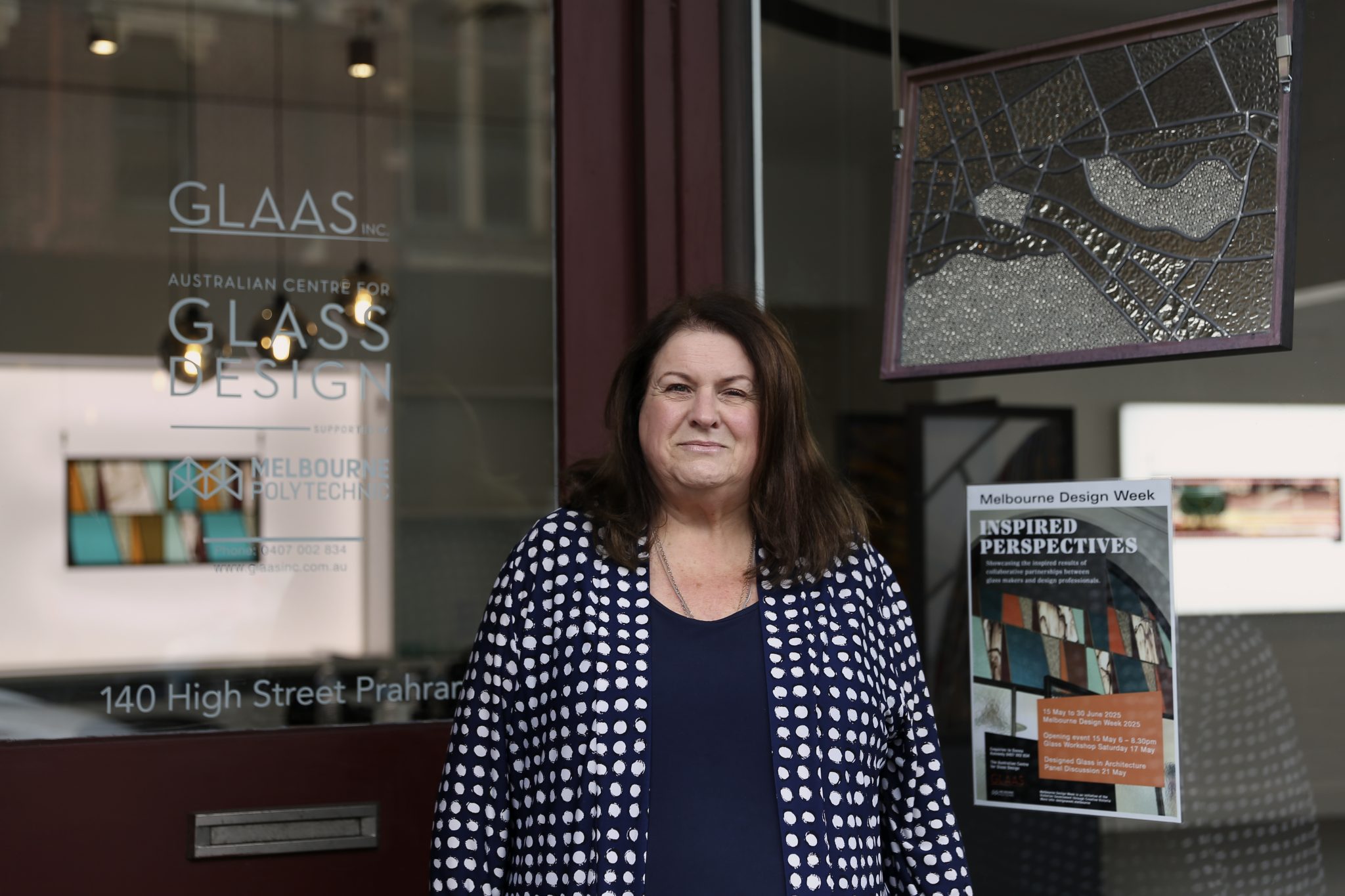
GLAAS Inc director Donna Kennedy. Photo: Bianca Lamont.
Architectural glass design – the type seen in windows as opposed to glass-blown vases – encompasses the distinct practices of leadlighting, stained glass, copper foiling, kilnforming and sandblasting. When Kennedy finished her leadlighting education in 1986, it was a “healthy” time for both industry and hobbyists. “Every family had one,” she recalls, “an aunty, an uncle or a grandma.”
Kennedy ran her own commercial studio for 20 years, flanked by about 60 competitors across Melbourne in the early days. Between old window repairs and new leadlight front doors in Federation revival homes, there was plenty of work to go around.
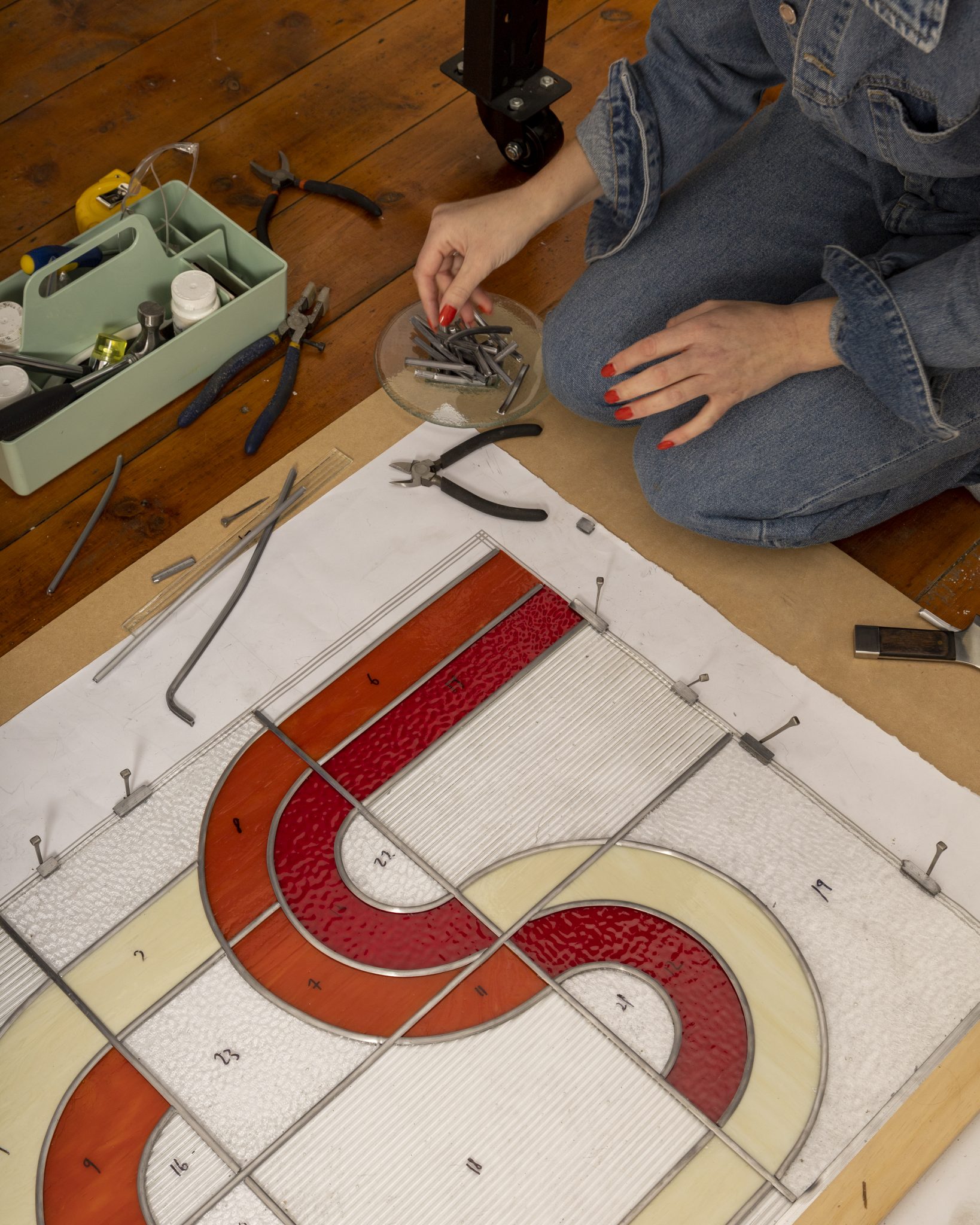
Leadlight work by Eloise McCullough. Photo: Shannen Johnstone.
But the changing tides of architecture and interiors nearly swept designed glass away. Pared-back minimalism took hold in the second half of the 1990s and leadlighting, perceived as a decorative, colourful medium by contrast, fell out of favour. “By 2005, we were down to about six major studios,” Kennedy says.
Alarmed by the threat of her industry’s extinction, she sprang into a long period of advocacy. Together with Dr Hughes, whose background is in education, Kennedy established Glass Light Art and Architecture Synergies (GLAAS Inc) in 2015, which supports practitioners and promotes the use of designed glass in architecture. By 2020, they’d secured funding to deliver a Certificate III in Glass and Glazing through Melbourne Polytechnic. It’s the only course in the world to offer a trade qualification in designed glazing, according to the education provider.
“The objective when we kickstarted it was to retain the skills so that the heritage work could be repaired, but also to take the skills into more contemporary design,” Kennedy explains. “That’s exactly what’s happened, and young people have to drive that.”
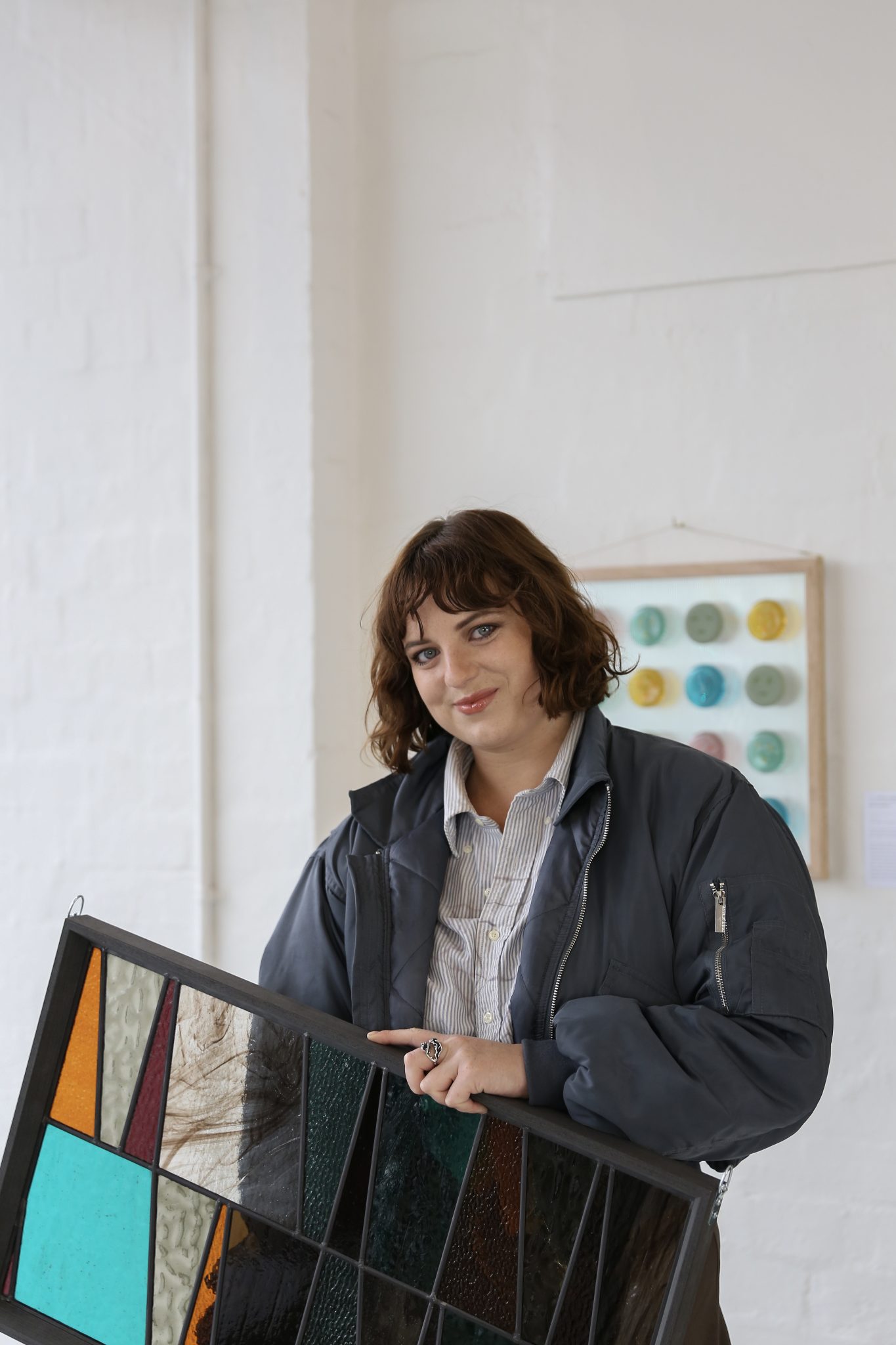
Eloise McCullough. Photo: Bianca Lamont.
Eloise McCullough was part of that first cohort of 12 pupils. Stumbling across a video of local artist Nadine Keegan promoting the new course, McCullough saw glass as a way to combine her skills in graphic design and marketing at architecture and interior design studios, where she had come to learn the processes of her future specifiers.
Now operating under Fools Glass, she is a full-time glass designer and maker, teaching her own workshops. McCullough’s mostly art deco-style windows feature in popular Melbourne pubs and will cast long, colourful shadows in the memories of lucky homeowners.
“I work with some amazing interior designers and architects,” she says. “Often they’ve already put together a really beautiful material palette and colour scheme, so I can pick that apart and make them really sing.”
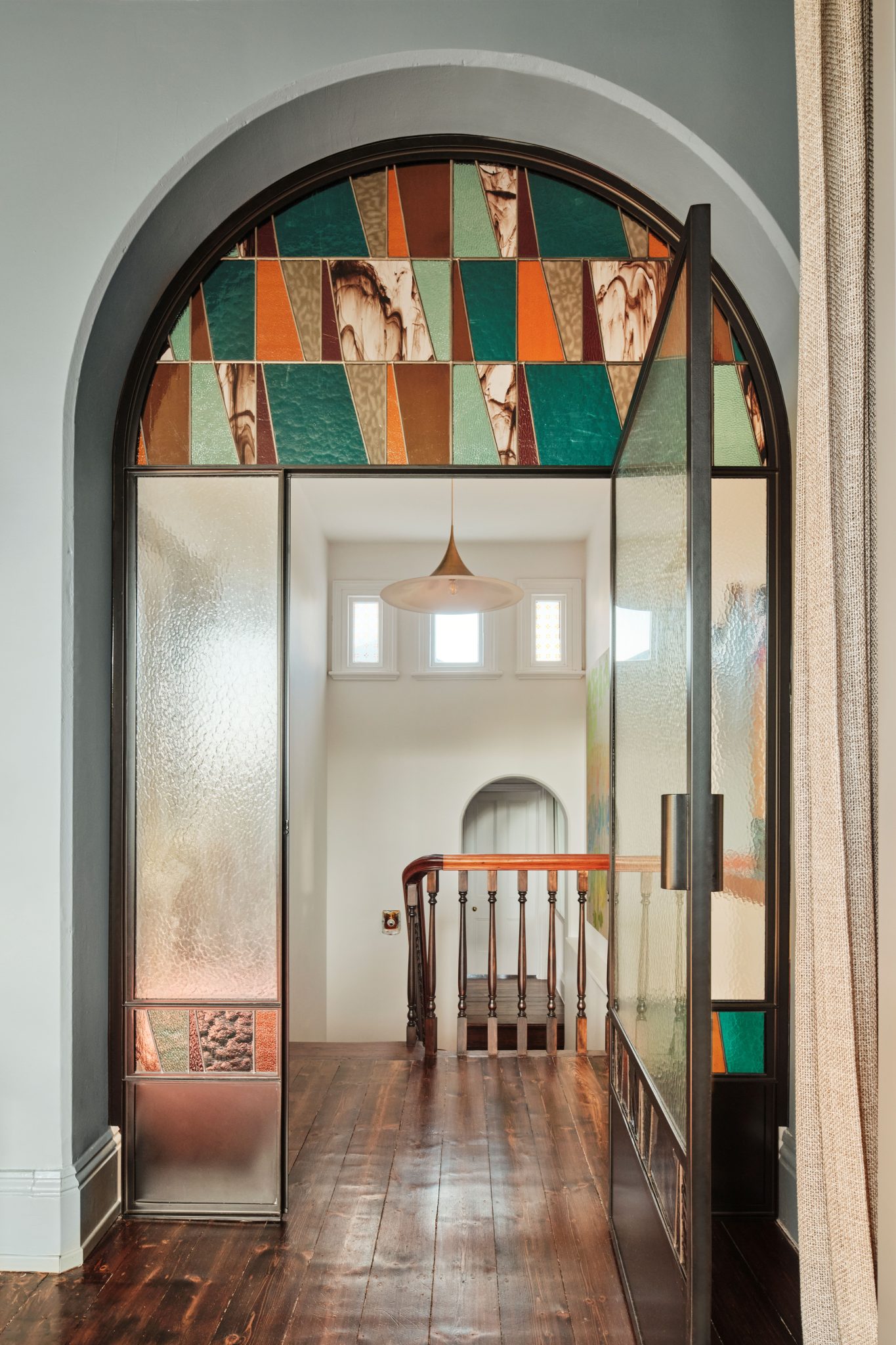
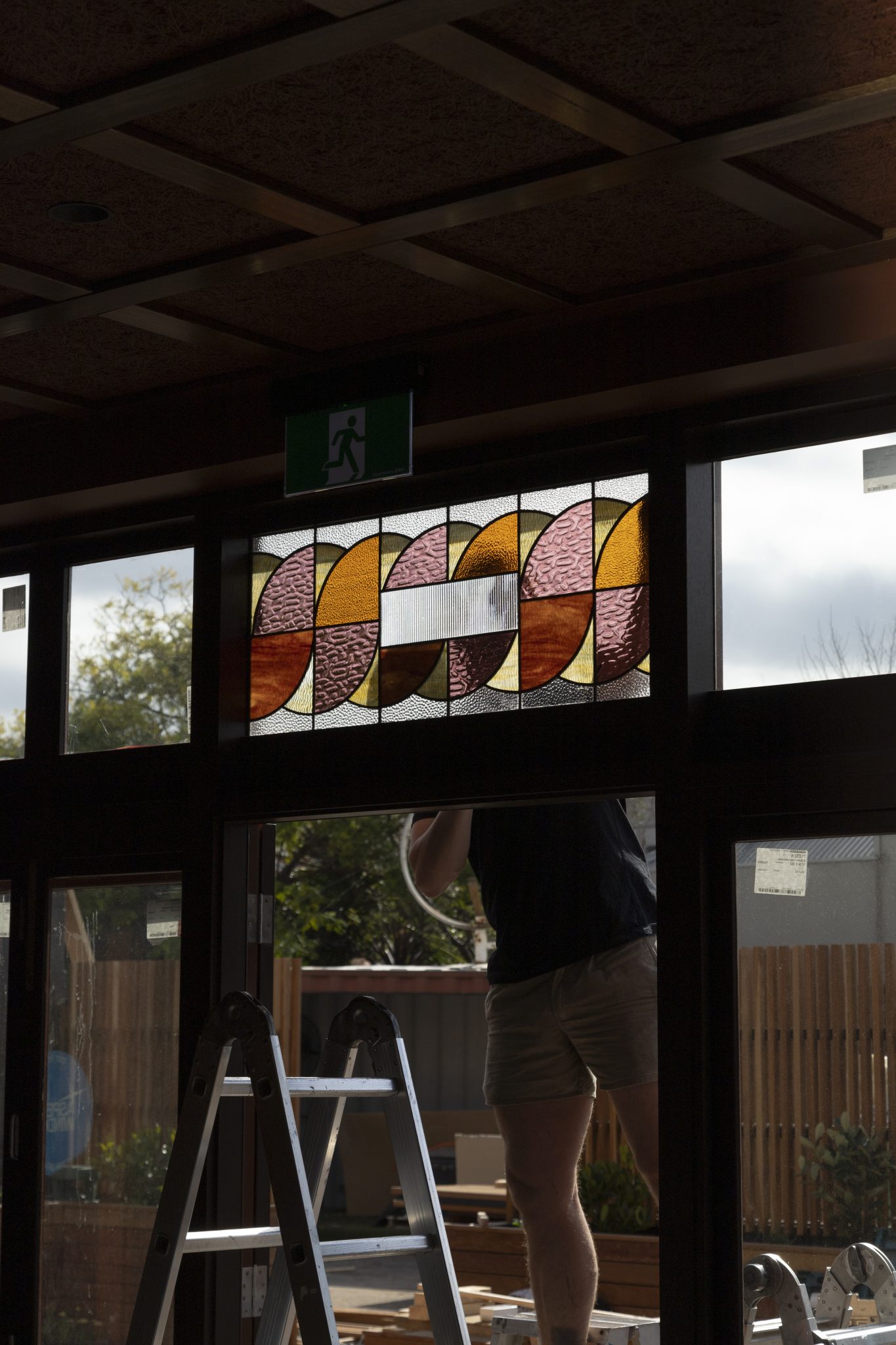
Eloise McCullough’s leadlight designs installed inside a residential project in Fitzroy and the Sporting Club Hotel in Melbourne. Photography: Alberto Zimmerman and supplied.
Fellow student Rickie Martin’s entry into the industry was through GLAAS Inc’s First Nations Glass Workshop Program in 2022. The Yorta Yorta and Pairrebeenne/Trawlwoolway man had previously spent three years living in the Aboriginal Tent Embassy in Canberra before moving to Melbourne for its protest and art scene. A flyer for the free classes caught Martin’s eye at a Melbourne crisis centre while he was living rough. Since then, he has completed Certificates III and IV, and is now partway through a diploma.
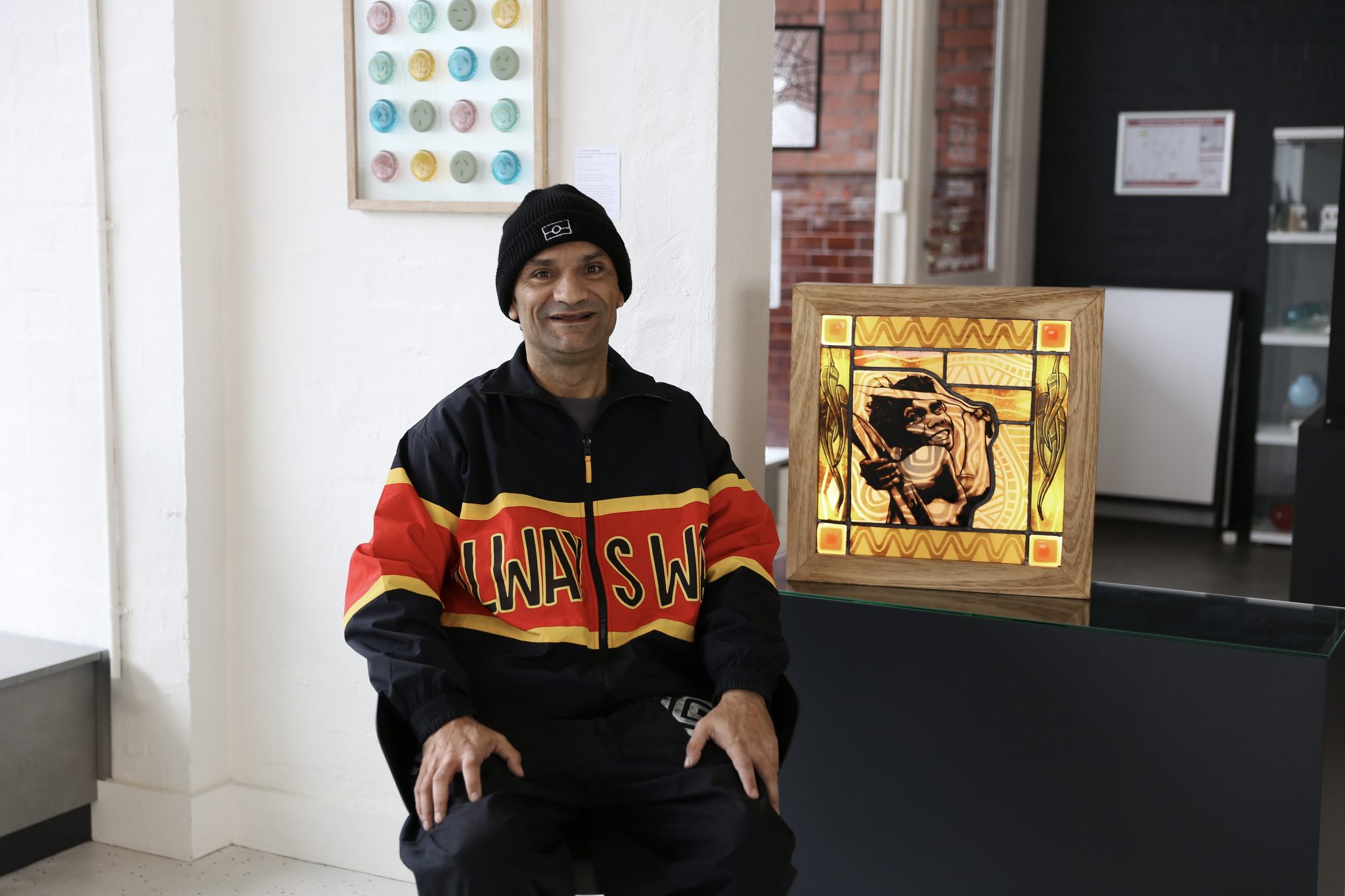
Rickie Martin. Photo: Bianca Lamont.
“I thought it would be a lot harder than it was because it’s a Western world form of art and it’s all based in Christianity and that ain’t my belief,” he says. “As Indigenous people, we understand what the people who believed in Christianity did to our people.”
Martin soon discovered a freedom to apply his own culture to this foreign medium. “That’s the oldest living culture in the world and I’m able to put it in glass,” he says.
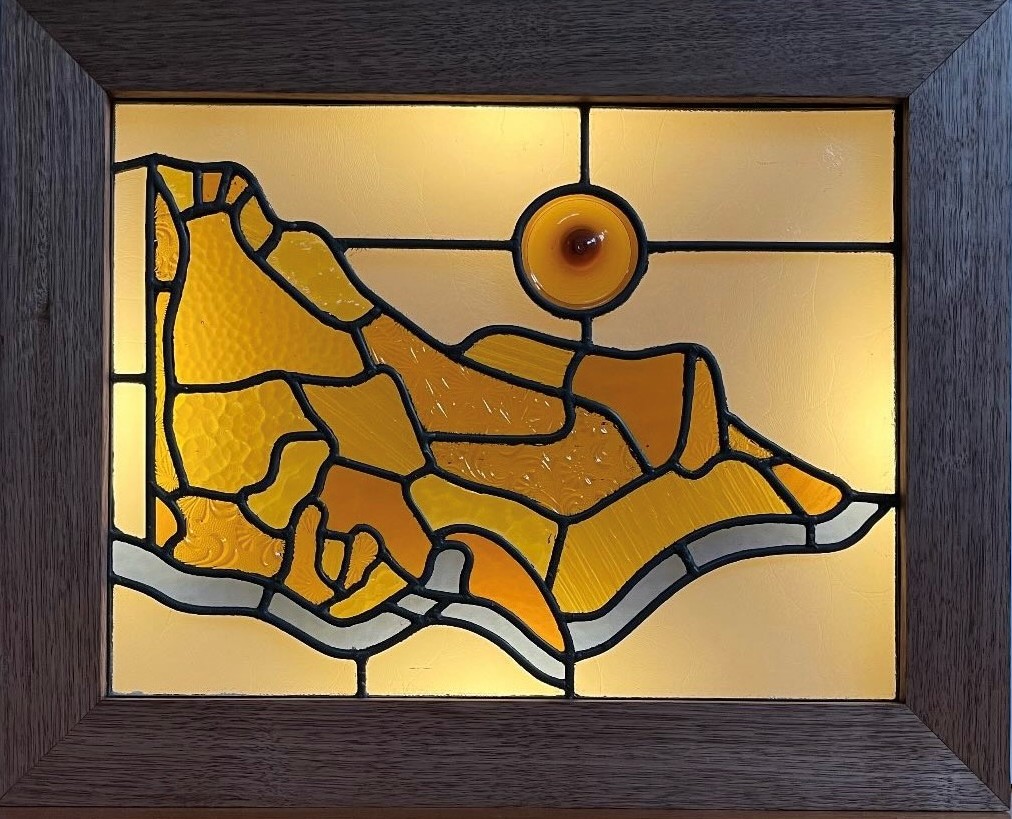
‘Tribes’ leadlight by Rickie Martin.
Incorporating leadlight, stained glass and as many other techniques as he can, Martin describes his style as a mix between contemporary and traditional. While protest still has a place in his life, he views glass as a form of “positive culture”. Martin now teaches the First Nations program that started it all and has collaborated with other alumni like Shea Oberleuter.
“As far as I’m concerned, it’s a good way to close the gap in education,” he says. “The glass industry would benefit if there were more Indigenous people too.”
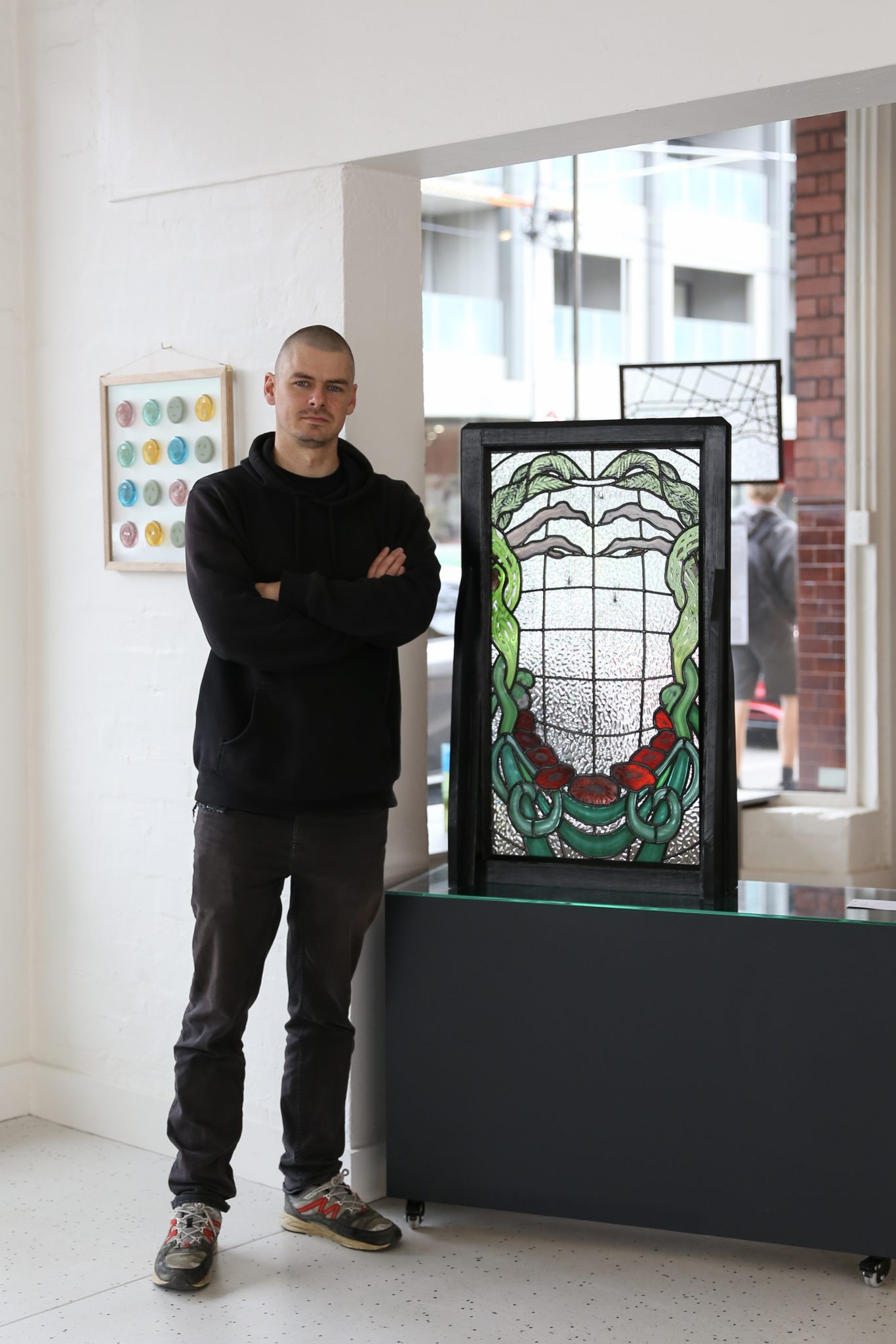
Jordan Benson next to his stained glass collaboration with artist Celeste Magee. Photo: Bianca Lamont.
Jordan Benson is another teacher at Melbourne Polytechnic whose work subverts the traditional subject matter of stained glass. The painter and former graffiti artist took an interest in the medium’s uncharted territory while visiting Europe’s museums and churches.
“I would always look at the windows and be like, ‘Oh, wouldn’t it be funny if it was a lad drinking a beer or something like that’,” he says. “There’s a good modern take here that hasn’t been explored much.”
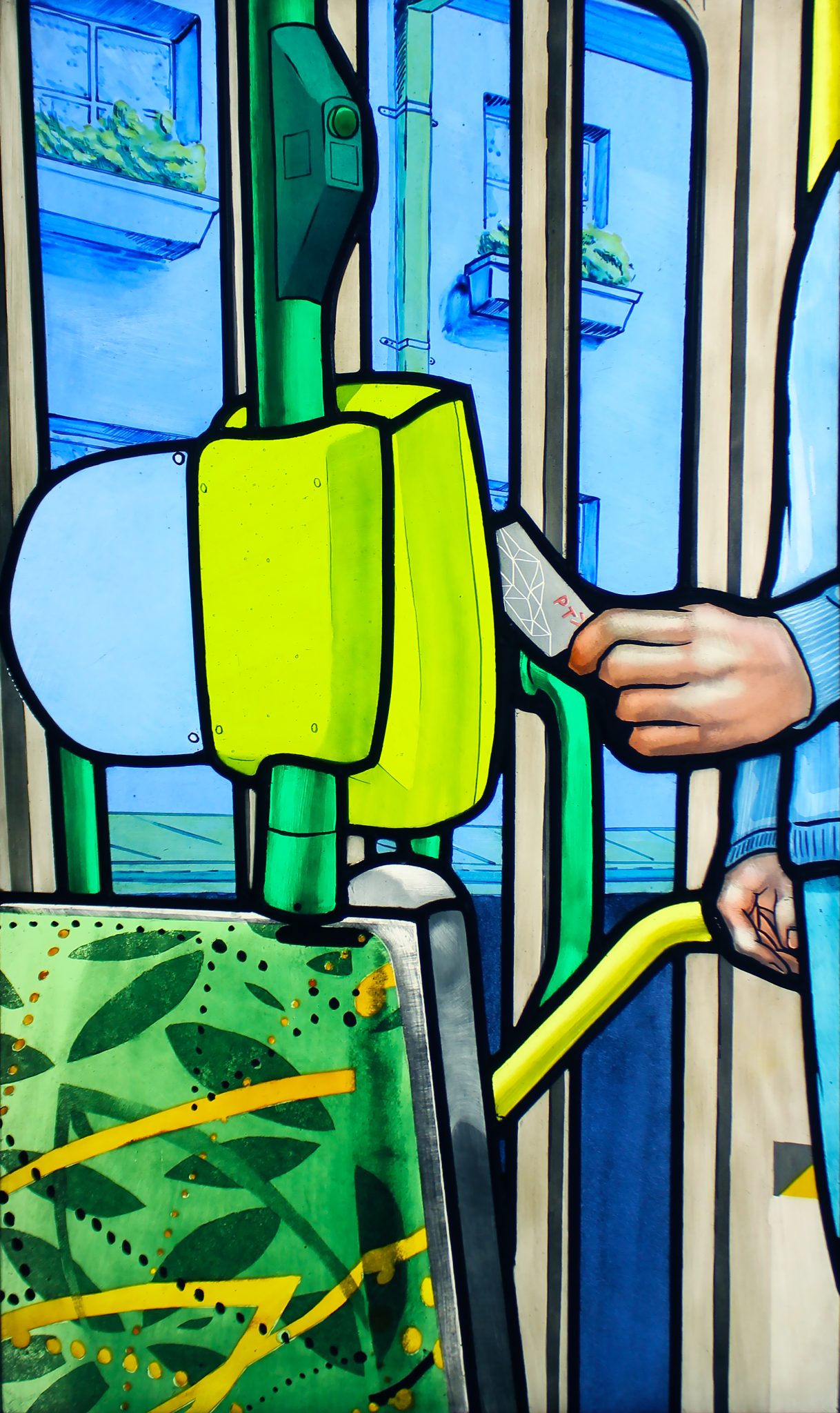
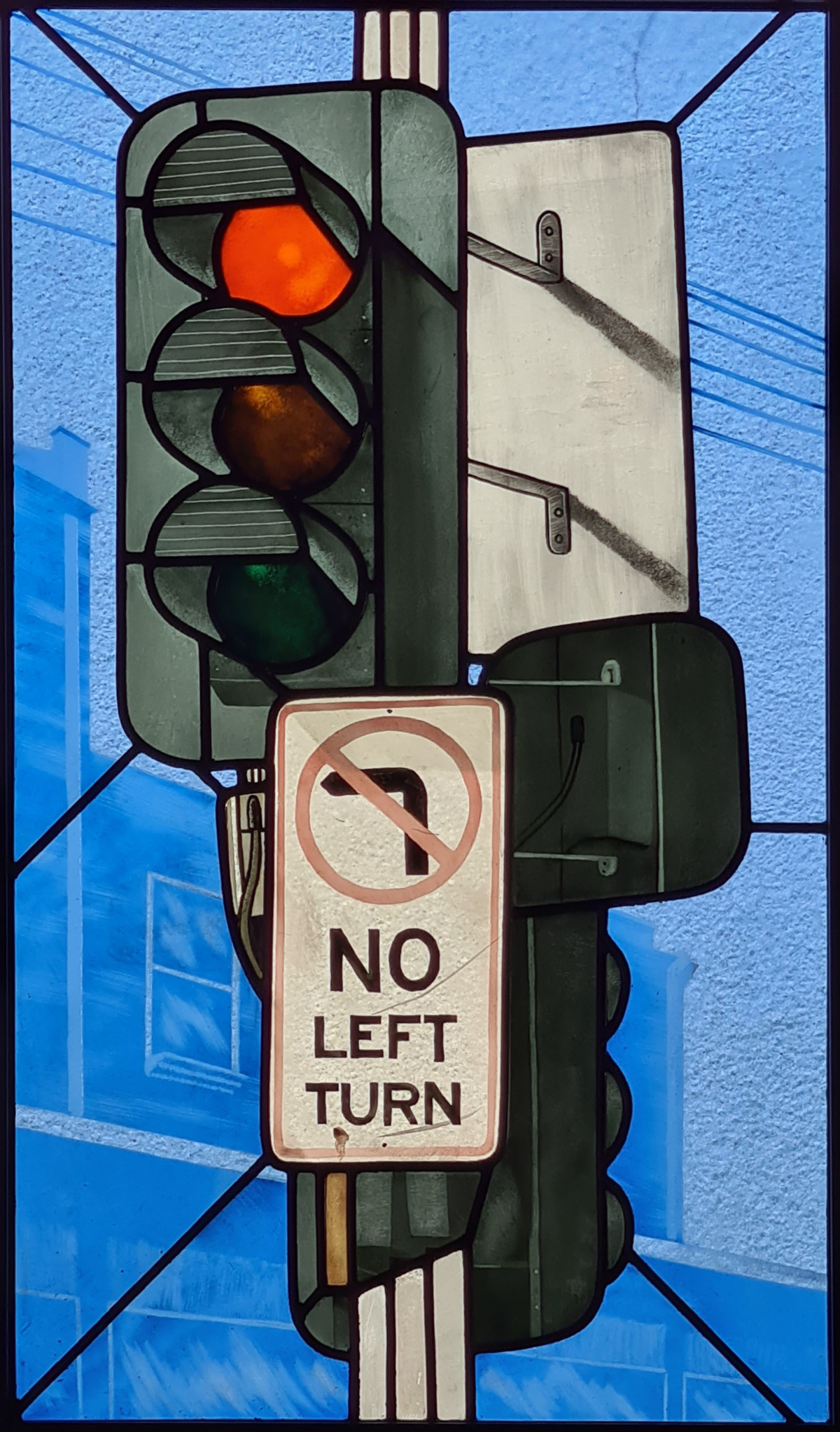
Jordan Benson’s work captures contemporary subjects in the traditional medium of stained glass. Photos: supplied.
Upon his return, Benson eventually enrolled in the Certificate III. His thoroughly modern body of work – whether depicting someone tapping on their Myki or the subcultures of his peers – maintains a reverence for stained glass techniques. “I really just try and go down my own art avenue,” he says.
Through the kaleidoscopic styles of McCullough, Martin, Benson and other alumni like Poppy Templeton and Jodie-Mae Holm, GLAAS Inc has successfully made an old-fashioned trade relevant again. Yet there is still a place for young traditionalists in their fold.
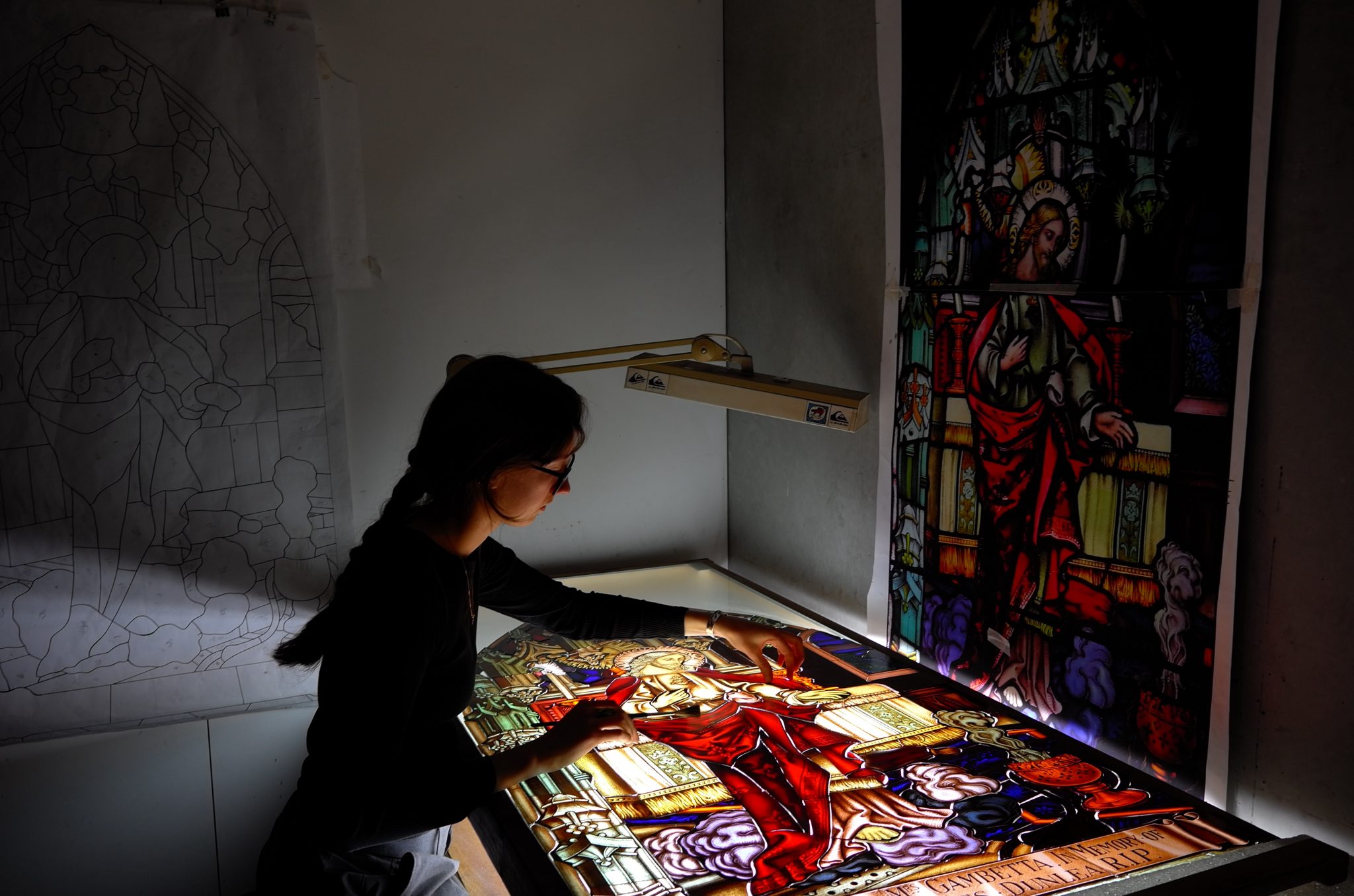
Rebecca Boehme adds final touches to a reproduction project. Photo: supplied.
Rebecca Boehme is employed in Melbourne as a traditional stained glass painter, conserving and restoring heritage glass. Kennedy says Boehme is the only person in her age group who has mastered the skills necessary to do this work to such a high level.
“I don’t think traditional practice and contemporary design should exist exclusively,” Boehme says. “As the interest in glass increases, more daring and complex projects are bound to follow. The free-flow of ideas, experience and expertise between both traditional and contemporary practices can only benefit, grow and sustain the industry into the future.”
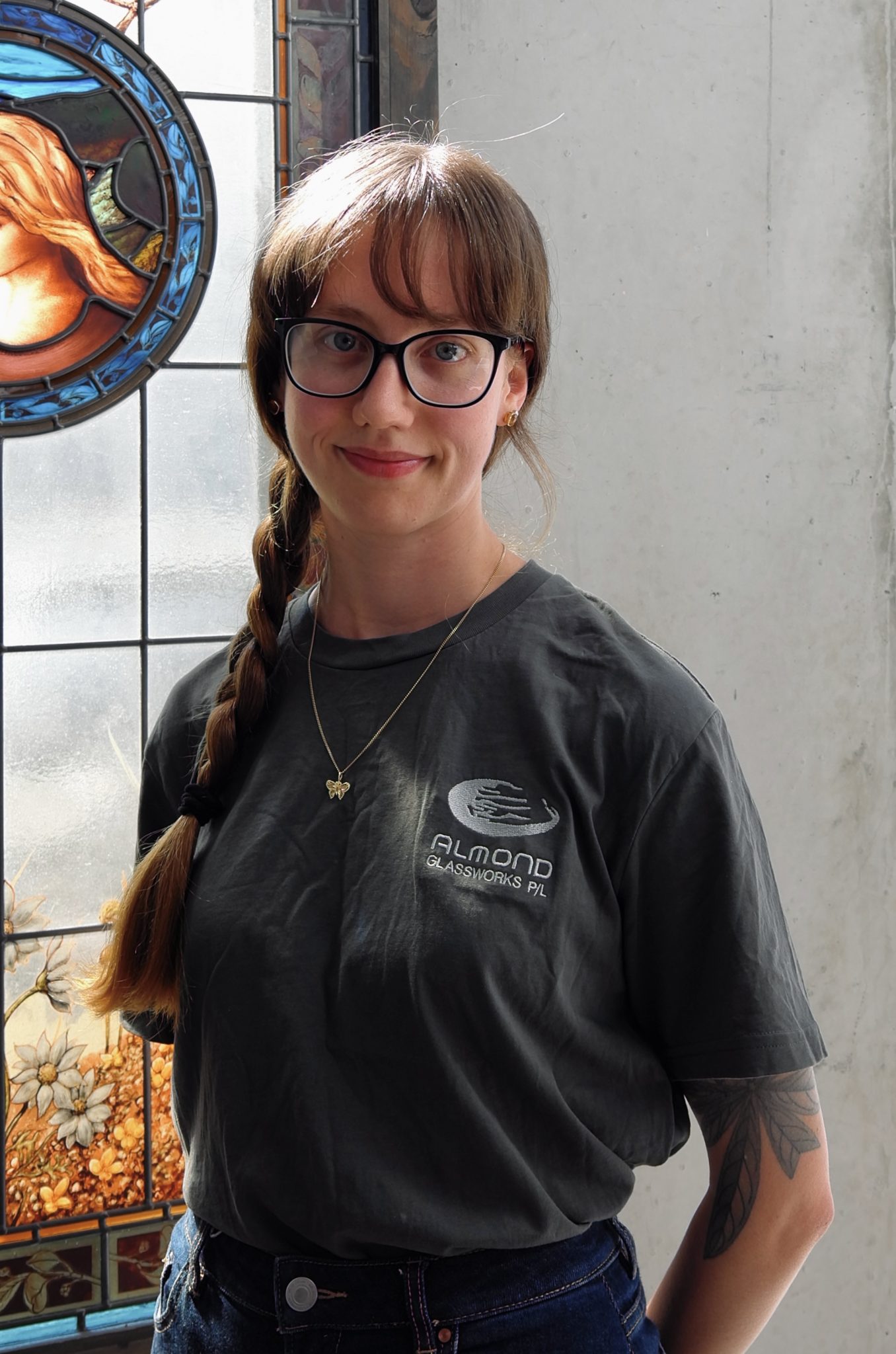


Rebecca Boehme alongside one of her stained glass restoration works in progress. Photos: supplied.
The future looks bright once more for glass design in Australia. Kennedy is proud to share that enrolments have grown to 74 in 2025. These newcomers are set to join a tightknit community averse to gatekeeping their skills, lest they lose them again.
“Whenever anyone else gets success in this industry, it’s good for everyone,” McCullough says.
After years of tireless – and voluntary – advocacy, Kennedy finally feels designed glass is in “safe hands”.
“We’re the core, but you guys are the ripples,” she says in our group interview. “And the ripples just get wider and wider.”
This article originally appeared in issue 121 of inside magazine. Grab a copy here.

© Niche Media 2026