

The triple-barrelled dynamic duo at Tom Mark Henry

Share
Tom Mark Henry is a Sydney-based interior design practice founded in 2014 by directors, Cushla McFadden and Jade Nottage. It’s also the latest studio to join Australian Design Review‘s 30UNDER30 program as a practice partner.
Not only that, McFadden has also signed on to be a shortlist judge for the 30UNDER30 applicants this year. Here ADR talks to both designers about their admiration for the program, but first we ask McFadden about her role assessing the entries this year…
Australian Design Review: What will you be looking for as you go through the entries?
Cushla McFadden: I will be looking for a level of rigour that shows a budding all round designer that is both creatively expressive and technically sharp.
You have a number of younger designers working at your studio – what do they bring to the practice?
We love having a mix of years of experience in our practice. Often we can be challenged by a different perspective rather than looking for solutions that have worked before.
Do they ever surprise you?
Of course! I am especially surprised at times by the maturity of graduates and young designers.
And when you hired them, what were the standout qualities or achievements that got them the job?
We look for a great cultural fit or what they can bring to the team first, and technical skill second.
=================================================================================================================
Australian Design Review: Your practice celebrated its first decade a couple of years ago. 30UNDER30 is celebrating its fifth anniversary in 2026/2027. Why was this a good time to become involved as a practice partner?
Cushla McFadden: We have always strived to create a culture of mentorship at Tom Mark Henry, so the 30UNDER30 program resonates with that shared value. We attract lots of applications for internships, and have created an internship program that supports students learning in the design industry to gain real studio experience. We think it’s so important to provide opportunities like these to the people who are helping shape the future of the industry.
Were you aware of the program before you became involved?
CM: Yes, we’ve admired the program since it first came on our radar a few years ago.

What were your initial reactions to the concept behind the program?
CM: It is rare for a program to be so heavily invested in students and graduates and people early in their design careers, with no other agenda but to give them the best chance at succeeding and having their portfolios recognised, and is free to enter.
What are the values and overarching guiding principles at Tom Mark Henry that you consider align with the program?
CM: First and foremost we value creativity, and creativity requires time. Time for ideas to form, develop and be resolved. Giving graduates the gift of time with a mentor to hone their creative process is invaluable.

How important do you think the 30UNDER30 program is for young designers and architects?
CM: It’s incredibly important for them to feel seen, heard and important. We need young designers in the industry using their voice to keep pushing the design industry forward and for design to continue to gain more recognition as a practice and profession in Australia.
Did you have the benefit of mentorship when you were young designers?
CM: We’ve had some great mentors in business over the years, and I was lucky enough to be selected for a Dulux Dialogue tour, which involved a week with design peers and industry leaders travelling to different cities and soaking up inspiration.
What do you think being involved in the program means for your practice?
CM: We’re honoured to to be partnered with such an exceptional program that gives back so generously to the design community.
You work as a duo, but how important do you think peer to peer relationships are for designers in the early years of their careers?
Jade Nottage: The design community is so deep and generous within Australia, so forming bonds and relationships with design peers who are willing to share their time and knowledge is an important part of a designer’s career. Cushla and I are lucky to have each other; we’ve grown as both designers and people side by side, but the influence of the broader design community can’t be undervalued. By establishing these connections with others early, designers have the fortunate ability to be sponges for influence and information, which can be so critical in the formation of ethos and process.

Can you talk further about this point, particularly taking into consideration how to have successful working relationships across states with Cushla in Sydney and Jade in Brisbane?
JN: While our studios are physically separated, the foundation of our partnership is built on trust and a shared vision that we established long before expanding into Queensland. Having a presence in both Sydney and Brisbane broadens our network, allowing our team to collaborate and experience jobs in locations or sectors they may not have otherwise. We rely heavily on studio processes and open communication to ensure that all staff feel connected, collaborative and supported regardless of location.
Passing that first decade point of working in the A+D industry, what do you know now that you wish you’d known when you were at the age of the cohort?
JN: One of the biggest lessons we’ve learned is that great design isn’t just about how something looks – it’s about really understanding the client’s brief and solving the right problem. It’s easy to get caught up in the visual side of things, especially early on, but managing projects, working closely with consultants and navigating the day-to-day realities of running a business is where so much of the work happens. We’ve also learned that being adaptable and building strong relationships with both our team and our collaborators is just as important as the design itself.
What projects has Tom Mark Henry been working on recently?
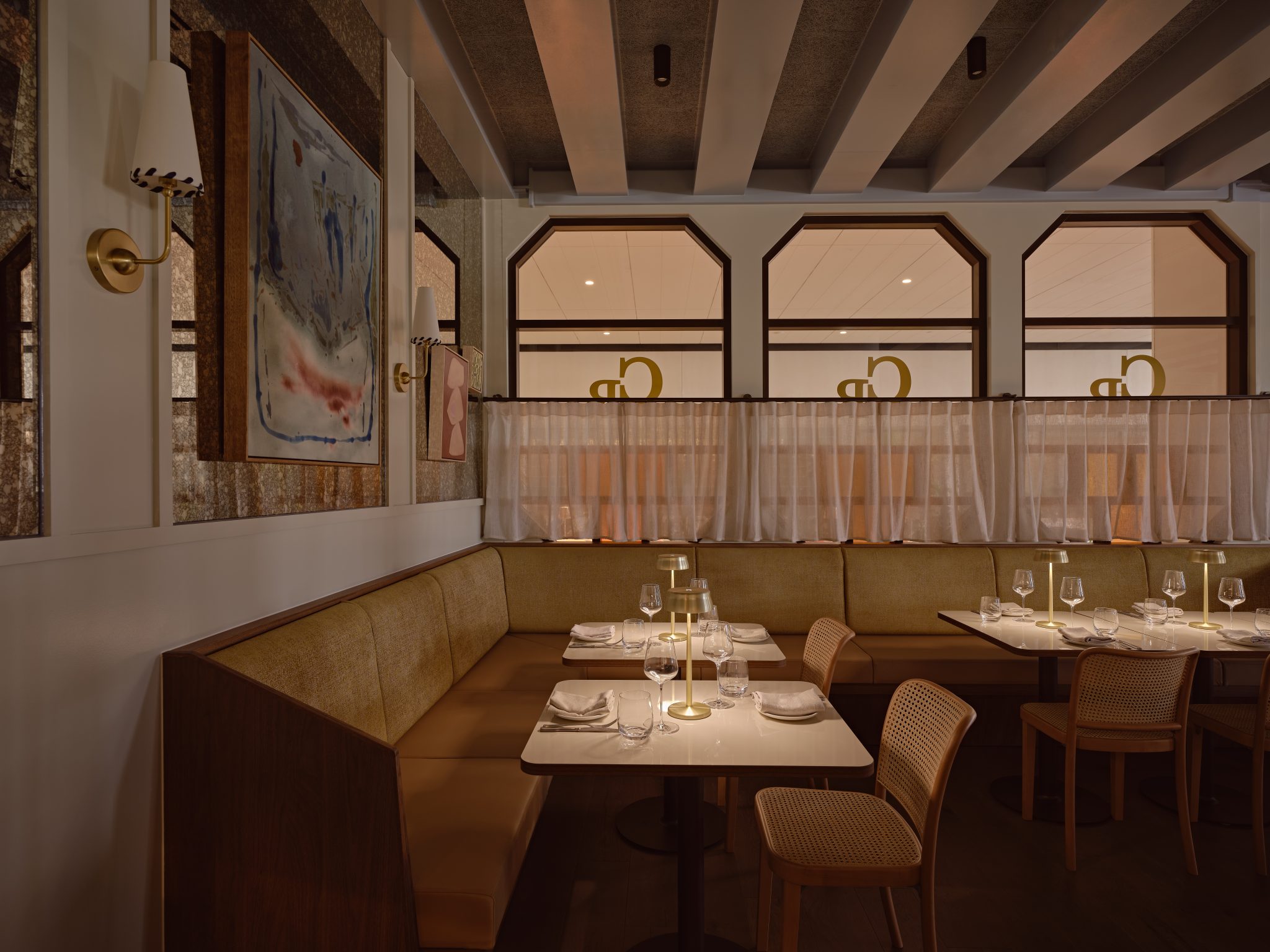
JN: We currently have a diverse and exciting portfolio of projects across both states. In the hospitality and wellness sector, we’re designing a large restaurant south of Sydney, alongside an exciting wellness precinct within a multi-residential development in Brisbane. We’re also continuing our work in the education sector with the design of an early learning centre that sits nearby a recently completed project within the same school. Complementing these projects are a number of exciting multi-residential and single residential projects. Beyond our built environment projects, we’re delighted to be continuing our collaboration on a range of exciting product design partnerships.
How do you think practice partners and the cohort can have a mutually beneficial relationship?
JN: It is absolutely a two-way street. As a practice partner, we can provide the cohort with grounding industry realities – sharing the realities of running a studio, managing budgets and business development. In return, the cohort brings an incredible injection of fresh energy and creativity. Being exposed to the younger generations of designers more broadly will encourage us to look at our own creative approach through a new lens.

What would you say to either potential cohort members or other practice partners considering getting involved?
JN: For potential cohort members, be a sponge, ask questions, and be excited about the invaluable network you are building. These peers will be your support system for decades. For practice partners, getting involved is one of the most rewarding ways to give back to the generous Australian design community. It keeps you connected to the future of our industry and is a reminder of why we became designers in the first place.
Top image: L-R Jade Nottage, Cushla McFadden. Photo: Damian Bennett.
ADR’s 30UNDER30 program is brought to you by co-major sponsors Neolith and King Living, alongside partners Designer Rugs, LAUFEN, Krost, Miele, Signature Appliances powered by Miele and Tongue & Groove.
ADR is also grateful to our 30UNDER30 practice partners AJC Architects, BLP, BVN, Cera Stribley, COX Architecture, Design by WBL, DKO, Genton, Gray Puksand, GroupGSA, Hare + Klein, Hassell, HDR, Lawless & Meyerson, Luchetti Krelle, Made For, Mim Design, Richards Stanisich, RIZEN Atelier, Rothelowman, SJB, T. Black and Tom Mark Henry for helping us foster the future of Australian design.
Follow @ausdesignreview and @adr30under30 and subscribe to ADR’s newsletter to stay up-to-date with the program.

© Niche Media 2026