
Looking for Luchetti Krelle, the latest 30UNDER30 practice partner

Share

Rachel Luchetti and Stuart Krelle knew each other from university, but a chance meeting in a bowling club one afternoon led to them joining forces to establish the now multi award-winning practice.
Here’s a fun challenge. Try looking at the awards and nominations list on Luchetti Krelle’s website and see which body part gets tired first. Will it be your eyes glazing over or a cramp in your scrolling finger or thumb?
In the nearly two decades of practice, the studio has been racking up accolades right, left and centre. And this year its co-founders and principals Rachel Luchetti and Stuart Krelle have decided to return the A+D industry’s favour and join 30UNDER30 as a practice partner.
Here they talk with Australian Design Review about the success of their partnership, how they complement each other and why a mentorship and leadership program like 30UNDER30 benefits the industry.
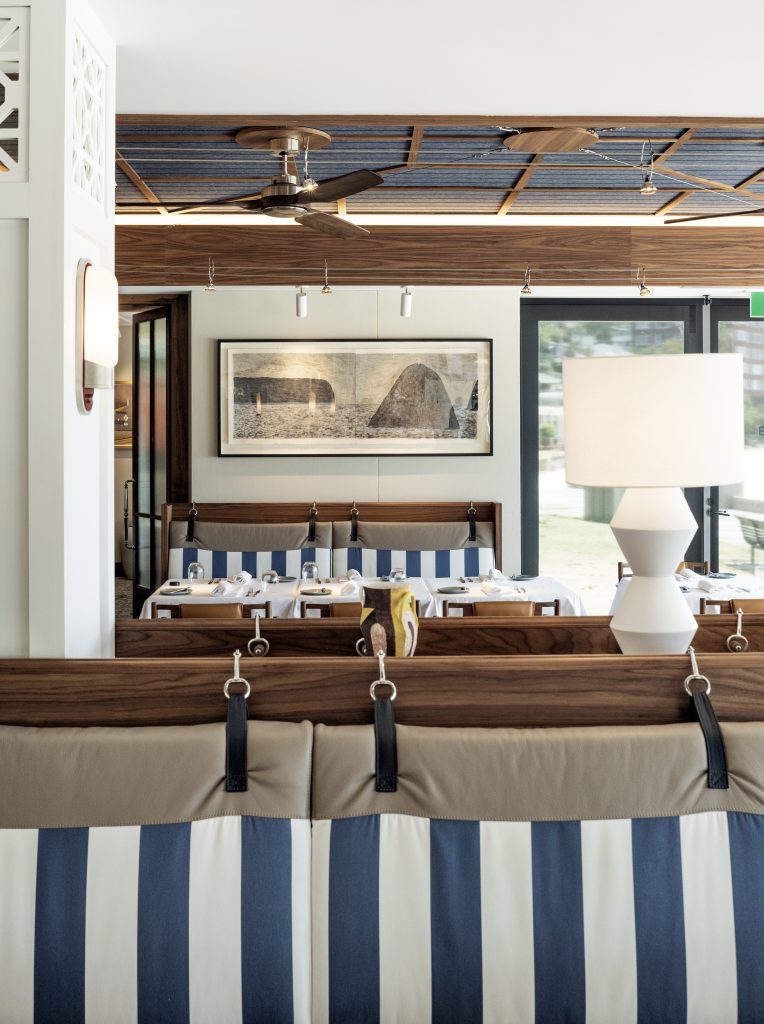
Australian Design Review: You’re coming up for 20 years as a studio. What do you know now that you wish you’d known starting out?
Rachel Luchetti: How to run a business. That would have been good.
Stuart Krelle: At the same time, it was kind of good that we didn’t, because then you go all in. We just went for it!
RL: What you don’t know can sometimes protect you. I think in hindsight that naive mindset was probably a good thing.
Do you think if you had known what it was going to be like, you would have baulked at the idea?
SK: No, not at all. The funny thing is I look at our office – we have a decent-sized team – but sometimes I feel we still keep that mentality that we’re just a start-up. We’re still young even at 18 or nearly 20 years, which may actually be a good thing. It keeps that energy.
RL: I just don’t even feel like a grown-up in life!
How many people do you have now?
RL: 22, if you include contractors.
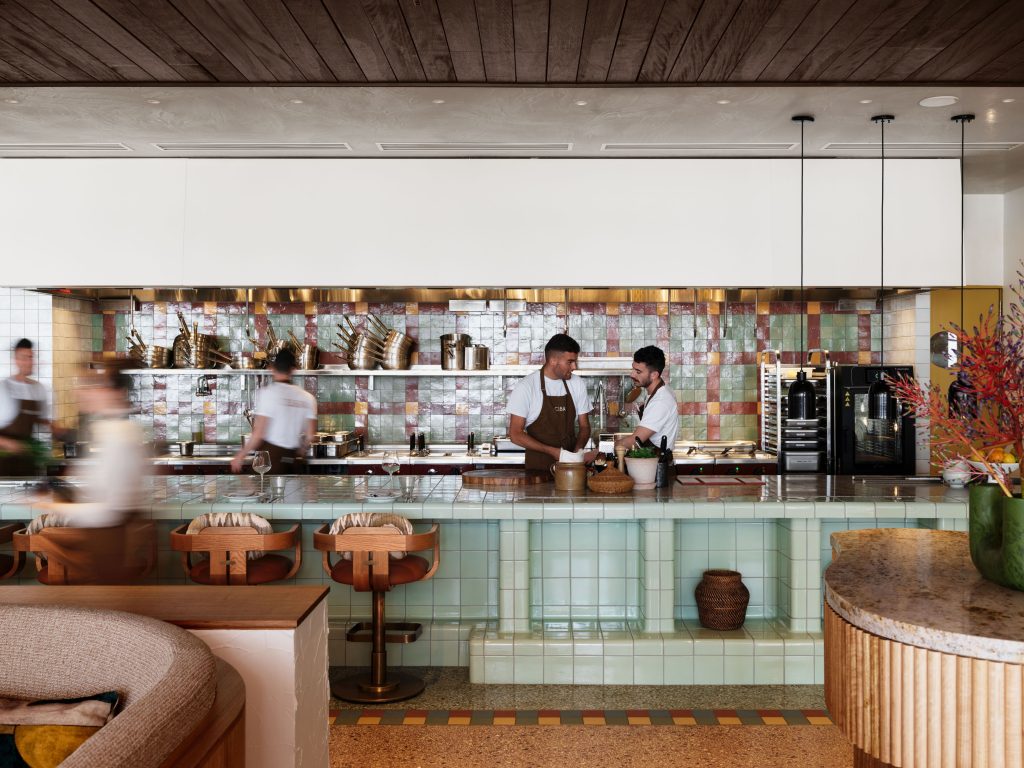
Over those 18 years, what have been the major changes that you’ve seen in the industry?
RL: Well, we’ve gone from everything being inspired by magazines and analogue to being very digital. That’s been huge. At university I hadn’t even learned how to draft on a computer; I used a drafting table. And then when we were first out of uni we were still sending faxes to builders.
There wasn’t such a thing as Facetime to be able to look at something on-site.
And what about materials and construction? Have they changed much?
SK: Disappointingly – certainly over the last five years post-COVID – the margins are so tight now. Trying to be true to a material is harder and harder as years go by. That’s something I’ve seen a lot in that industry. It’s the race to make everything look a million bucks, but cost nothing.
RL: We’ve lost a lot of the artisans of trades as well – carpenters that are real carpenters, stonemasons that are real stonemasons.
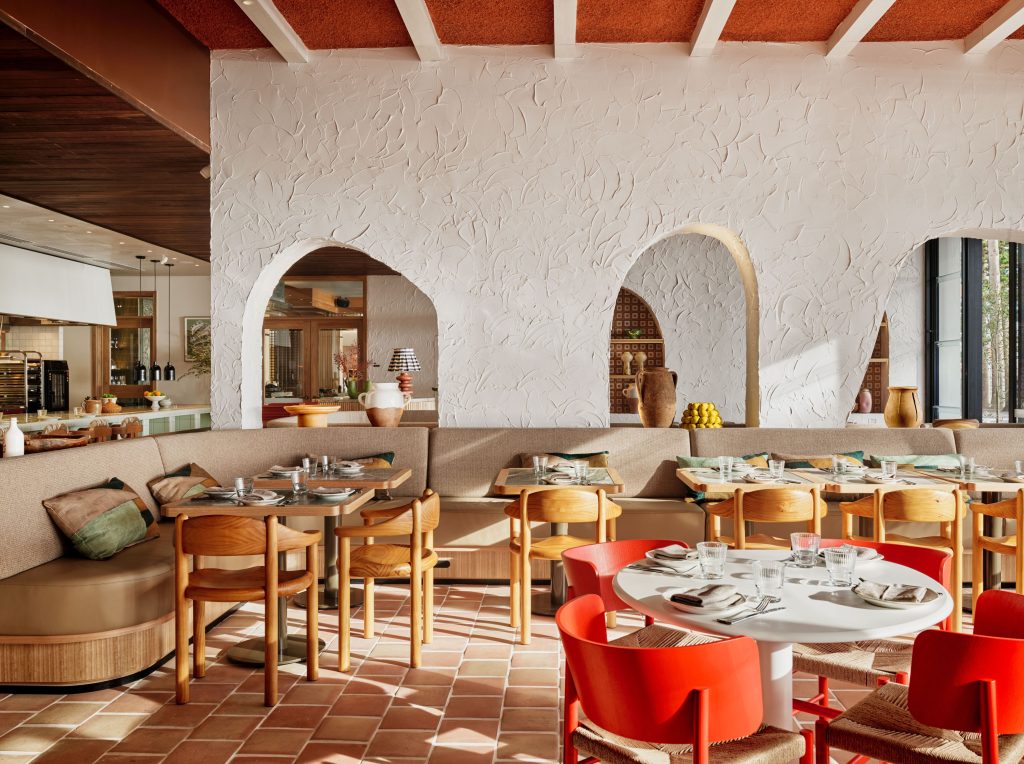
So do you think the emerging designers, the 30UNDER30, they’re going to be dealing with people who aren’t particular experts in their trade?
RL: Yes.
SK: When you start out, you take a lot of people’s word on something, but just because it’s one contractor it doesn’t mean that they can actually do it.
There are some really good ones and then there are ones that aren’t, who will say, ‘Oh, you can’t do that.’ And you say, ‘Oh, OK.’ And then you find out you actually can do it. So you need to have that confidence to push back. I think that’s probably one of my big regrets.
RL: At least now we can ask AI if it can be done. It used to be that we were told and we didn’t have another resource to go and check if something is doable or not doable. So now, even in designing, if we don’t understand how something’s done, we can research online how to do it and then put that into our documentation. So that’s changed.
That sounds like young designers need confidence and curiosity, but what other important tools do you think they should have?
SK: Understanding their value. We’ve had a very successful run and it’s amazing, but when you look at it, you remember when you maybe didn’t back yourself enough on things. It’s knowing the value of what you are to a project.
It’s sad; you can see it happening in the industry that for architects and interior designers that value seems to be slightly diminishing or that control has been taken away.
RL: Yes, having confidence in your own ideas [is important]. Sometimes you believe in something, but selling it to make the decision-makers understand it and agree to it when they’re spending money… that’s difficult. It’s becoming more difficult now, because of all the information at everyone’s fingertips.
We have to learn how to adapt to that environment because everyone expects a polished 3D rendering now. We used to get away with just a hand sketch, which left room for the imagination and allowed us more time to then work on the design. Now that process is really getting cut short.
I can’t imagine being in my 20s now with AI as a native tool. It makes that creative process a little more on trend and you’d hope that your concept can transcend a trend.
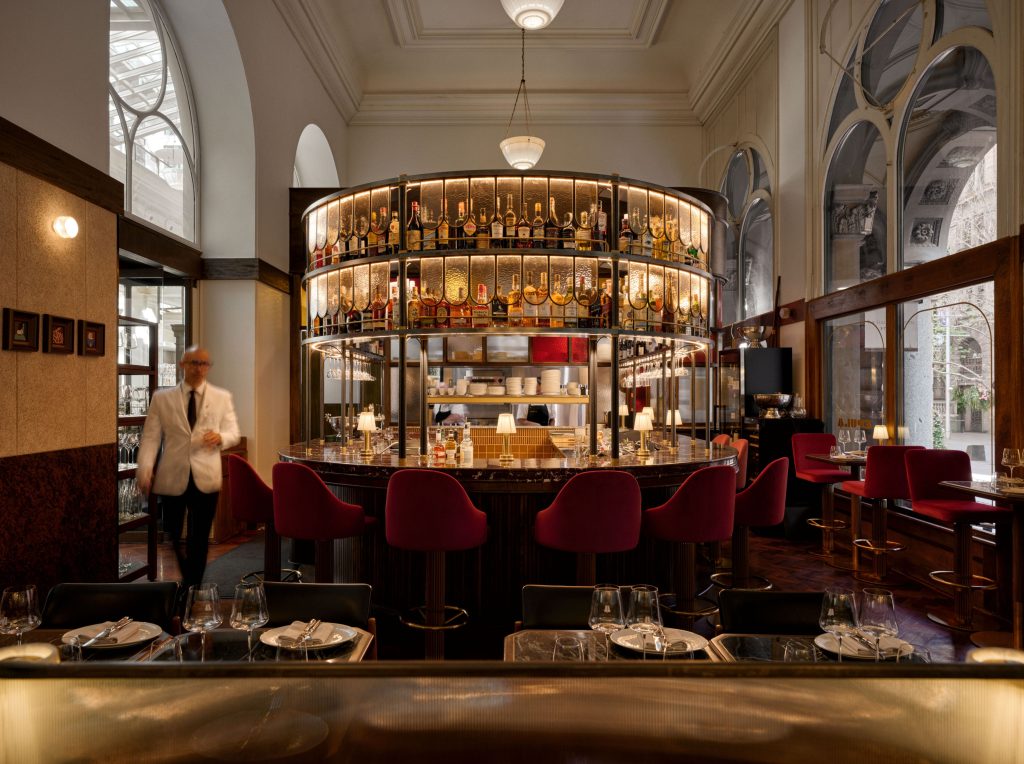
Because the danger is that it leads to homogenous designs?
RL: That’s right.
SK: Which it’s definitely going towards.
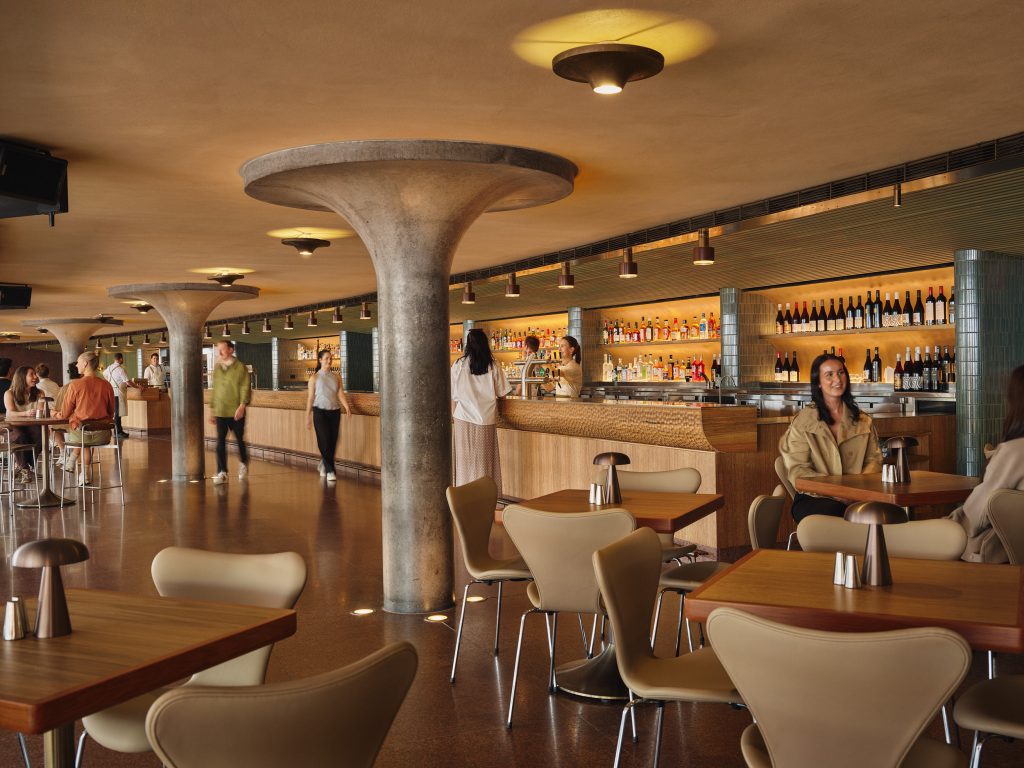
RL: Look, we’ve always had trends and that’s great, that’s what people want. And we do hospitality design, which you can say has a five-year lifespan. You hope it goes to 10, but it doesn’t always happen. So we try to approach it to give a sense of atmosphere. It’s how a space feels and how you feel, because it’s the real world. It’s not about the photo. It’s not about getting that vignette on Instagram.
Pathways
Did either of you have access to mentorship when you were emerging designers?
SK: No, not a design mentorship, but when we were starting out, we were agile. We were looking for ways to get other income or whatever income could come in.
RL: There was a government initiative for the unemployed to start their own business. We had to come up with a business plan and we went through a course where we learned how to run a business – basic stuff…
SK: Super, super basic!
RL: And at the end of that we received an allowance that meant we could start the business. It was the equivalent of getting the dole while we were working. Then we also both tutored at (UTS) University of Technology Sydney and that’s what got us through the first couple of years.
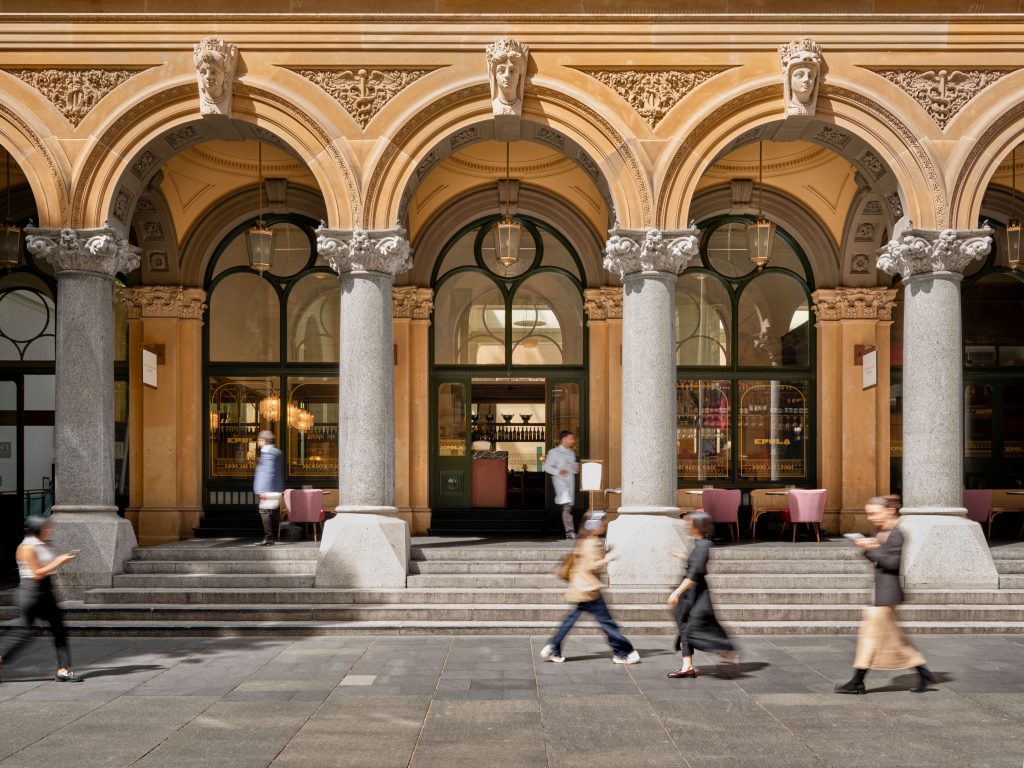
Going back to that time, Rachel spent three years at PeckvonHartel, but what about you, Stuart?
SK: During my final year at uni I was at a small company in Balmain called CCP and then I went to Yarn Associates, which did high-end residential. From there I bumped into Rachel one time. I was actually working at two jobs. I was doing a freelance job for a nightclub in Sydney. She knew about the opening and said, ‘Oh, you know, we do a bit of hospitality here.’ And Rachel was actually doing it all herself at that time. We worked together on a project for about 18 months. And then we thought, ‘Hey, let’s just do this ourselves.’
The birth of Luchetti Krelle
That was still comparatively early in your careers to found a practice. What gave you that confidence and impetus to do that?
SK: It was like when I was a kid in primary school, I would do odd jobs around town. I didn’t know what a job should look like. I’ve never worked in a big firm, so the small firms have helped that feeling. Also there’s confidence in knowing the two of us had these great kinds of skills together. We were already working by ourselves at that time. We thought, ‘Why work for someone else when we can just do it ourselves and still do the late nights?’
Do you have complementary skills?
RL: We’re both very much concept heavy, but we bounced really well off each other, and we brought the best out of each other. I think Stuart is the best detailer. I was very impressed with that and it was something I knew I wasn’t good at.
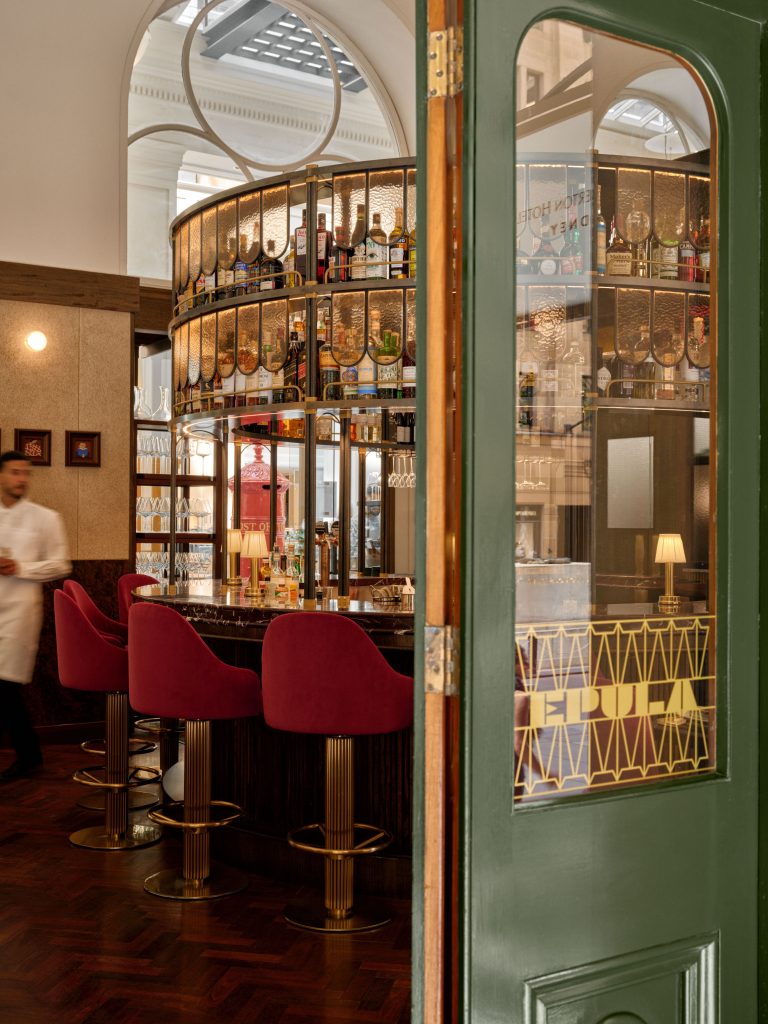
I was really good at material knowledge and understanding. I’d do a lot of research into what was appropriate. So, I would look after the FF&E (furniture, fixtures and equipment) and the schedules. But I wasn’t great at documenting. I did need Stuart for that. I was definitely better at selling our ideas than Stuart. There was crossover and also a lot of respect between ourselves. We also got along really well, we just clicked. I never actually thought I’d start my own company. It wasn’t on my radar, but we just loved hospitality. So doing the projects that we enjoyed and having the choice over what we worked on – I think that was the biggest thing for me.
On leadership
What do you think are the most important qualities for leaders in design practices?
SK: I would say Rachel hasn’t changed much, where I’ve probably changed a lot more in that way. To Rachel’s point, it’s a personality thing that seems to work really well. The energy that we bring, the shared values – we’re very good with that. The trust has been huge in that way. We always have a chance to veto. As soon as someone says, ‘I’m not sure about this,’ it’s always respected. You do have to allow for mistakes…
RL: We’ve had expensive mistakes,and there’s never been any anger from the other partner. There’s been a lot of forgiveness in that respect. It is actually nice because Stu and I have such different temperaments. We have clients that will gravitate to one or the other and neither of us get offended by it, because it’s like any relationship, you want to make sure you get the right fit.
I always say that I’m Stuart’s biggest fan, but I really am. And it’s worked out really well that projects that both of us have led in a creative sense have won awards. It’s not like just one of us is winning all the awards. That would be awkward!
Practising as a partner
Talking about 30UNDER30 for a minute, what was the deciding factor that made you decide to come on as a practice partner?
RL: One of our staff, Siobhan McNamara, was one of the 30UNDER30 a few years ago and we saw what she got out of the program and we loved that it helped her grow as a young person, to the point where she’s become very much a loyal staff member. Siobhan is currently on a one-year sabbatical, but we said, ‘We’ll take you back after.’ It was a really positive thing going through the mentorship, because it helped her understand a lot more about the wider design community and that’s a good thing.
We’ve always been mentors, like when we’re teaching at UTS. And we’ve always brought in paid interns. We don’t believe in having unpaid internships.
Conversely, those young under 30s, in the practice or coming in as interns or to do work experience, what do they give to the studio?
SK: I think the sense of their curiosity or willingness to learn can be inspiring. It’s almost like a parent relationship.
RL: We have also learned a bit about our work ethic from some of the younger ones. Our mentality was very much that you work all those hours and you don’t question it and we’ve actually had to rethink that, because young people are coming from a different perspective and we’ve had to adapt to really much better working conditions for everyone, including ourselves.
SK: It’s less exploitative. There were a lot of businesses that, when you look at it…
RL: … we were exploited. We were all exploited, yes.
SK: So that’s going back to knowing your value again and knowing when we do need rest.
RL: And it can be a bit confronting as a business owner at first because, you think, ‘OK, how are we going to make this work?’ And the simple answer is you have to put your fees up. And so, if you don’t win that project because your fees are too high, well, you can’t do that project.
That’s one of the crossgenerational changes, but what do you think about the importance of peer-to-peer relationships and especially cross-disciplines, which is a core part of 30UNDER30?
SK: It’s awesome in that way that it does speak straight to the idea of a community. It really does take so many people to do what we do. It’s knowing your value, of course, but it’s also not overinflating that as well. You can see on social media there’s a lot more referencing those artisans or builders or other people in the community…
RL: And engineers, even engineers can be creative! We try and foster with our staff that they should treat all consultants – all the peers that we’re working with, the builders, the clients and everybody – the same. And we do get a lot of good feedback from our clients and builders that our team are good to work with.
And does Siobhan keep in contact with the rest of her cohort?
RL: Yes, she does.
On the horizon
Is there anything looming that you think should be of concern for young designers or that they should be prepared for in the industry?
RL: The age of AI is going to make a lot of roles redundant. But we’re also going through a huge growth period in construction. So, it’s not that there won’t necessarily be work, but what will that role look like? Hopefully, it’ll look better for us and the tools that we get will help us. But it’s who can drive those tools the best and who can stand out when given such a resource. It’s going to be more competitive and certainly roles in documentation aren’t going to be there.
SK: I think keep the optimism, keep the ambition, but keep AI as a tool. You’ve got to be ahead of the curve on that one. There’s so much more to our job than just the visuals and the aesthetic.
RL: Because it’s problem solving and you can’t just outsource that.
Practical projects
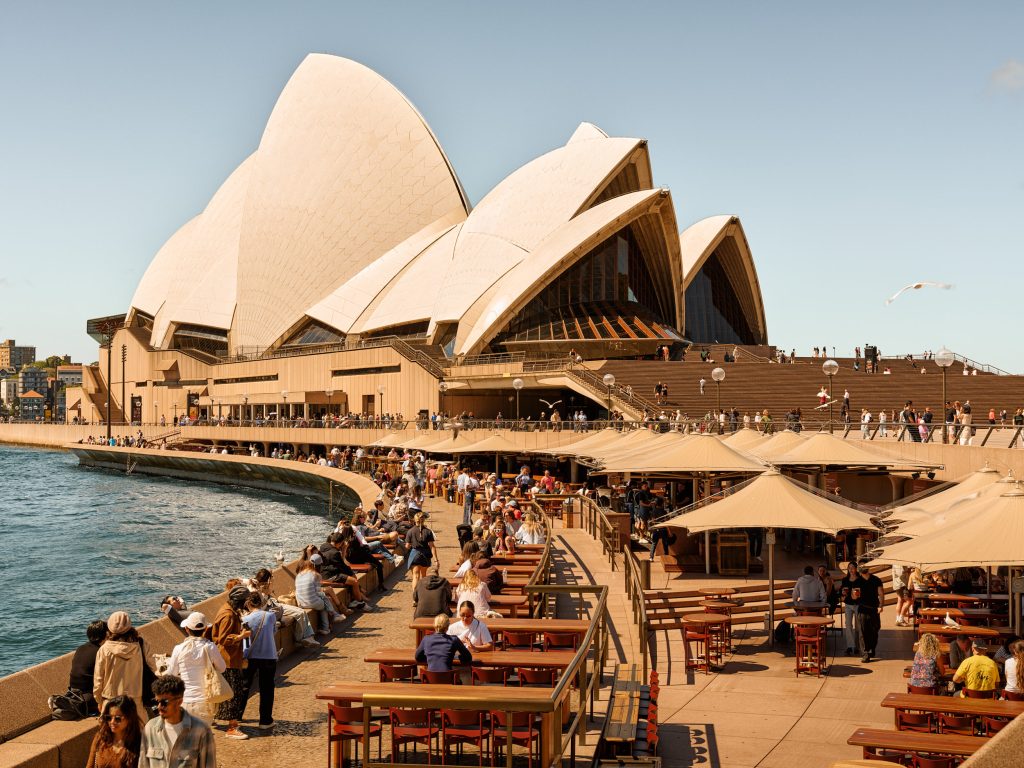
Are there any projects that you’ve been working on recently that you’re particularly proud of or are really meaningful for you?
SK: I don’t mean to toot our horn, but I do think we’ve been fairly prolific over the period of time. As a team we’ve produced a lot. We’re working on a project at the moment and there was something that had to change. The project manager said, ‘Don’t worry, the clients are just going to come in and they’re going to love the interior and you’re going to get all the praise.’ And it really struck me that it’s never really been about that for me. The process is what’s the most rewarding thing on every project.
RL: Yes, because sometimes it’s the tiny projects that you love, because it’s a little restaurant or something that you did and you go back there and you eat and everything’s good – it’s the whole production. For me it’s enjoying the space afterwards.
We’re working on some really exciting projects and some large-scale hotels, but to Stuart’s point, sometimes you get a client that lets you do some amazing things and that may not have been the project that you thought you would enjoy.
I love doing hotels where we get to do the rooms and the social spaces. We’re working on one in Queenstown, New Zealand, which has been really good because the setting is amazing. That’s been a highlight.
DR’s 30UNDER30 program is brought to you by co-major sponsors Neolith and King Living, alongside partners Designer Rugs, LAUFEN, Krost, Miele, Signature Appliances powered by Miele and Tongue & Groove.
ADR is also grateful to our 30UNDER30 practice partners AJC Architects, BVN, Cera Stribley, COX Architecture, Design by WBL, DKO, Genton, Gray Puksand, GroupGSA, Hare + Klein, Hassell, HDR, Lawless & Meyerson, Luchetti Krelle, Made For, Mim Design, Richards Stanisich, RIZEN Atelier, Rothelowman, SJB, T. Black and Tom Mark Henry for helping us foster the future of Australian design.
Follow @ausdesignreview and @adr30under30 and subscribe to ADR’s newsletter to stay up-to-date with the program.

© Niche Media 2026