

Leave it open – designing for the temporary spaces at the Australian Open
Leave it open – designing for the temporary spaces at the Australian Open

Share
While many designers focus on legacy and making a profound impact on the environment, some like Rebeka Hall specialise in ephemeral design – creating something wonderful that will be there one day and gone the next.
Rebeka Hall is a Premium Experience Designer at Tennis Australia. And that means that, when you visit Melbourne Park this January and step back from watching Carlos Alcaraz or the inspiring veteran, the 45-year-old Venus Williams (granted the eighth and final wild card this year) for a moment’s respite and refreshment away from the actual tennis, there is every chance you’ll encounter her work in one of the many hospitality spaces around the venue.
But how does it feel to create such temporary spaces for an interior designer who trained in the discipline at the University of Canberra and honed her craft working for such respected studios as Mim Design?
With a passion for hospitality and events, however, Hall says that, first and foremost, the opportunity to work on an “amazing event” like the Australian Open – the first of the four that make up the annual Grand Slam of tennis tournaments – was a huge drawcard.
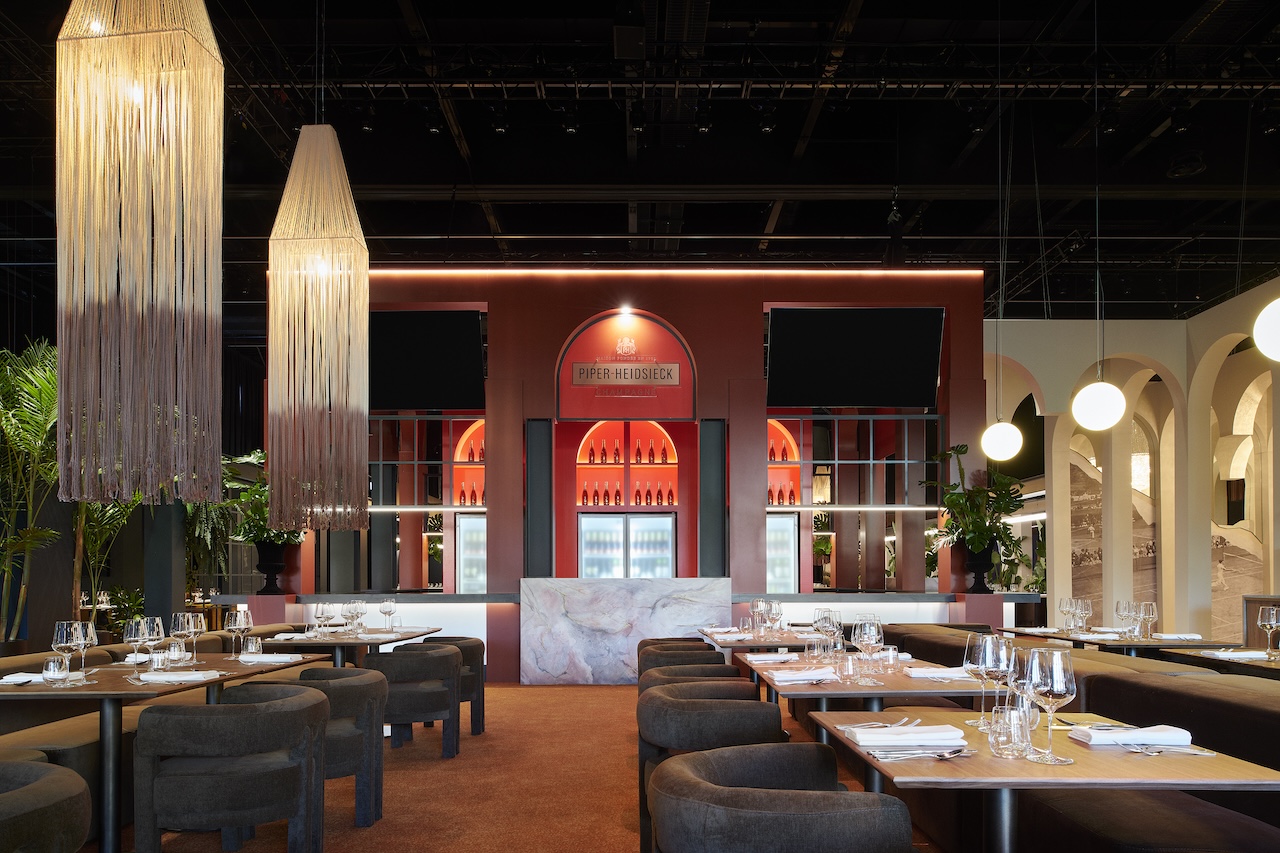
More than that, though, she was attracted to the freedom that comes with a temporary design brief. “We can be bolder and we can be a bit more expressive and experimental,” she explains, “and explore different avenues that you’re not necessarily able to explore in permanent design and, more specifically, residential design.”
In fact, it was the work’s short lifespan that Hall found most liberating. “Just because they’re not forever, there’s that idea that you don’t have to be so focused on how timeless something is going to be,” she explains. “It’s really about the experience that a person or a group is going to have in that space for the short time that they’re in it. You have so much more ability to push the boundaries of what you do with design.”
Adapting formative skills
At the same time, she says that her formative experiences gave her really valuable skills and ideas of how to approach the Australian Open project. “Working at Mim you learned so much and worked with such amazing collaborators and suppliers. The thing that I took most was the approach of coming up with a narrative and concept initially and then integrating that into the materiality, the layout, the detailing. And that’s even more the case with the work I do now.
“It’s so different to working in permanent spaces,” adds Hall. “So, we’re very agile and adaptive with the materials that we use. And I often liken it to set design. We use smoke and mirrors to our advantage where we can!”
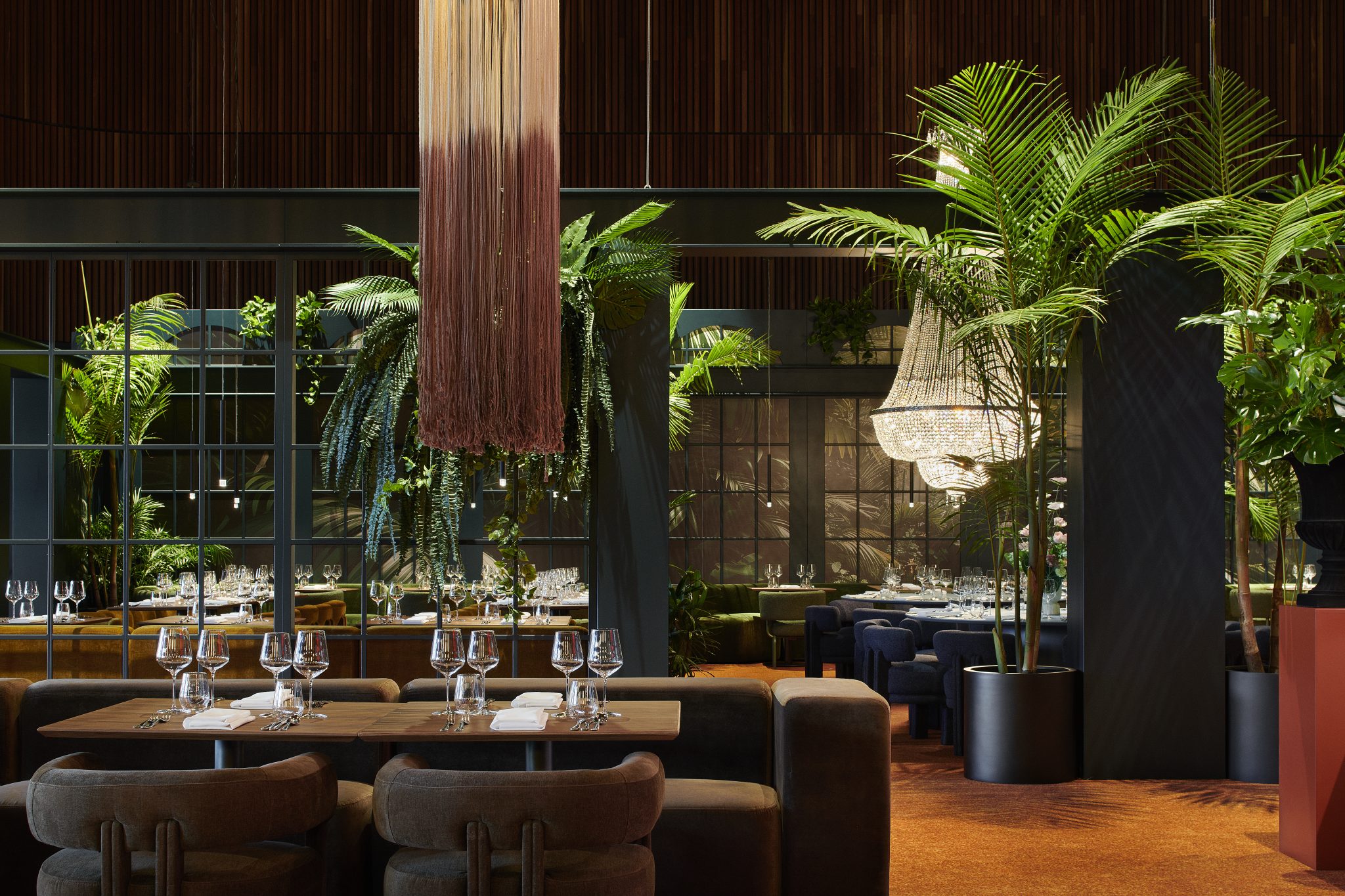
This meant throwing out some of the lessons she’d learned as a young designer. “When I first started, I thought, ‘I can’t use a faux timber or marble look’. [But] last year we had a scenic painter paint this beautiful marble print onto one of our bars that you would not have known was not marble.”
Having said that, the materials used still need to be durable, so that the interiors can be dismantled and reused, says Hall.
Furniture is hired, however, as there would be nowhere to store purchased pieces. “And we want to be able to refresh it every year,” adds Hall. “We work really closely with our hire suppliers and we’ve got some beautiful pieces coming into Riverside Social, with some beautiful textures, walnuts and woven fabrics.”
Themes for 2026
Hall looks after about 20 different venues across the AO Reserve spaces, which include everything from Omakase dining by Sushi Room to the aforementioned lounge and cocktail bar Riverside Social, to The Bistro by Brisbane restaurant, SK Steak & Oyster.
“We really love to ensure that each space has its own identity and its own personality and that can depend on whether it’s one of our products that we are building from the ground up that doesn’t have any restaurant partners associated with it,” says Hall.
When a partner is involved though, the design team “work with them collaboratively to come up with the design brief, so it works for them and us as well and doesn’t just feel like a brand activation”.
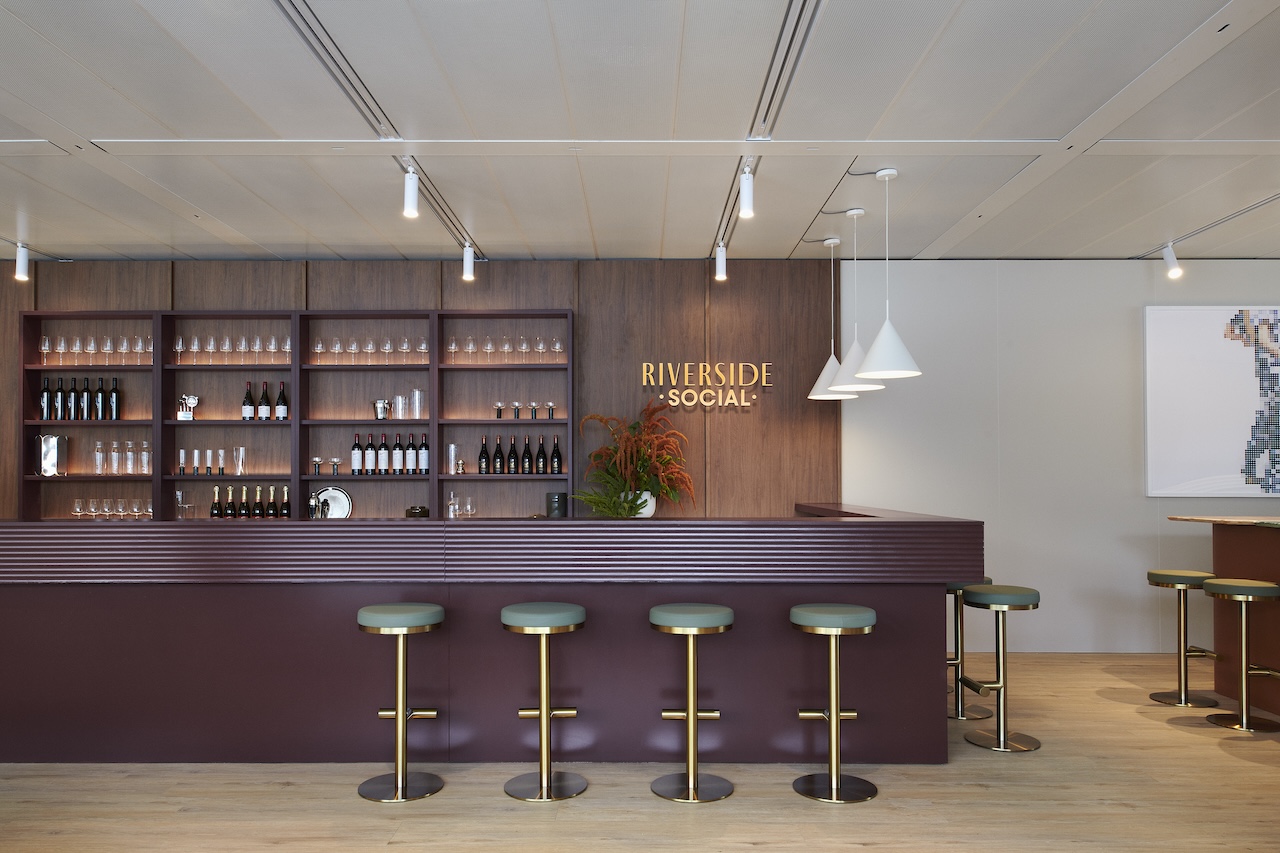
One of the main spaces the design team reimagine every year is the hero restaurant Club 1905, which this year will have its dining options curated by the Michelin-starred chef, Simon Rogan. The design concept selected for the space in 2026 references the inaugural Australian Open, which took place in 1905. The 530-pax restaurant will feature memorabilia, but will also have appropriate furniture references and finishes.
What goes around comes around
While sustainability may be a buzzword throughout the A+D industry, for ephemeral event design like that utilised at the Australian Open, reusing, reducing and recycling is absolutely integral.
“We have been working really hard, particularly over the last five years, on our circular design guidelines,” says Hall. “We have a team at Tennis Australia developing these and then passing on our parameters to our suppliers. It’s been very exciting to be at the forefront of this approach, so that in the AO Reserve spaces – which is the premium restaurants and bars – we have a minimum three-year strategy for every build that we do.”
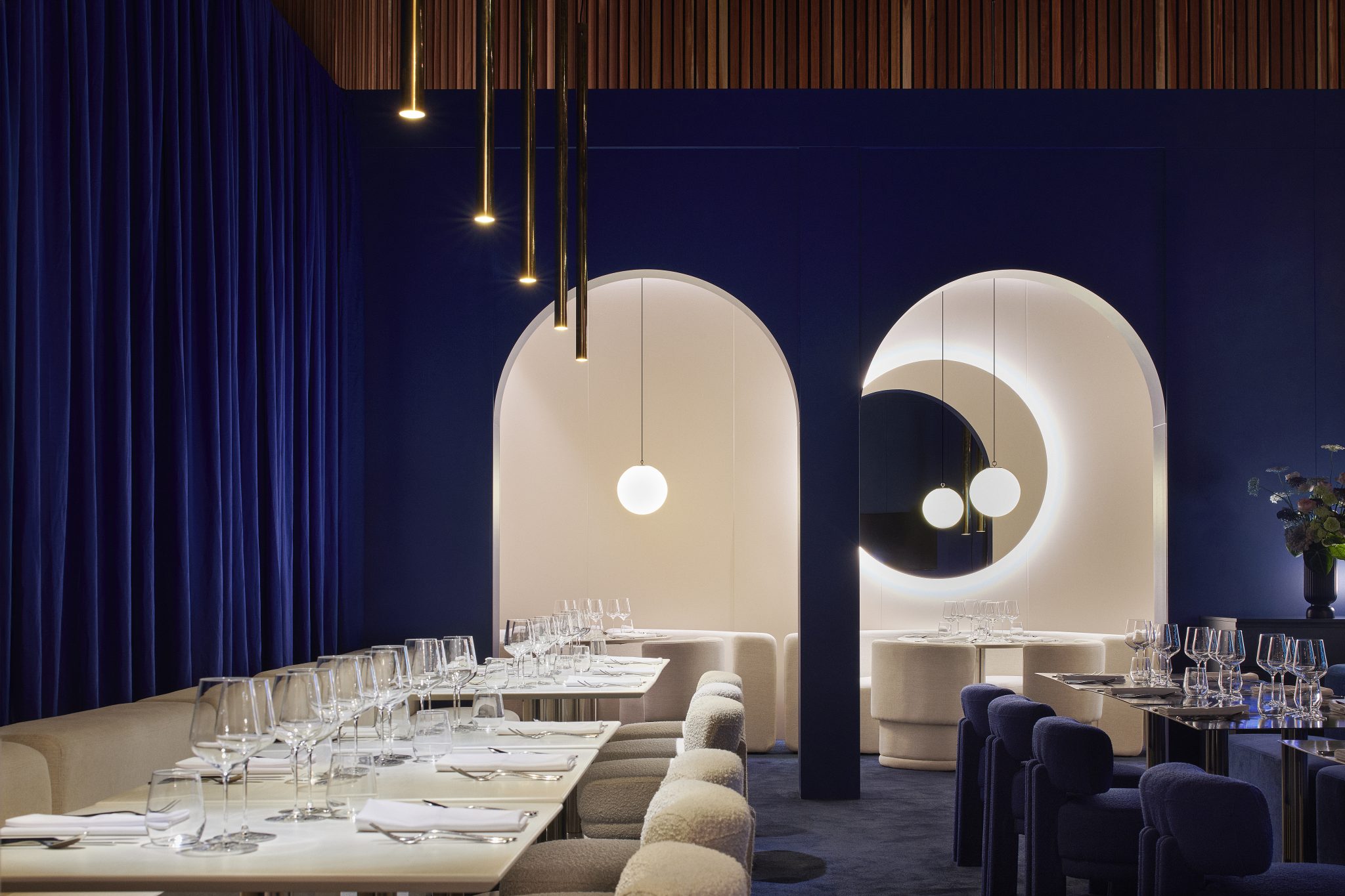
This translates to the bones and structures of these spaces being set in the first year of the project, then the design team reevaluating how the materials can be reused elsewhere across Tennis Australia’s sites.
This isn’t confined to Melbourne Park, explains Hall, with other Tennis Australia events such as the United Cup in Perth or the Brisbane International also potential sites for the adaptation, reuse and recycling of those frameworks and structures.
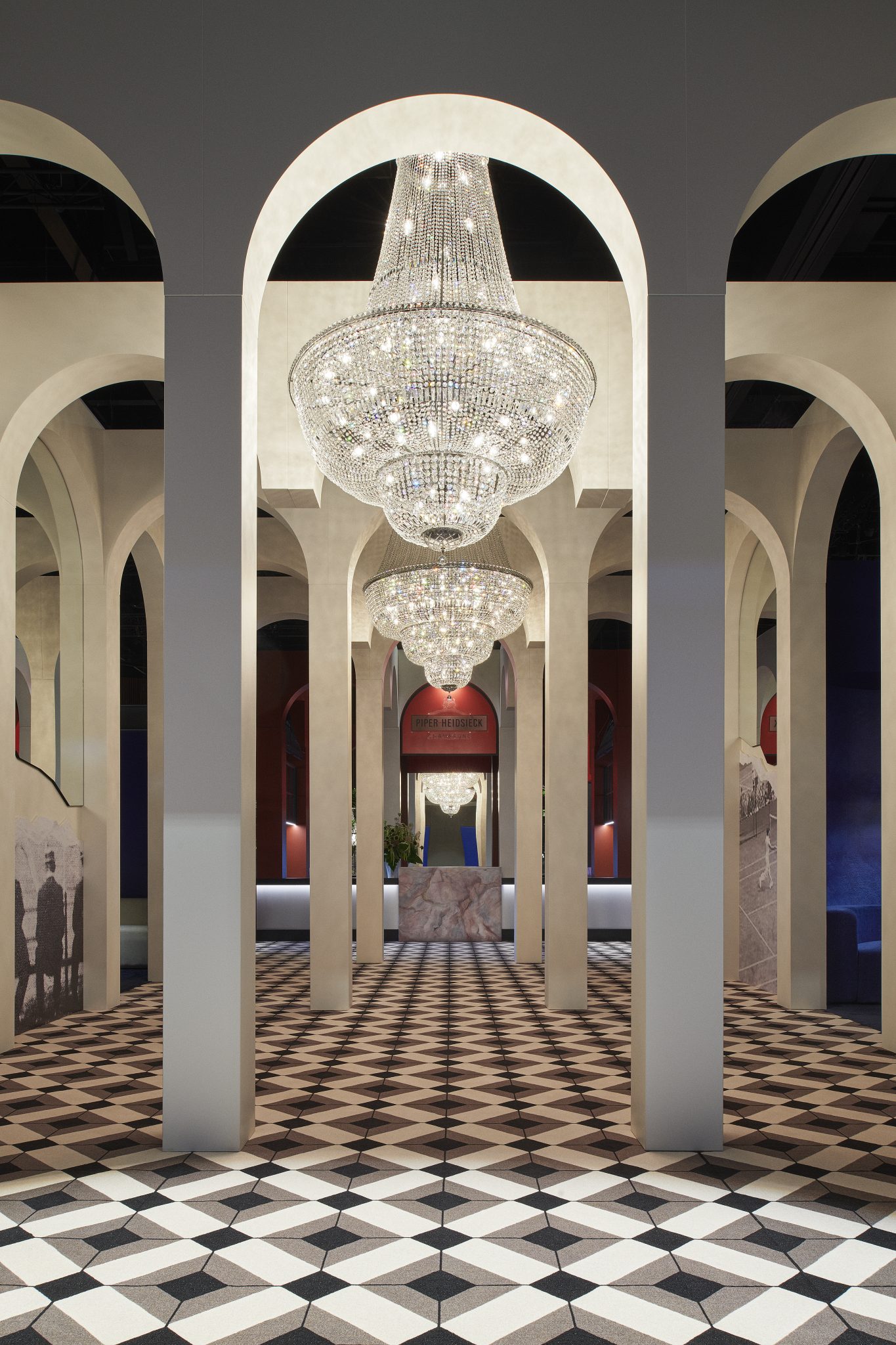
“So the design brief for the year after year one is to challenge ourselves – how can we come up with something more impressive than last time, but using as much as we can from what we have already?” she says. “It’s like putting all these puzzle pieces together.
“The venue I’m most excited about is probably Riverside Social, for the way that we’ve been able to breathe life into it the second time. From a sustainability aspect, we’ve literally used every asset that we invested in last year, but it looks like a completely new space again.
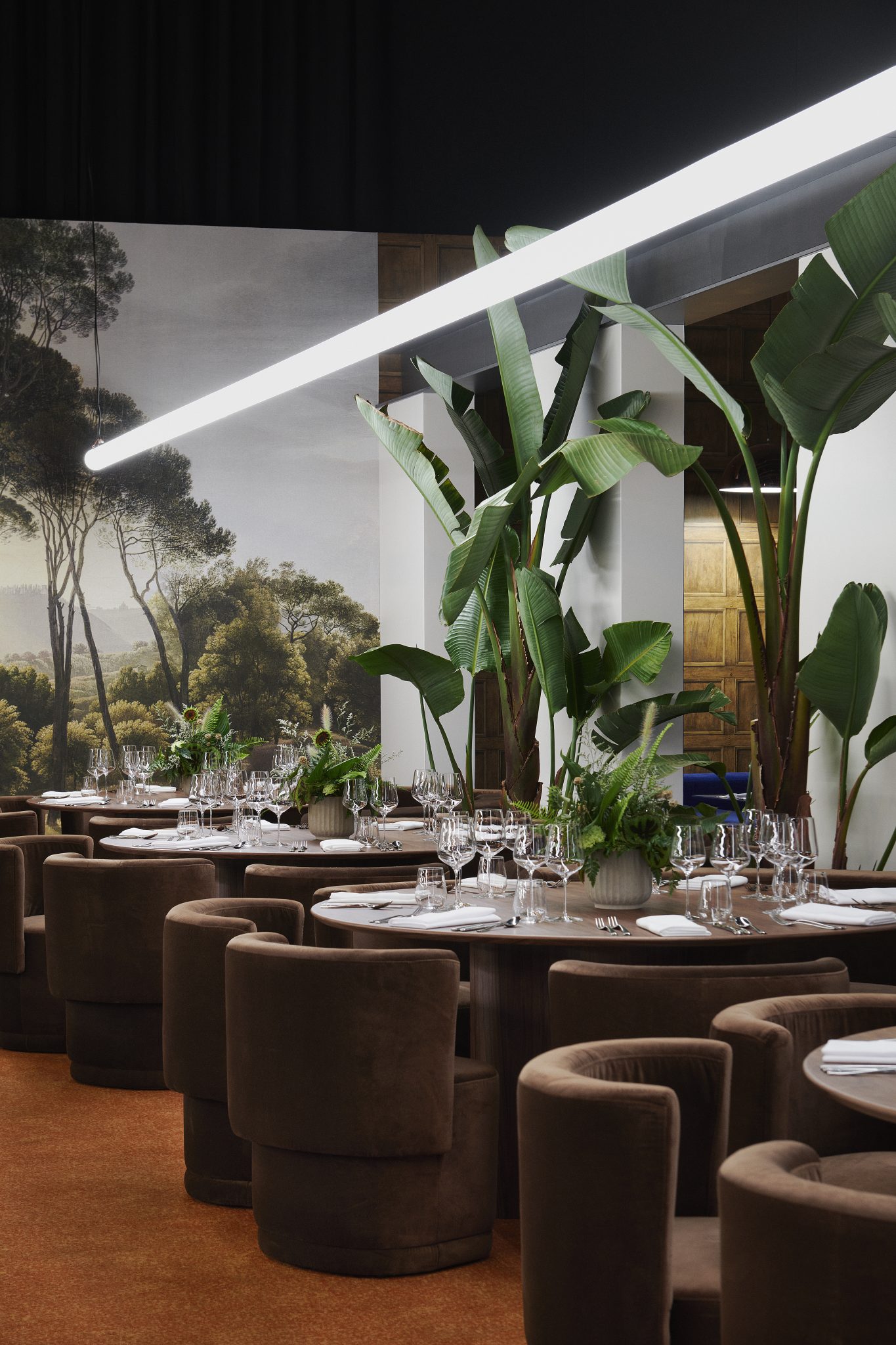
“It’s also the first space where we don’t have another brand or partner influencing what that is. So we’ve been able to establish what we can do as a team and as an event on a world stage. It’s also, I think, the best experience on-site because you can see the tennis from up there, you can see the city from up there and there are great drinks and food as well.”
Pulling it all apart
Despite the rewards of working in event design and the latitude it gives her and the rest of the team, there is something of a pang when it comes to the dismantling, Hall admits. “It honestly is so bittersweet,” she says. “You stand there and you’re so sad that you walk into a space that was perfect and finished the night before and you come back at 9am the next morning and half of it’s already gone.


“We start bumping out literally the minute the last person comes off-site. After the finals is when everything starts coming down. It takes us about three months to bump in and it takes us less than three weeks to get everything out on the other end.”
But every year and each iteration offers new learnings to take into the next event. “What I love about it is we spend this time watching how people use the space through the three weeks of the event and, by the time that we get to the end of it, we are so energised and ready to go with all these ideas of how we can improve it or how we can rethink things or how we can reuse things to do it again better the year after,” she concludes.
The Australian Open runs from 12 January to 1 February 2026. For more information and to buy tickets.
All images from AO2025, supplied by Tennis Australia.
Edited 9.03am Wednesday 7 January to correct two details about the AO Reserve spaces.

© Niche Media 2026