

Italian spirit with Melbourne edge at Elio’s Place
Italian spirit with Melbourne edge at Elio’s Place

Share
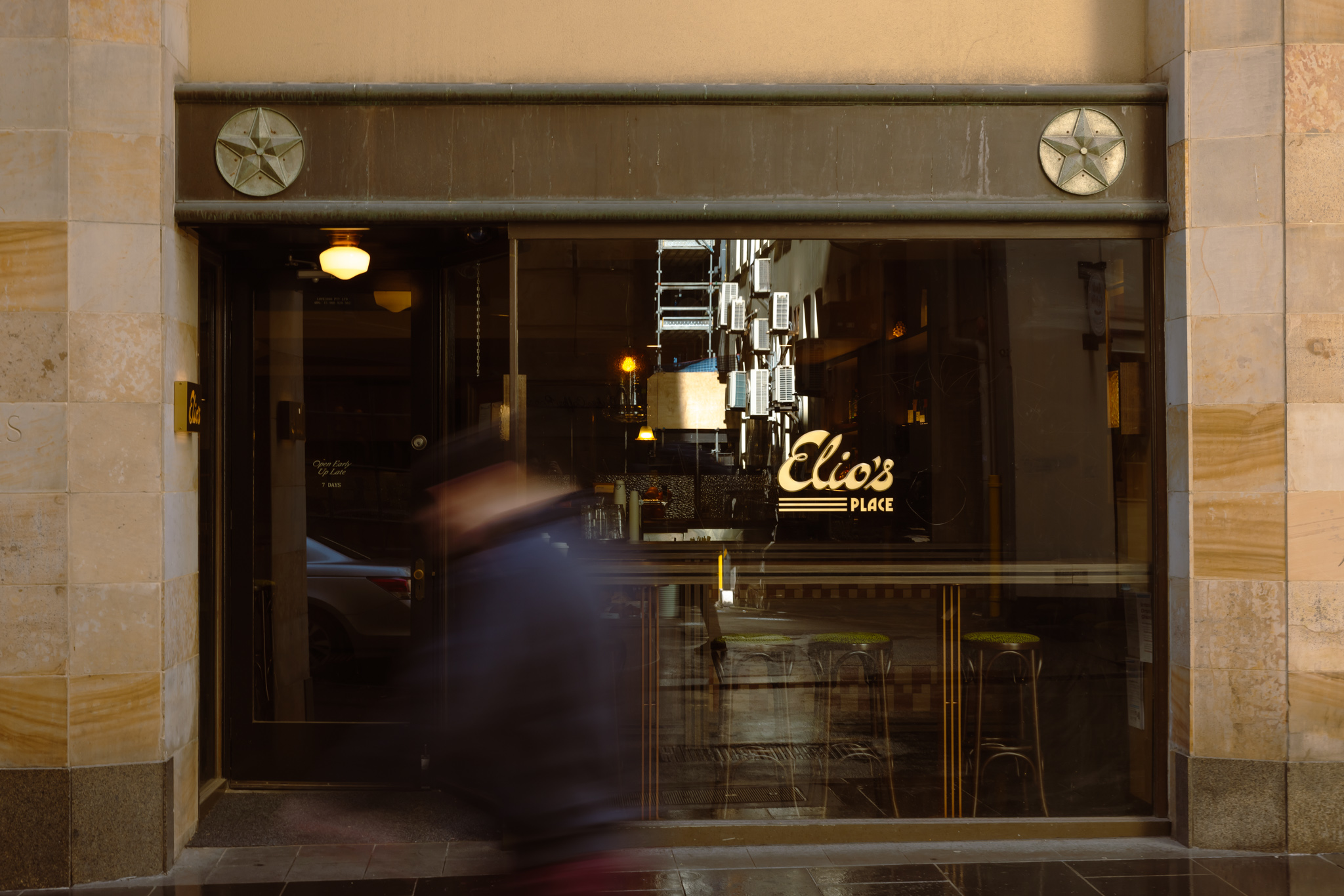
Tucked into the corner of Manchester and Flinders lanes, Elio’s Place is an all-day trattoria that channels Southern Italian warmth with an unmistakable Melbourne flair.
Designed by Studio Co & Co, Elio’s Place is as much a tribute to memory as it is a statement of contemporary hospitality design. Rich, confident and full of character, the interior merges past and present to create a setting that takes diners from a quiet window-seat espresso in the morning through to a cosy yet bustling Saturday night tuck-in.
Melbourne-based Studio Co & Co, led by creative director Ineke Hutter, has earned a quiet reputation for shaping some of the city’s most beloved venues. Known for reimagining old pubs and injecting soul into under-loved spaces, the studio approaches each project with what Hutter describes as “an emotional and material sensibility, the kind that rewards people for lingering, for noticing”.
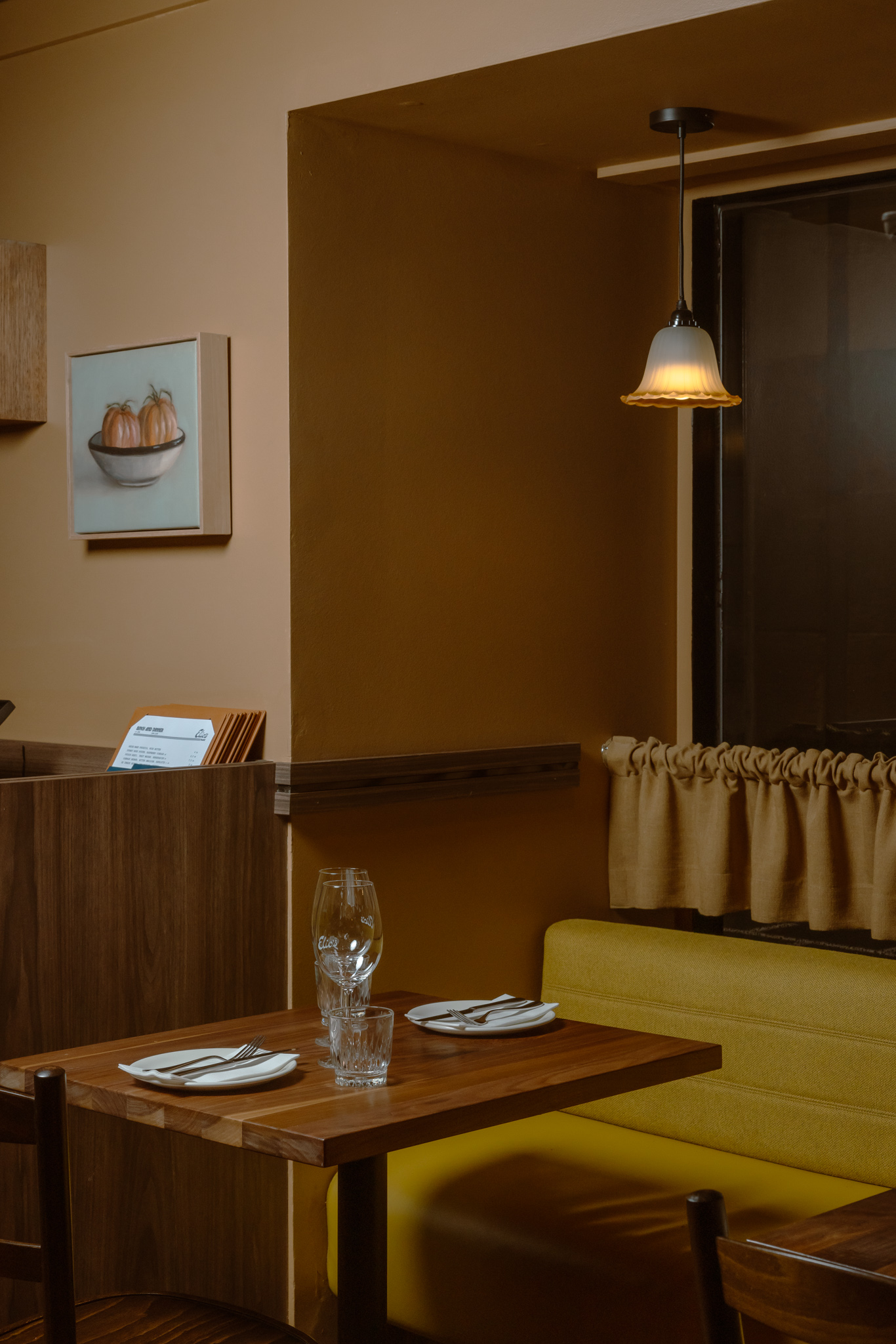
Elio’s design doesn’t cry out for attention, but it still manages to leave an impression.
At Elio’s, that sensibility echoes through every detail. Briefed with the task of creating a layered and inviting space sans clichés that remained unmistakably Italian, Hutter and her team got to work. “We didn’t want to replicate the coastal look or go full Nonna kitsch,” Hutter says. “Instead, we anchored the palette in raw, textural elements that nod to tradition without getting stuck in it.”
The project unfolds in considered layers where brick and terracotta tones meet matte timber finishes and hand-glazed tiles. A scalloped walnut bar wraps the corner, grounded by custom steelwork and fluted glass. The floor plan deftly shifts as the space transitions from light-filled and communal in the morning to warm and intimate with the onset of dusk, a deliberate choreography of light, surface and texture that supports rather than dictates the mood.
While the palette is restrained in dark wood, cushioned mustard banquettes and window stools, the storytelling is anything but. “World building and storytelling is our main philosophy,” Hutter says. “We design complexly layered immersive worlds.” In Elio’s, that philosophy is reflected in aged mirrors that catch the candlelight while powder-coated accents in aubergine and olive offer a playful reference to the Italian pantry. Custom details, like brass foot rails and hand-thrown ceramics, are other gentle indulgences.
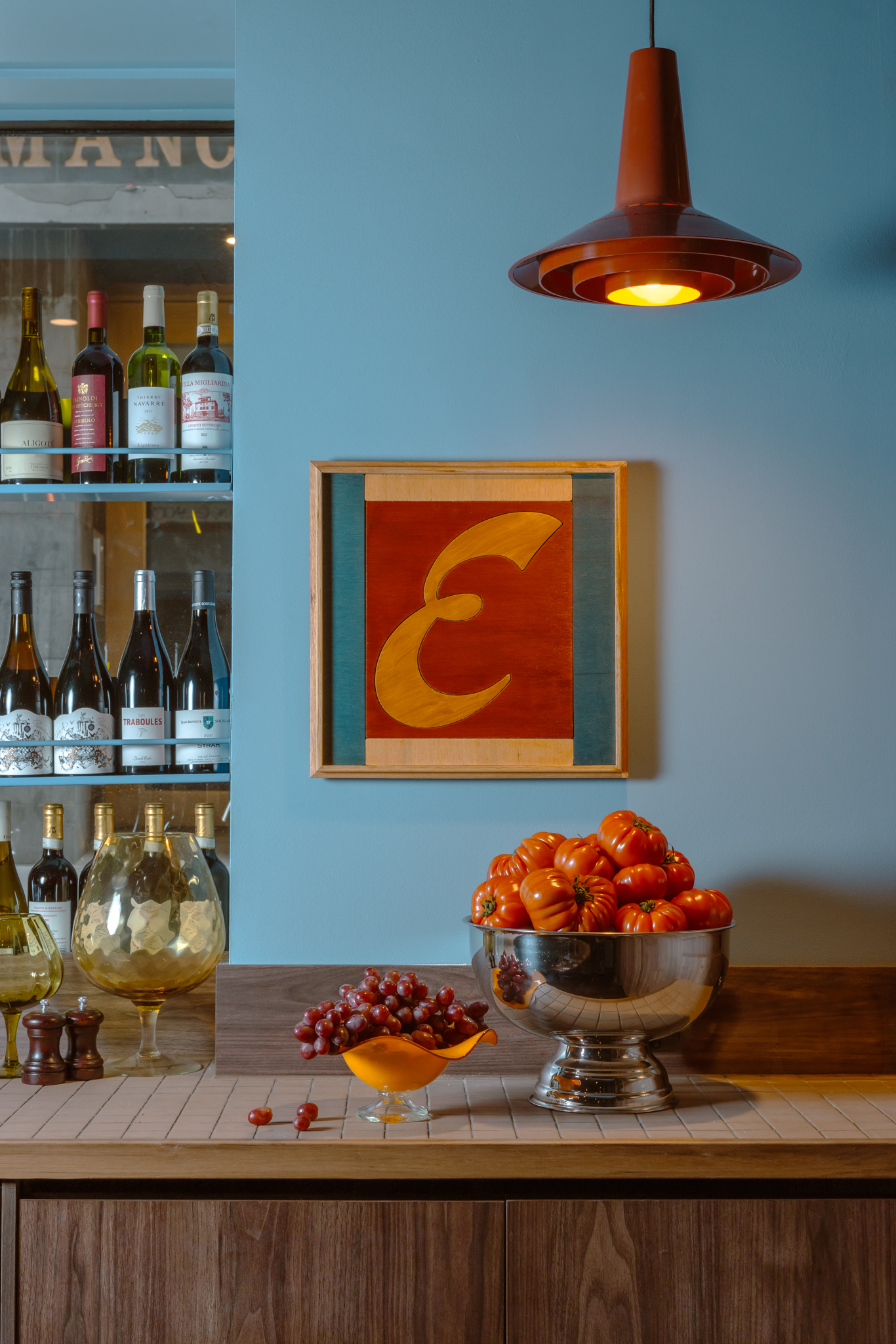
An intuitive, expressive and deeply human ethos defines Studio Co & Co’s position in Melbourne’s ever-evolving hospitality landscape.
Hutter says hospitality design in Melbourne is undergoing a shift. “For a long time, it was about novelty or Instagram appeal, places designed for the snapshot. But I think there’s a deeper conversation happening now around longevity, about spaces that hold up five, 10 years down the track.” Elio’s is a case in point: timeless but not static, confident without being self-conscious.
Foundations of stone and memory
This desire for endurance is something Studio Co & Co has explored across many of its recent projects, especially in Melbourne’s inner north. Known for giving old venues new life, the studio’s approach to renovation sits somewhere between homage and reinvention. “We’re not interested in pastiche,” Hutter explains. “The bones of these places matter, and so do the memories. It’s about what you carry forward and what you let fall away.”
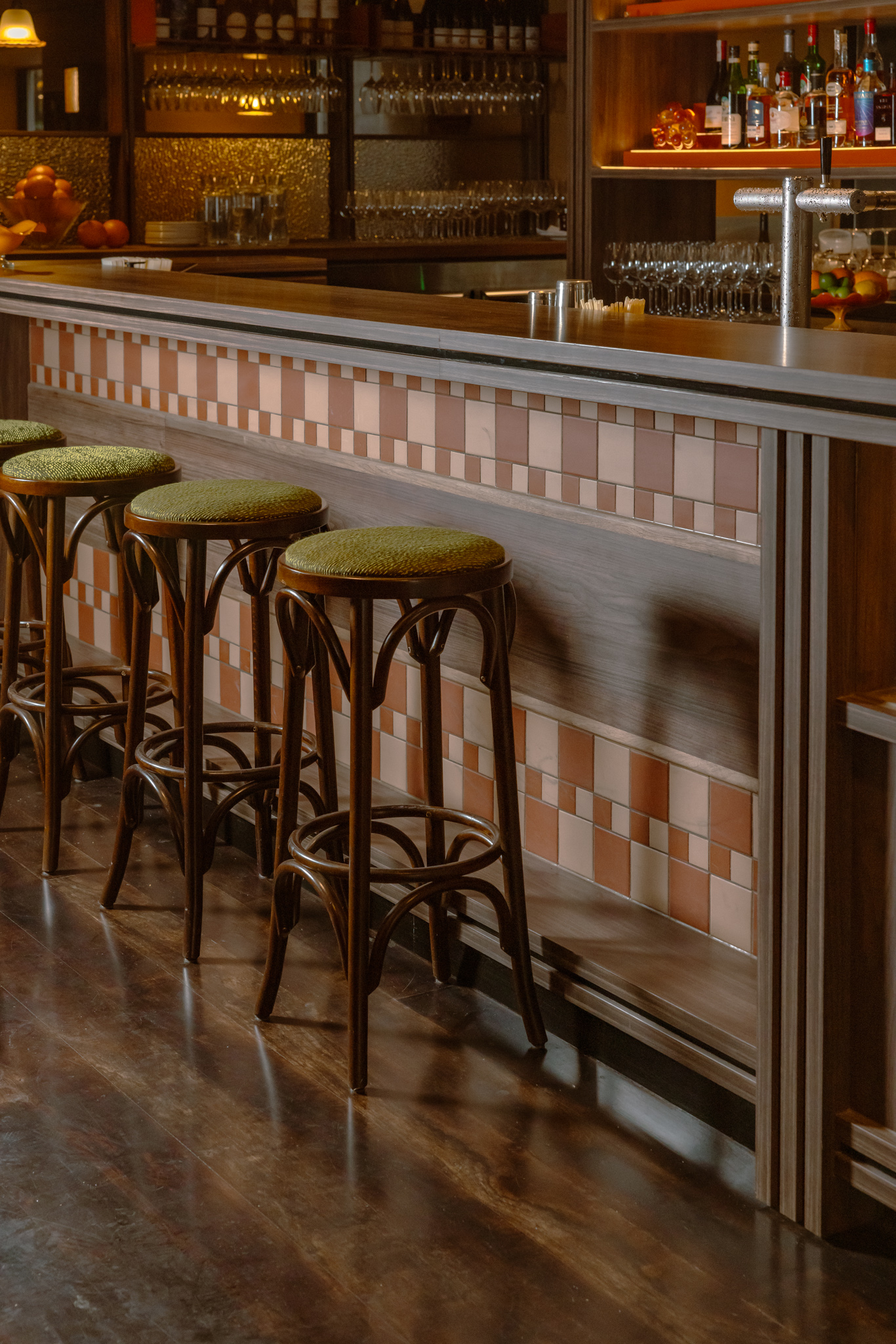
The project unfolds in considered layers, where brick and terracotta tones meet matte timber finishes and hand-glazed tiles.
The Sporting Club Hotel in Brunswick is a prime example. What was once a weathered corner pub is now a laid-back local with a loyal following, thanks in large part to the studio’s deft touch, which is light on nostalgia and strong on atmosphere. “Pubs like that can be emotional landmarks,” Hutter says. “You have to listen to the community as much as the client.
“We believe collaboration is everything. The magic of collaboration means every job is this unique, new thing.” That collaborative spirit was clearly present at Elio’s. Hutter says the restaurant is a homage to the owners’– two siblings – father, Elio, and his pocket of Italy, his love of hospitality.
The client’s vision, a venue that could transition effortlessly from day to night, espresso bar to trattoria, was a springboard for the design team, allowing them to explore ideas around rhythm, repetition and ritual. “We kept coming back to this idea of generosity,” Hutter says. “Not just in the food or the service, but in the way the space holds you.”
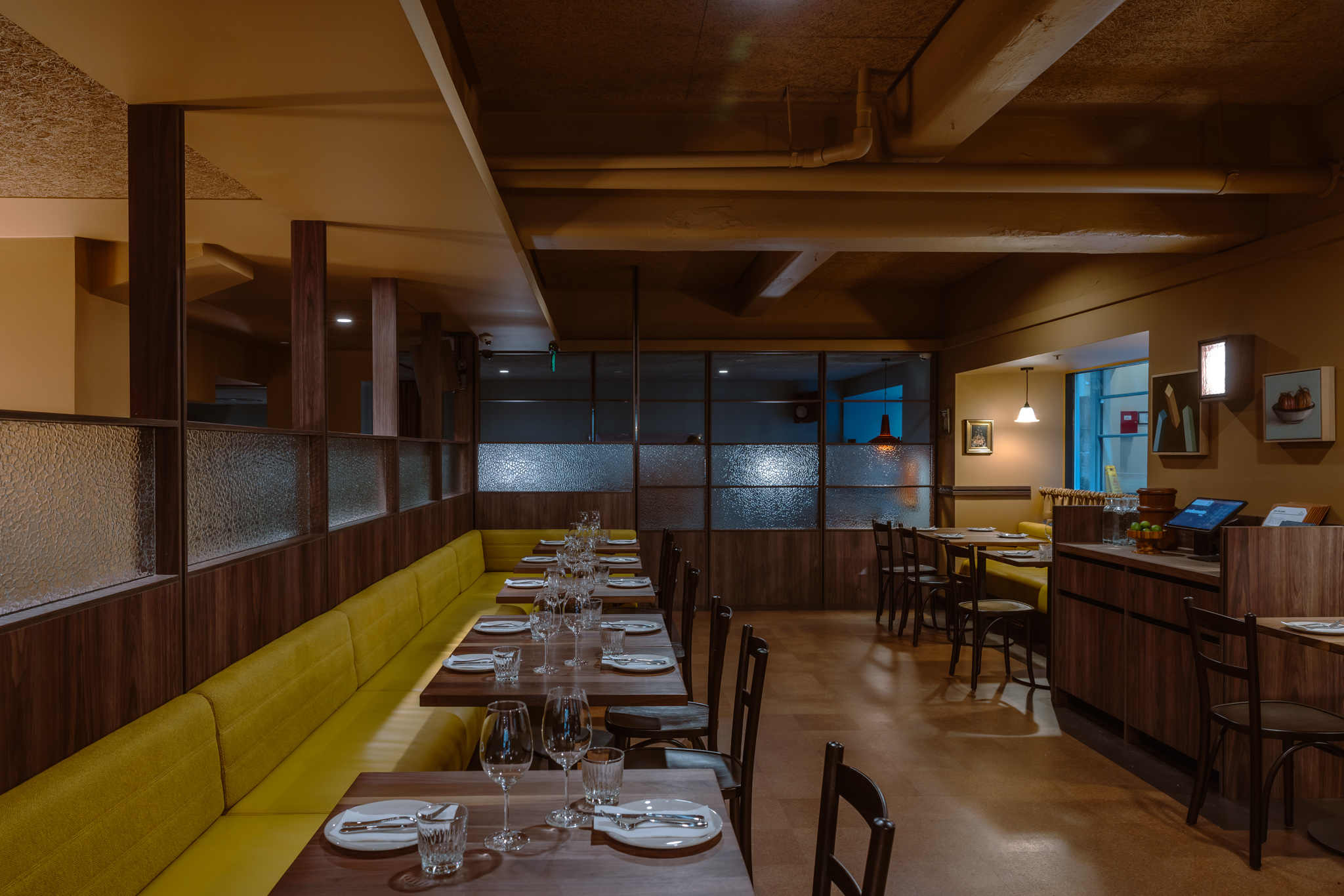
Elio’s Place deftly transitions from light-filled and communal in the morning, to warm and intimate with the onset of dusk.
Design that leaves an impression without crying for attention
At Elio’s, there’s a generosity in spatial planning. The bar acts as both an anchor and a vantage point, offering a place to pause, observe and connect. Circulation thoroughfares are wide, taking into account intuitive desire paths that lead patrons to modular furniture that thoughtfully accommodates everything from solo breakfasts to extended dinners. “You enter the space and feel one thing, then drift through zones that shift your mood as you go,” Hutter says.
Even the acoustics have been tuned with care. Perforated ceiling panels and fabric wall treatments soften the bustle without dulling the energy. “You want a bit of hum,” Hutter says. “But you also want people to hear each other. That’s the kind of balance that makes people stay a little longer.”

“We start with the question of how a space should make someone feel, then work back from there.” – Ineke Hutter
While many modern fitouts chase immediacy with a forced aesthetic, Elio’s invites a slower response. The design doesn’t cry out for attention, but it still manages to leave an impression. As Hutter puts it: “We design with feeling first. That doesn’t mean emotion overrides function. It just means we start with the question of how a space should make someone feel, then work back from there.”
That ethos, intuitive, expressive and deeply human, continues to define Studio Co & Co’s position in Melbourne’s ever-evolving hospitality landscape, and Elio’s Place may be their most elegant iteration of it yet.
As the plates are cleared and the evening light pools across the tiled floor, it’s hard not to sense the quiet confidence at work here. This is a space designed to hold many moments and let you take them with you.
Photography by Duncan James.
This article originally appeared in issue 121 of inside magazine. Grab a copy here.

© Niche Media 2026