

History, art and design collide at Lanson Place

Share
Lanson Place: While many choose to escape the city as swiftly as humanly possible after turning on their out-of-office and logging off for the year, there are others who delight in nothing more than finally having the luxury of time to soak in the sights, sounds, art, history, culture and cuisine that can only be found in a city. Especially if that city is Melbourne.
With a well-established and well-deserved global reputation as Australia’s cultural capital, the city recently surpassed Sydney in terms of the number of hotels offering guests a place to drift off to sleep once they’re done absorbing the buzzing energy of the city for the day.
As of May this year there are 635 hotels for city-philes to choose from. Strangely, however, despite the city’s rich heritage and cultural capital status, only a handful of the 635 hotels truly offer their guests the opportunity to wake up in a building that epitomises Melbourne. Which is precisely what makes Lanson Place unique.
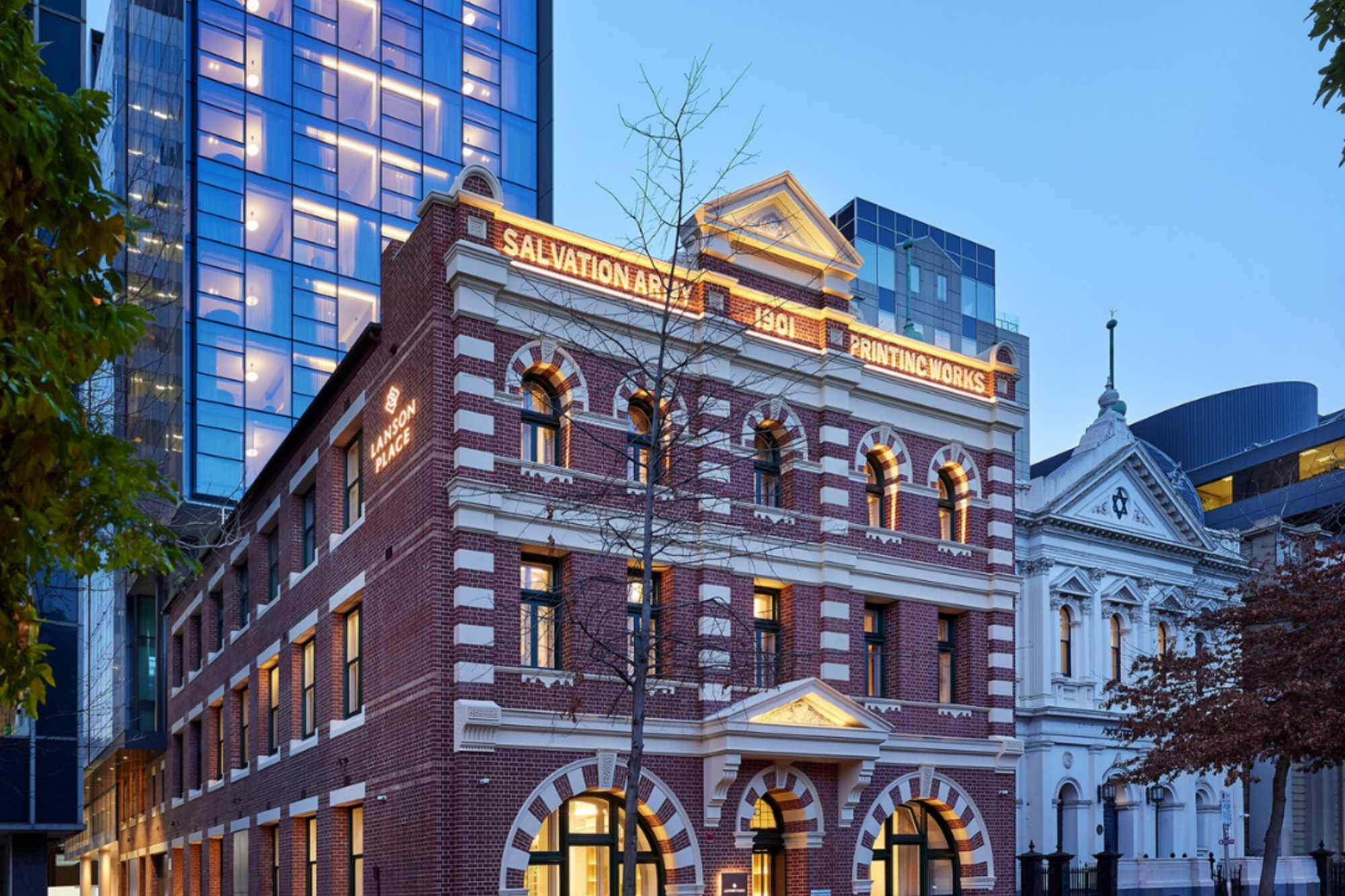
Melbourne’s history reimagined
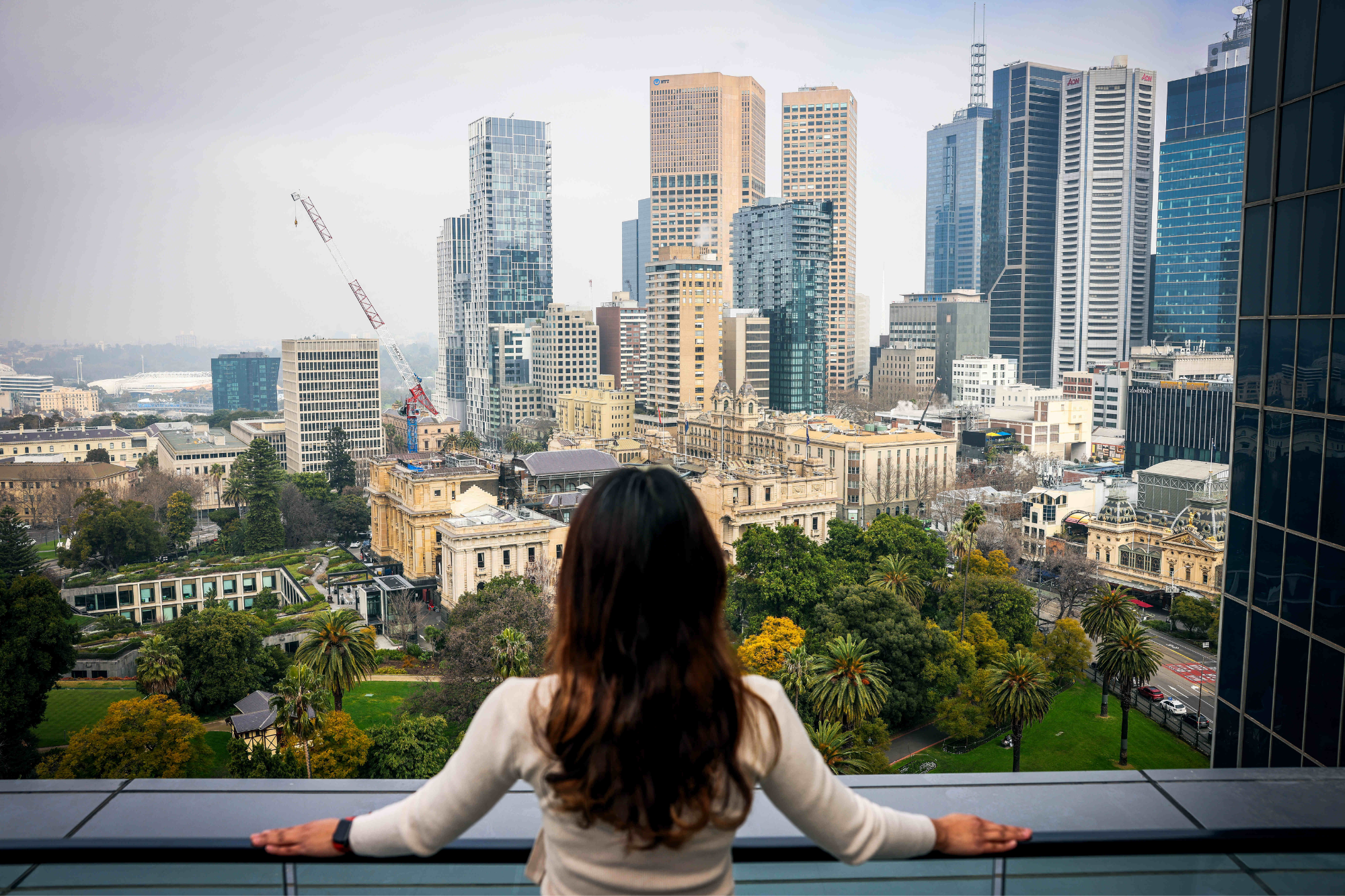
Located in a golden-triangle location on the edge of Parliament Gardens, a stone’s throw from the iconic Princess Theatre, Fitzroy Gardens, the Gothic Revival spires of St Patrick’s Cathedral and the Paris End of Collins Street, the five-star boutique hotel rose up ever so carefully from the heritage-listed bones of the Salvation Army Printing Works. As the saying goes, good things take time. In this case, the multi-year planning, designing and construction process, which experienced delays due to COVID-19, was absolutely worth it.”
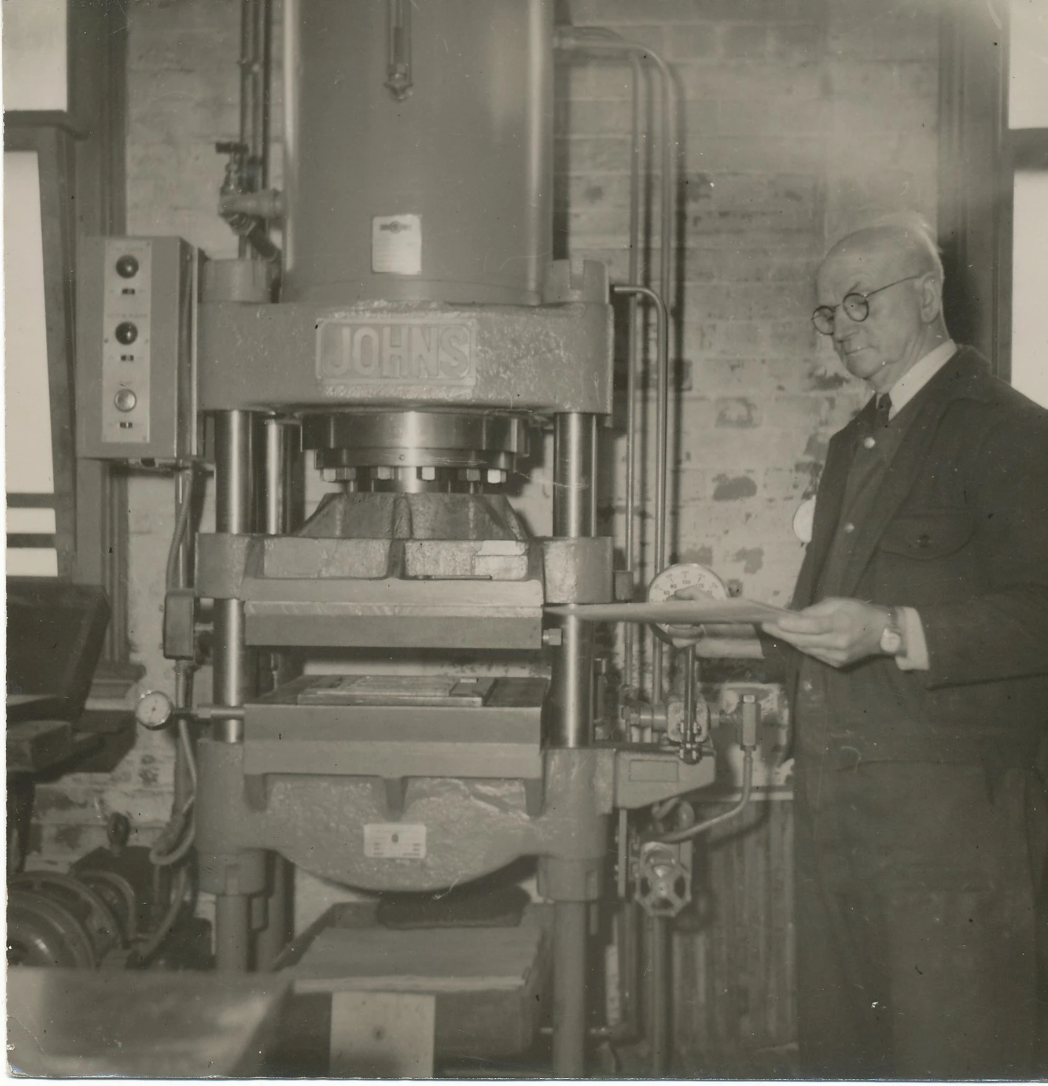
Designed by Brigadier Edward Saunders and dated 1901, the Salvation Army Printing works building holds regional significance for Victoria. As noted in an article from The Age in October 2011 – the year the building was listed for sale – an East Melbourne conservation study carried out in 1985 stated: “The building is significant… as part of an important streetscape of large, scaled, free-standing buildings [that] illustrate Governor La Trobe’s plan to reserve Eastern Hill for institutional and religious bodies in Melbourne.”
While the building may no longer serve the needs of institutional or religious bodies, the meticulous restoration has successfully preserved the streetscape. It’s so successful in fact that, if you let yourself become distracted by the cornucopia of impressive architecture surrounding 501 Albert Street, you’re likely to walk straight past. There’s something to be said for being discreet.
Contributing to Melbourne design discourse by way of London
Stepping across the threshold into what is now the hotel lobby, the first thing you notice is the absence of the usual hotel lobby suspects. Designed by London-based, internationally renowned architecture and interior design practice Conran and Partners, the space feels like an elegant and perfectly curated residential open-plan living and dining space.
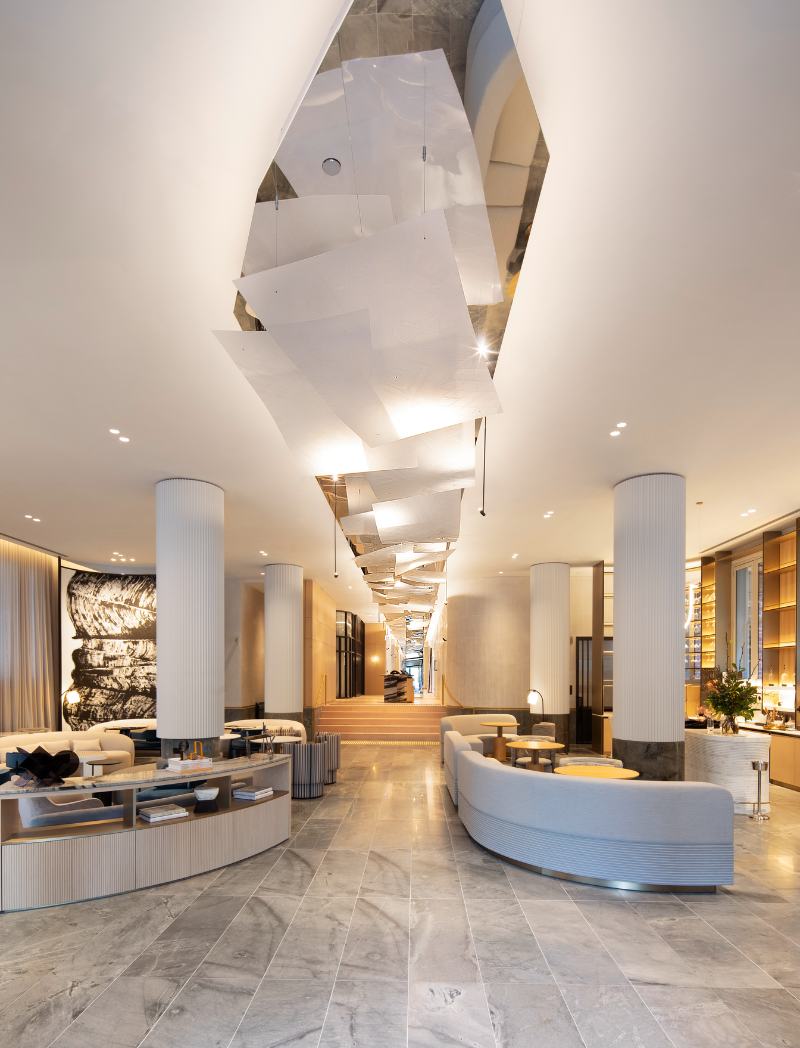
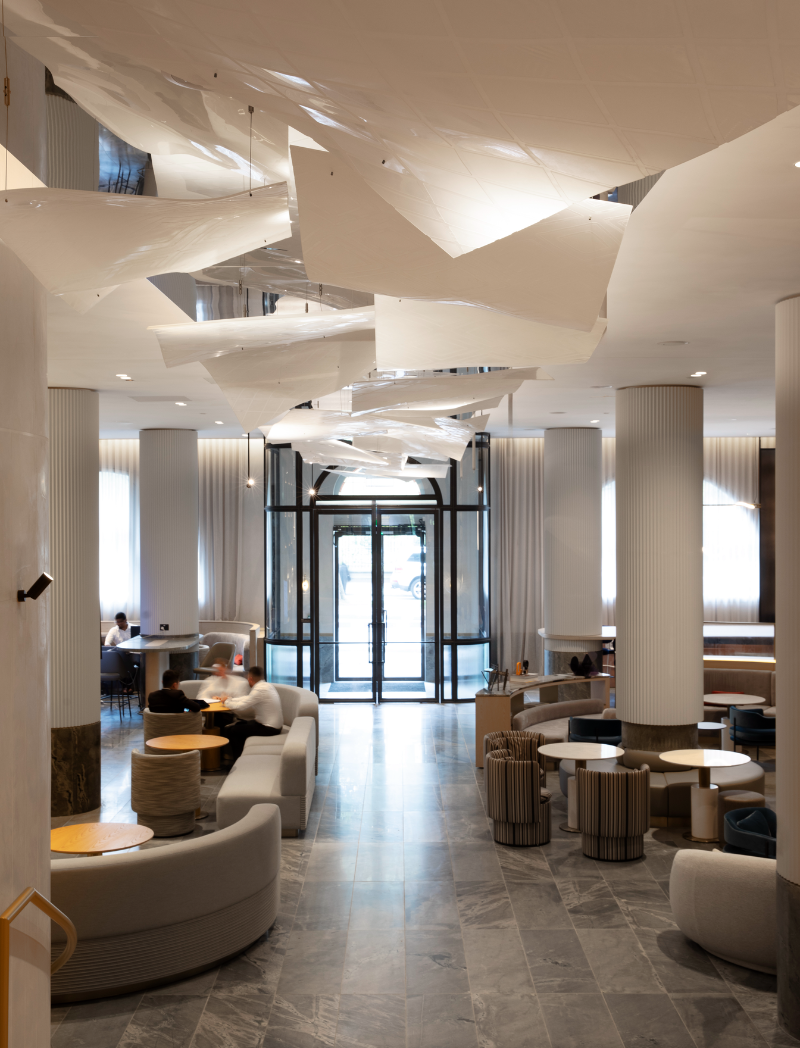
For principal at Conran and Partners, Tina Norden, creating a home-away-from-home feeling for guests directly and sensitively informed by the characteristics of Melbourne, together with the history of the building, played a huge part in shaping the design vision, both conceptually and materially.
“Conceptually, the Salvation Army’s commitment to community inspired us to make community spirit a central pillar of the design – looking at how we could foster connection among guests and link them to the local neighbourhood,” Norden says.
“The printworks heritage also informed our material palette, artwork concepts and detailing. We used deep inky blues throughout the spaces, echoing the ink of the printing presses, alongside bold graphic elements like Panda marble with an almost inkblot pattern and artwork based on print techniques and paper.”
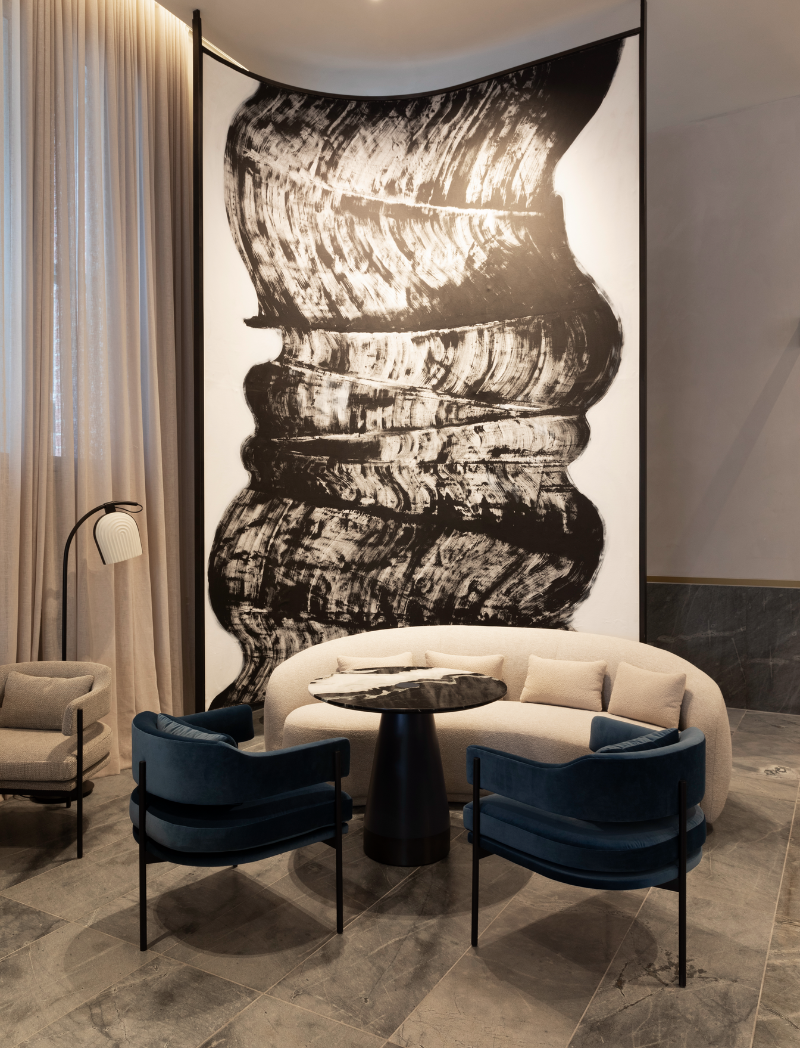
The result is a hotel in which – despite being developed and operated by an overseas brand, and designed by an overseas practice – every space and every room looks and feels thoroughly Melbourne. “Lanson Place Melbourne is the brand’s first venture outside of Asia,” Norden notes. “We worked closely with them to refine and adapt their brand identity for this new context. We don’t have a ‘house style’ – our approach is always narrative driven and contemporary, and our style naturally adapts to each project’s context.”
An art informed approach elevates design
When designing from a context-based perspective, Norden believes that “art plays a vital part of the narrative”. The capacity for art to express a contextual narrative, and by extension imbue a space with a feeling of familiarity, is undeniable. Irrespective of the colour palette or materials, to be surrounded by things that are recognisably made by the hand of another, as opposed to that which is manufactured en masse, naturally sets us at ease.
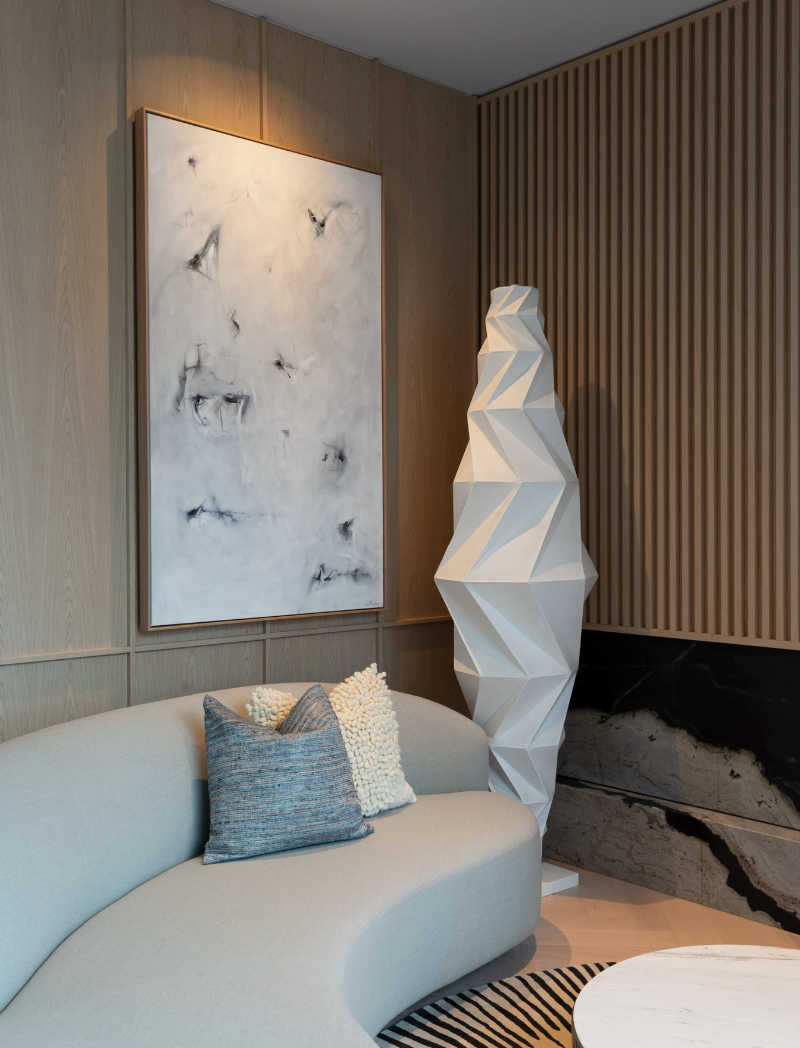
This is especially true of site-specific artworks that take direct inspiration not only from the history embedded in the walls of the building they will come to adorn, but also from the deep history of the land beneath the concrete foundations.
Curated by Sydney-based art consultants, Curatorial+Co, the lobby and main penthouse suite feature site-specific works by highly regarded Australian practitioners: multidisciplinary artist Jarra Karalinar Steel (Boonwurrung, Wemba Wemba and Trawlwoolway), Melbourne-based sculptors Corey Thomas and Tracey Lamb, and Sydney-based printmaker Kate Banazi.
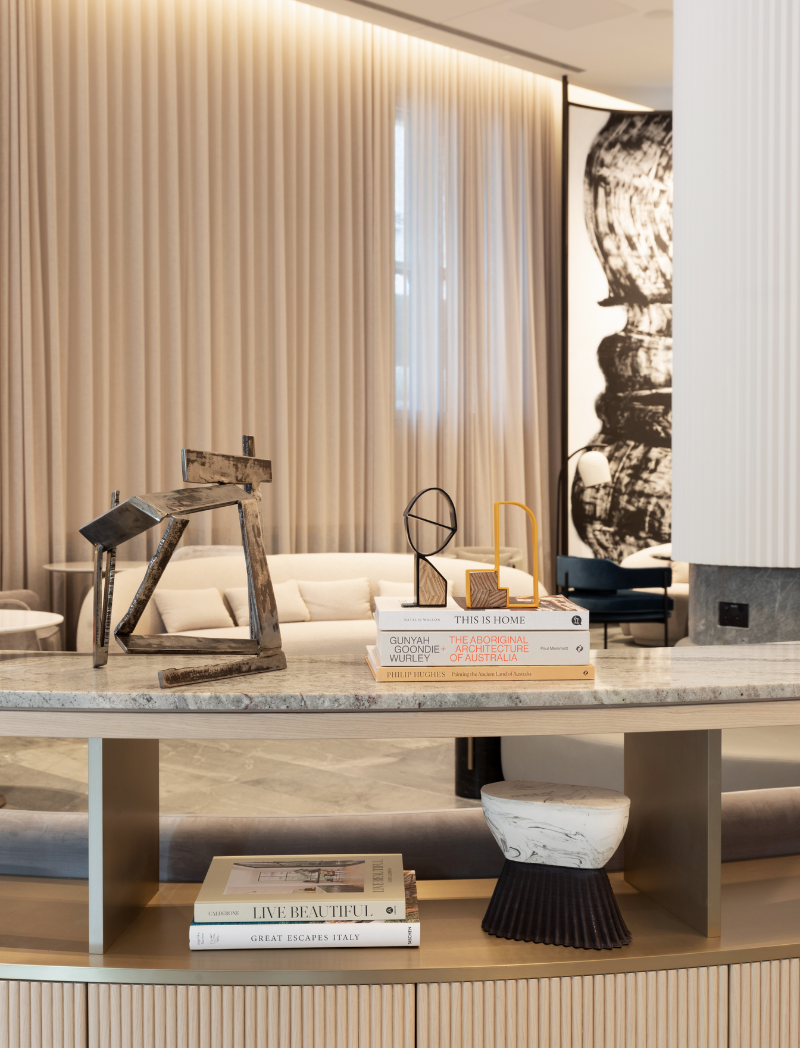
“Jarra Karalinar Steel brought Kulin Nation mark-making into the built urban environment, Corey Thomas contributed his skill in material manipulation and his ability to create rhythm and movement through the central lobby installation, and Kate Banazi offered her bold, graphic ink gestures,” says Senior Curator, Curatorial+Co, Claire Field. “Each artist shared intrinsic elements of their practice in their work, which resonated powerfully with the interior aesthetic and industrial printmaking history of the space.”
Sometimes, the loudest voice in the room is the quietest
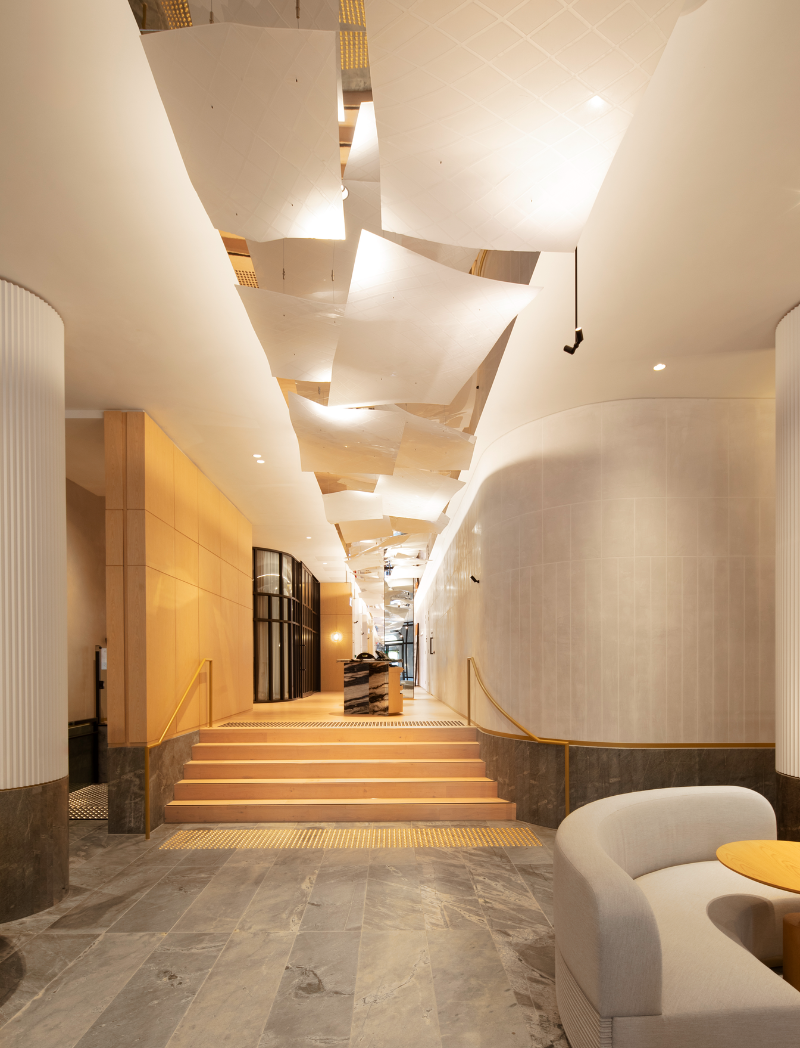
Of the more than 462 original contemporary artworks that guests have the opportunity to experience – including in each of the 137 rooms, which all feature pieces selected for their relevance to the themes of mark-making or the transmission of knowledge synonymous with a printing works – Letters from Country is without doubt the most powerful, despite being the most subtle.
The 40-metre long suspended sculpture created by Karalinar Steel and Thomas for Lanson Place comprises dozens of gently undulating frosted acrylic ‘pages’, each carefully hand-formed by Thomas. Embedded subtly into the milky-white surface of each ‘page’ are Karalinar Steel’s modern interpretations of traditional mark-making patterns, which, when ‘read’ by guests as they pass beneath them on their way to and from their rooms, or as they recline beneath them, silently yet powerfully share the traditional stories of the Boonwurrung and Kulin people.
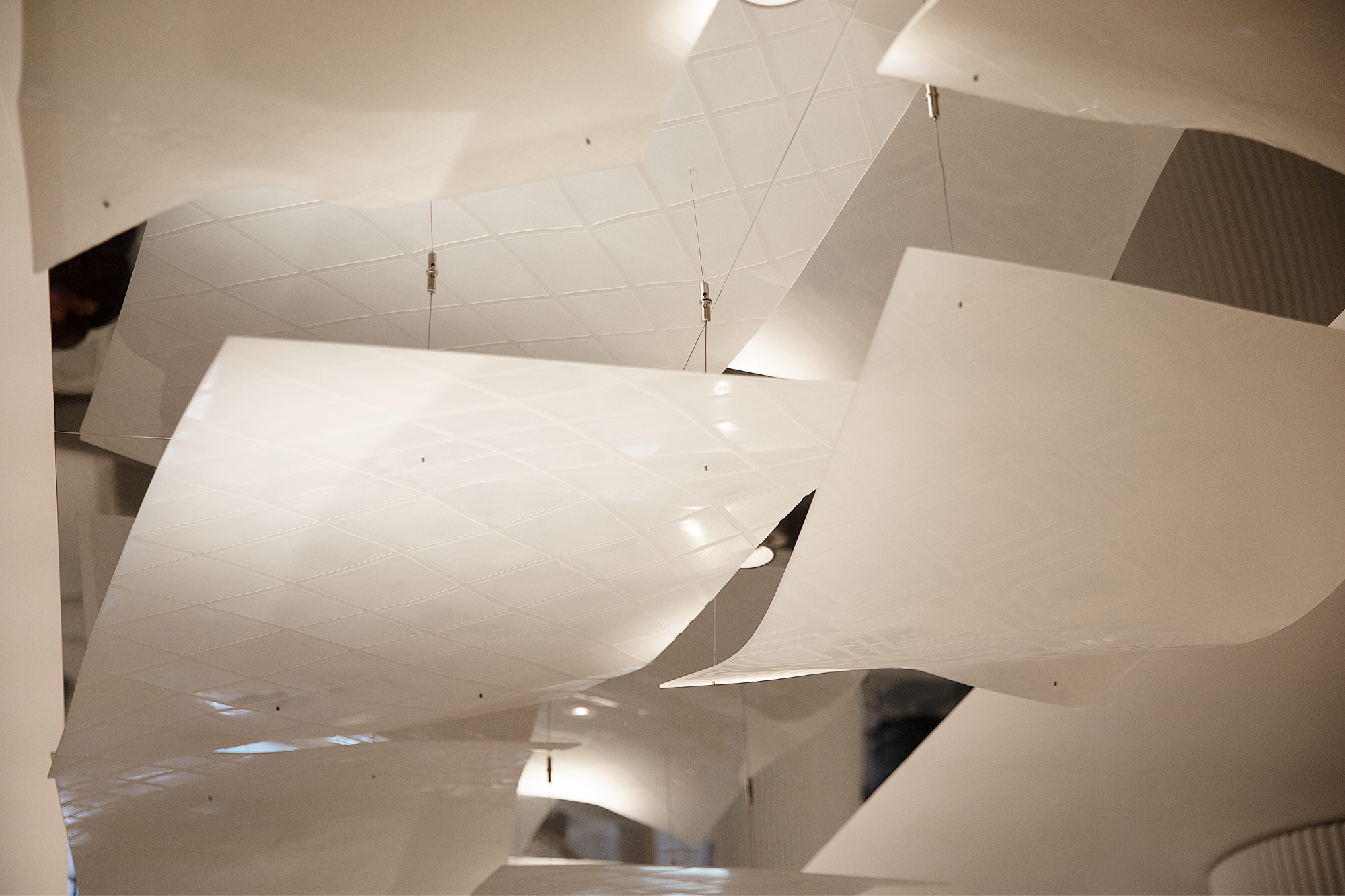

“These were our visual languages,” says Karalinar Steel. “You find them imprinted on our shields, our message sticks, and in a way these are like message sticks. They’re telling a story and passing it down.”
Since its opening in September 2024, Lanson Place has quietly established itself as one of Melbourne’s most thoughtfully considered luxury art and design led hotels – a hotel experience that was, until now, sorely missing from the Paris End.
Anchored by its important architectural legacy and uniquely Melbourne history, deftly distilled through the dual lenses of design and art, Lanson Place feels as if it has always been there. Hiding in plain sight. As all best kept secrets are. And now, in its current iteration, Lanson Place, 502 Albert Street continues the legacy of passing down the stories of Melbourne’s people and places to those paying close enough attention.
All photography, except where specified, Elizabeth Schiavello.
You may also like: Sento by FK: luxury onsen hotel and apartments will be an ‘honouring of stillness’

© Niche Media 2026