

Herman Miller’s Aeron chair doesn’t sit still
Herman Miller’s Aeron chair doesn’t sit still

Share

Originally designed by Bill Stumpf and Don Chadwick in 1994, Herman Miller‘s Aeron chair has led the way in ergonomic performance seating for over 30 years.
Not ones to sit still or settle, the design team has continued to innovate this iconic chair with new materials, new colours and sustainability breakthroughs.
Problem-solving through design has been part of Herman Miller‘s ethos from the beginning. While the company has established a reputation for transforming the way people sit and perform at work, the problems the designs are now tackling reach far beyond the workplace. Herman Miller’s focus is increasingly widening to include material innovations, sustainable sourcing and reducing embodied carbon across its collections.
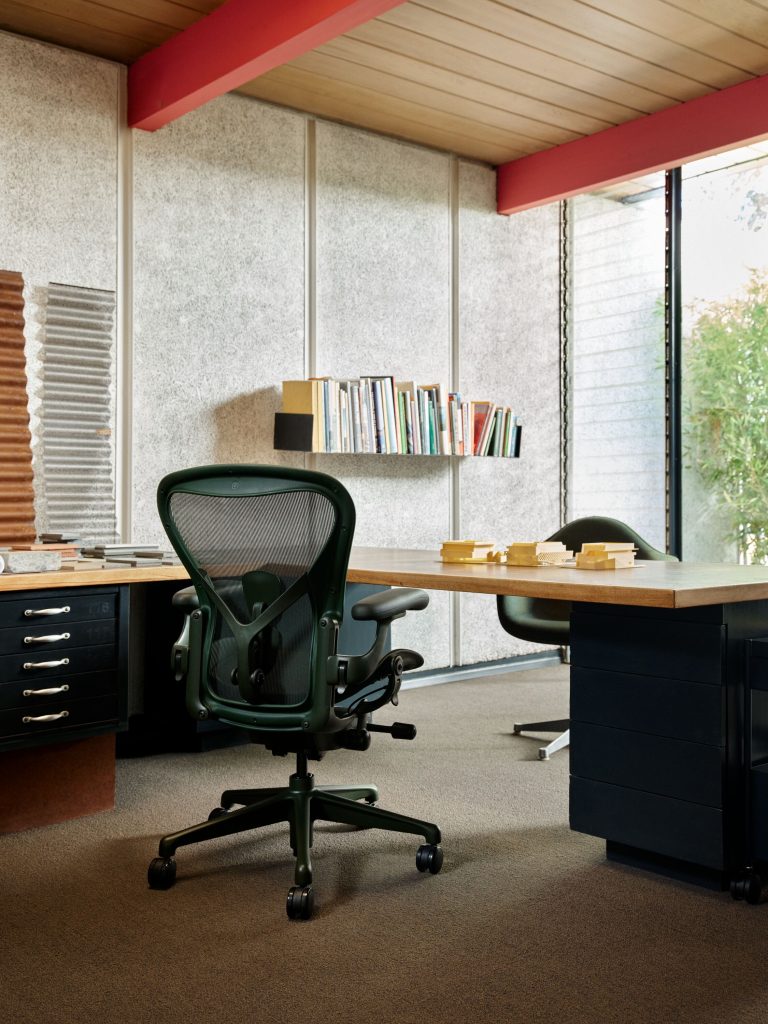
A founding member of NextWave Plastics, a collective working to develop the first global network of ocean-bound plastic supply chains, Herman Miller is working to integrate this transformed plastic into its products and processes, diverting plastic pollution that otherwise would have ended up in the ocean. The ocean-bound plastics are collected, ground, washed and made into pellets before being sold to manufacturers and used in a wide array of products.
As the first chair in Herman Miller‘s portfolio to integrate ocean-bound plastics in its design, the Aeron chair is no stranger to material innovations. From its inception, the Aeron design marked a decisive deviation from the norm, striving to do things differently and set a new standard by shifting away from the standard use of foam, fabric or leather found in most office chairs at the time.
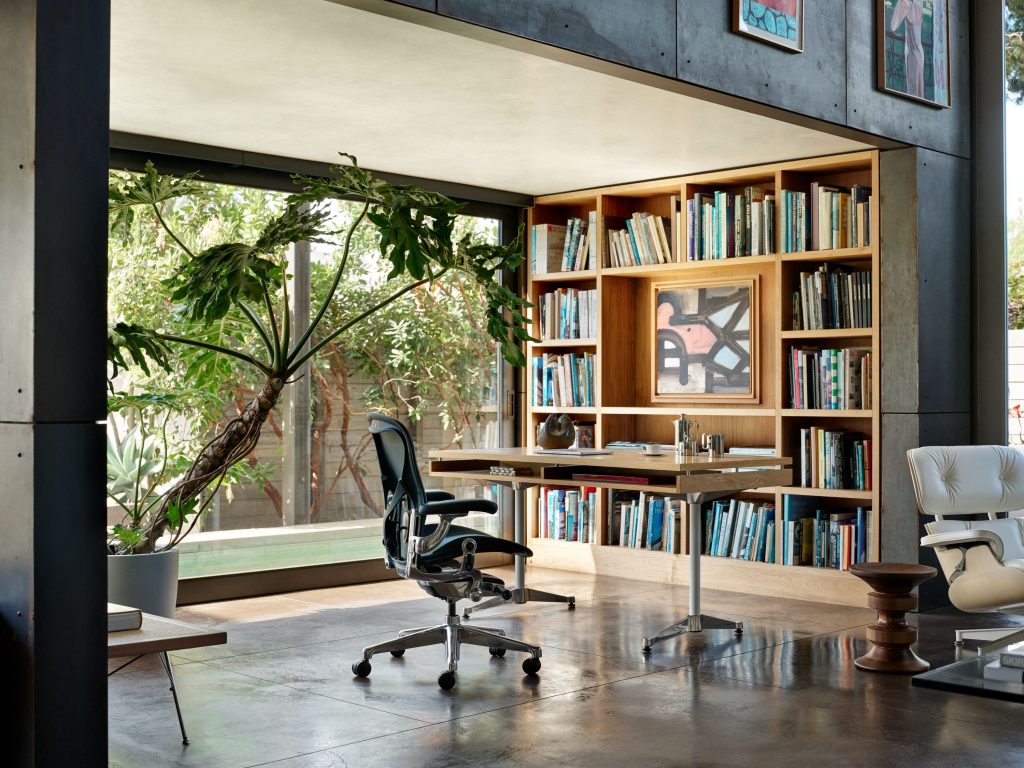
Decades of continued research and development have culminated in the latest iteration of the Aeron, lightening its carbon footprint while ensuring its performance is better than ever. The Aeron frame construction has continued to evolve, utilising new polymers, resins and nylon material construction. Now incorporating more post-industrial recycled content and bio-based nylons, the chair’s carbon footprint has shrunk significantly.
The chair’s base has also seen refinement, including a reduction in the amount of material needed to create the aluminium structure. This results in the weight being almost a kilogram lighter compared to its predecessor. Aluminium is one of the most carbon-intensive but most commonly used materials, accounting for four percent of global carbon emissions, so any amount reduced is a big win for sustainable design.
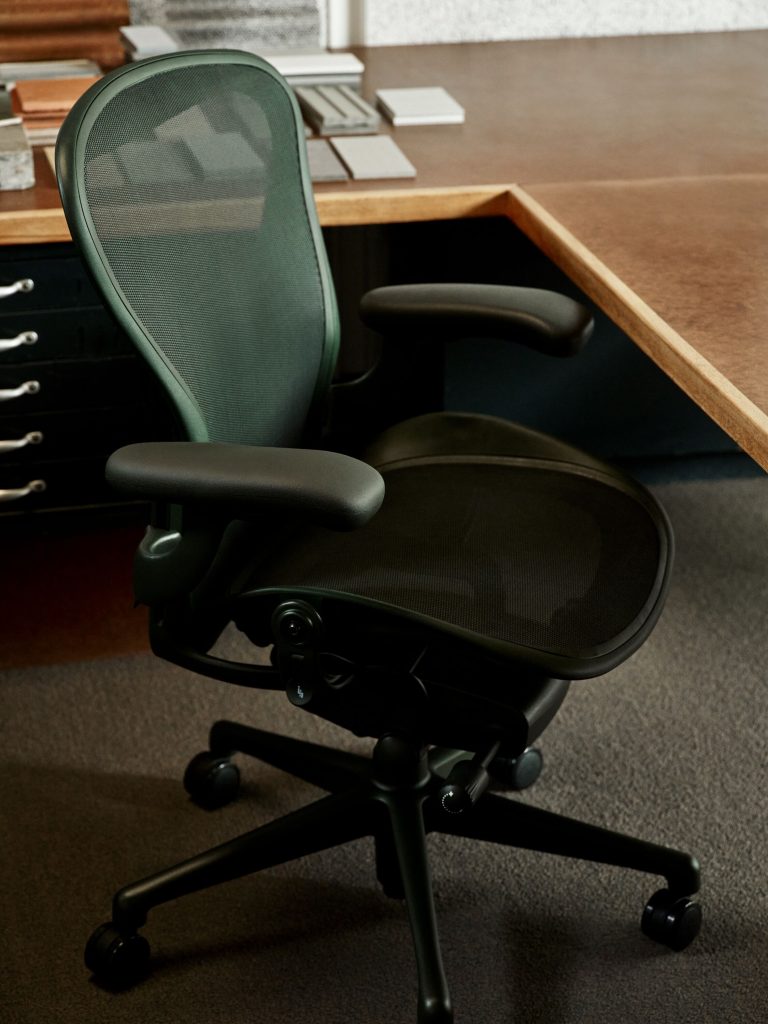
“By using the right materials, in the right amounts, in a product built to last, Aeron shows what circular design can achieve at scale, keeping a meaningful amount of aluminium in the ground,” says Gabe Wing, vice president of sustainability at MillerKnoll.
As of June this year, Herman Miller has more than doubled the amount of diverted plastics in its products since last reported three years ago in 2023, demonstrating an ongoing commitment to circular design practices. This equates to 660 metric tonnes of plastic, or 79 million plastic water bottles, being recycled and put to use once again. Beyond diverting plastics from landfill, the Aeron chair‘s durable and timeless design have meant only 0.0055 percent of the nine million models sold since 1994 have needed to be replaced – a testament to the design’s longevity and quality.
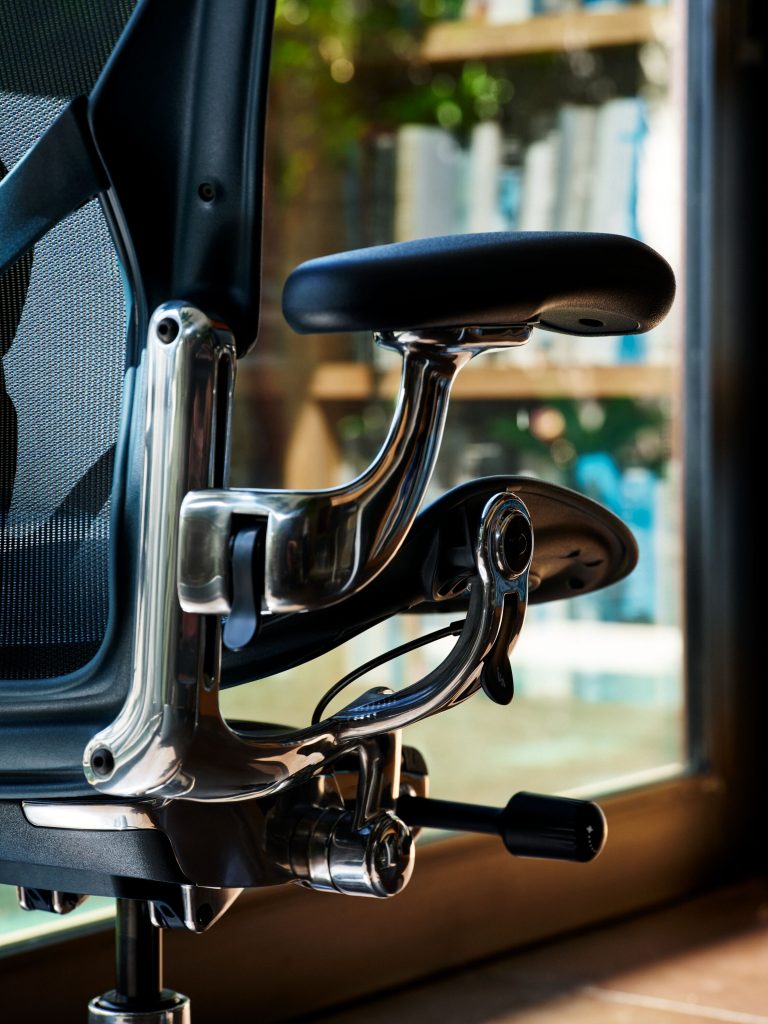
A key part Herman Miller’s overall product decarbonisation strategy, the Aeron chair‘s average embodied carbon footprint has reduced by 12 percent thanks to these innovations. This contributes to the company’s collective carbon saving, amounting to over 7000 tonnes since 2022 – the equivalent embodied carbon of 70,000 office chairs in its range, or about 1166 economy round trips from Sydney to London.
“Aeron has always evolved through rethinking materials – finding better ones, using less where we can, and continuing to push what’s possible. That same approach will guide how we reduce the carbon footprint across our broader portfolio,” says Wing. “Our teams and strategic partners play a huge role in that work, helping us support our company’s mission to design and make the world’s best products in the most sustainable way.”
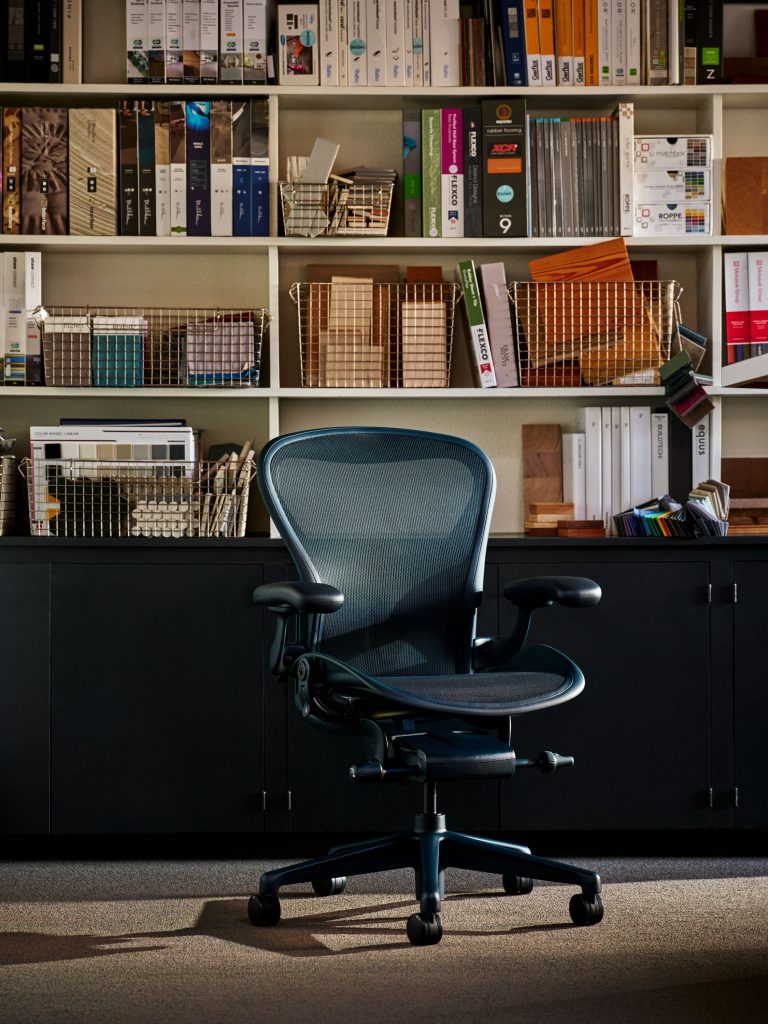
The next evolution of the Aeron chair debuted in Herman Miller’s Chicago showroom on Monday 8 June as part of ‘Living with Change’, a dynamic exhibition in the line-up for Fulton Market Design Days. The immersive display wove lifestyle, seating and workplace design together to explore how intentional, research-backed design can transform people’s daily lives.

© Niche Media 2026