

Architects and designers share tips for building strong industry relationships in honest panel discussion
Architects and designers share tips for building strong industry relationships in honest panel discussion

Share
In a field where creativity often starts in solitude, it’s easy to forget how fundamentally collaborative design truly is. But as a recent panel at Tongue & Groove’s Brisbane showroom revealed, no successful design career is built alone.
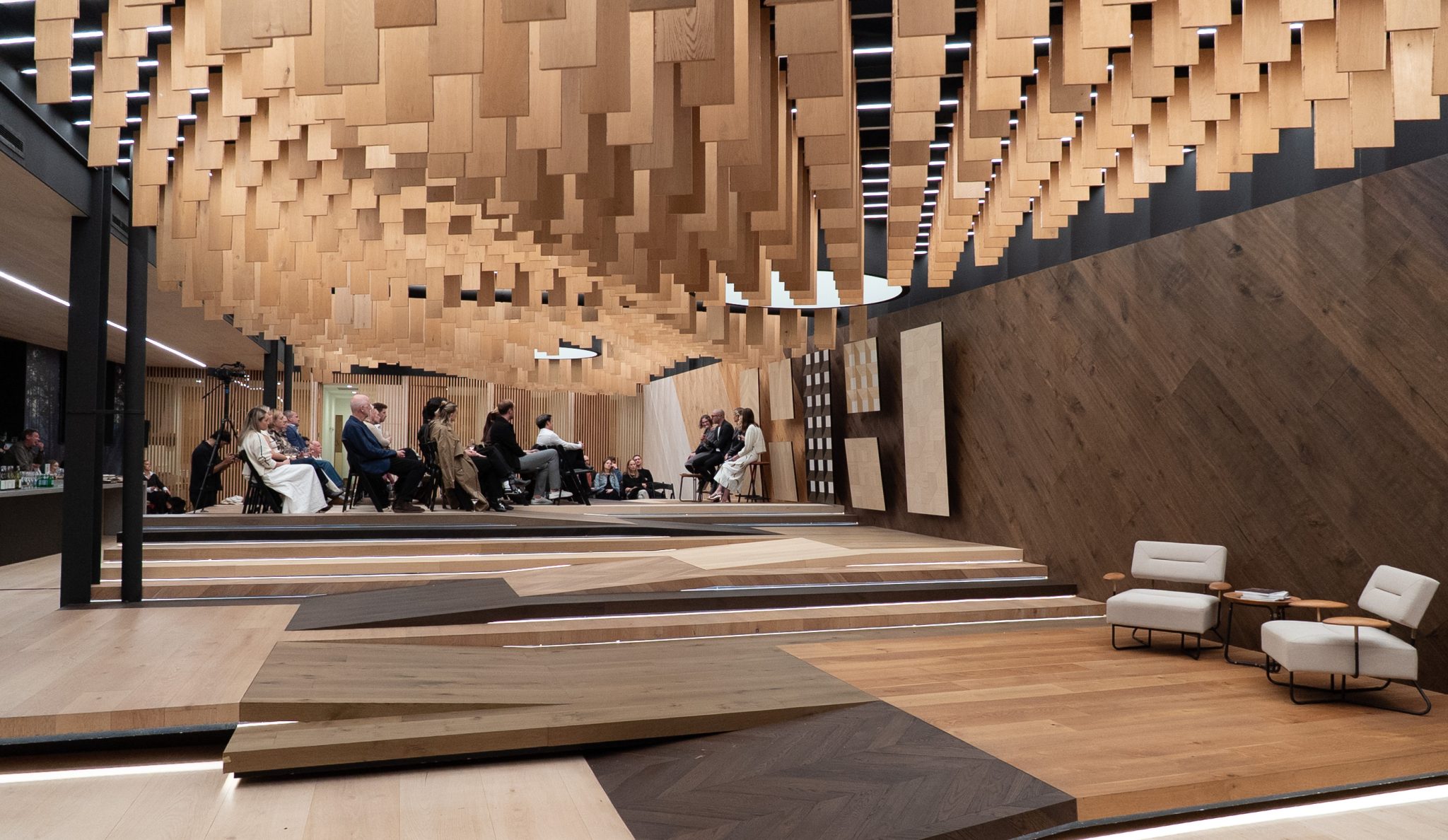
Tongue & Groove’s Brisbane showroom on 3 July 2025.
Design can be a solitary pursuit. Before we land our first job, many of us have spent countless hours refining our craft alone, sketching, modelling, rendering and revisiting ideas late into the night. It’s a profession that demands introspection and imagination. We live in our heads a lot, dreaming up the ‘what ifs’.
But stepping into the professional world quickly reveals a different truth: great design is rarely created in isolation. Success in this industry hinges not only on creative talent, but on collaboration and forging genuine relationships with colleagues, clients, suppliers, builders, fabricators and even accountants.
Building those strong, enduring relationships in a highly competitive industry is an art form in itself. How do we cultivate connections that are genuine, reciprocal and mutually beneficial without being purely transactional?
This question took centre stage on Thursday night (3 July) at Tongue & Groove’s Brisbane showroom in Fortitude Valley, hosted in collaboration with Australian Design Review’s 30UNDER30 program.
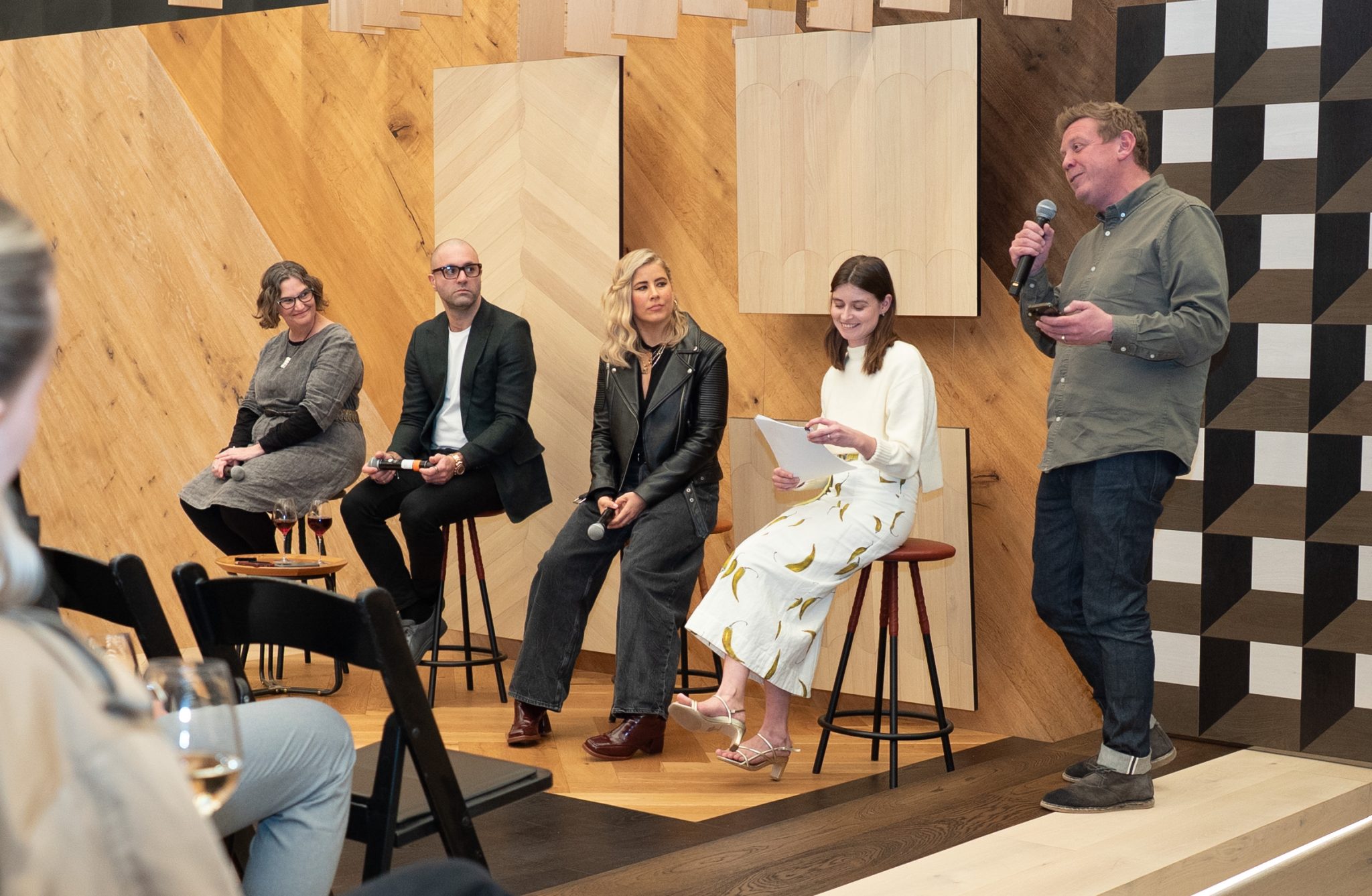
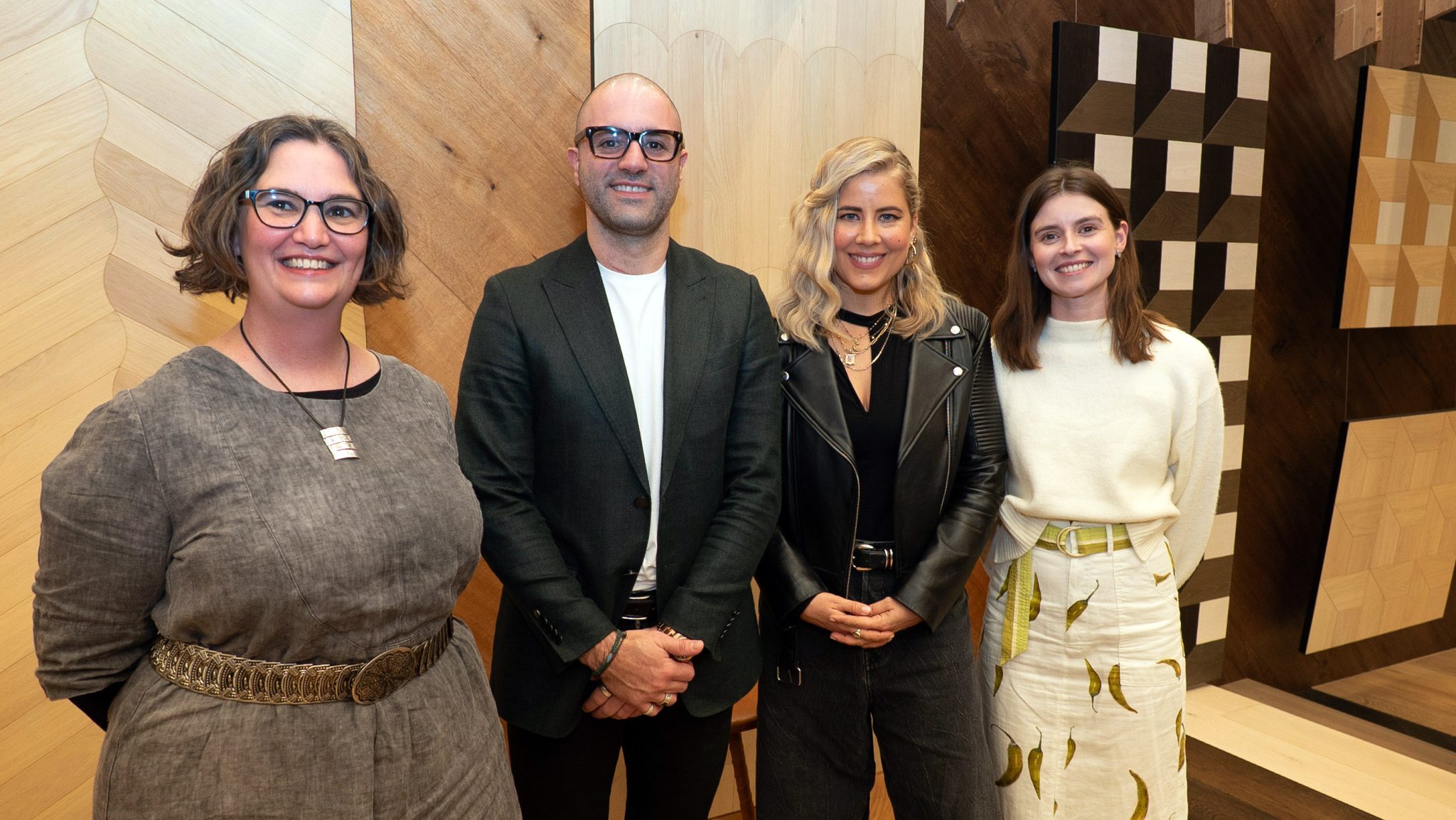
Tongue & Groove’s general manager sales Andy Sutherland introduces the panel, featuring Tamara Reilly, Dom Cerantonio, Carlene Duffy and moderator Ashleigh Sullivan.
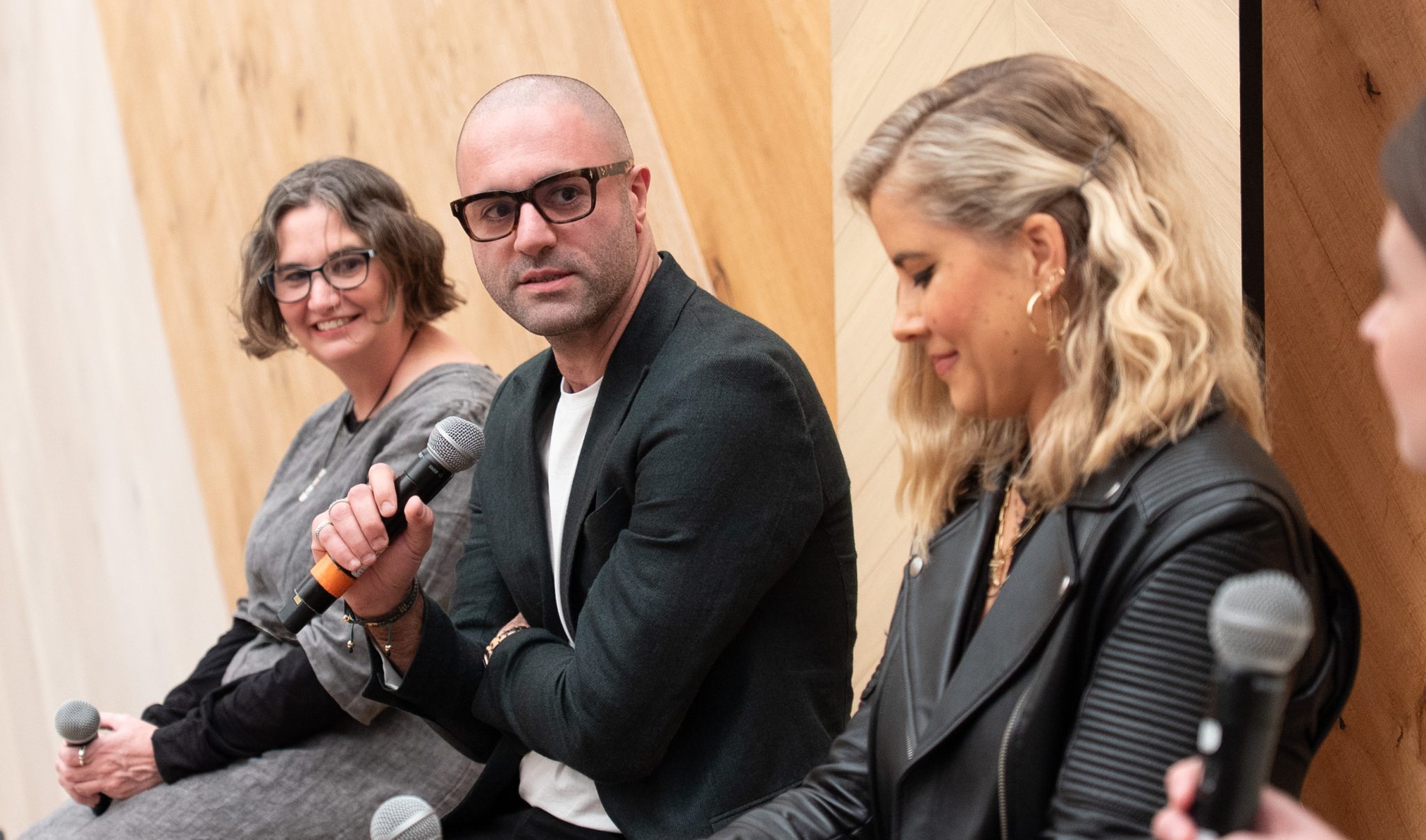
The evening featured a panel discussion exploring the theme ‘How to build strong relationships in design’, moderated by Ashleigh Sullivan, interior designer at COX Architecture and a member of ADR’s 2024/2025 30UNDER30 cohort. The panel brought together some of the country’s sharpest design minds: Cera Stribley co-founder Dom Cerantonio, Billard Leece Partnership senior associate Tamara Reilly and Carlene Duffy Studio creative director Carlene Duffy.
What emerged was a candid and insightful conversation about the relationships that sustain design practice – how they’re built, how they’re tested and why they matter more than ever.
Relationships that shape a career
Opening the conversation, Sullivan asked panellists to reflect on the relationships that were pivotal to their career success. Cerantonio co-founded the architecture and interior design practice Cera Stribley when he was 29 after working at some of Australia’s top-tier firms. “You realise how important it is to rely on people to grow,” he said, reflecting on the early days of launching a practice.
“One of the things that we talk about at Cera Stribley is creating our own dialogue in design and being able to communicate an idea through architecture or design. No one person can run a project; a dialogue is required and it’s a dialogue between a group of people.”
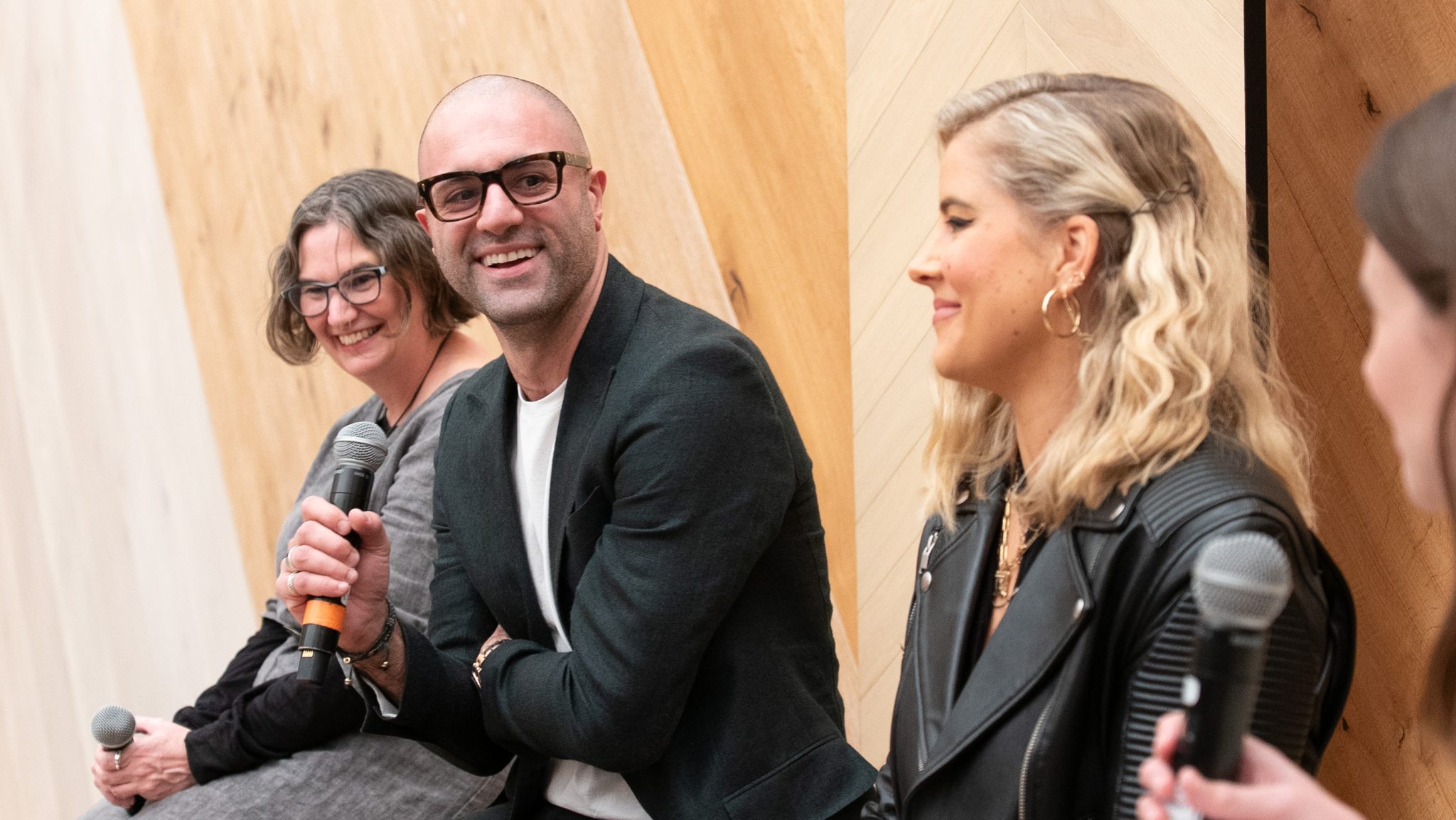
Dom Cerantonio tells the audience about Cera Stribley’s mission to ‘designs by dialogue’.
For Reilly, a senior associate with 20 years in the game, it’s the “good relationships” that matter most, those that last well beyond a single job. “They never go away,” she said. “They are a touchpoint in your career, and you come back to them.”
Duffy highlighted the vital role suppliers play in helping her team deliver creative, high-quality outcomes. “Relationships with our suppliers are key to being able to deliver projects on time,” the Gold Coast-based founder and director said. “It’s also been evident lately just how important suppliers are in being able to extend our creativity. We need our suppliers and manufacturers to be really responsive and open to doing something a little bit different.”
Cerantonio agreed: “Even with a professional relationship, you can still show that you care about that person, whatever they’re doing. If you’re really honest and genuine about how you interact with that person, I feel like it’s reciprocal, and then that bond is a lot more meaningful.”
Mentoring as relationship building
Mentorship emerged as a major theme across the discussion, not only as a means of guidance but as a long-term form of relationship building.
“My old boss used to say that the assessment of a good architecture firm is not how many projects you do, but how many architects go on to own their own firm,” Cerantonio told the audience. “We’ve had one or two people leave us over the past five years and go on to do their own thing. We really welcome that and encourage that. I still speak to one of them once a week. We pass along work to them because it’s not really for us. I really value that relationship and vice versa. My old boss has done the same thing. I still call him.”
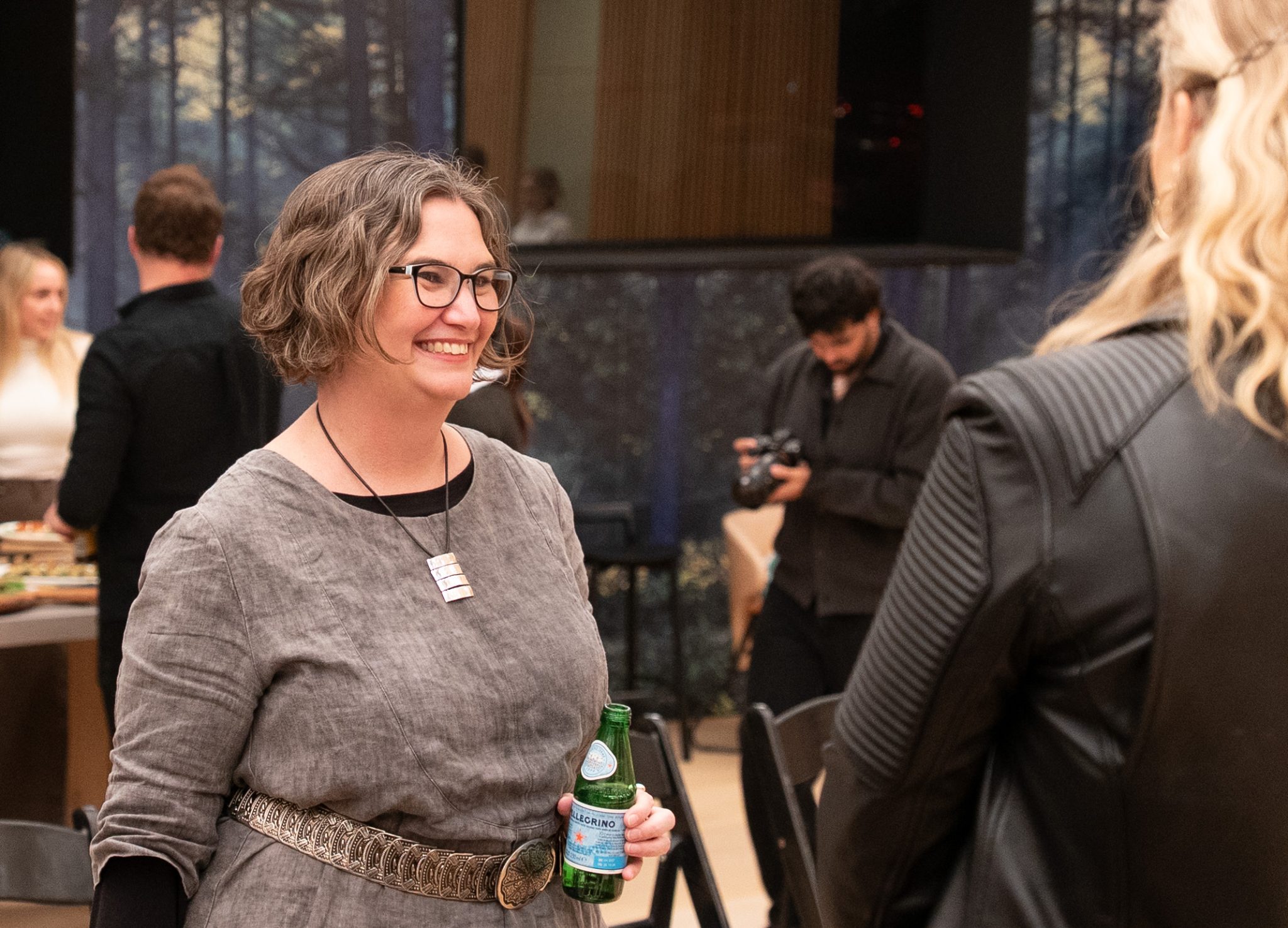
Mentoring someone through the registration process can be incredibly rewarding, according to Tamara Reilly.
Reilly’s team at Billard Leece Partnership is similarly committed. She said mentoring graduates through the registration program is something that her team is very passionate about. “Getting someone through the registration process is incredibly rewarding,” Reilly added.
When relationships get rocky
While most relationships offer opportunity, not all go smoothly. The panel didn’t shy away from discussing the difficult ones and how to deal with them.
“Be honest with yourself and try to be honest with that person,” Cerantonio said. “If you feel like you’ve done the wrong thing, then own it, pick it up and try and reconcile if you want to.”
For Duffy, sometimes the best move is knowing when to walk away. “Be open to severing a relationship for your own mental health.”
And when expectations aren’t aligned, particularly with clients, she added, trust becomes non-negotiable. “If a client from the get-go is questioning your pricing, your process and your timing, they are not your client. Because it’ll just be a constant struggle. It means they don’t trust you implicitly. And you need trust in this process.”
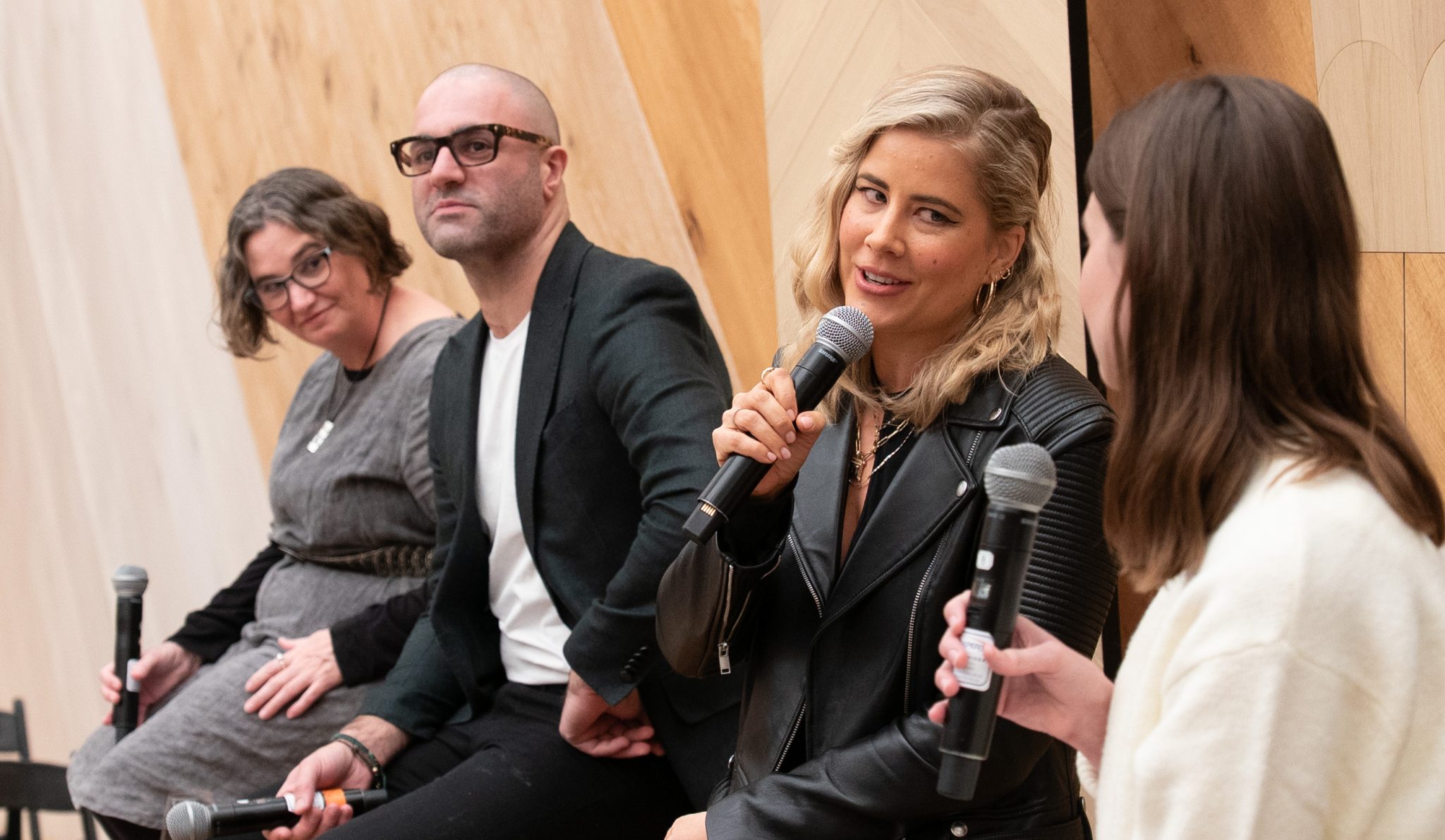
Carlene Duffy says client trust is integral to the design process.
Reilly warned against assumptions, especially when being referred by a long-standing client. “Sometimes you can fall into the trap with all the work that you’ve done for an existing client and the relationship you have with them, that it will automatically roll into the next one. You’ve got to start from scratch. You can’t assume you’re going to be able to work with them in the same way.”
Duffy noted the importance of spotting red flags early. “If any consultant is undermining your process, that would be a red flag as well. This process is a big one, a costly one and a massive collaborative effort.”
Cerantonio added, “There are so many consultants out there who say ‘it can’t be done’ because they can’t be bothered putting in the effort. It drives me insane. A lot of things can be done, it just requires hard work and collaboration. If everyone has the right mindset, then it can be done.”
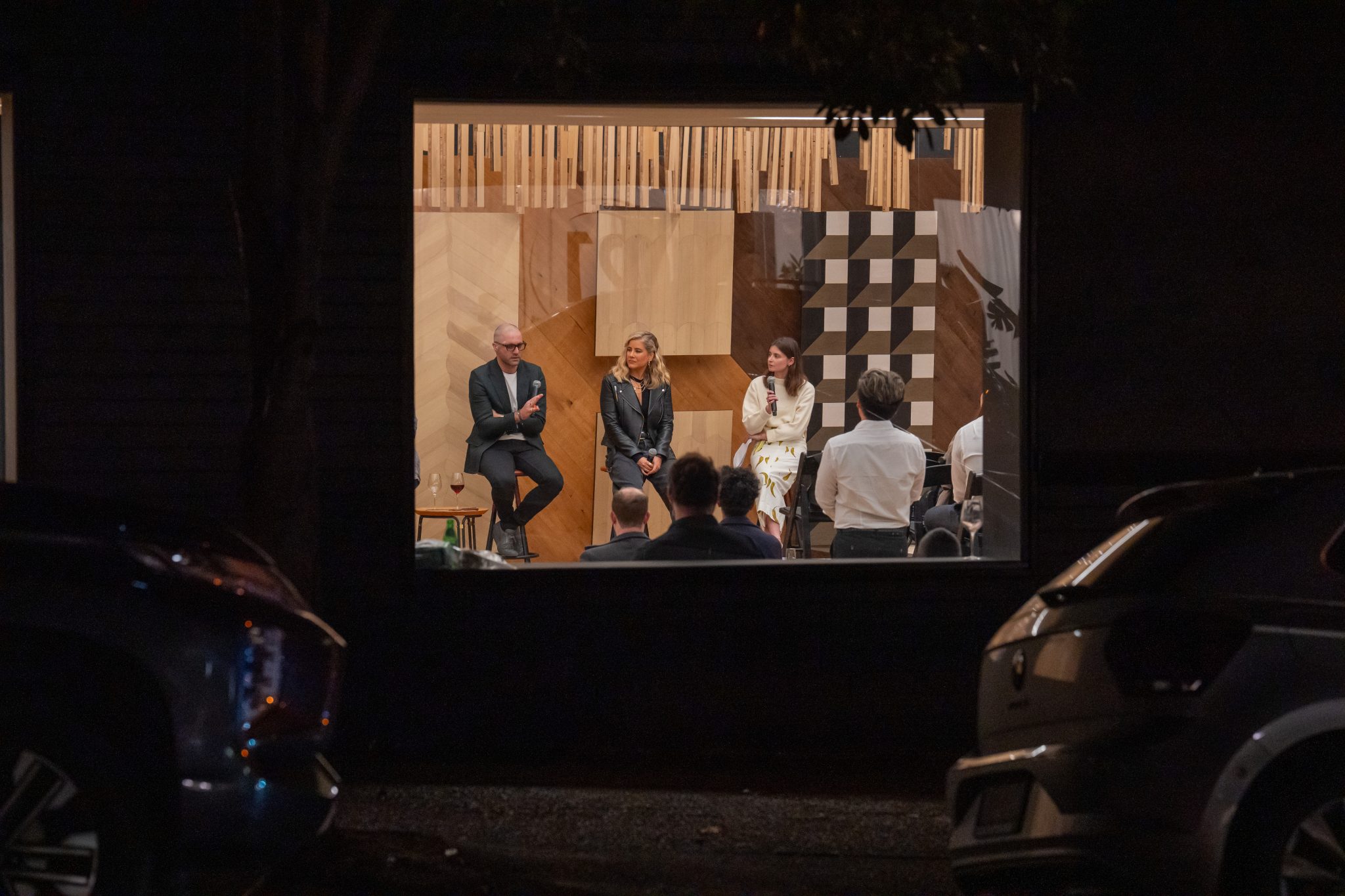
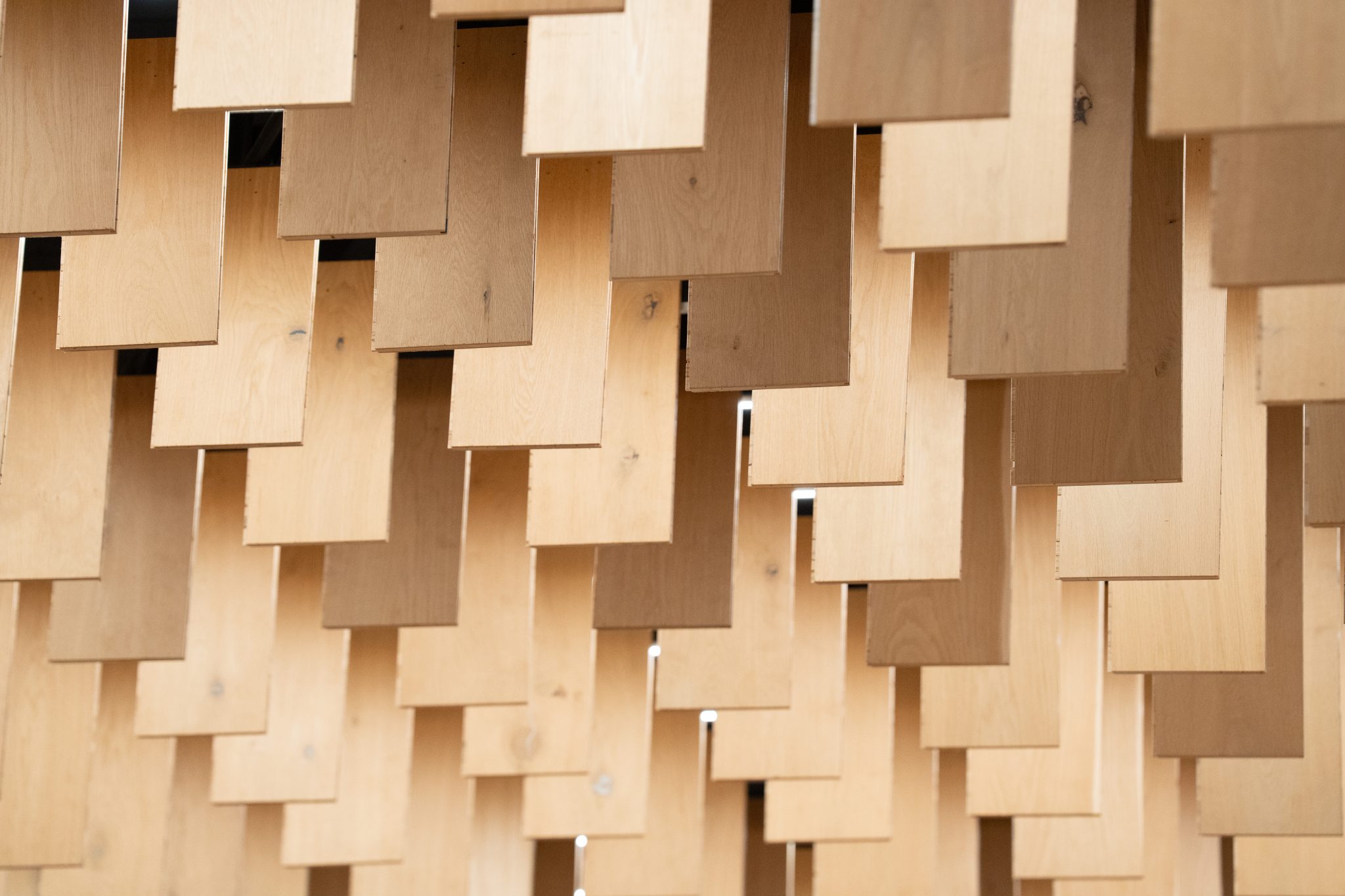
Tongue & Groove’s Brisbane showroom.
Remote work and the studio culture shift
The shift to remote work brought by the pandemic changed how design teams collaborate, but it hasn’t diminished the importance of in-person connection.
Having worked in Melbourne through lockdowns, Reilly recalled how her team found ways to maintain creative momentum. “We found some really creative ways to work around it [using] platforms to do sketches online, where everyone could get in there and start sketching together. It’s effectively butcher paper and felt tip pens, but it’s electronic,” Reilly said.
To build that digital fluency and connection, her team even played lunchtime Pictionary to practice drawing online together.
“If you need to work online, then you need to put things in place to make it more collaborative. You can’t just assume collaboration is going to happen,” Reilly explained.
Cerantonio remains a strong advocate for in-person collaboration. “I’m a big believer in the best outcomes coming when everybody’s in a studio together,” he said. “There’s a struggle between whether you work more efficiently on your own or get a better outcome with a team that might be less productive.”
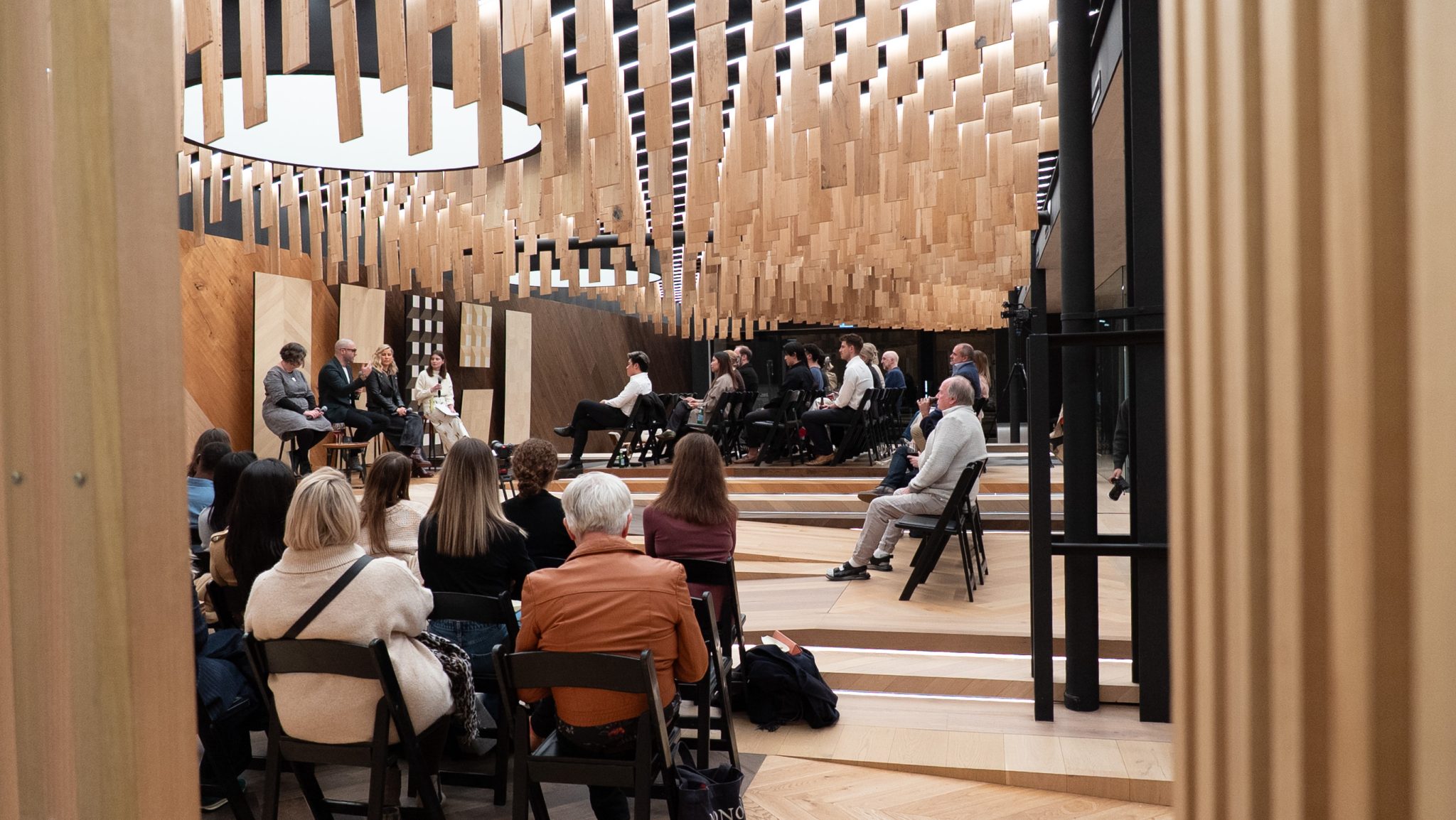
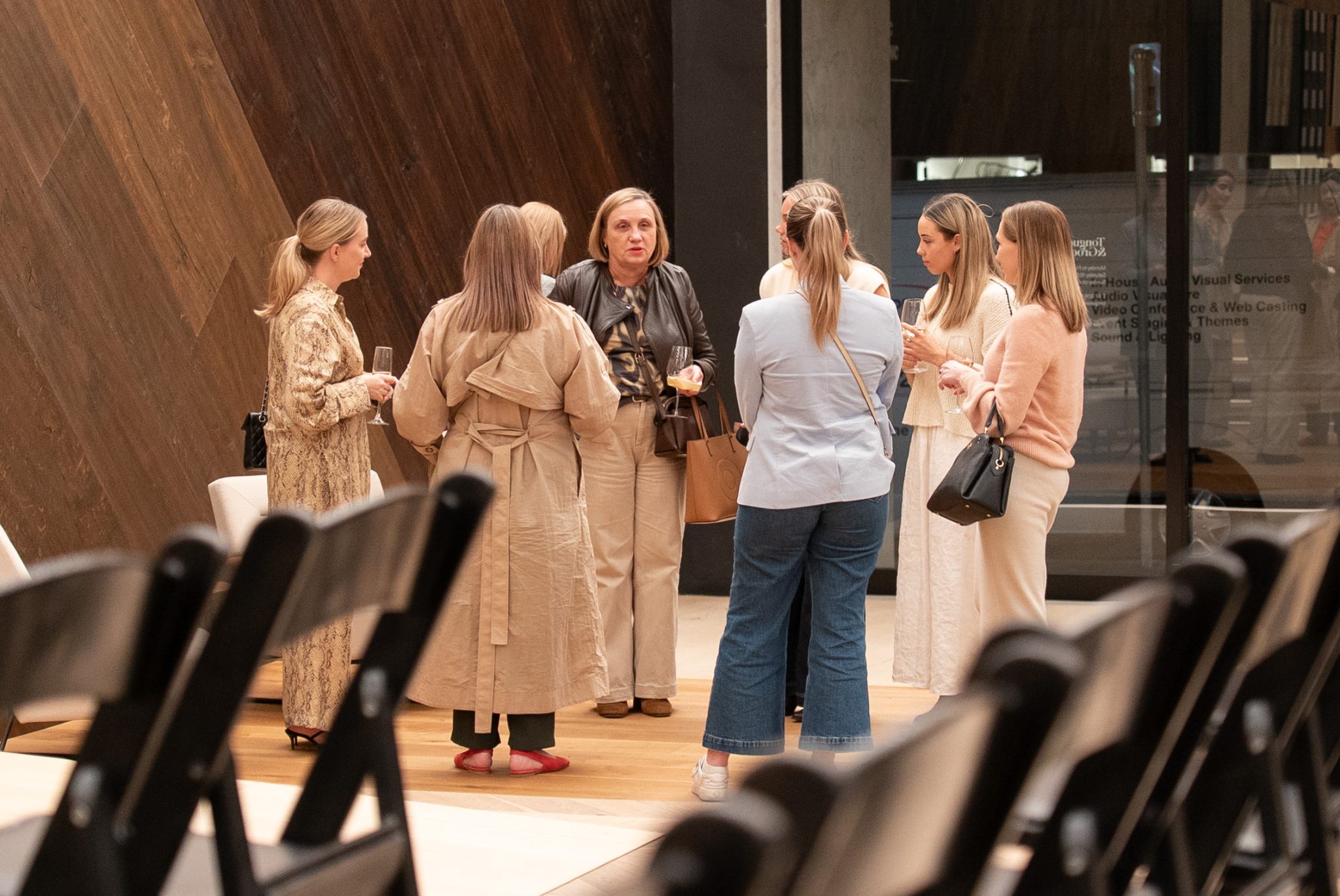
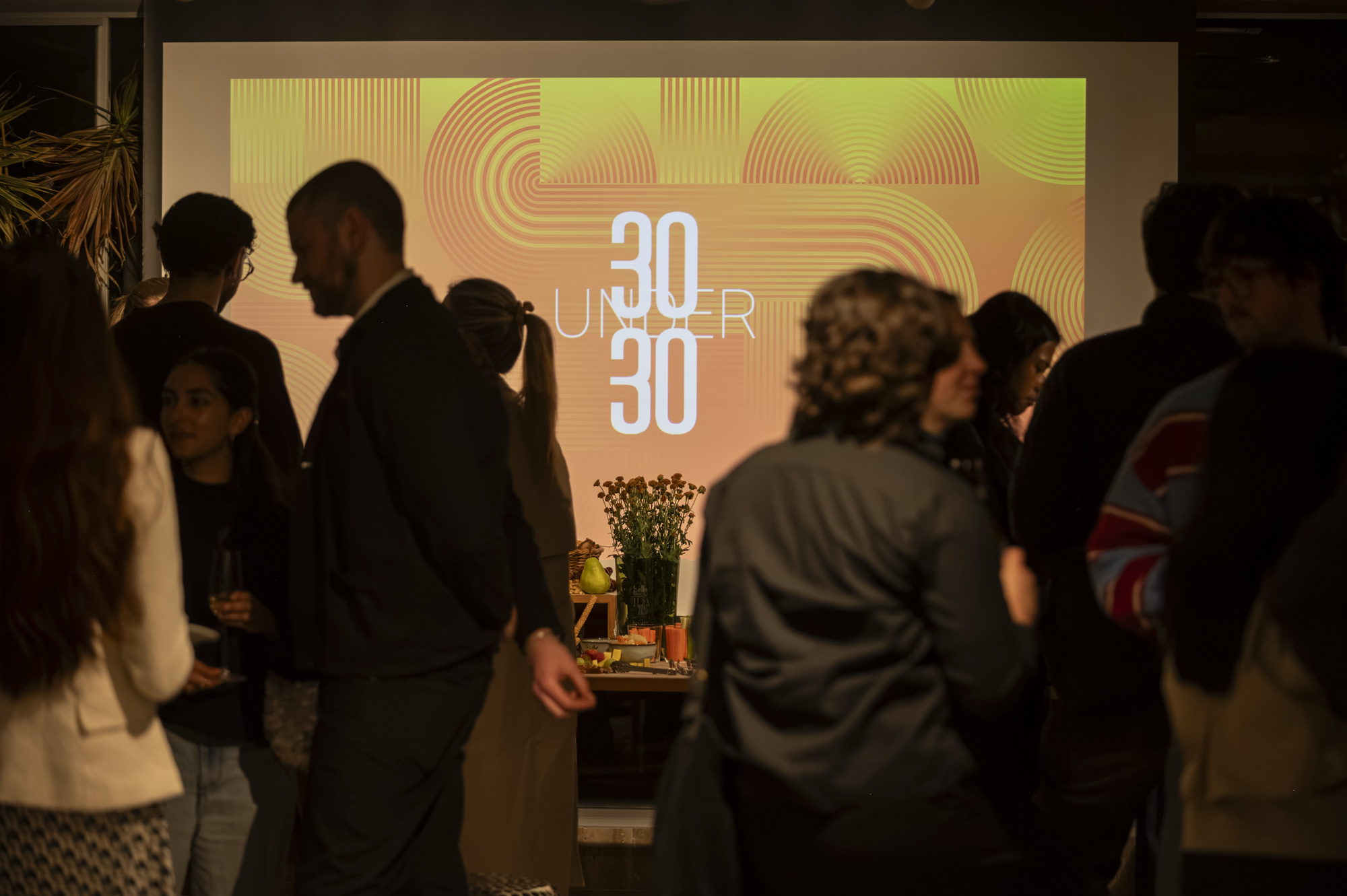
Guests fill out Tongue & Groove’s Brisbane showroom for ‘How to build strong relationships in design’ on 3 July.
He said an office environment was crucial to on-the-job education – “the younger team members just won’t get that if they’re working remotely.”
Duffy, who leads a tight-knit team of four, agreed. “Every [in-office] conversation feels like it matters, even though we all work on different projects. There’s so much learning happening in conversations between each other, where we’re trying to break down an idea or decide why we’d use this material over that one.”
Paying it forward
As the evening wrapped, the conversation returned to generosity and mutual support – qualities that distinguish good collaborators from great ones.
“If you make my job easy, you get my work,” said Reilly of supplier relationships.
Cerantonio elaborated: “If you work for your network, becoming almost like an agent for them, referring work to people and helping people out where you can, and being yourself, being authentic, then you’ll find that those people will actually do the same for you. Think of how you can help people through whatever industry they may be in. That will often be reciprocated and you will reap the benefits.”
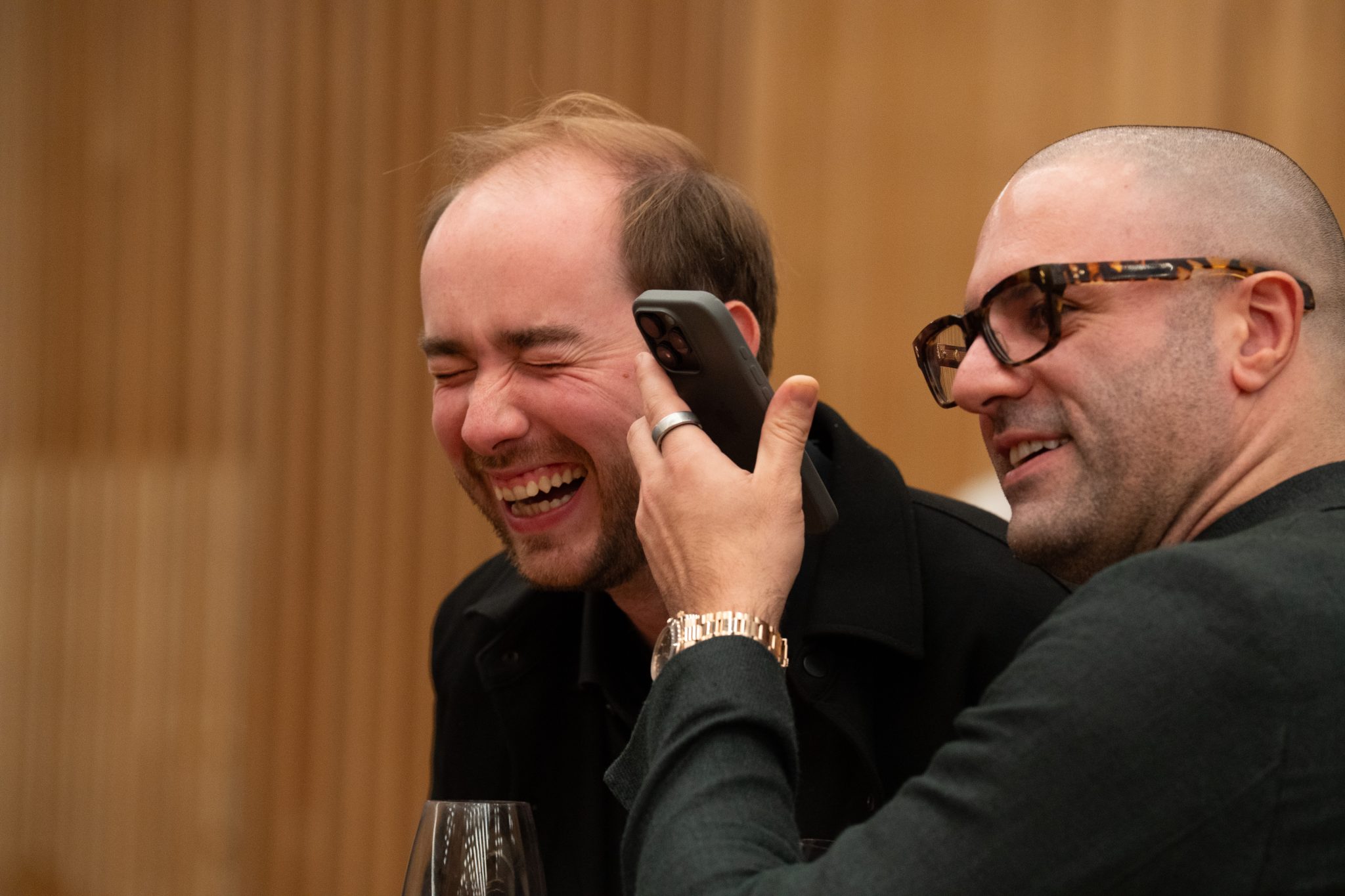
According to Dom Cerantonio, if you work for your network, they will return the favour.
Sullivan reflected on how expanding her network – locally and internationally – has shaped her career. Having spent formative years living and working in Amsterdam, her perspective is shaped by Dutch design values of circular and adaptable thinking, combined with a design approach that is always grounded in local context, materials and community.
“I’m quite proud of moving to Amsterdam to build a whole life from scratch and then equally, moving back here. By saying yes to everything – maybe that’s a whole different kind of discussion, because I wouldn’t always recommend it – has helped to expand my network and meet new people.”
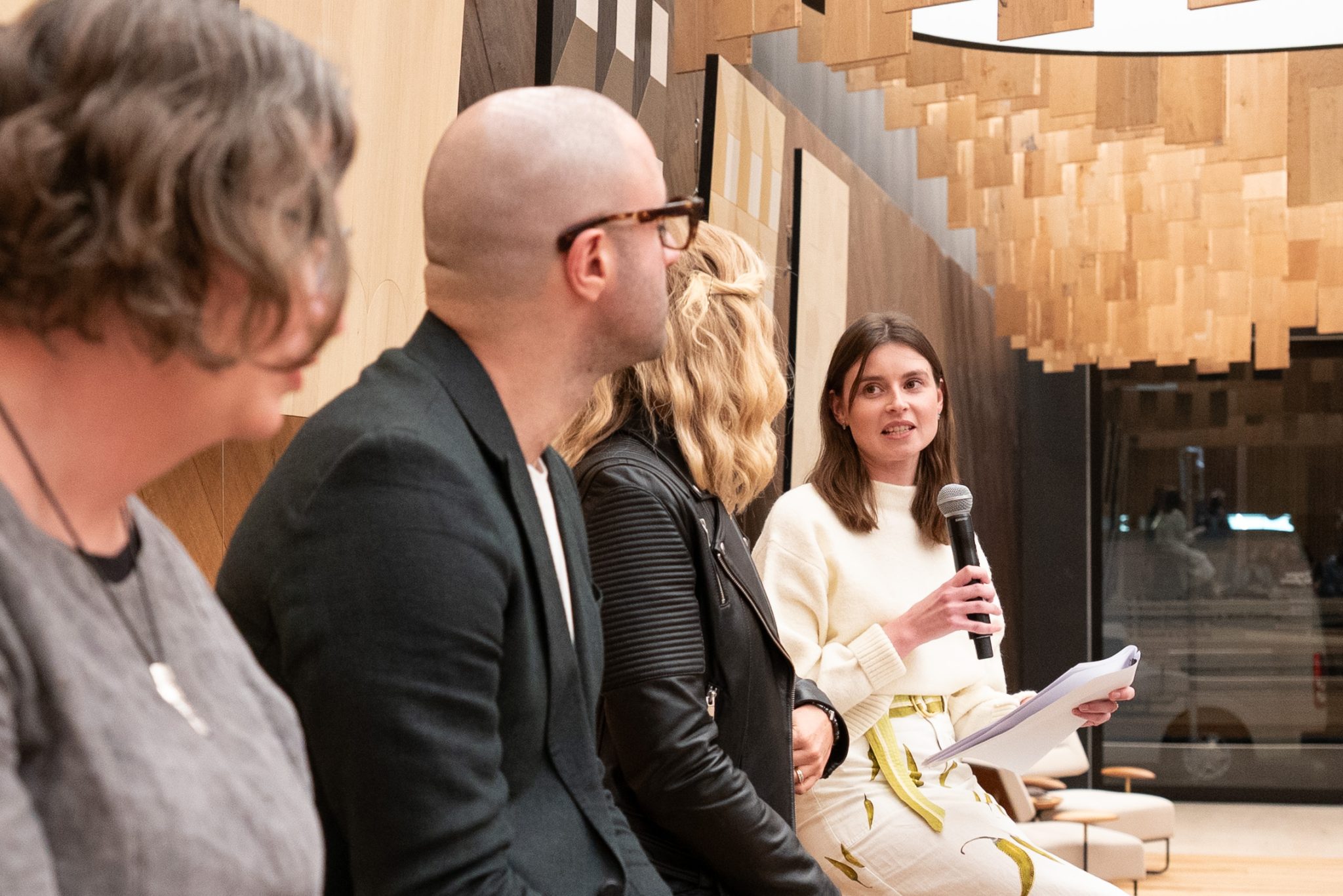
Ashleigh Sullivan says saying yes to everything has helped to expand her network and meet new people.
For Cerantonio, international connections also broaden design thinking. “The relationships that you can follow with overseas groups will really open up your horizons in terms of design and how you perceive and think, because there are multiple ways of doing things.”
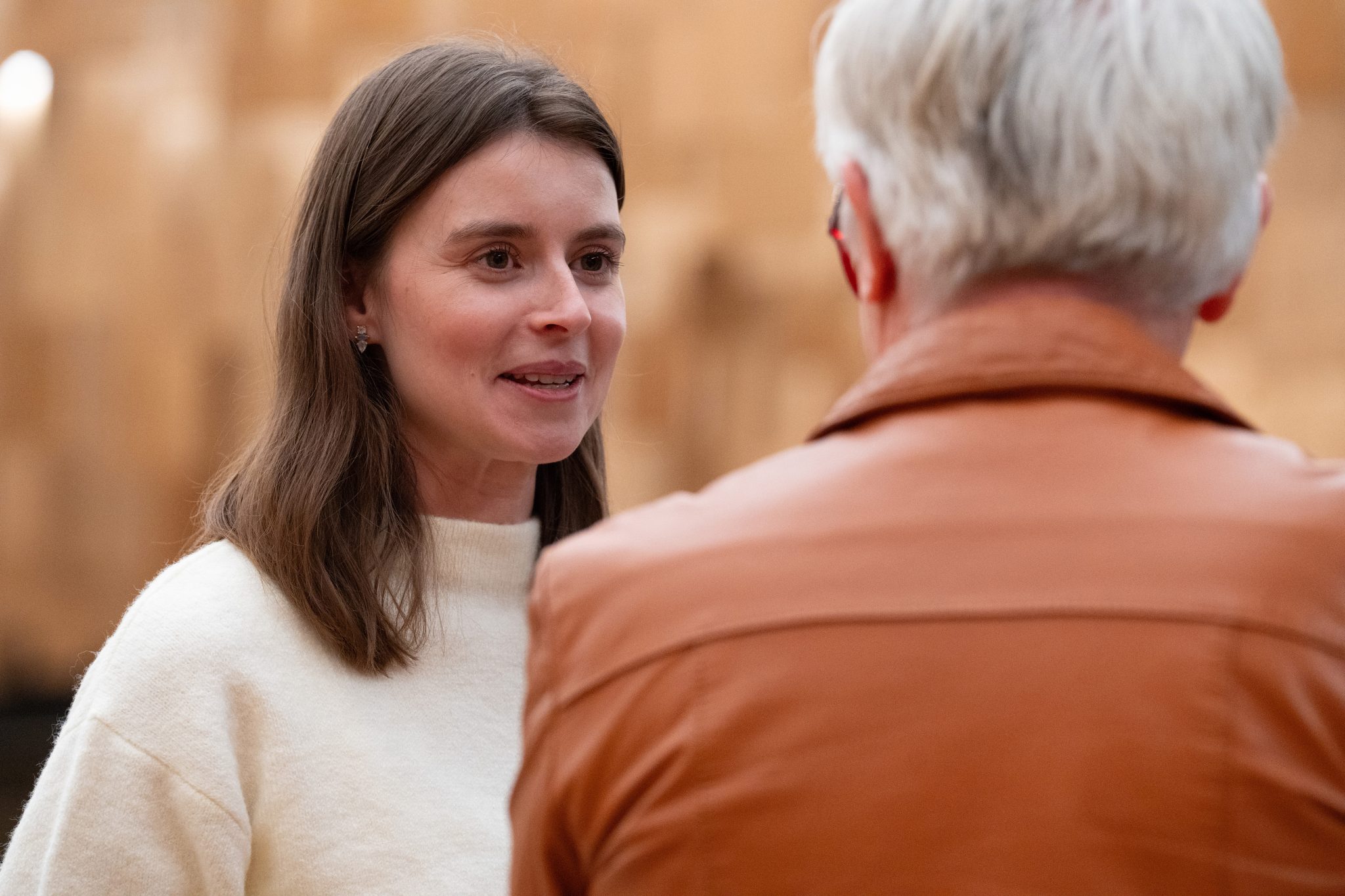
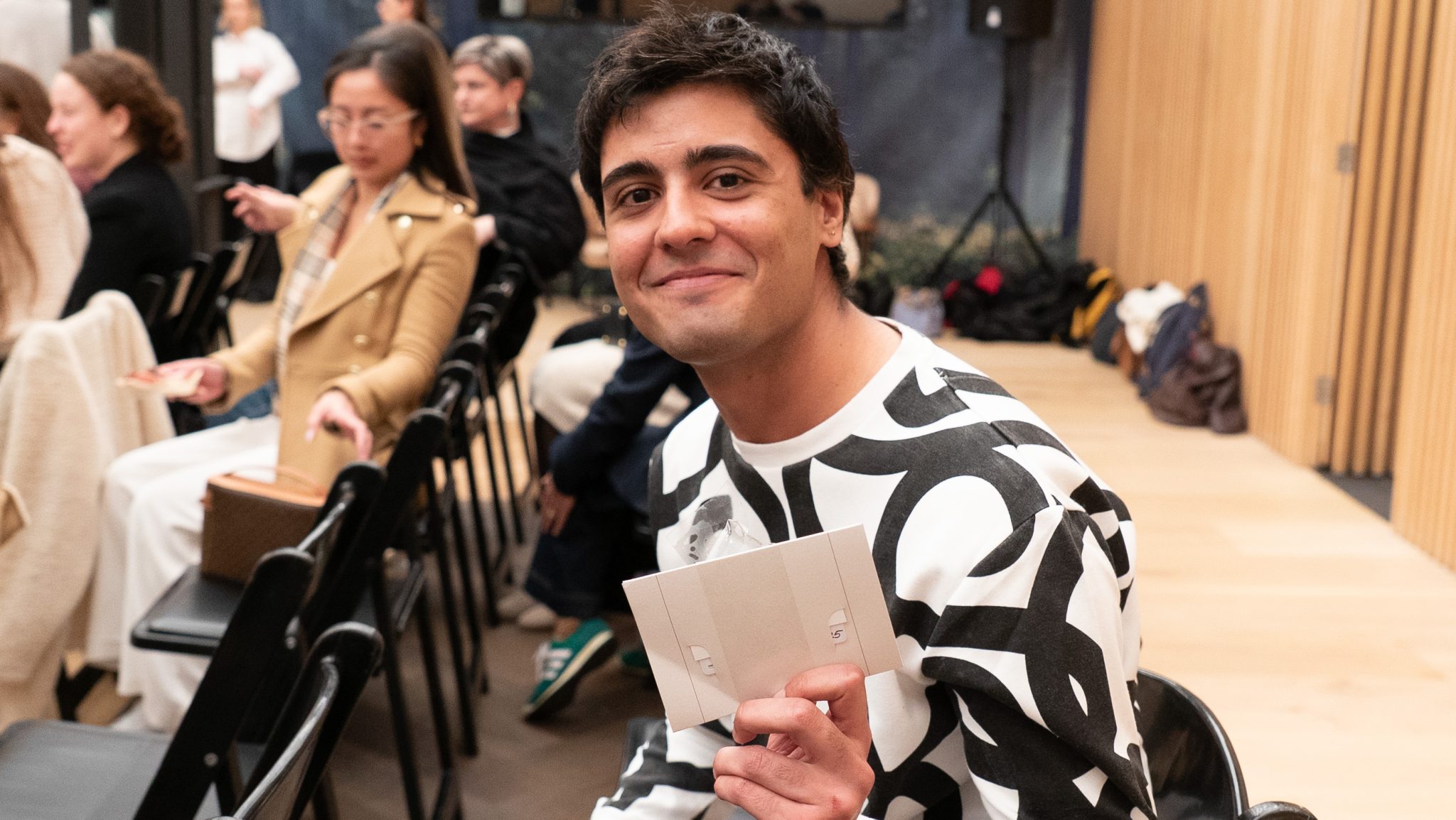
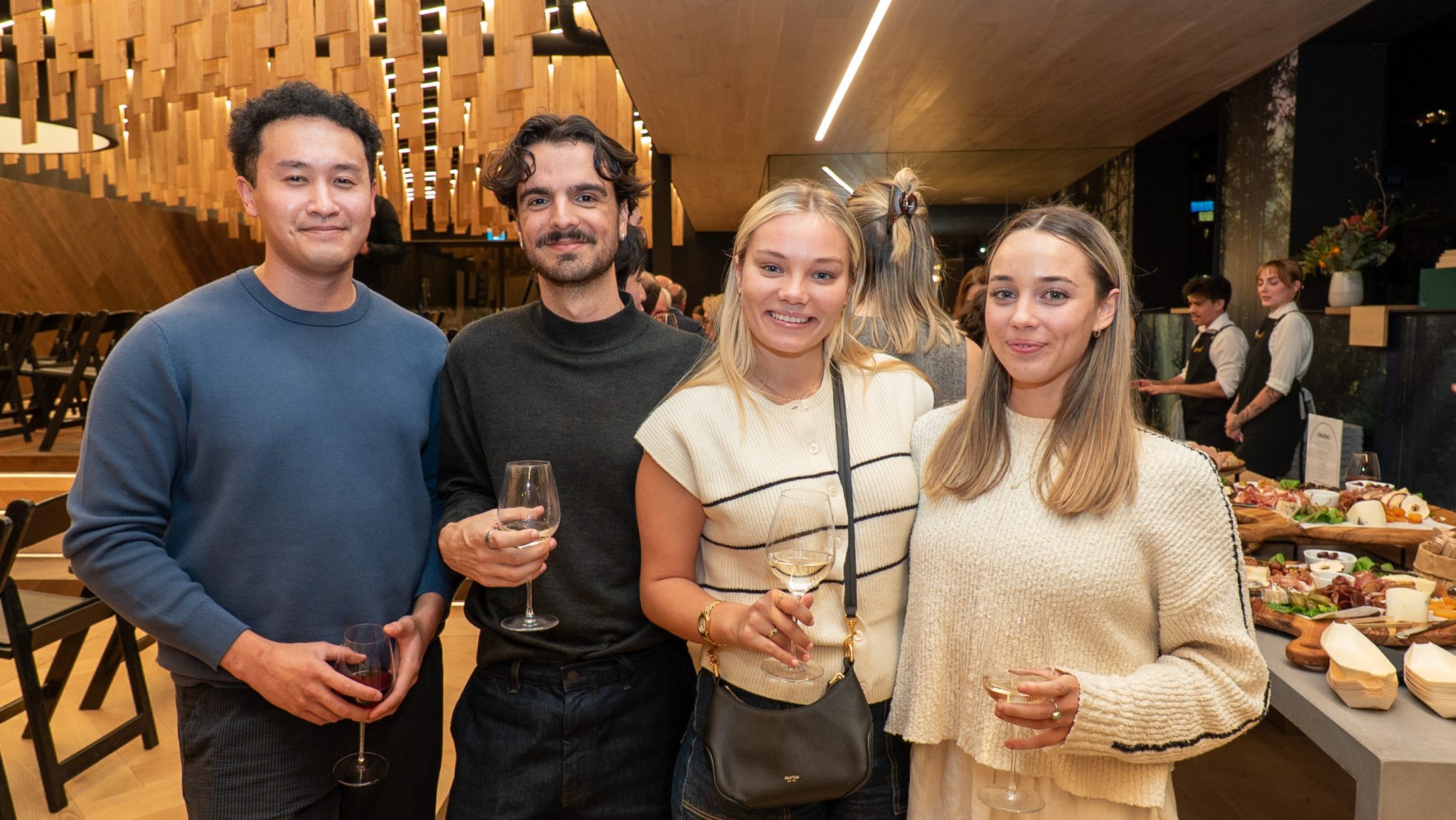
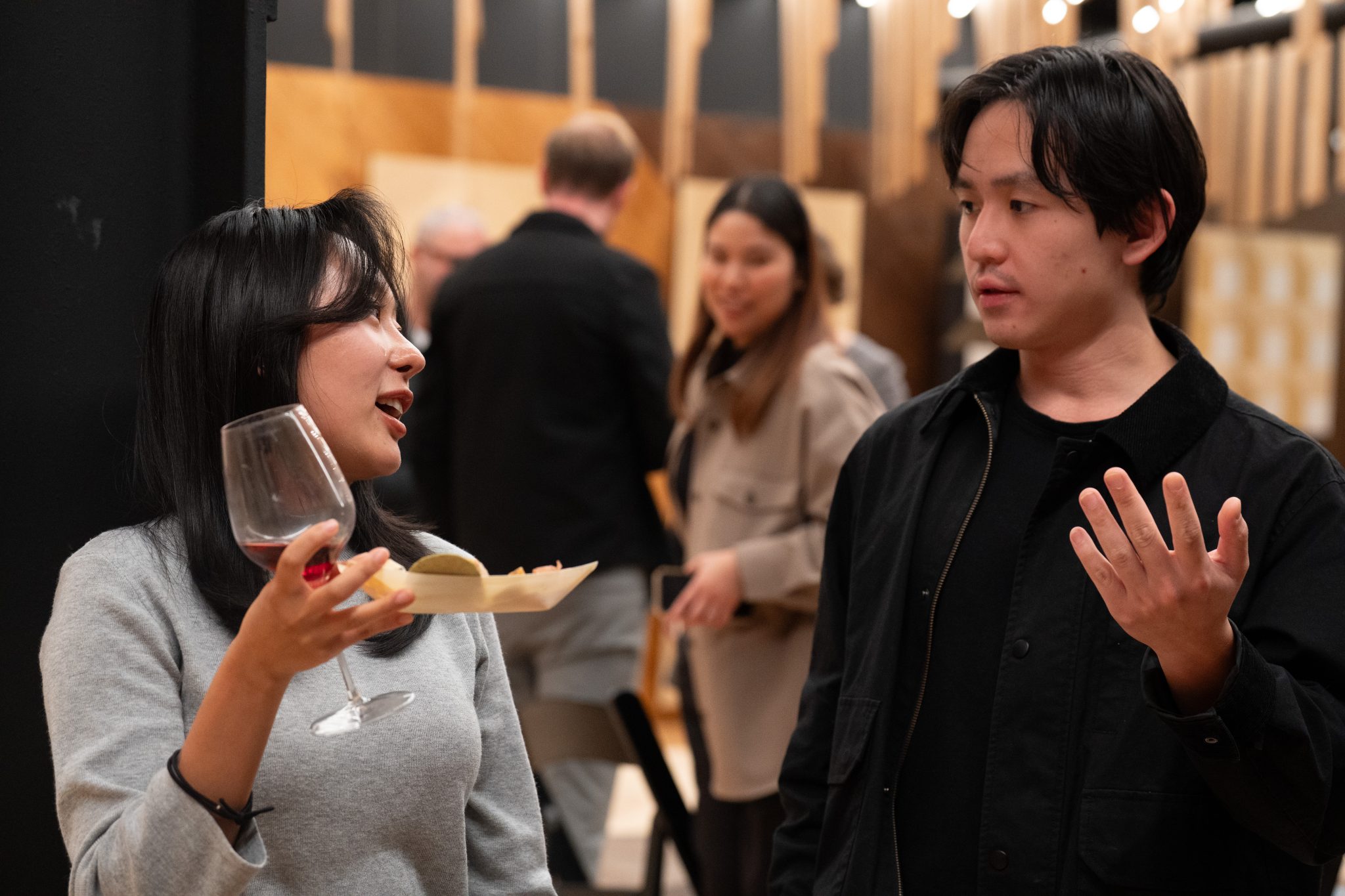
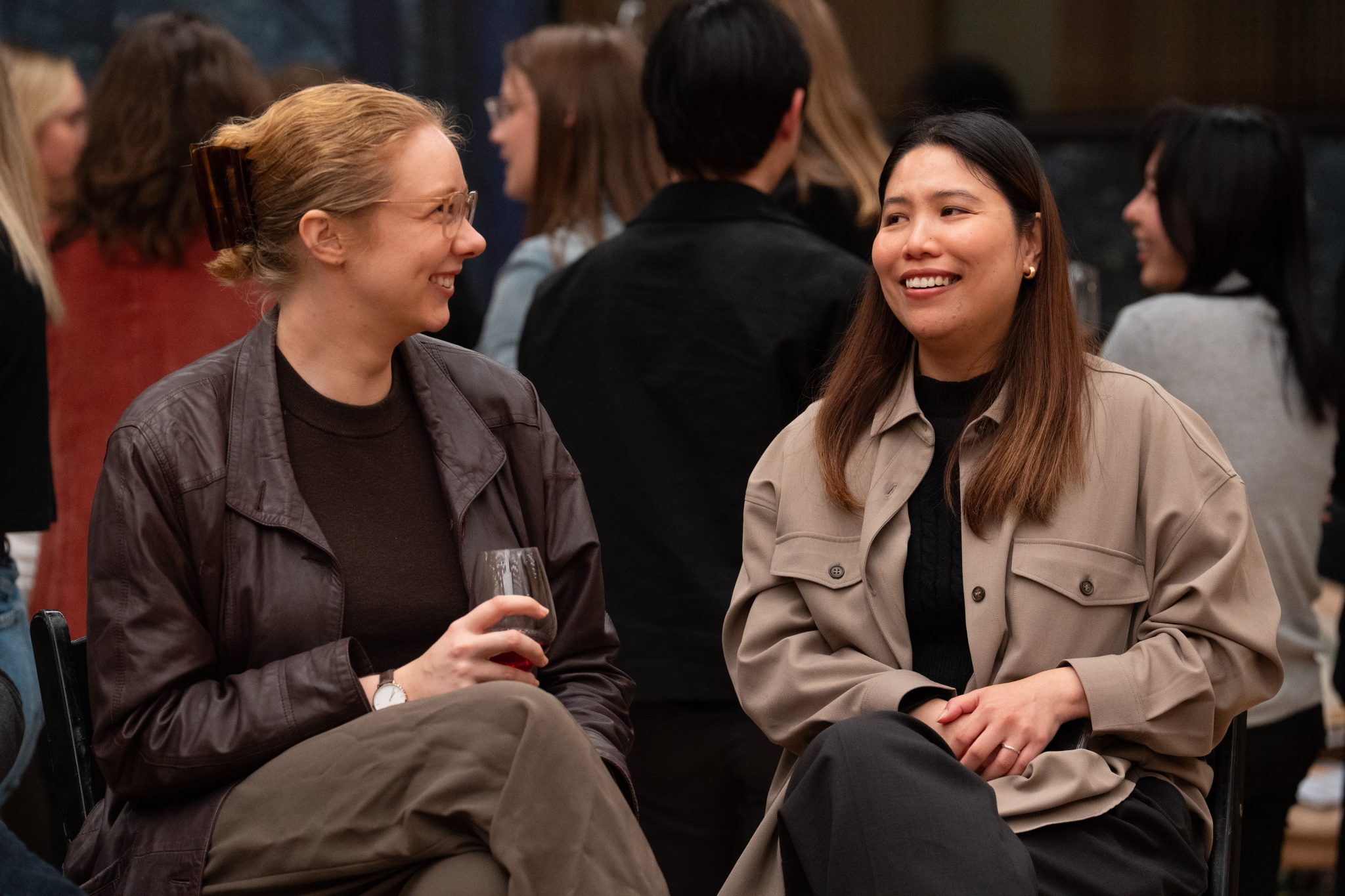
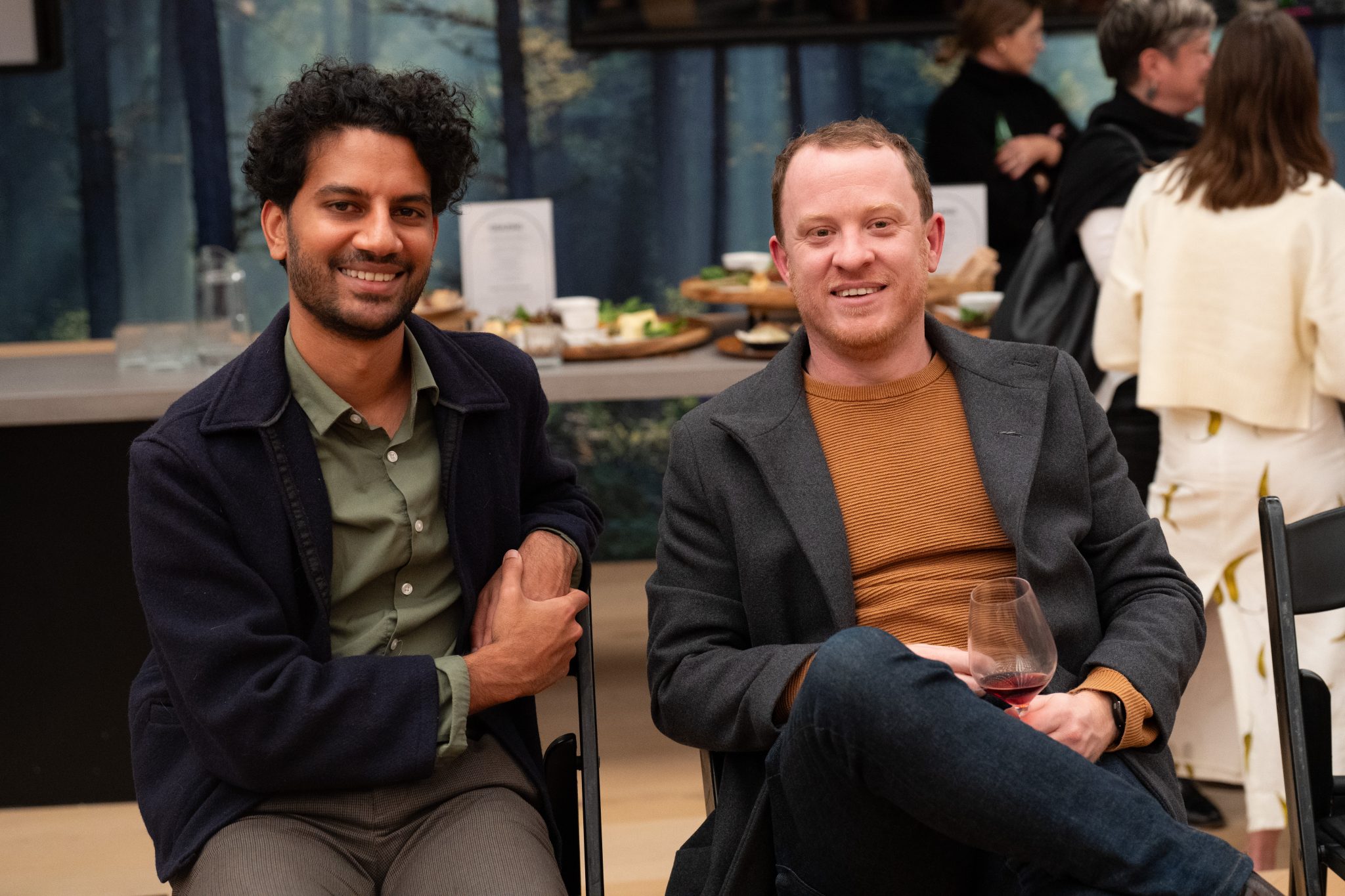
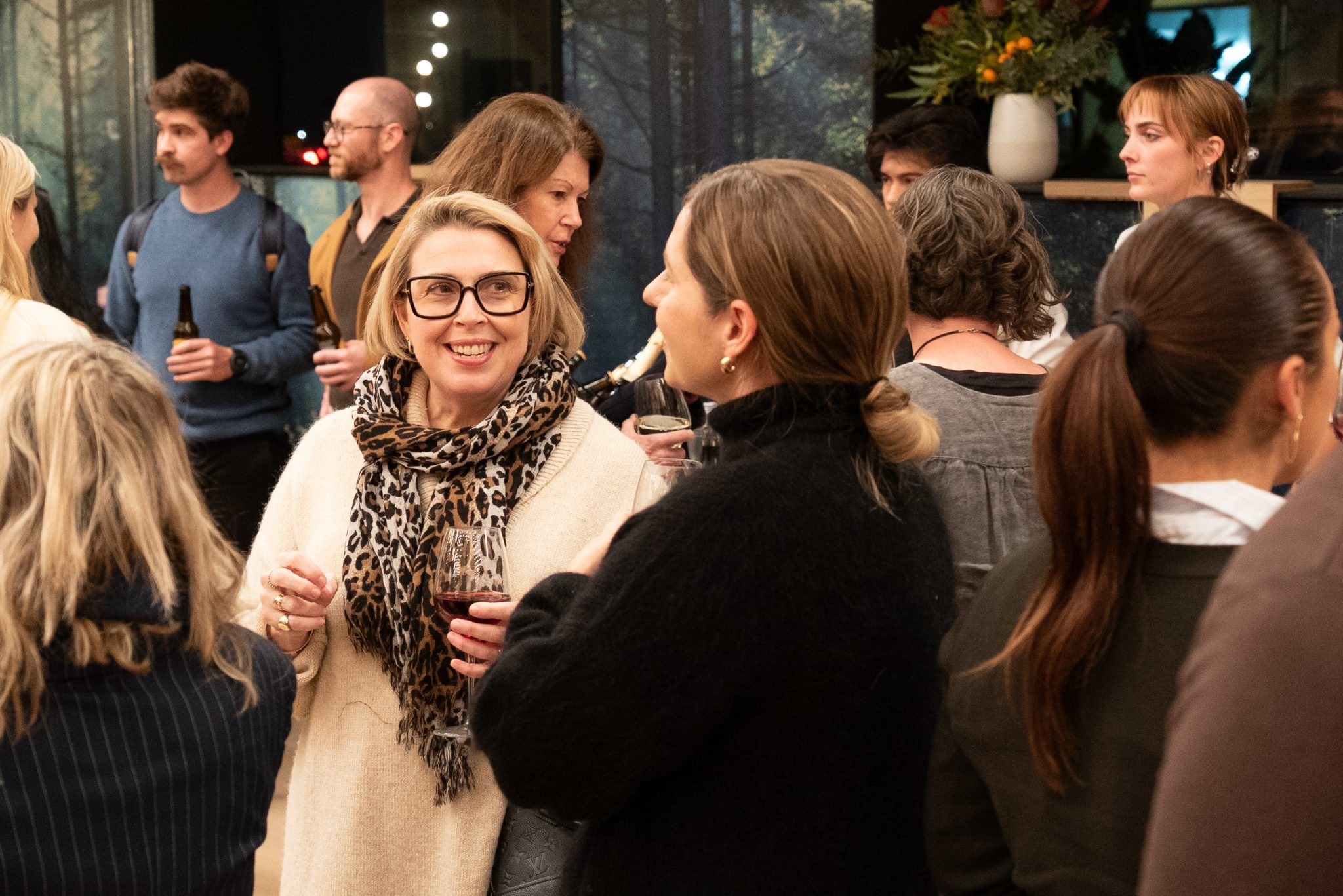
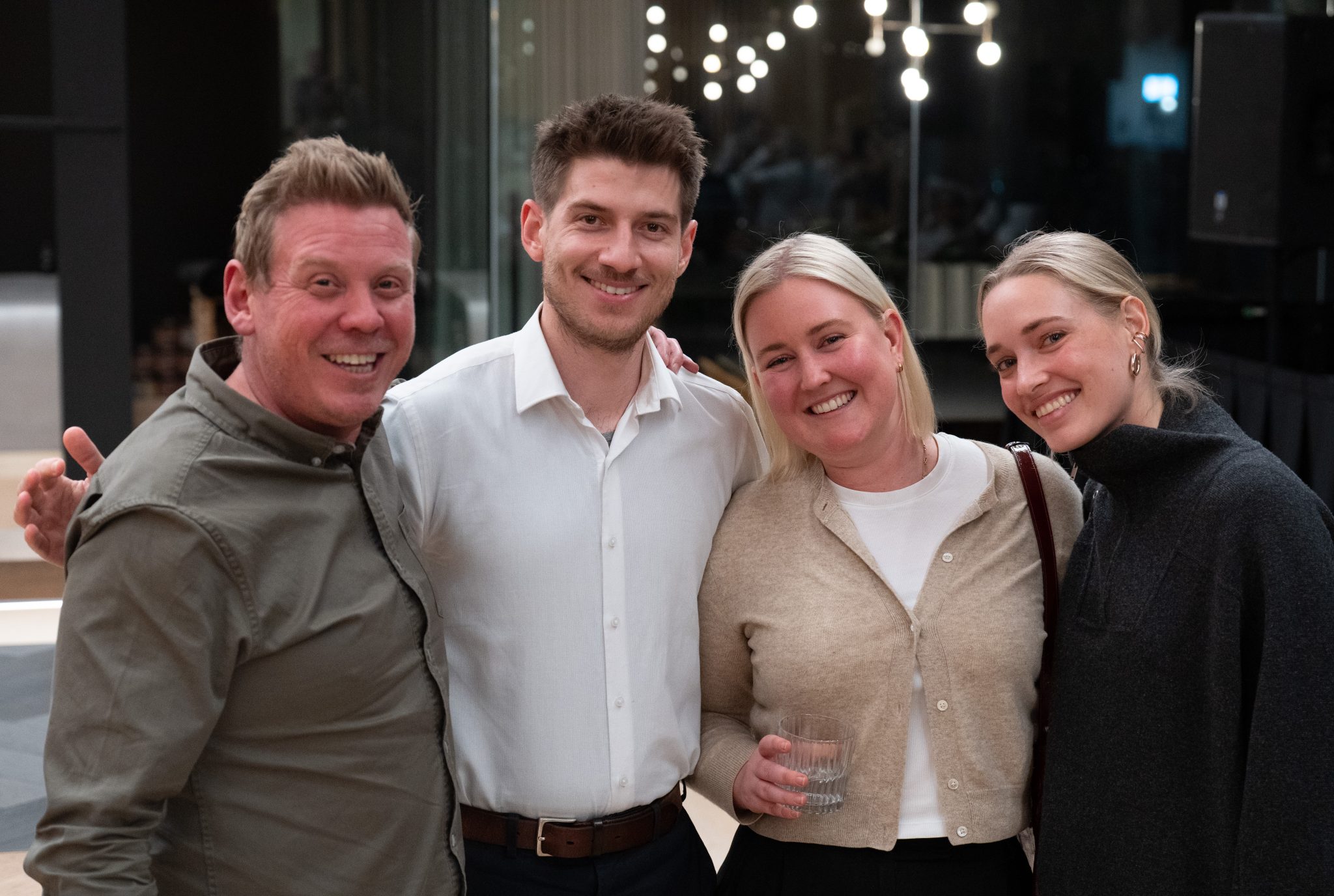
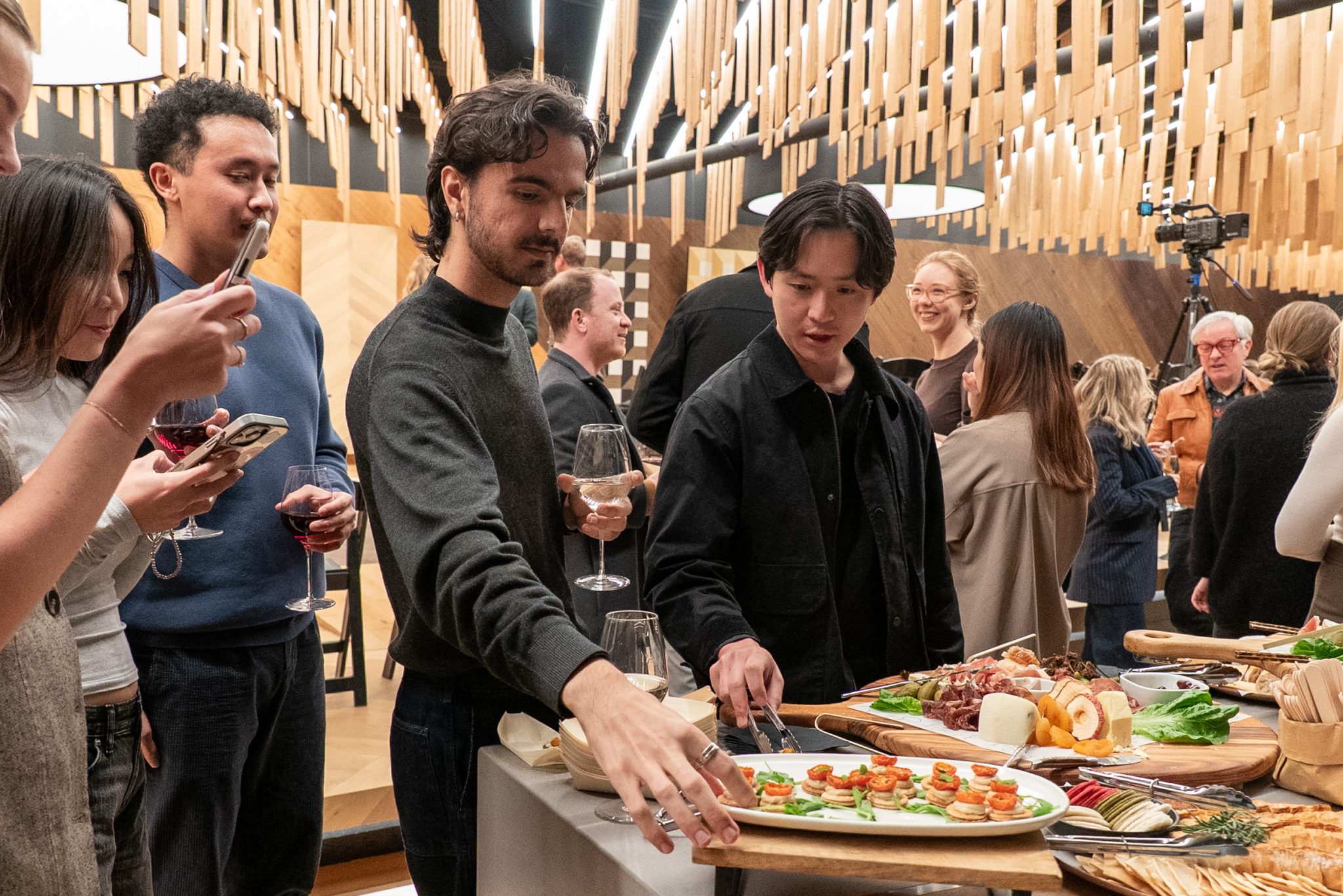
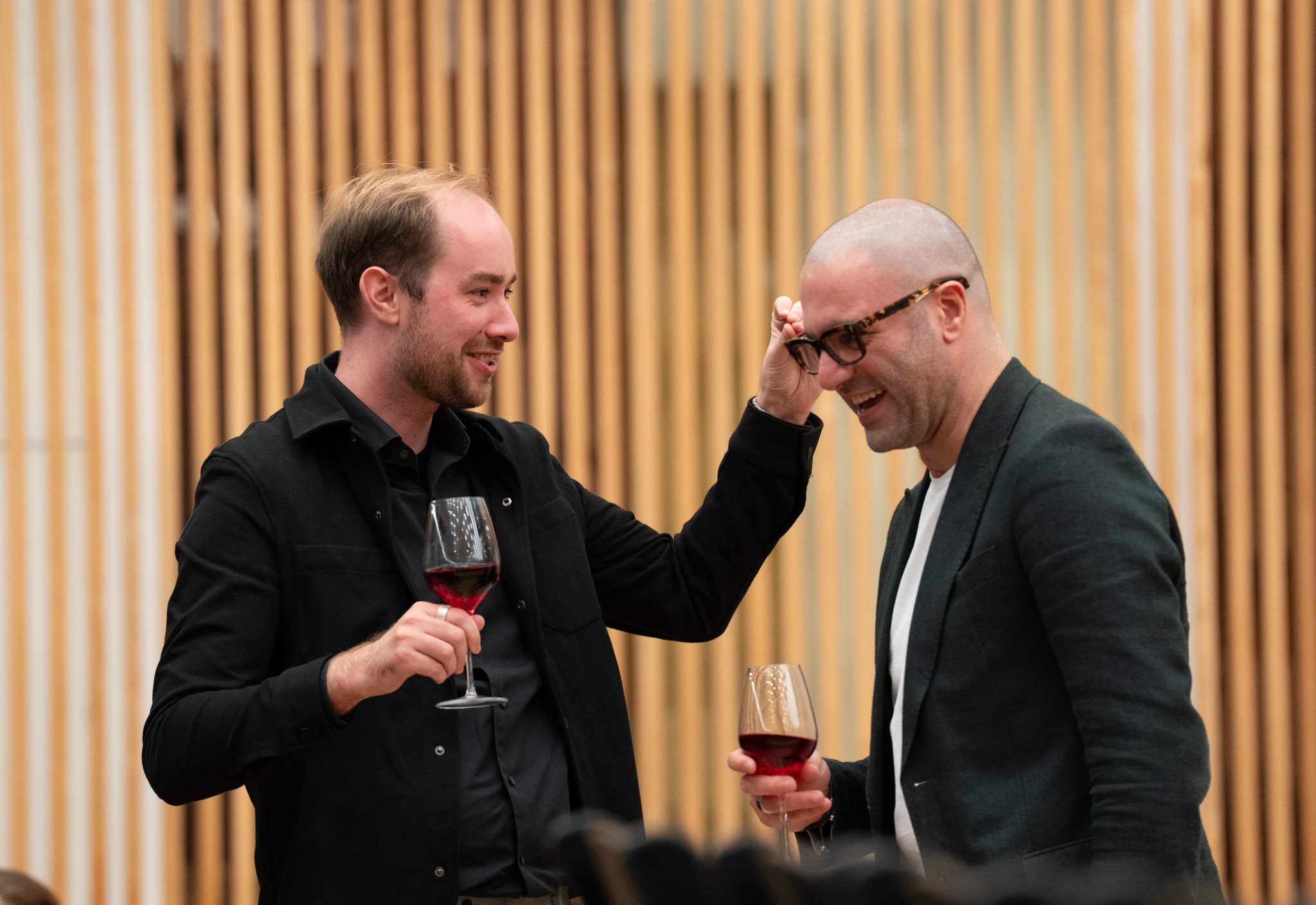
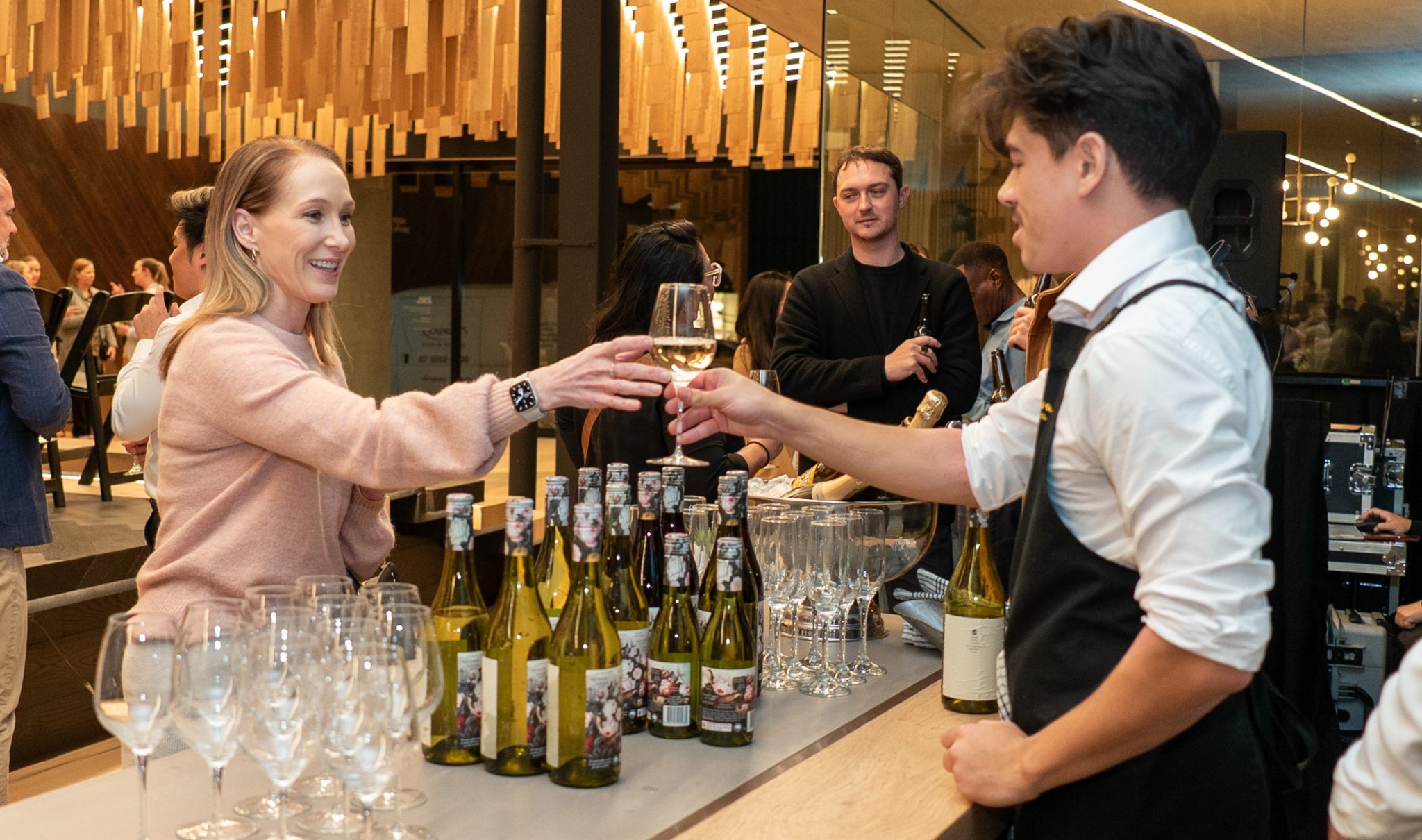
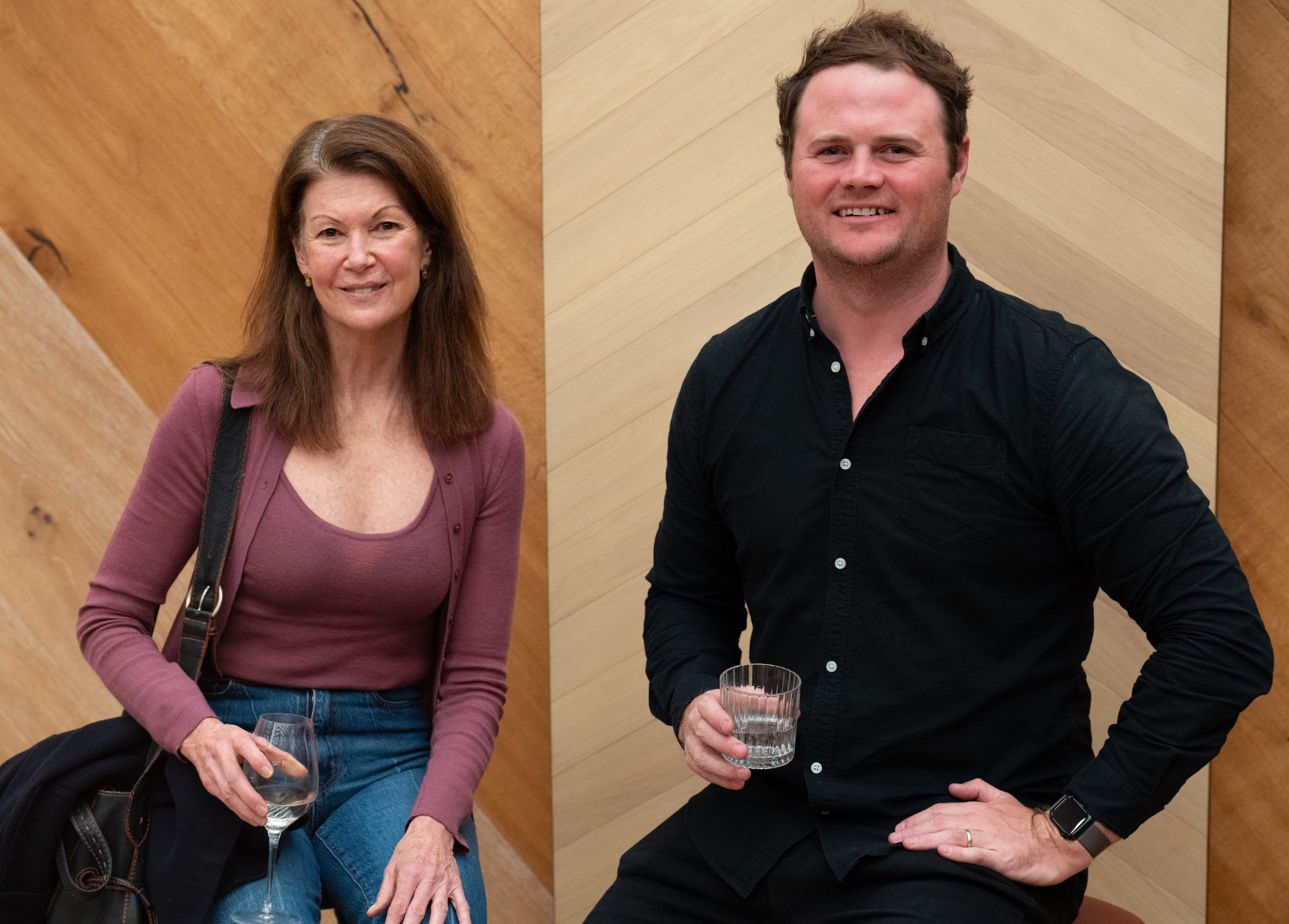
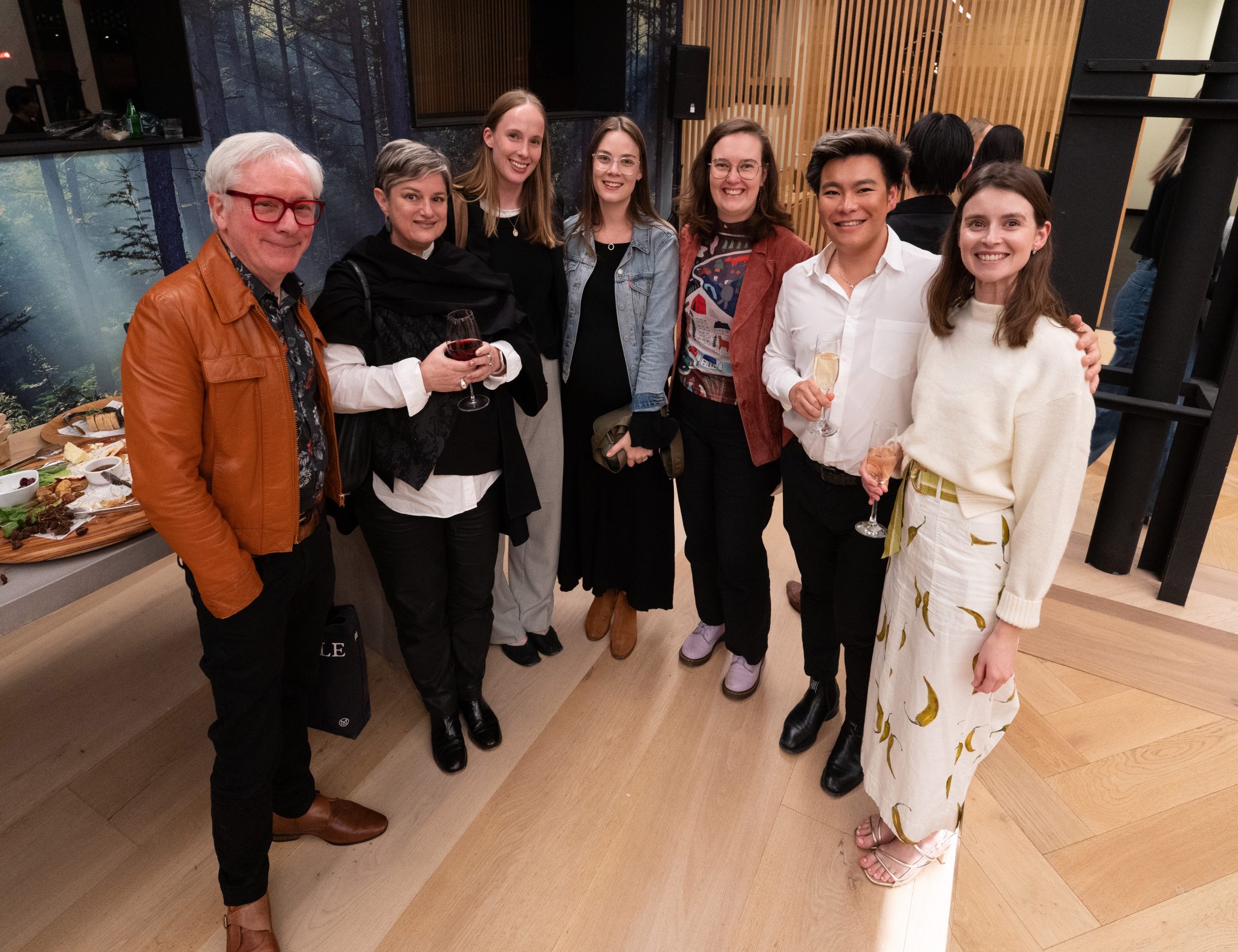
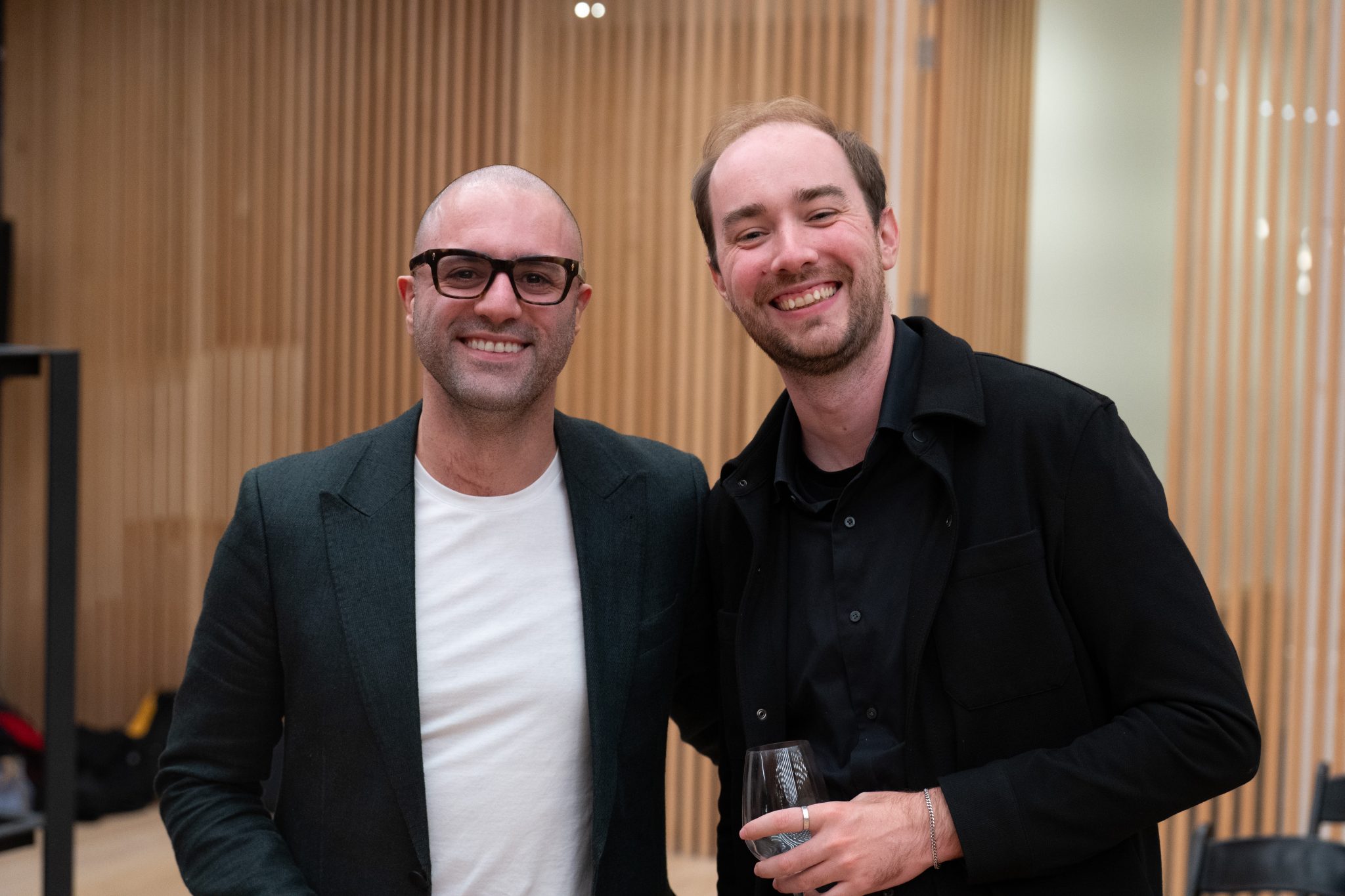
Check out the gallery from the night below:
You Might also Like


Related Stories

© Niche Media 2026