

30UNDER30’s Cristina Napoleone on founding Terrain
30UNDER30’s Cristina Napoleone on founding Terrain

Share
Cristina Napoleone was among Australian Design Review’s 30UNDER30 cohort in 2024/2025. Below, we get to know how the young founder spearheaded Terrain, an experimental community space in Fitzroy, Melbourne, where ecology, design, technology and culture intersect.
Australian Design Review: What is Terrain?
Cristina Napoleone: Terrain is an initiative that creates playful physical and digital spaces to remind humans that they are embedded in a more-than-human world. We are also Australia’s first ecologically-oriented bookshop, gallery and studio, as a hybrid social enterprise rooted in the idea that design and culture are inseparable from nature. It’s a place where books, exhibitions and conversations come together to invite people into deeper awareness of our living world. The bookshelves hold everything from philosophy and science to poetry and design; the gallery hosts exhibitions and events; and the studio is a productive workplace for experimentation and collaboration among like minds.
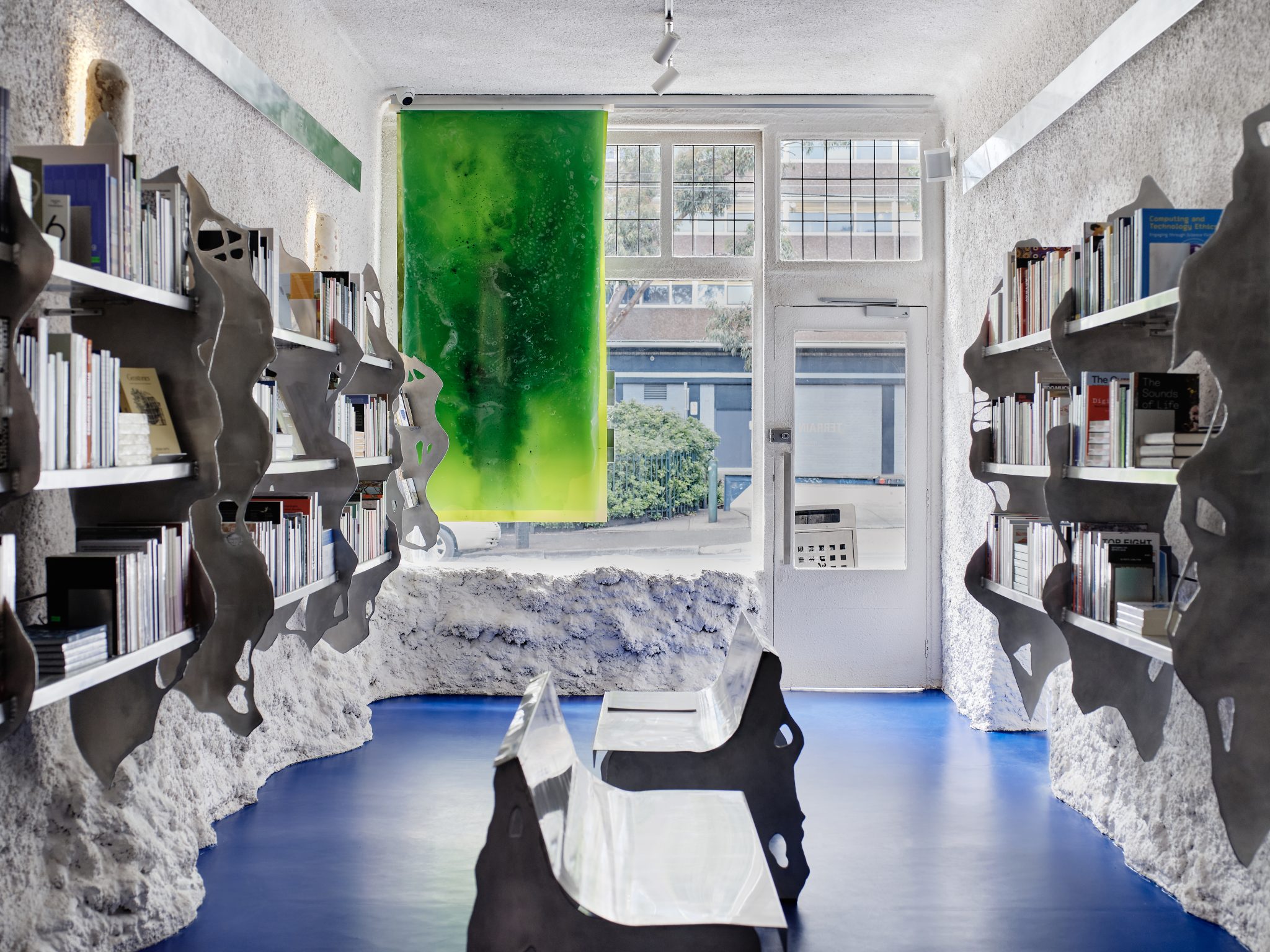
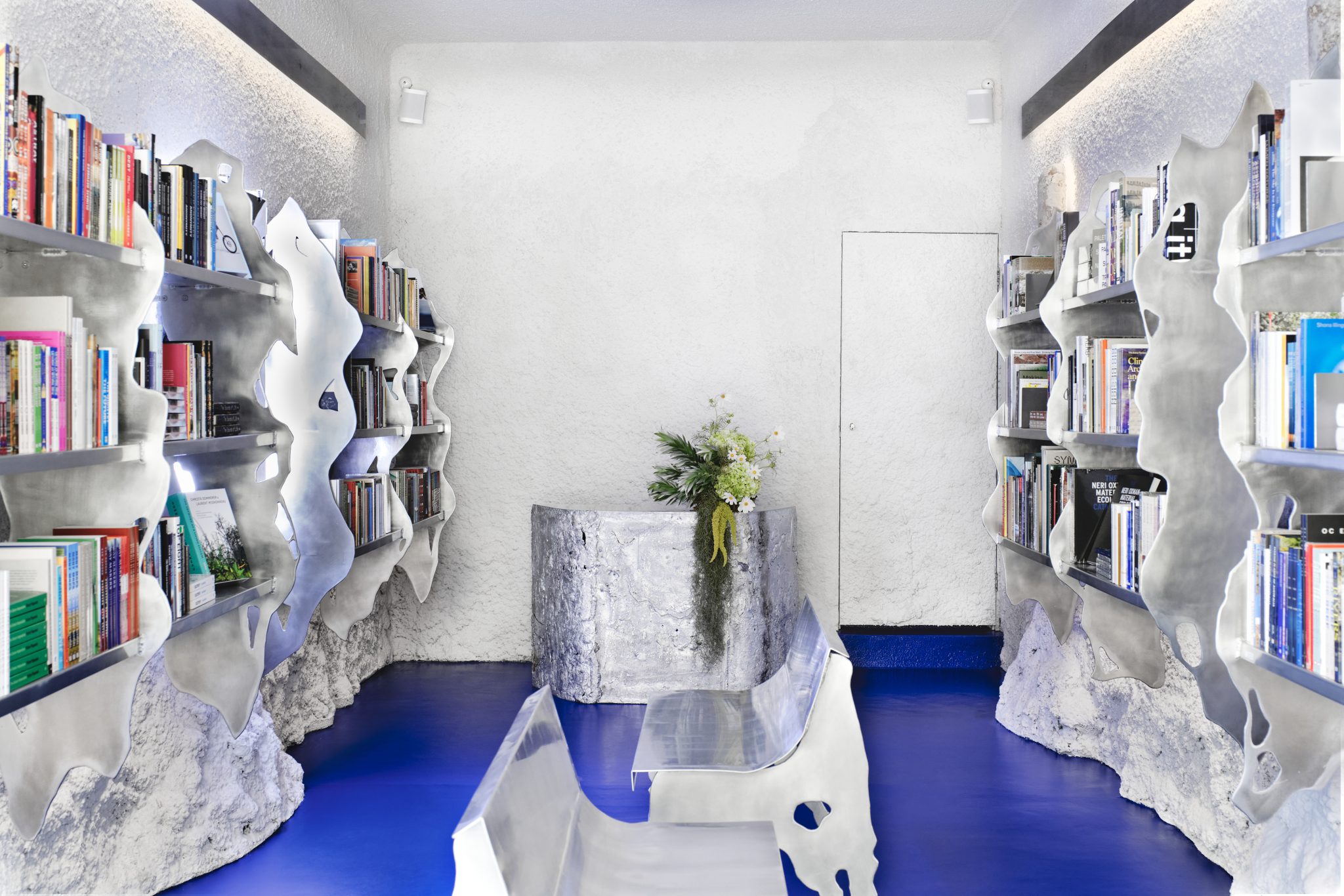
The Terrain physical space in Fitzroy, Melbourne.
Terrain is both a physical place in Fitzroy and a model for how creative practice can act as community infrastructure and a blueprint that perhaps creates a culture that can be regenerative rather than extractive. At its heart, it exists to remind us that we are participants in a planetary ecosystem, and to spark collective imagination for how we might live differently by realigning back to those systems.
ADR: Can you share a bit about your career background, including the story of how you came to found Terrain and the kind of impact you hope to make?
CN: My background is in environmental geography, with studies at the University of Melbourne and University of California, Berkeley, but I’ve always gravitated towards that space where ecology, design, technology and culture overlap. Before Terrain, I worked and freelanced across events, visual art, mixed reality, photography, tech, publishing and sustainability, constantly noticing how siloed those worlds could be. The spark for Terrain came from wanting to build something real, offline and tangible, as a public-facing space where ecological ideas weren’t tucked away in academia or niche design journals, but were woven into everyday life as an unsuspecting bookstore.
In founding Terrain, my intention was to attempt to create a living model, not just a concept. A tactile place you’re encouraged to feel, learn, sense, browse and engage. The impact I hope for is twofold: expanding ecological literacy through culture, and demonstrating that enterprises can be both socially and environmentally regenerative, offering a viable alternative to business-as-usual.

Terrain is an ecologically-oriented bookshop, gallery and studio.
ADR: What have been some major highlights for you since starting up Terrain?
CN: There have been many, but what stands out are the moments that have acknowledged that Terrain is resonating here in Australia. I spent six years back and forth between Melbourne and the Bay Area of San Francisco. For a while there, I thought I’d be permanently relocating because the work and ideas I was working with were understood and accepted over there, and I was already finding work and opportunities – and this was in 2017 too. When I returned home to Melbourne and talked about the ideas and projects, I was met with a lot of blank stares, which was disheartening (not to mention the repeated failed funding attempts to get it off the ground here first as an initiative).
To kick-start Terrain and create this space, I was philanthropically funded by the Kalliopeia Foundation in San Francisco, because when they heard my vision for this space and what it could be, they said, ‘Yep, Australia really needs that. Here’s the money, go do it’.
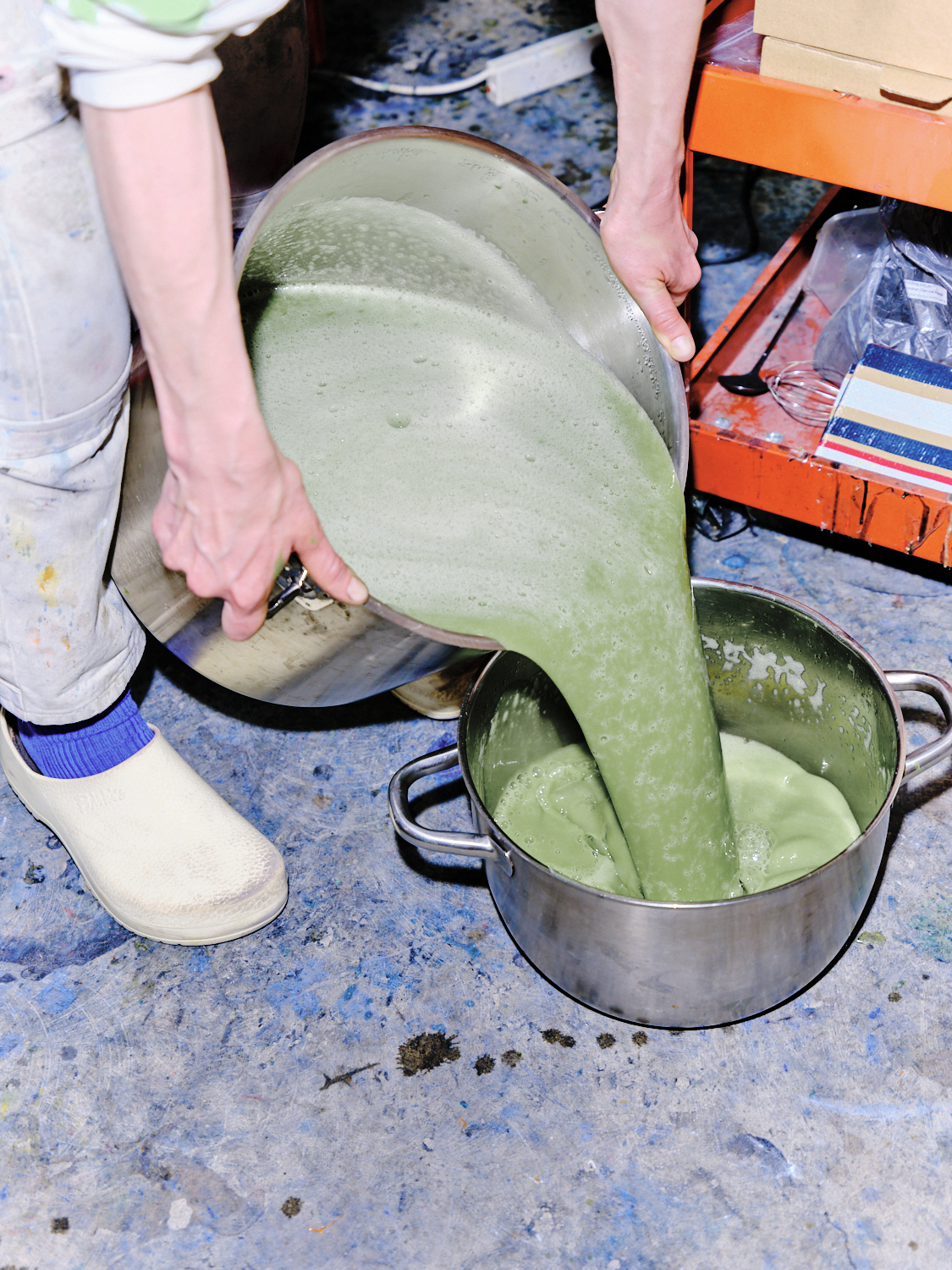
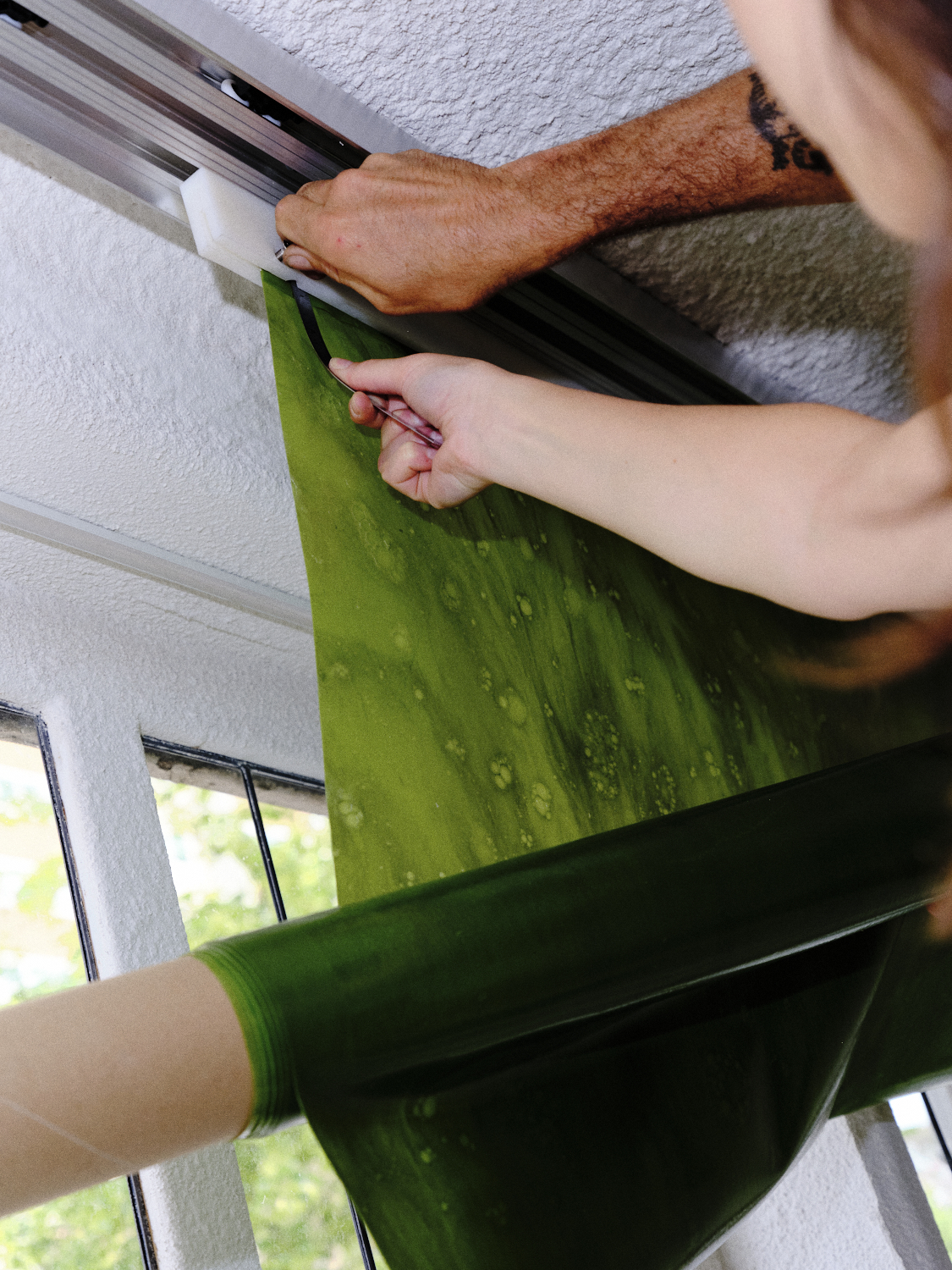
The making of algae-based bioplastic modular blinds by Terrain, Other Matter, Old Four Legs and Defy Design.
Now, when I fast forward to receiving four Australian Good Design Awards in our very first year, including a Gold in Design Strategy, plus six IDEA shortlists and a Dezeen longlist, I am humbled by the national and international recognition of the vision and the collective energy that has brought it to life. Seeing Terrain named alongside major projects in architecture and design with the best in the industry has made me realise how much space there is for something small and mighty like an ecological bookshop to disrupt and inspire.
The most meaningful highlights are often quieter though. There have been beautiful and deeply moving moments since being in the bookshop that keep charging me to keep going. There have been times when a visitor asks, in awe, what the space is about and they’ve been brought to tears. At times, I’ve found it hard to accept the level of thank yous received directly from the community. Also, the fact that Terrain is alive now, it exists, it’s no longer a construction site, and I no longer have to explain the vision because it’s now real, has taken time to sink in. These moments remind me that impact is measured not just in awards or media attention, but in the small shifts of perception and care that ripple outward through community, because this place is a resource for the community. That’s why I created Terrain, and the design practice is an extension where more spaces and experimental prototypes such as this can be created.
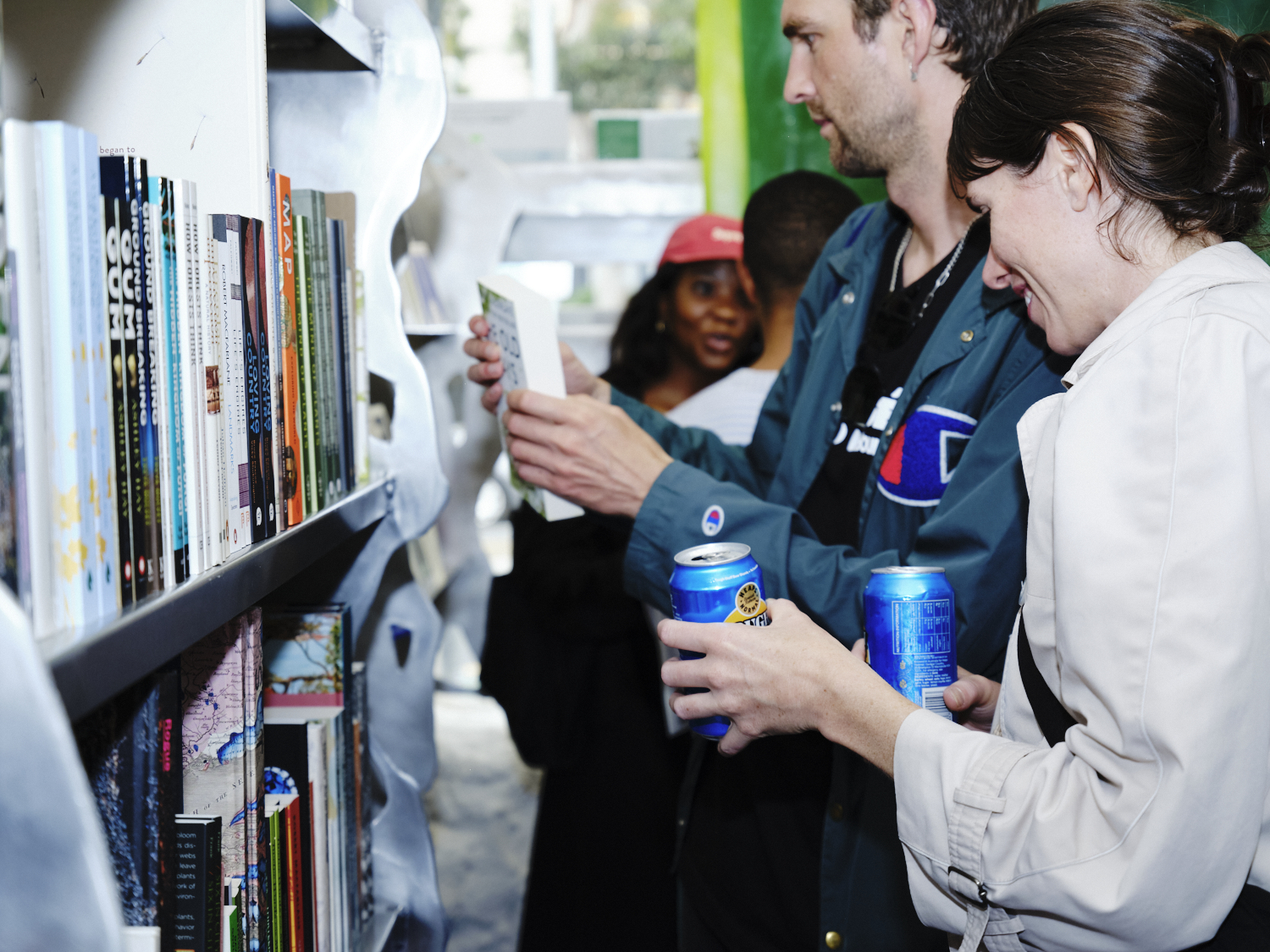
Terrain is intended as a community resource.
ADR: What challenges have you faced running this unique initiative? What keeps you going?
CN: The challenges have been significant. Terrain is unconventional, and building something that doesn’t fit neatly into existing categories means constantly navigating uncertainty. Financial sustainability is a perennial challenge, especially running a bookshop in an era when books are seen as low-margin, and layering on a gallery, studio and public programs only increases the complexity. Add to that the reality that for much of Terrain’s early life, it has been dependent on one founder. Often that weight can be heavy, especially when you’ve enabled an appetite by its followers and community who want to see more. I’m eternally on the quest to ensure that all projects and events are done with integrity intact, even if that means slowing down to conduct projects with the right ethics in place.
Without a doubt, the people who gather around Terrain keep me going, and the conviction that spaces like this are necessary infrastructure for the future. Every time someone tells me Terrain gave them language, tools, friendships or hope they didn’t have before, it re-energises me. I believe deeply in the cultural role Terrain plays, and that belief is fuel for the potential of what it could grow or evolve into.
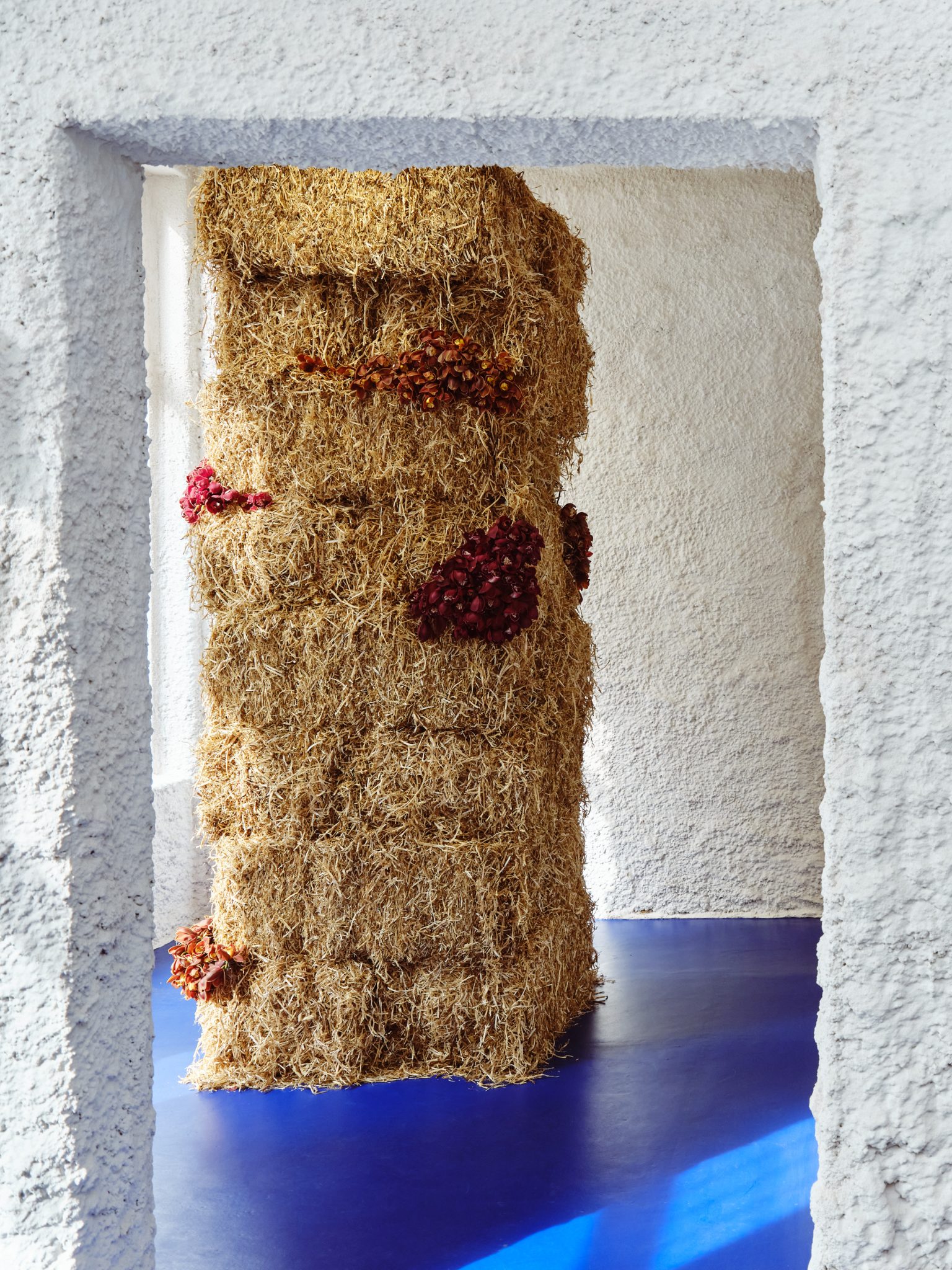
Ecology, design, technology and culture intersect at Terrain.
ADR: What prompted you to enter Australian Design Review’s 30UNDER30 program?
CN: I entered 30UNDER30 because Terrain was still young, and I felt the need to situate it within a wider network of peers and mentors. Running something experimental can be isolating, and I wanted to connect with others who were also carving new paths in design and leadership. Recognition through a program like this also matters as it signals to collaborators, funders and the public that Terrain is serious and that it belongs in the larger conversation about design futures. For me, applying wasn’t about personal accolades so much as giving the project another platform to grow and opening doors to the kinds of partnerships that might lead to new, interesting future projects.
ADR: What did you take away from the 30UNDER30 high-performance leadership and creativity retreat in Bali?
CN: The retreat was a powerful reset. Being surrounded by 29 other young leaders, each carrying their own bold ideas, reminded me of the collective potential of this generation and the myriad challenges we face too. What I took away most was a deeper understanding that leadership isn’t about holding all the answers but about asking the right questions, building resilience and creating the conditions for others to thrive.
The time in Bali also gave me clarity around my own role: that my work with Terrain is to hold and continue to nurture what has been created – and to continue defying the odds saying otherwise.
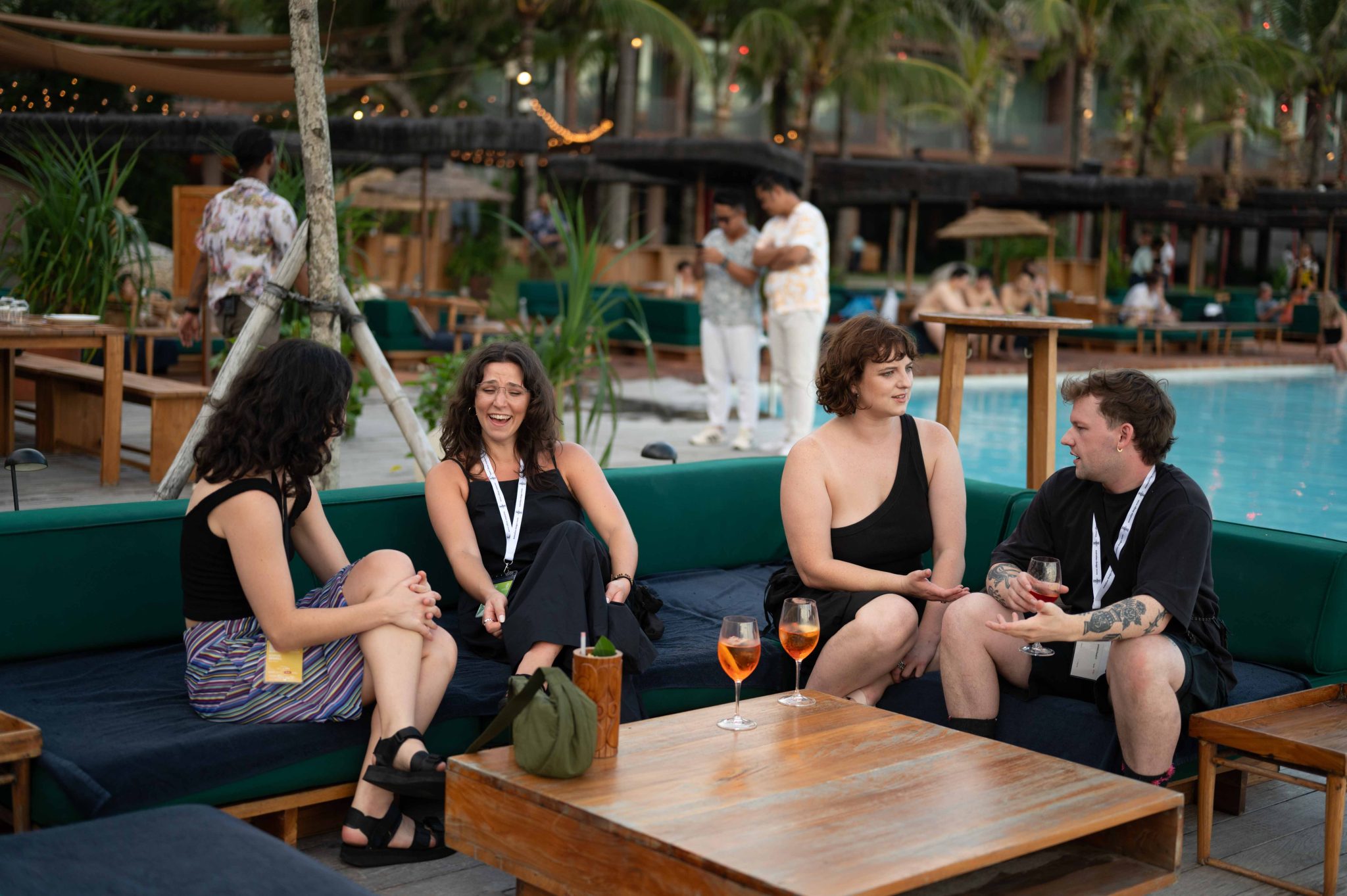
Cristina Napoleone (second from left) at Australian Design Review‘s 30UNDER30 retreat in Bali in May 2025. Photo: Amazing Bali Events.
ADR: Do you have advice for young creatives thinking about starting a bold venture like Terrain?
CN: My advice is simple: start where you are, with what you have. Don’t wait for the perfect conditions, because they rarely exist. Anchor your vision in something bigger than yourself, so that when challenges inevitably come, you have a clear reason to keep going.
Bold ventures often feel impossible at the outset, but, step by step, they can become real. Surround yourself with people who understand the value of what you’re building and lean on them. Dial back the importance of any voices that say otherwise and remember that experimentation is a form of progress. You don’t have to know every answer at the start.
What matters most is taking the first step and then the next, and trusting that others will gather around you when the work speaks to something true.
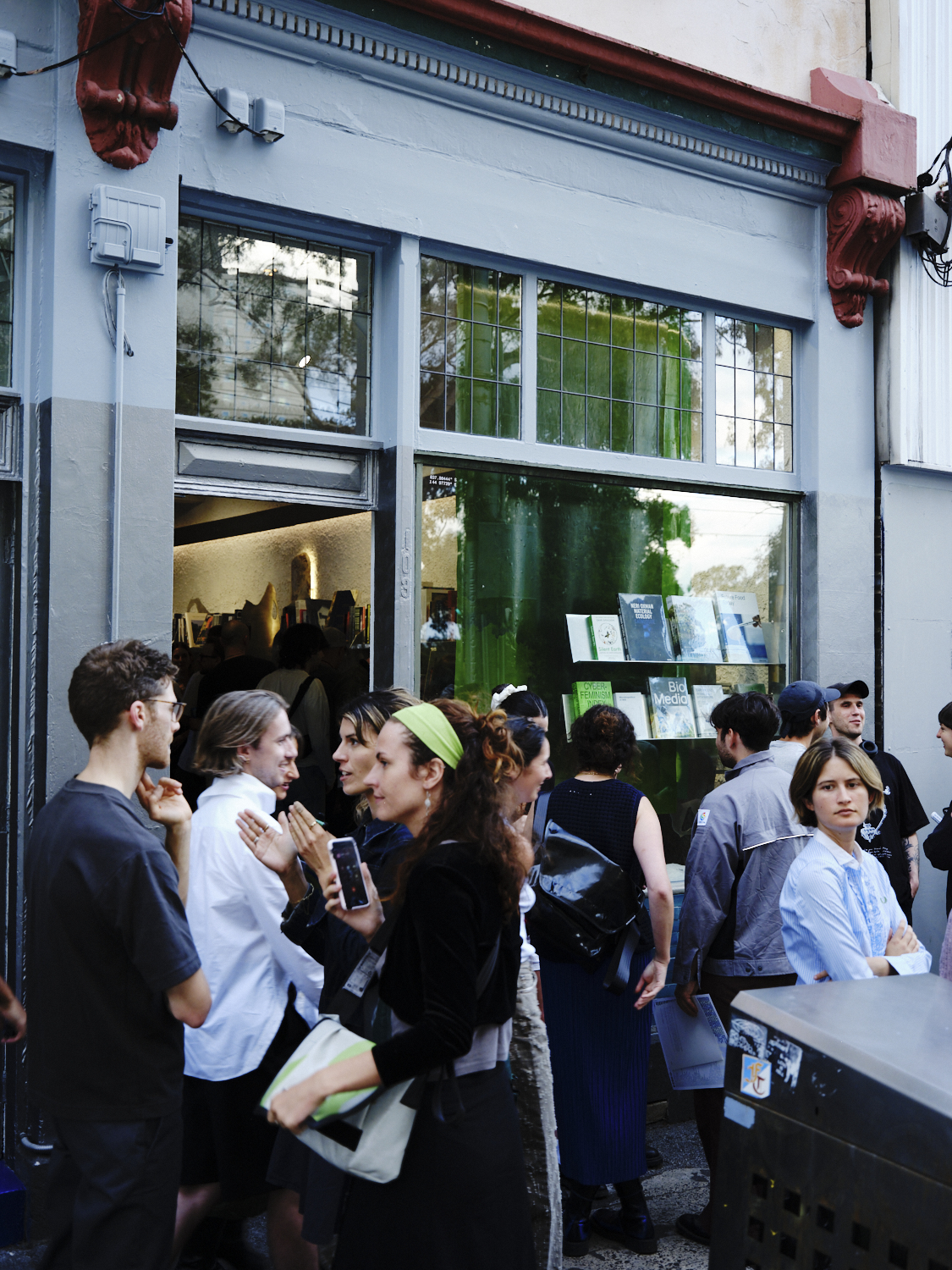
All photography by James Whiting unless otherwise specified.
Entries into the next stream of 30UNDER30 close 26 October 2025. Enter now.
Australian Design Review’s 30UNDER30 program for 2025/2026 is brought to you by major sponsor Neolith, alongside partners Miele, Krost, Signature Appliances powered by Miele and Tongue & Groove.
Australian Design Review is also grateful to our 30UNDER30 practice partners AJC Architects, BVN, Cera Stribley, COX Architecture, Genton, GroupGSA, HDR, Richards Stanisich, Rob Mills Architects, Rothelowman, SJB and Design by WBL for helping us foster the future of Australian design.
This article was amended on 21 October 2025 at 8.22am to correct an incorrect comment about the Kalliopeia Foundation.
You Might also Like


Related Stories

© Niche Media 2026