

Three days that changed two designers’ palettes
Three days that changed two designers’ palettes

Share
Evolve competition winners Anne-Marie Randall and Maggie Craig found colour, craft and calm at 3daysofdesign in Copenhagen.
Winning a national design competition is one thing, but being flown to Europe’s most influential design week to see how the best in the business live and work is quite another. Anne-Marie Randall, an architect at fjcstudio, and Maggie Craig, an interior designer at Woods Bagot, took out top honours in their respective categories at Designer Rugs‘ 2025/26 Evolve competition, an industry competition that invites architects and designers to explore colour through a custom rug design. As their prize, both women travelled to 3daysofdesign in Copenhagen, an experience that reshaped how they think about craft, colour and the pace of contemporary practice.
Randall’s winning entry, Lazuli, channels her architectural training into a distinct rhythmic woven grid, its repeating pattern designed to be unpacked in multiple directions rather than confined to a single format. “Structure is integral to building buildings, and I guess you have something to react to. Having a grid and having a repeating pattern allows you to unpack things in a few different directions,” she says. Rather than treating the rug as a stand-alone artwork, Randall approached it as a pattern capable of extending into hallways or entire architectural schemes, an instinct she credits to her day-to-day work translating ideas across scales.
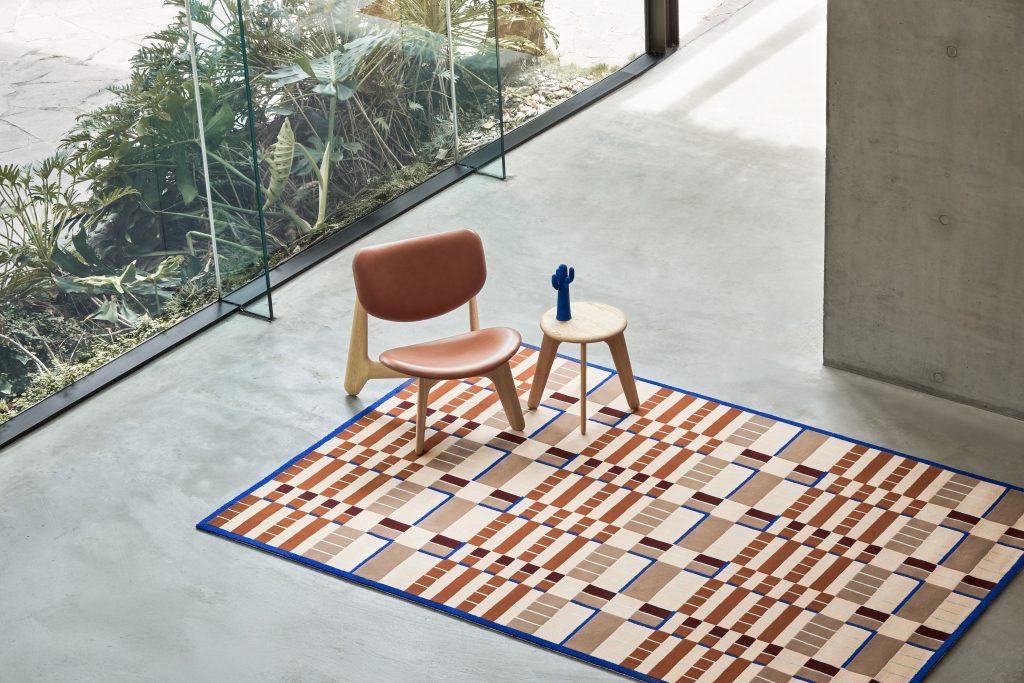
The rug’s striking ultramarine hue was drawn directly from Yves Klein’s signature blue, offset against mission brown, the previous year’s Pantone colour of the year. “I love playing with contrast,” Randall explains, describing her approach to setting a powerful, evocative colour against neutral, natural tones sourced from the surrounding landscape. Rather than chasing seasonal trends, she prefers to work towards a sense of timelessness, treating colour cues as a starting point for reaction rather than a rulebook to follow.
Bringing colour and rhythm to the under 30 category
Craig’s entry, aptly named Maggie after its designer, took inspiration from a work by US artist Harriet Korman, whose fluid tonal shifts Craig sought to translate into textile form. “What stood out to me about her work was its refinement and sense of rhythm. To bring both of those qualities together in a single piece is quite special, and something that can genuinely elevate a living room, hallway or commercial space.”
Winning the Under 30 category, Craig sees the recognition as validation to keep pursuing creative projects alongside her role at Woods Bagot. She describes the experience as exposure to a discipline entirely outside her usual scope of work.
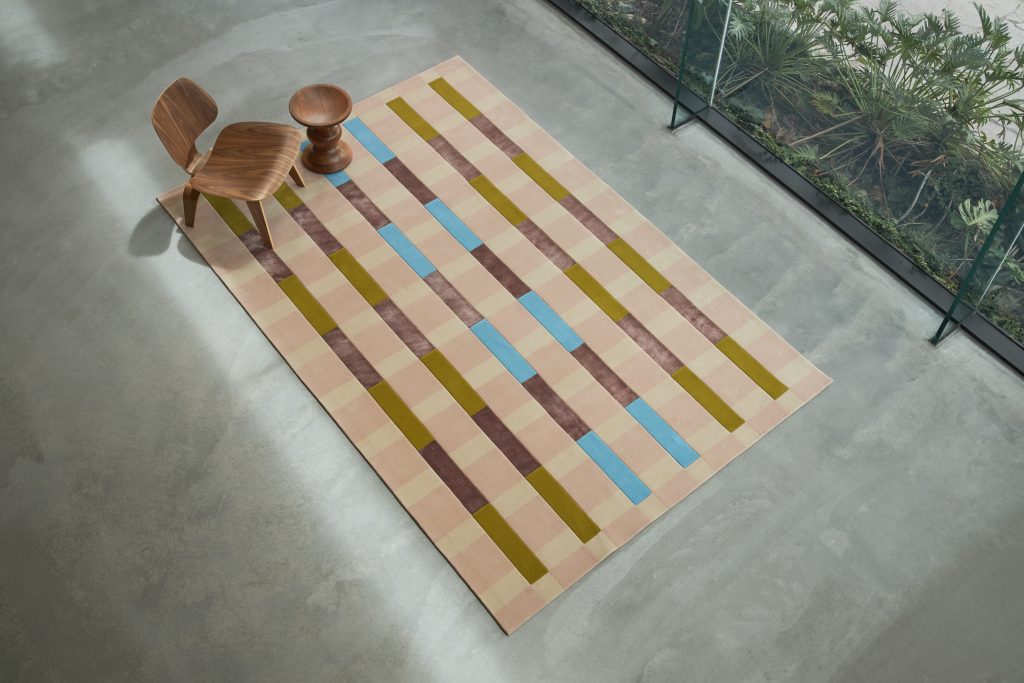
Both designers push back gently on the idea that trends dictate their creative choices, though Craig acknowledges their pull is often subconscious. “The thing about trends is that their influence is often subconscious. While social media plays a role, they’re really shaped by everything around us, from galleries and films to the everyday experiences that quietly inform how we see the world,” she says. For Craig, longevity remains the goal, even as she accepts that surroundings inevitably shape a designer’s instincts.
A masterclass in slowing down
Landing in Copenhagen for 3daysofdesign proved transformative for both women, offering a masterclass in how design and daily life can intertwine. Randall says she was struck by the density of the city and how that translates into the physical fabric of everyday living. She talks of beautiful precincts filled with apartments wrapped around shared courtyards. “There is definitely a friendliness that exists in those cities, and that was what I found truly inspiring,” she says. A phrase she encountered while there, ‘design as democracy’, stayed with her as a description of how good design in Denmark is treated as a tool for accessing quality of life, from urban planning down to the smallest furnishing decisions.
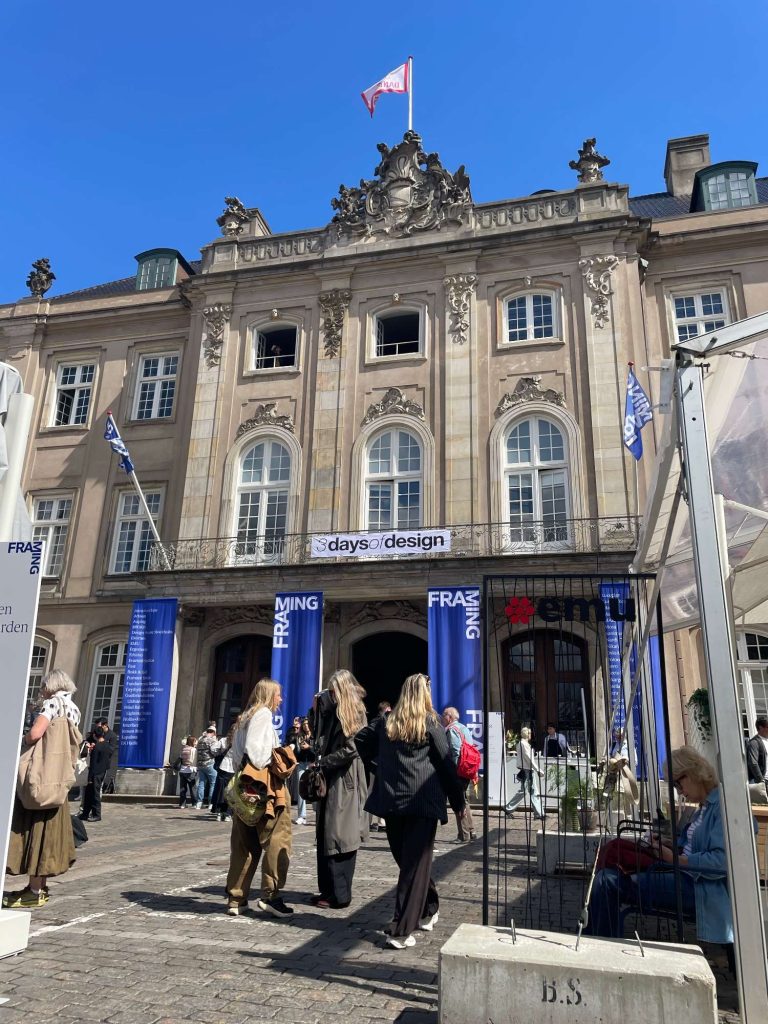
Craig says she came away with a similar appreciation for considered pace, observing how Danish and European designers take pause and reflect rather than rushing towards output. “I think that’s really evident in what they’re able to create,” she says. “What really resonated with me was hearing about the level of research, development and iteration behind their work. As designers, we go through a similar process ourselves, so it was inspiring to see how much care and consideration they invest in continually evolving their projects.”
Another of Craig’s observations was the absence of takeaway food culture in favour of sitting down to savour a coffee and pastries – a rhythm she believes filters directly into the considered quality of Danish design.
The pair’s time in Copenhagen also identified a shared language in their design approaches, particularly around geometry, sparking early conversations about a future collaboration and even a return trip to Copenhagen with a joint entry. As cities densify and custom manufacturing becomes more accessible, both designers see an opportunity for rugs to move beyond function and become genuine expressions of personality underfoot – pieces of art that people encounter daily rather than furnishings chosen by default.
Images supplied.
You Might also Like



Related Stories

© Niche Media 2026