

‘Style is eternal’, Melbourne Gin Company sponsors IDEA
‘Style is eternal’, Melbourne Gin Company sponsors IDEA

Share
IDEA (the Interior Design Excellence Awards) has always championed timelessness and the pursuit of excellence – something that resonates with new awards sponsor, Melbourne Gin Company (MGC). ADR speaks with winemaker and MGC founder Andrew Marks about his passion for classic cocktails, the story behind the brand, and the importance of timeless style over fleeting trends.
Australian Design Review: MGC began with a longstanding Tuesday night martini ritual with your best friend. What was it about that ritual – and the pursuit of the perfect martini – that ultimately led you to make your own gin?
Andrew Marks: On Tuesday nights my flatmate and I would have this ritual of Martini Tuesday where we would solve the problems of the world. We both had very different working fields – he’s a surgeon and I’m a winemaker – and we’d come together and we’d either go out and have a martini or we’d make a martini at home. And this is going back 16, 18 years. So it’s a long time ago, and the bar scene in Melbourne has changed quite a lot since then.
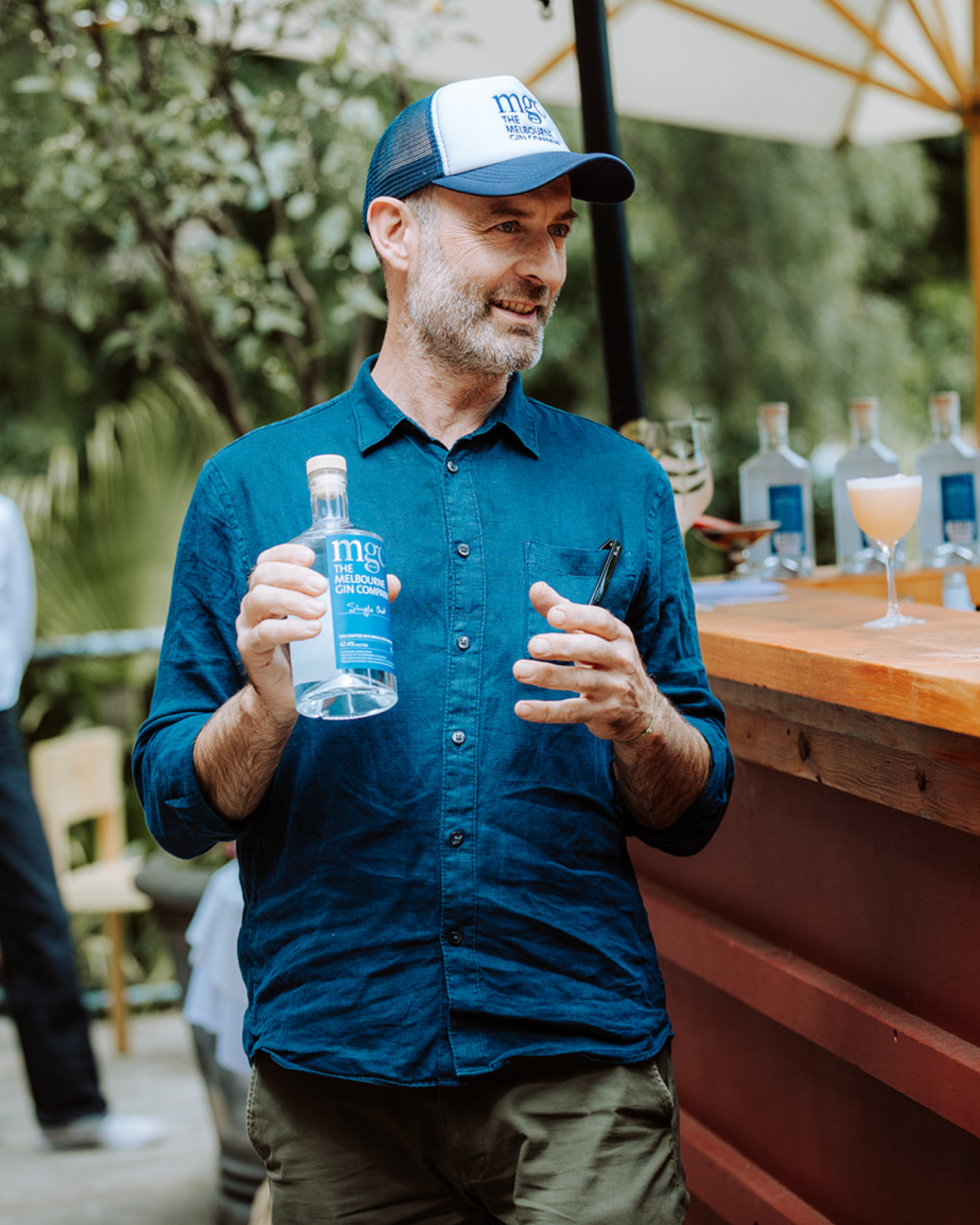
This is well before craft gin became a thing. And Hendrix was probably the only example of what you’d call craft in those days, which certainly isn’t what I would call craft these days. But I think when Hendrix came on the scene, it really changed everything. It was this gin with a beautiful texture, quite a smooth gin, and it really broke the mould. It’s not a classic London dry in the strictest sense of the word, but it just makes these beautiful martinis. It wasn’t commercially available in Melbourne at the start, and people would be going over to the UK and coming back with a bottle in their luggage. And you know something’s going really well when people start to do that. So it started off with that martini and it got to a point where we realised that we were going through quite a lot of gin and I thought, ‘Hang on, I’ve got this amazing set of skills in terms of my everyday job making wine, perhaps I should have a crack at it’.
And it was one of those audacious offhand sort of thoughts, but the more I started to think about it, the more I quite liked the idea. The reality was at the time it was such a scary thought because, as I said, I had no idea if I could do it. I thought, ‘Well, you’ve got to have a crack now that you’ve thought of it.’ And then I was walking down Gertrude Street one day and the name Melbourne Gin Company came into my mind. So, before we had even gone too far down that journey, I registered the name. And once you’ve put a name to your dream, then you’ve actually got to really try and make it happen, I think.
It was one of those pursuits of trying to make an idea a dream and then trying to make that turn into reality. There’s nothing more rewarding than trying to do those sorts of things in life, I think.
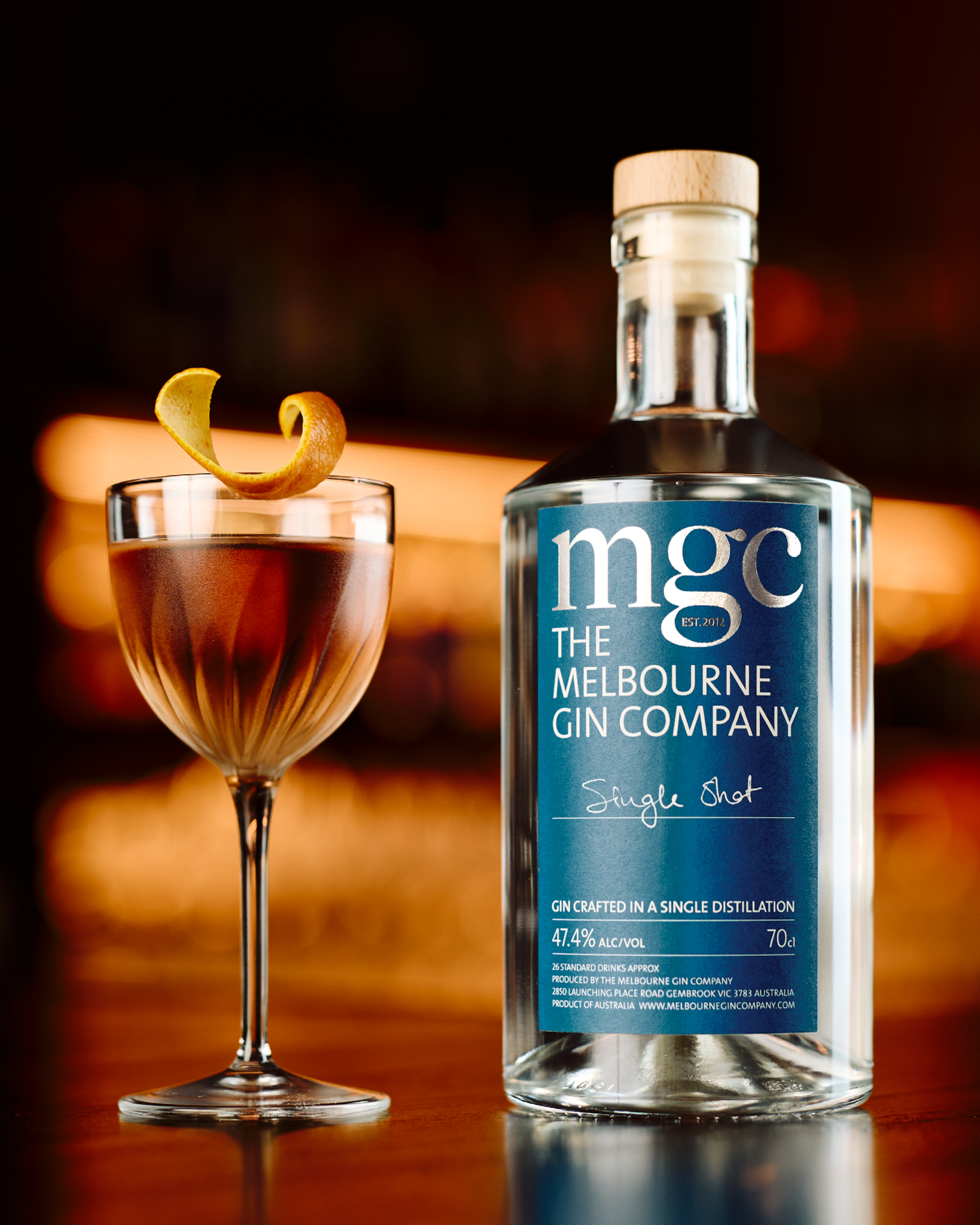
There’s something enduring about a classic martini: the drink, the ritual, the company and even the setting. What is it about that experience that continues to resonate with you?
One of the reasons I love the martini is that it’s a classic drink. I’m all for the classic cocktails. I think they’re classic for a reason. I think they stand the test of time. I love the lore around martinis.
There’s a lot of cultural cues when it comes to martinis. If you’re having a beer at the end of a hard day’s work or a gin and tonic at the end of a hard day’s work, you may be wearing your working clothes. But if you’re having a martini, there can be a sense of occasion attached to it. It is by nature a classy drink. I think that whole sense of occasion, the idea that you take a moment when you’re having a martini, I think there’s something very nice about that in a very fast world these days. It’s nice to take the time out to smell the roses… or smell the juniper.
I love the cultural references when it comes to the martini. I love going to a bar and seeing how different bars prepare it. At the time I was getting into it, I started reading a book that everyone should have on their bookshelf – Martini by Frank Moorhouse.
He writes, “The martini represents the journey towards the unattainable ideal drink.” That phrase struck a chord with me because I make pinot noir. Pinot noir is a grape variety often known as the heartbreak grape variety, because we winemakers all strive for perfection. And of course there’s no such thing as perfection, but it doesn’t stop us trying. And so that really struck a chord with me, the idea of this unattainable ideal drink being a martini.
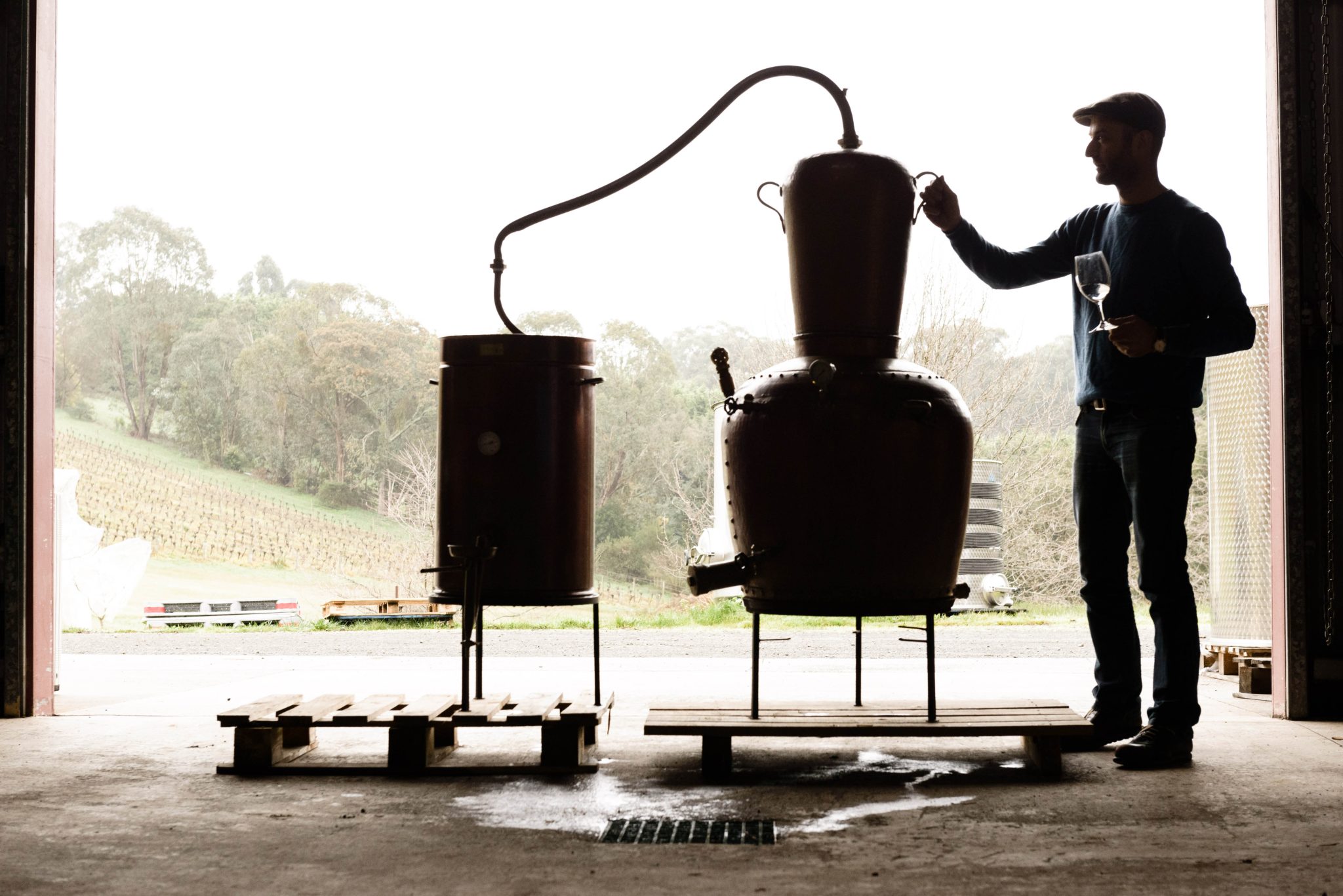
The gin category has gone through periods of enormous experimentation and novelty, yet MGC has remained resolutely classic. Why has staying true to that been so important to you?
I’ve never been that interested in fashion, but style is eternal. We’re quite intentional about how we do things and we’re not chasing fashions at all. I’d rather have one beautiful object than a house full of objects that are mass produced or don’t speak to you. That’s the sort of ethos I have, and that ethos informs both the gin and the business. I think there’ll always be a place for beautifully crafted classic gin.
When I make wine, there are certain characteristics that I think make some wines more attractive than others. These are characteristics of flavour intensity and the length of flavour, concentration and texture and balance, all these sorts of aspects. They’re all different circles on a Venn diagram; where they intersect, that is a little intersection of deliciousness. And if you can find that, then you’re on the right path. I find that’s what I attempt to do with my winemaking as much as I do with my gin distillation.
I don’t mind taking a slow approach to things. I think as a grape grower, when you plant vines, it may take three or four years to get a crop from them. We’re not in the game of instant rewards. We’re quite prepared to take our time to develop things properly with time.
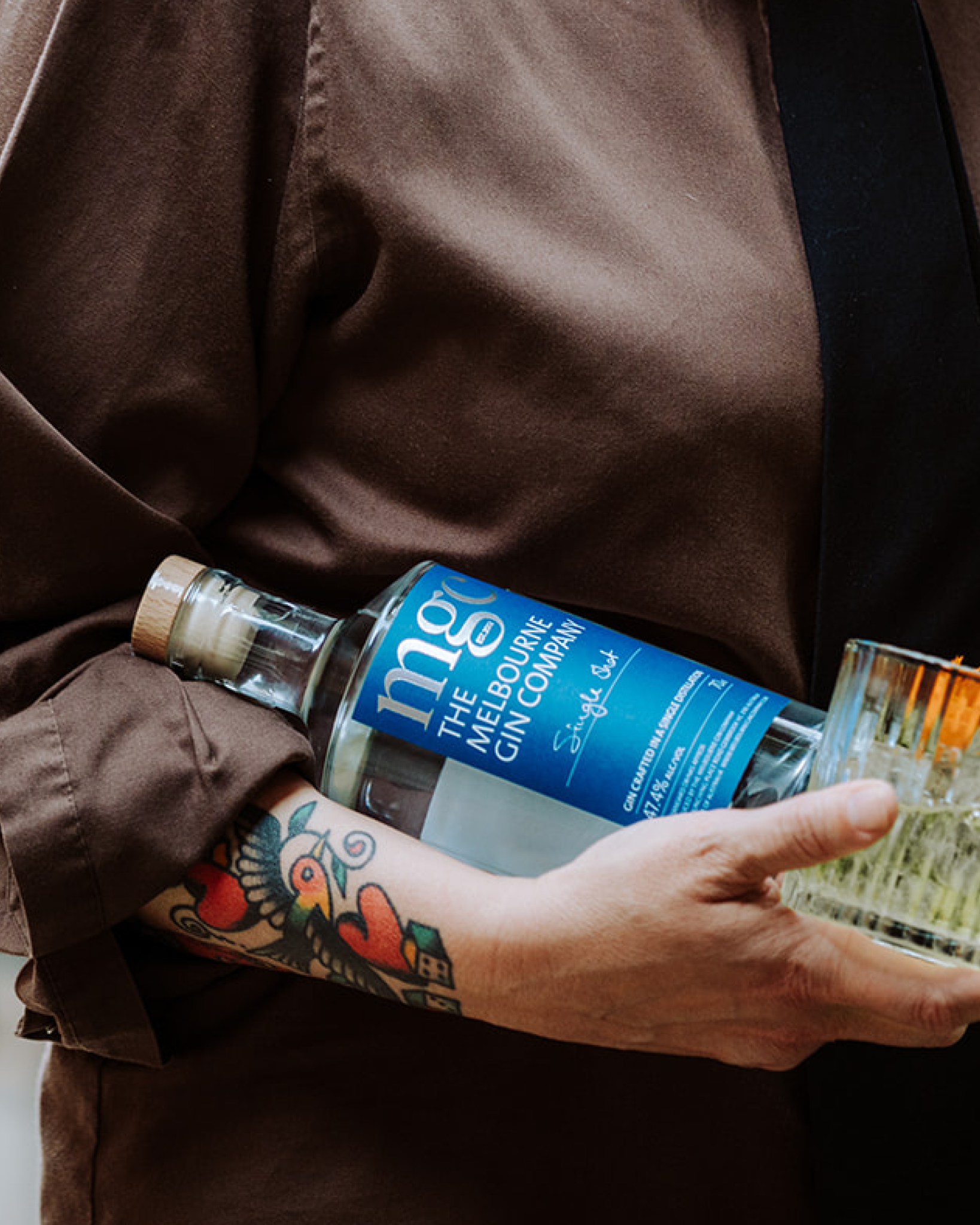
In 2018 we produced our second gin, which was called Single Shot. It’s called that because it’s basically a gin that’s distilled in a single distillation. The reason that’s important is that our dry gin is made with 11 botanicals distilled individually. It’s the process that I found really interesting that I was exploring when I made that gin. But in terms of the selection for the botanicals, I thought ‘less is more’. So we actually reduced the number of botanicals. Whereas our original dry gin has 11 botanicals, the single shot only has seven, but we concentrated the flavours. Distillation is all about concentrating things.
We soaked our juniper overnight to get an extra strong juniper hit. So when other people were going for novelty, we said, “Let’s make it more about the juniper. Let’s make it a really strong juniper hit. Immediately recognisable.” And so that’s a delicious gin that is drunk the same way the dry gin is, in martinis and G&Ts, when you finish the hard day’s gardening and need to have a relax on the patio.
Melbourne has been part of MGC from the very beginning. Beyond geography, how has the city and its culture shaped the brand?
I think it’s good to anchor the product with a sense of place. I’m a Melbourne boy. I grew up in Hawthorn as a kid and I live in Collingwood now. I just think there’s something about the city. At the time when I was starting off, we’d been named multiple times the world’s most liveable city. And I just think it comes back to that whole sense of style.
Melbourne’s an extremely cultured city. It’s a melting pot and when you have these melting pots, this is when exciting things happen.
When I started Melbourne Gin Company, I wasn’t sure if I was going to be successful. As I said, I had no idea, no references. I had a few interactions actually with a brand that I’m a massive fan of, which I think is quintessentially Melbourne, although these days it’s international, which was Aesop. I had a few chats with Dennis Paphitis, the founder of Aesop, and he gave me some really valuable insights on brand building.
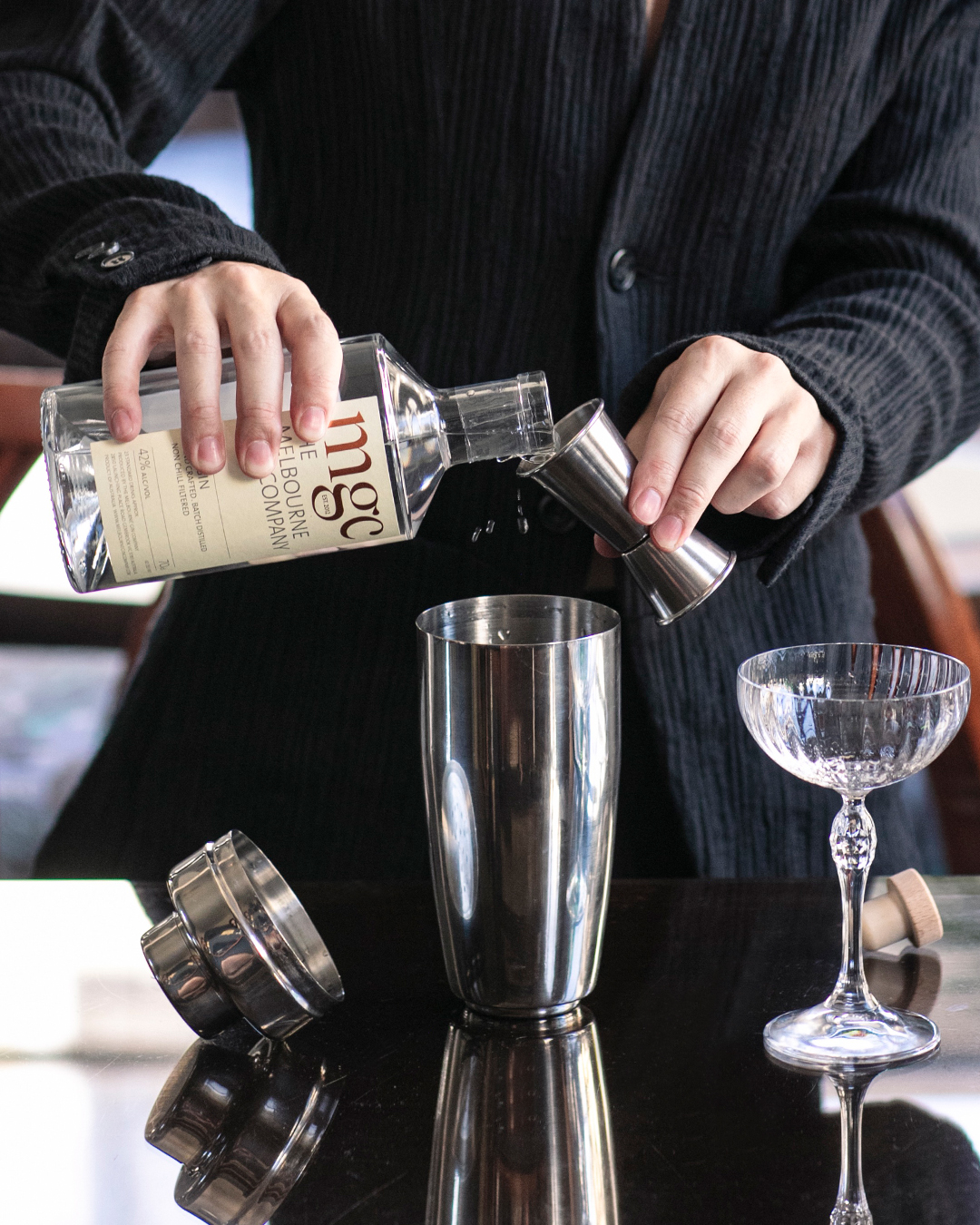

I think design very much has its place in that. When we were designing the brand, it was all about a sense of style, a sense of something that could be around for a long time and would never really go out of fashion. For me, Melbourne ticks a lot of those boxes we love. With MGC being conceived in Collingwood and then made in the Yarra Valley, I wanted to make a contribution to the culture of the city.
I think food and wine and cocktails are really important to the culture. At a time when there are epidemics of loneliness, going out to meet people in a bar and having a martini, having chats over a cocktail in a bar or as a pre-dinner drink at one of our fantastic restaurants, it’s a great thing to do. As I said, I love the contribution of the lore of the martini and martini drinking. I love the contribution that that makes to culture as well.
You’ve also been quite deliberate about supporting Melbourne institutions and events. What makes you want to give back to the city in that way, and why did IDEA feel like a natural fit?
I just think Melbourne is the cultural capital for Australia. When there’s a grand final on at the MCG, numbers to the galleries are very high on that same weekend. Two things can be true in Melbourne at the same time. I think it’s an exciting place. We’ve done lots of things with the City of Melbourne. We’re a sponsor of the Melbourne Theatre Company. We’ve done that for, I think, almost 10 years, the same amount of time we’ve spent as a sponsor for the Melbourne International Comedy Festival, which is an icon of Melbourne. We also sponsor the Melbourne Queer Film Festival.
Now with IDEA, it fits in perfectly, as I said, with a sense of style over fashion. It’s this curious place where with gin, you can be having that martini and having a bit of a ‘martini moment’, feeling a little bit special, putting on your nicer clothes and going out. But you can also have a gin and tonic once you’ve done the gardening, you can still have that with a very fine, highly considered, beautifully made drink that adds that extra value without ruining your wallet. And I think that’s a great place for us to be.
Images: Supplied.
IDEA 2026 would not be possible without our overall sponsor Miele, alongside sponsors Crafted Hardwoods, Clipsal, Cult, Designer Rugs, ForestOne, Herman Miller, Roche Bobois, LAUFEN, Signature Appliances powered by Miele and Zenith.
We are eternally grateful for their continued support of IDEA and of Australia’s design community. We are also hugely thankful to our event partners Axolotl, The Melbourne Gin Company, Jansz and Yalumba, which help the IDEA gala sparkle even brighter.

© Niche Media 2026