

Introducing IDEA 2026 judge Diana Espiritu – feeding the fire

Share
Designer Diana Espiritu works at the intersection of architecture and interiors. She has worn many hats since graduating from the University of NSW’s interior architecture program, including as a teacher passionate about keeping the flame of hope and inspiration alive for her students.
It’s less than a decade since Espiritu finished at UNSW, but already her achievements range from teaching at her alma mater to serving on the Architecture with Pride committee and, of course, her day jobs – associate roles at Woods Bagot and now at 3XN/GXN. She was also a member of Australian Design Review‘s 30UNDER30 2022/23 cohort. And now she’s the newest member of the Interior Design Excellence Awards (IDEA) jury for 2026.
When you’ve packed that much into such a comparatively short space of time, it could be hard to pick out career highlights, but Espiritu is quick to nominate one. “I feel like the biggest thing I’m proud of, or what’s most exciting about my career so far, is how varied it is in terms of experiences and projects,” she says.
But she’s happy to add a few specifics too.
Specialising in education spaces while at Woods Bagot, including Mosman High School, she recalls the satisfaction of a job well done. “One of the latest projects that we completed was a school and that was amazing in itself, but seeing the reactions of the principal, staff and students and their response to that space was a highlight,” she says.
Wider reach
Her more recent projects have expanded her horizons. Literally. “I’ve been travelling to Japan,” she says, “which is quite new for me, as previously I was very much embedded in Australia, but now I’m looking at wider APAC region projects.”
Tokyo is proving to be a fascinating landscape for Espiritu as the multi-residential building requirements are so very different to those in Australia. “There’s a lot of seismic design, so earthquake design,” she says.
There was a period of rapid economic and technological growth in the 1970s, Espiritu explains, which led to significant number of high-rise buildings being constructed. Around 50 years on, these buildings are increasingly being scrutinised to determine whether they remain economical to operate and safe for continued use, including a reassessment of their seismic performance considering the new anti-seismic design standards that came into effect in Japan in 1981, in response to a particularly devastating earthquake off the shore of Miyagi Prefecture in 1978.
Ideally, the buildings reaching the end of their design life can be reused and transformed, similar to what was done with QQT Tower in Sydney.
Passing on the passion
Outside of her practice, Espiritu has spent time as a sessional tutor at both UNSW and the University of Technology, Sydney. It may only happen sporadically now, but for her teaching is a chance to “foster the next generation of designers”.
She’s also aware of her own background and setting the example of visibility. “I think it’s really important as a student to have diversity in teaching staff,” she says. “And you need tutors who are working in practice, so they understand reality.”
Plus she’s keen to nurture those younger and sometimes idealistic minds that can quickly get discouraged when they encounter the big wide world. “There are a lot of students and graduates who want to change the world in design and architecture. That’s why they study it, and they have this fire. And what I’ve seen is that fire goes out.”
It doesn’t have to be that way, she adds. “I want to show that you can actually take that and still bring it into practice. I recently did a guest lecture on inclusive spaces. And my closing message was that ‘change is not black and white’. You don’t have to be working pro bono to be doing good. Obviously, that’s amazing but not everyone can do that.
“You could be working in education, hospitals, multi-residential, hospitality… literally any typology. And you can make good choices, you can always be questioning and querying what’s normal and then you can create joy among everything.
“That’s the kind of message that I like to push with the students. Because I think it’s a shame that a lot of people go into the profession and then they just can’t find a purpose.”

Furthering representation
While helping to expand diversity in academia, Espiritu has also taken this into the wider community. When she joined the Australian Institute of Architects, she became involved in the gender equity task force, “because I wanted to learn from other seniors and know what does change and advocacy look like,” she says. “But I realised I was also there to add an intersectional lens.”
This led to considering other perspectives, such as those of First Nations and LGBTQIA+ communities. “We did a few ‘designing with Country’ talks and we also did an event around queering architecture. That was an interesting period and, when Architecture with Pride kicked off through the folks at SJB, I felt as if I could transfer some knowledge.
“It was really exciting that first year to see so many large practices involved and I think the message that I was always conscious of was ‘everyone is welcome’. This is for everyone and it’s a chance for us to step away from the computer and bond a little.”
Deepening connections
Citing being selected for ADR‘s 30UNDER30 program as another highight of her career so far, Espiritu says that this was another opportunity to bond with peers away from the computer screen or project site. “It was amazing to connect with a cohort that felt like the next generation of leadership. That in itself was really empowering,” she says. “I’ve always worked in big practices – 3XN is probably the smallest practice I’ve worked in – so it was really good to connect with other people in large practices going through the same things as me.”
Jumping onto the jury
Like many of the IDEA judging panel, Espiritu’s first reaction to the invitation to join was “it’s a big honour to be approached” but, more than that, she’s looking forward to yet another new industry experience. “It’s my first time on a panel, so I’m really excited to sit with other practitioners that I really respect. I’m not sure who they are yet, but it’s always an amazing list!”
Most of all, she’s relishing the opportunity to consider the big picture and discuss ideas. “I’m really excited to debate what good design is today, because I feel as if we live in such a visual world. We have been for a while, but now we’re just overstimulated by I think real content and then the AI generated [material].
“I’m really interested to see how we see past the visuals or remove the noise and then understand what the social impact is – how these spaces are supporting people, culture and then, of course, the impact on things like sustainability and the environment.”
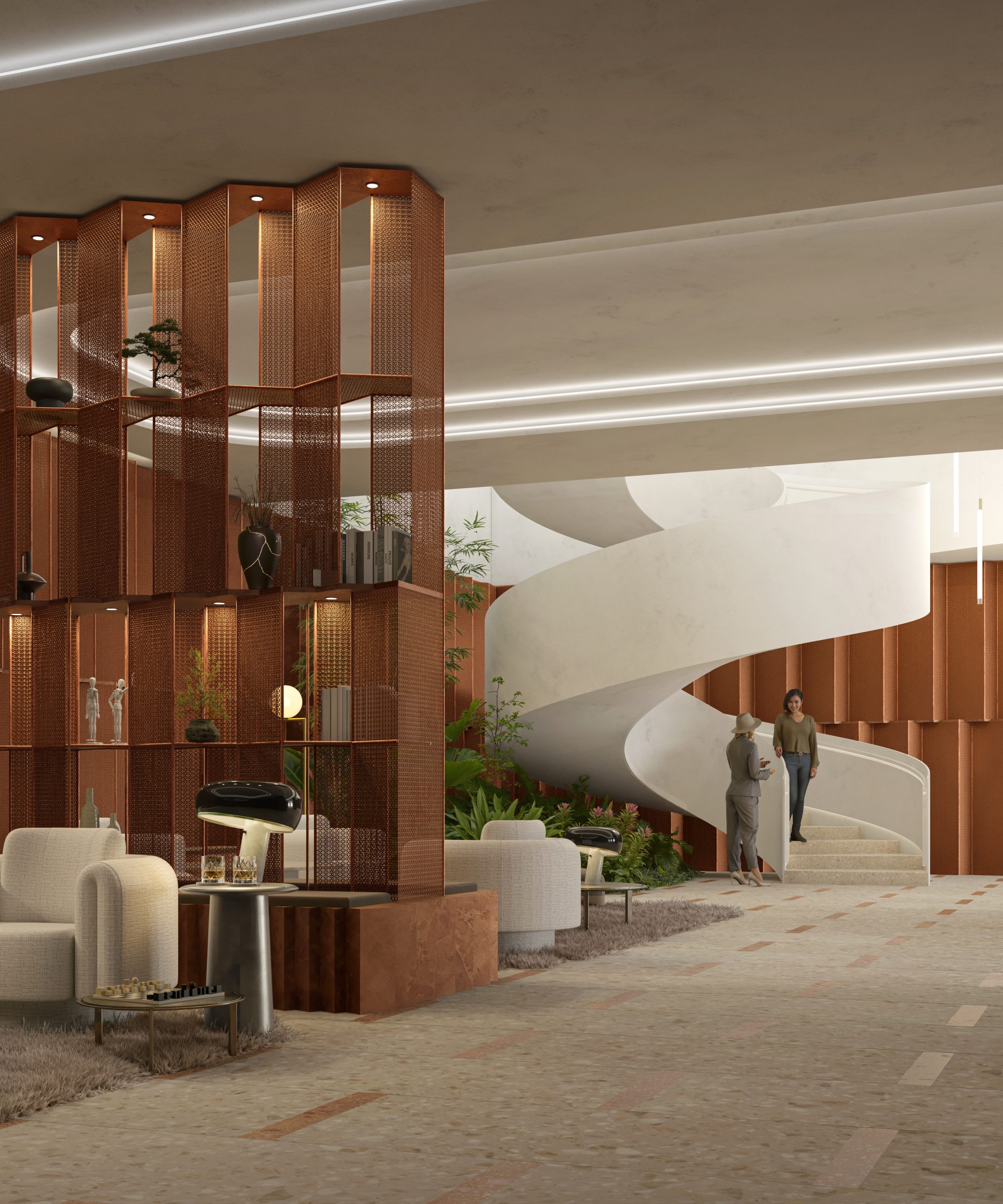
Top: Pymble Ladies’ College Secondary Innovation Precinct, competition render.
All images: Supplied.

© Niche Media 2026