

Home truths – meeting The House Detective
Home truths – meeting The House Detective

Share
Architectural historian Marianne Taylor is helping Brisbane remember itself before it forgets.
The Pink Lady of James Street
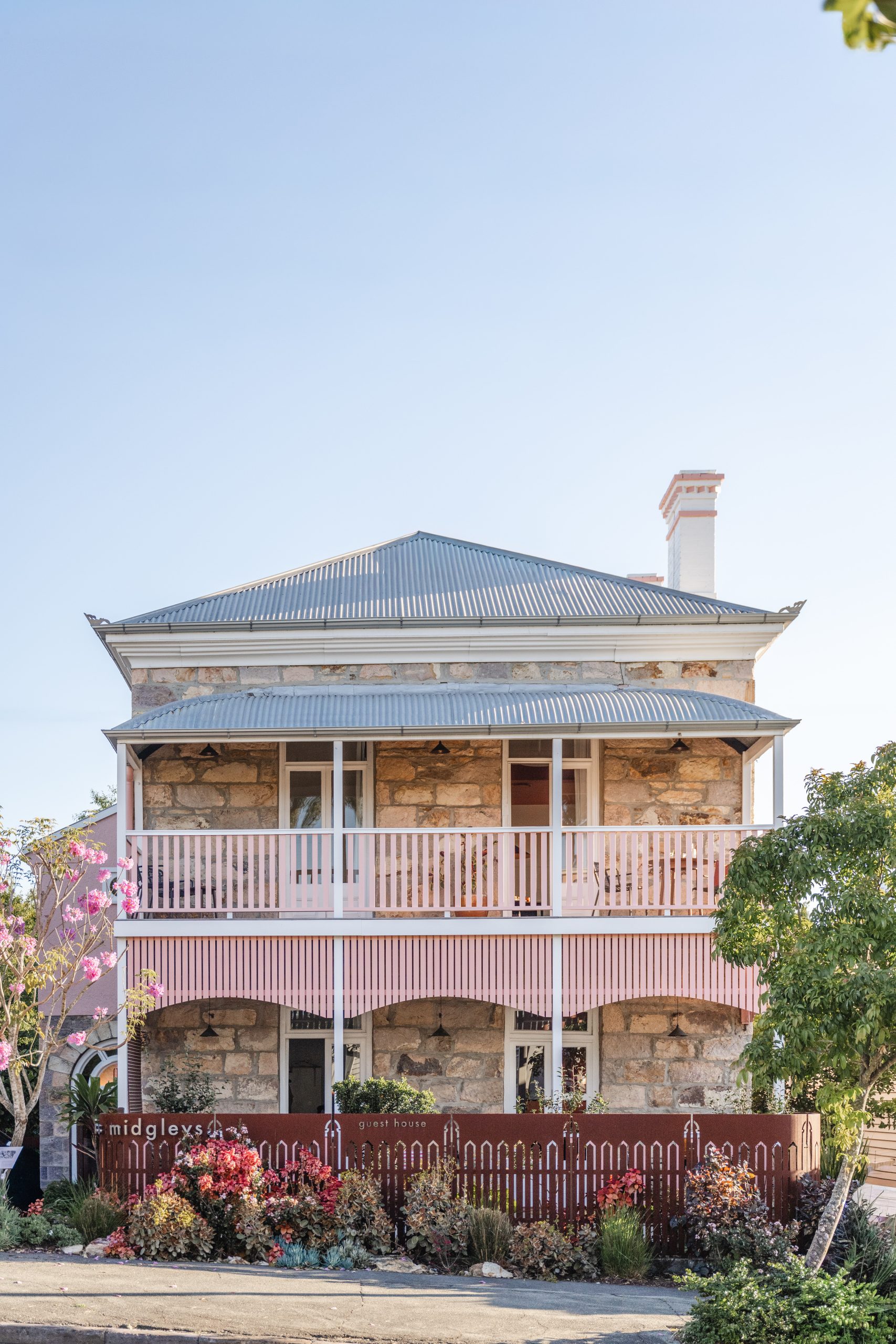
Behind a Corten picket fence, Miss Midgley’s pink-flushed façade hums with memory. Built 160 years ago, it’s one of Brisbane’s oldest heritage homes and now lives on as boutique accommodation on James Street in New Farm.
When mother and daughter Lisa and Isabella White bought the property in 2020, they understood its heritage significance, but suspected it had many more stories to tell. To help uncover them, they enlisted Brisbane’s House Detective, historian Marianne Taylor, whose findings became a storybook, placed in each of the five guest suites.
Over its lifetime, the building has housed several distinguished families, including a former Queensland Premier, and it later served as a hospital, orphanage and private school. Miss Midgley’s Educational Establishment was opened in 1903 under Ann Midgley and operated for four decades.
The Whites, both designers, chose not to erase that lineage. Their research led to restoring its soft pink façade – a hue that coloured the building for more than 120 years and earned it the name ‘Pink Flats’ in the 1950s.
“It’s such an unusual structure for Brisbane,” says Taylor of its ‘rare’ 1860s Brisbane Tuff stone construction, with metre-thick walls. “It was built as an investment property, not a home, but over time it became home to so many stories.”
A sleuth in the suburbs
Taylor has fallen down many rabbit holes. As ‘The House Detective’, she has researched nearly 200 homes across Australia, tracing not only their architecture but the human histories within.
Growing up in a 1920s Queenslander in Corinda, Taylor remembers sneaking into an abandoned farmhouse behind her family’s home. “It was run down and covered in graffiti,” she says. “That’s the first time I remember being truly intrigued by a house. I wanted to know what had happened inside it.”
With a background in heritage conservation and management, including as a past president of the Brisbane Branch of the National Trust of Australia (Queensland), Taylor provides consultancy services, including date of construction, heritage impact assessments, character home assessments, conservation management plans and renovation advice to homeowners, architects and designers, town planners and developers.
She spends hours sifting through building records, post office directories, subdivision maps and sewerage plans in Brisbane City Council’s archives at Rocklea – her ‘second home’.
“It starts with a name on a title deed,” she says. From there, Taylor studies the home’s context and physical fabric to trace its history, before revealing the people who once lived there – her “favourite part”.
“There’s a fine line between detailed research and obsession. You uncover the incredible human stories: the quirky, the scandalous, the shocking, the downright heartbreaking.”
Timber and tin
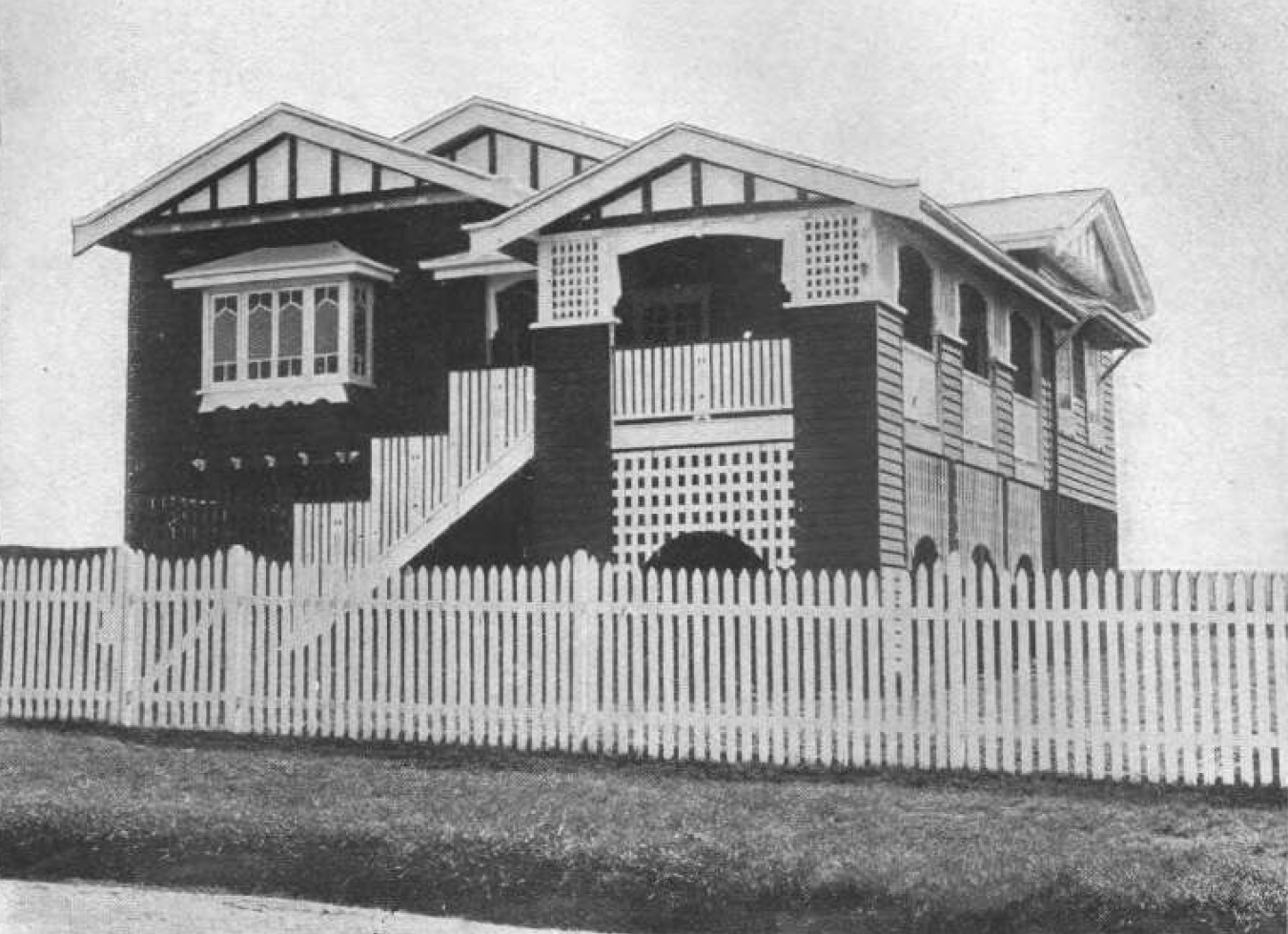
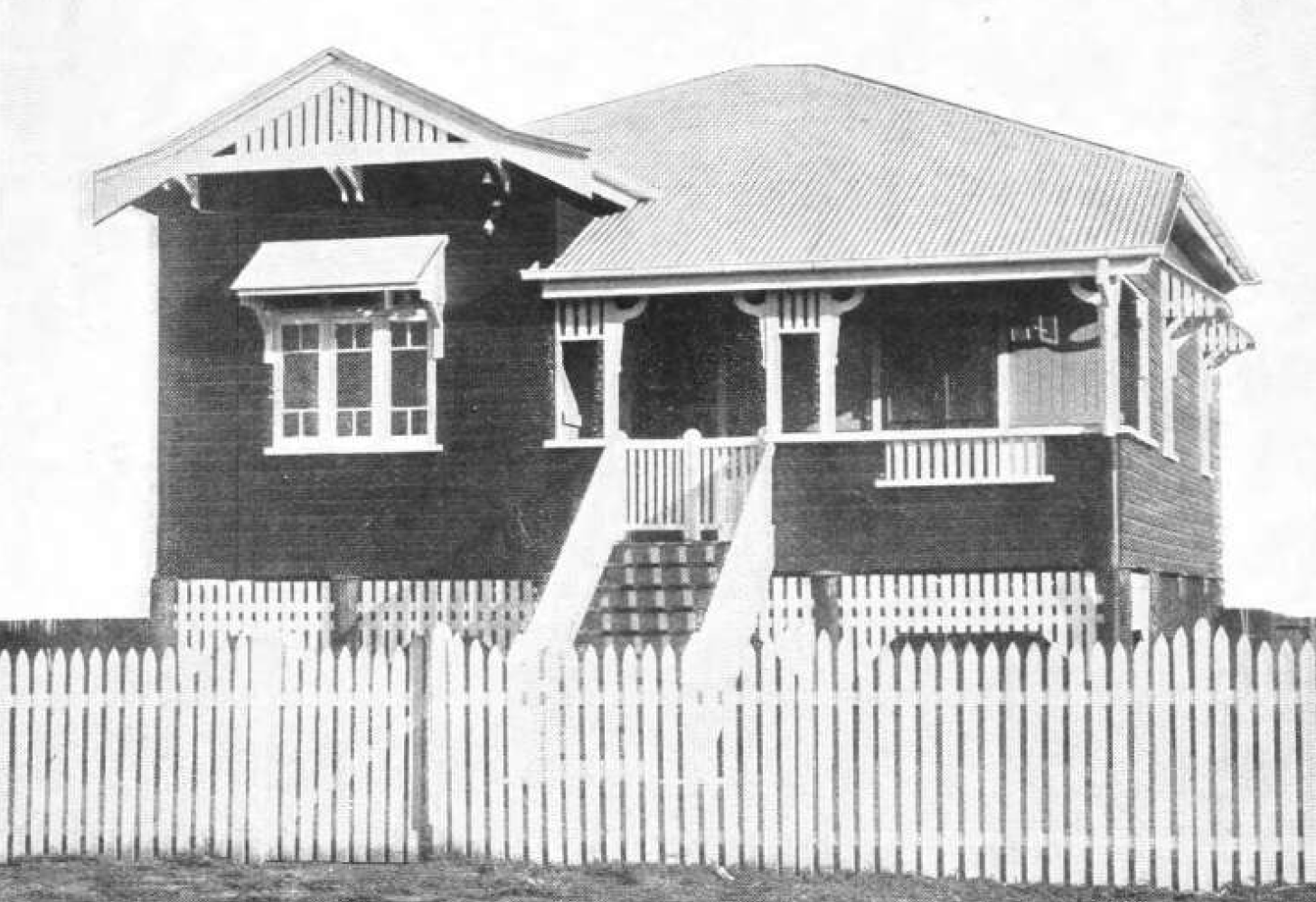
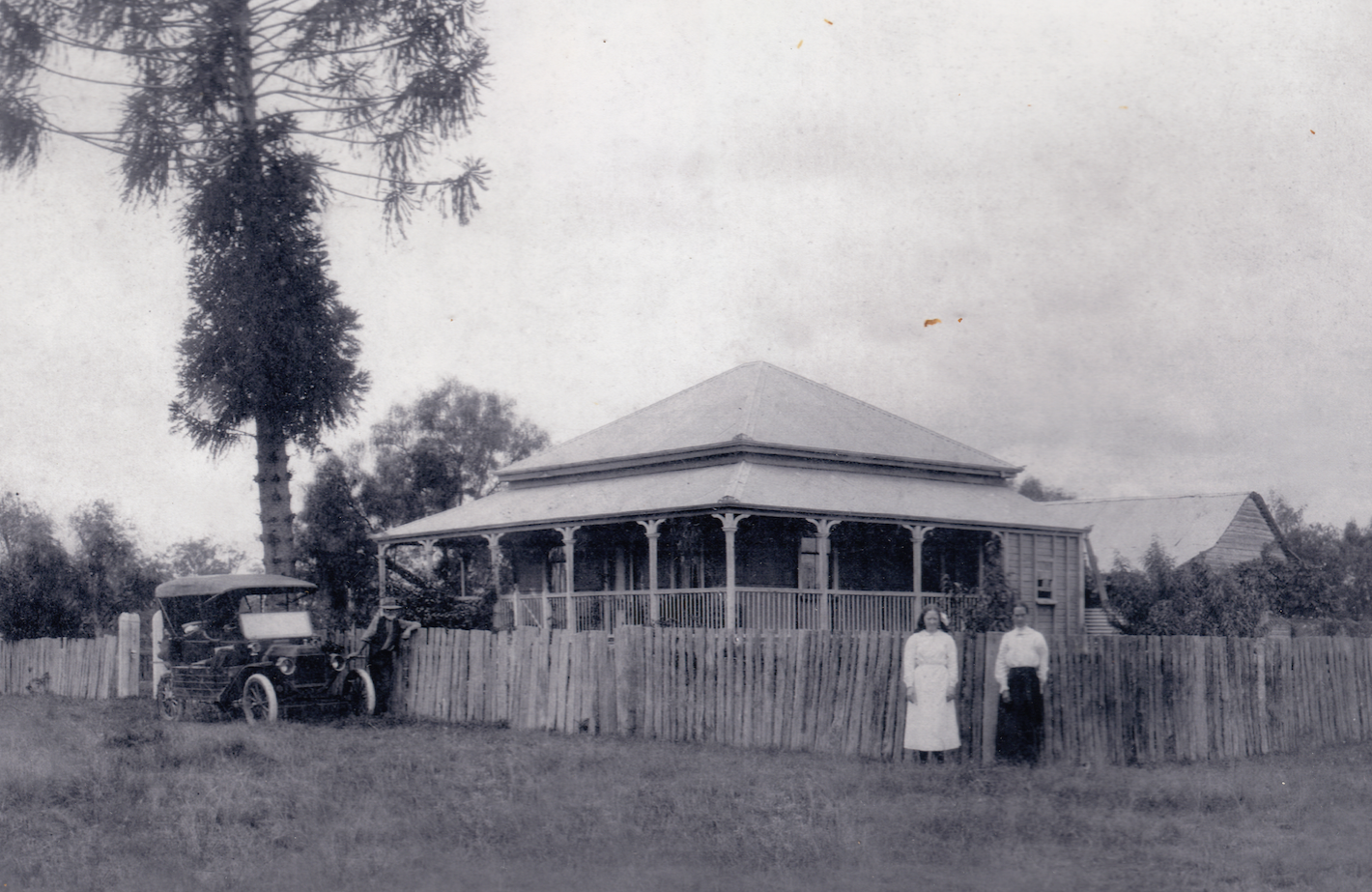
The Queenslander remains an ultimate expression of the state’s architecture. Timber and tin, raised on stumps, single-skinned walls with exposed studs, VJ (vertical joint) boards and double-hung sashed windows. “We take them for granted. You can see the bones of the house,” she says of their ‘honesty’. “But I actually prefer [researching] the everyday homes, particularly social housing from the past.”
She points to the precursors to the Queensland Housing Commission, like the Workers’ Dwellings Board established in 1909, under which “a huge percentage” of Brisbane houses were built. “We think of our Queenslanders as individual and unique, but these were the cookie-cutter houses of the day,” Taylor says.
Built off-plan and in bulk by the government, they provided affordable housing with low deposits and interest rates. “I often think, what could we learn from these schemes to bring back today?”
Taylor describes the multi-gable style homes of the 1920s as the ‘heyday’ of this building period. “Now they’re the multimillion-dollar mansions in suburbs like Ascot, yet they were built, well-built, as very humble homes.”
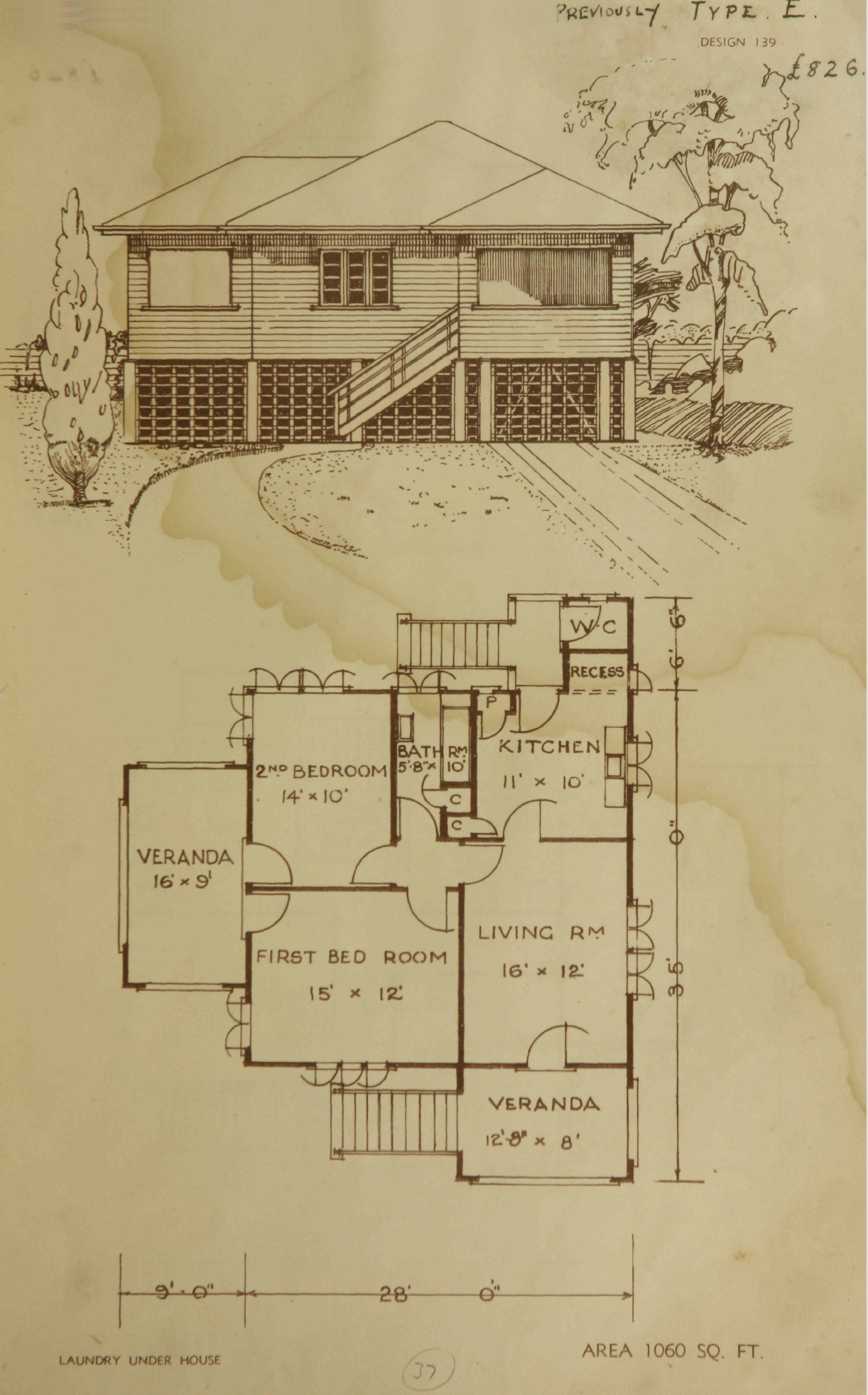
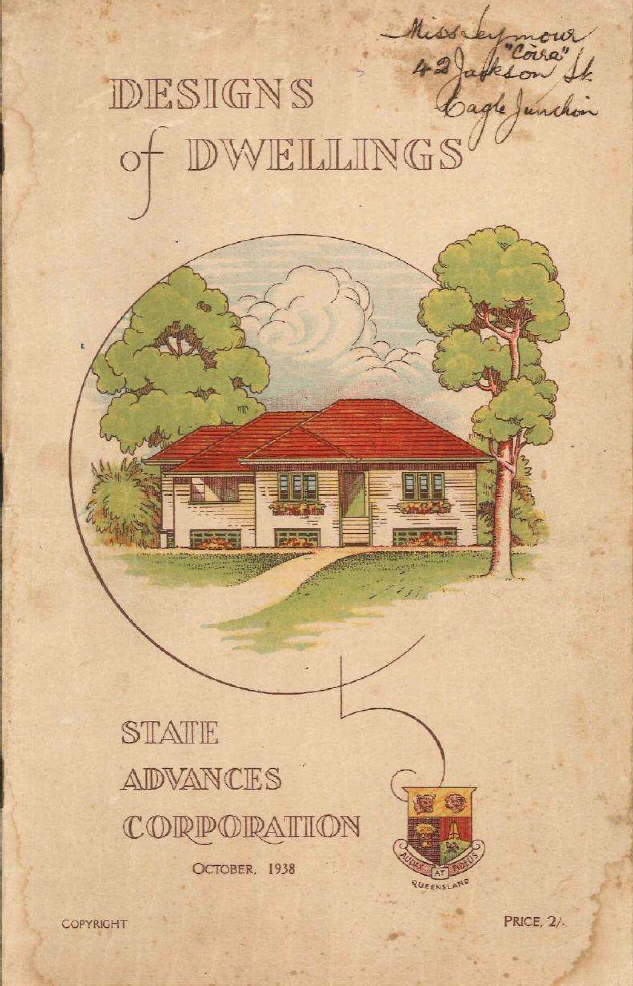
Her research on a modest 1937 house in Holland Park, designed by Eunice Slaughter, one of Queensland’s first female architects, is a touchstone of this legacy.
Working for the State Advances Corporation, Slaughter designed affordable homes for working families. Her own home reflected the principles she outlined in a 1936 article on the ‘ideal house’: low set, with verandahs, an entry vestibule, low ceilings and a kitchen close to the dining room. “The scheme revolutionised home ownership in Queensland, allowing many people to achieve the Australian dream… Her house designs are likely found all over Queensland.”
Who gets remembered
Not every old house needs heritage listing, Taylor says. “Most of the buildings on heritage registers belonged to rich, dead white men,” she says. “I’d like to change that.”
But Brisbane’s character homes are under threat. “There’s a lot of development pressure,” she explains. The housing shortage has accelerated granny flat approvals on large, quarter-acre blocks, which, Taylor says, are “as much as part of the Queenslanders’ story and what makes them unique”.
“That’s what we’re losing fastest, as they’re shifted to the side and the land is subdivided.”
Others are being lost to relocation. “Many are getting moved just to make way for development, which makes it so hard to track their history.”
Brisbane City Council planning instruments protect homes built before 1911 and 1947. Taylor supports these measures, but says the pre-1947 character protections, while well-intentioned, are too narrow. She’d like to see them expanded to include post-war properties, describing the cut-off date as “great, but arbitrary”.
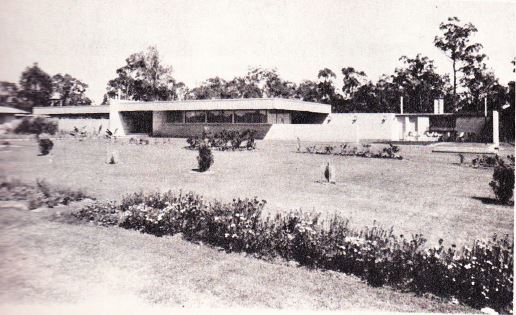
“So many significant houses that were built in the post-war period – particularly the mid-century modern style homes – I would love to see more of those houses protected,” she says.
The pre-1947 protections focus on streetscapes, not individual houses. “It can be avoided if the owner or developer argues that the pre-1947 house doesn’t exhibit traditional building character. For example, it has been so altered and changed that it is no longer recognisably a traditional house style,” Taylor says. “Alternatively, they can argue it is the only character house left in a street, which, to me, should be grounds to keep it, but it works the opposite way sometimes. Some developers just demolish illegally and pay a fine (if they even get caught) because they can make way more profit than the fine will cost them.”
Taylor hopes to raise the appreciation of Brisbane’s old houses via her YouTube histories and advocacy. “I love these old houses, but the reality is no one’s going to live in them if they’re kept as a four-room, tiny cottage. There has to be some compromise, but I hope that it means we can adapt them to our new lifestyles in a sensitive way, so that the original significant features are retained.”
What gets remembered
At Miss Midgley’s, the Whites have gone to extraordinary lengths to preserve and celebrate its eccentricity, while introducing contemporary functionality.
“To restore buildings like this keeps these stories alive, but it also makes you ask, whose history are we paying attention to?” Isabella White says.
She acknowledges the Turrbal and Jagera (Yuggera) people as the region’s original inhabitants. “All of these historical threads helped inform new design decisions. We are simply the most recent caretakers. For this reason, we decided to retain as much of the original building as possible.”
Inside, deep ochres mark modern insertions. “This juxtaposition of white and colour means you can clearly delineate the old and new – reading the different eras of the building in real time,” adds White.
Taylor says old houses are “constantly competing” with modern expectations. Decorative fretwork and archways, even floorplans, are often sacrificed to make homes more liveable for contemporary lifestyles.
“Heritage best practice says additions should look modern, but sometimes that just means you end up with two houses awkwardly stuck together. I don’t mind replication, as long as it’s honest and well-documented.”
She cites the JDA Co restoration of Home in Kangaroo Point, formerly known as Lamb House, as the best practice example of a sympathetic house restoration she’s witnessed in Brisbane. “Knowing when your house was built and why it’s important may encourage you to keep the original features and respect them. Alternatively, if you know the family history of the house or the original name of the house, then maybe you will connect with it more and feel more like a temporary custodian of the house.”
Another favourite is the adaptive reuse of Apple’s store in MacArthur Chambers on Queen Street. “It shows that heritage and innovation can coexist beautifully,” she says.
White, who holds a Master of Architecture, agrees. “Reusing our buildings is also the single most sustainable approach to building,” she says. “The less ‘new’ we have to build, the better. The result is almost always more interesting anyway.”


The heritage of tomorrow
For Taylor, heritage is not static, but a living archive. “We need to start asking what the heritage homes of tomorrow will be,” she says. “We may not necessarily value our post-war architecture, but people in the future will. In a few decades, no one will remember what a 1980s house looked like.”
She believes every era deserves representation, not just the “pretty ones”. “There was a time when people thought our beautiful, old Queenslanders were so daggy and they put the orange brick façades on them,” Taylor laughs. “Our tastes change and evolve, but we need to be thinking about what we’re listing now to make sure we’re capturing a representative example of all our architecture.
“Distinctive architects’ work will be appreciated. However, I don’t know if there’ll be many houses that really stand out.”
Taylor’s voice softens when she speaks of the Thiess House in Sunnybank Hills – a 1967 mid-century masterpiece by Peter Heathwood, which she adored. “It was an incredible time capsule of design integrity,” she says. “When it was partly demolished for a housing development, I sat in my car and cried.”
She questions the longevity of today’s housing. “I look at houses that have stood for 120 years and wonder how many new housing developments will last that long,” she says. “As far as materials go, they don’t make them like they used to.”

© Niche Media 2026