

Getting to know IDEA 2024 Single Residential winner Alcami Architecture
Getting to know IDEA 2024 Single Residential winner Alcami Architecture

Share

Alcami Architecture’s Terrace House Mirage claimed top honours in the highly competitive Single Residential category at the Interior Design Excellence Awards (IDEA) last month.

Sponsored by Halliday + Baillie, the award recognises excellence in the interior design of a single dwelling and remains one of the most fiercely contested categories. Judges consider not only the finished aesthetic, but also the spatial planning and programming, the cohesive connection between spaces, the interplay of light and shadow, and the selection of materials, products and furniture.
Described by the jury as an architectural statement that questions the boundaries of space and introduces fantasy into everyday life, Alcami’s Terrace House Mirage was a well-deserved winner. Australian Design Review spoke to Alcami Architecture director Victor Alcami about Terrace House Mirage, trying new things, taking risks and learning lessons along the way.
ADR: What did it mean for you to win your category?
Victor Alcami: For Alcami Architecture, winning best Single Residential project in Australia with a 60-square-metre terrace house extension was an incredible achievement, especially as the project competed against multimillion-dollar homes designed by large practices sometimes with dozens of employees. This project proves that good architecture isn’t about size or budget. All you need is one architect, a computer and a message. Good work can be created anywhere.

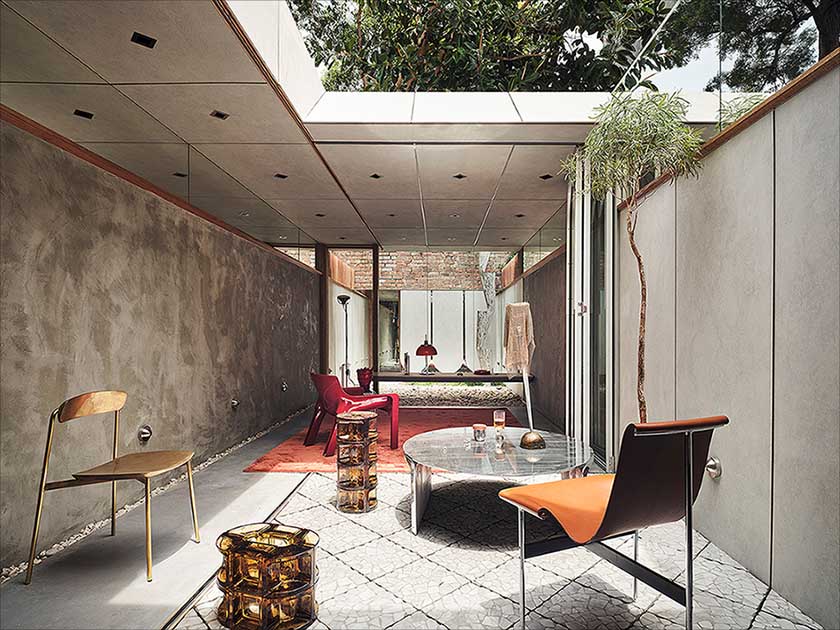
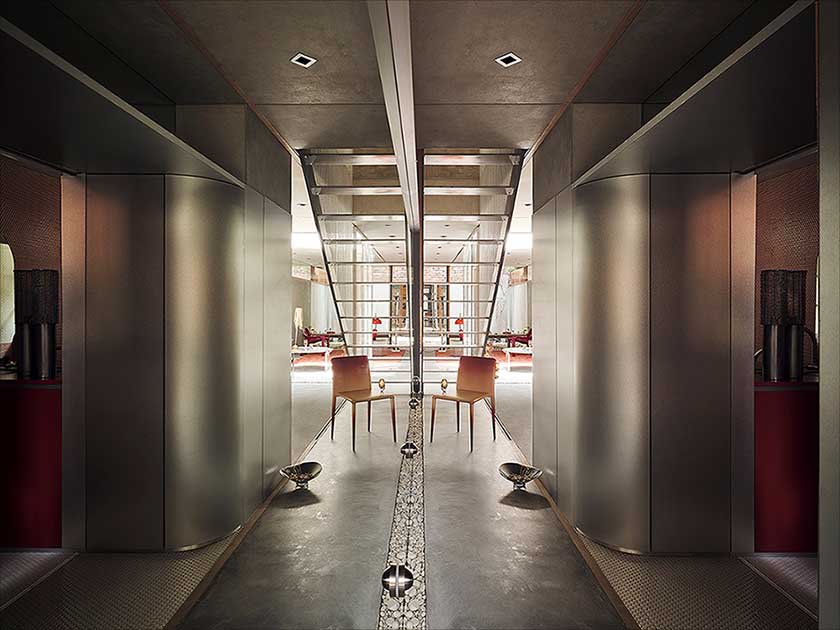
I think this project won because of what I did in this category. Using strategies like turning the ground floor into a fully openable outdoor garden, incorporating mirrors to eliminate the limits of space and make it feel bigger, the mix of Arabic and Spanish heritages as a way to reference the client’s background and using tones of orange – his favourite colour – all inside an existing terrace house. A Dutch and Belgian typology, that we know as English, in Australia.

ADR: Tell us about your winning project. What was its inspiration and how did you achieve the outcome that you did?
VA: Beauty should just be the aesthetic result of a meaningful process. This project celebrates Australia’s incredible cultural diversity. It is a representation of the world we live in and includes references to Chippendale’s industrial history and Spain’s Arabic heritage. It reflects how history often oversimplifies migrations and knowledge exchanges. For example, did the English discover Australia, or was it a reencounter with another branch of human relatives that originally migrated from Africa almost 200,000 years ago? The way history is told contributes to building different mental constructs and this project challenges the current tendencies to homogenisation and racism by celebrating diversity.

As for the references, I drew inspiration from many sources: Adolf Loos’ American Bar (1908), Donoval Hill’s D House (2000), the Cordoba Mosque (785), 1970s and 1980s Spanish and Italian interiors, and the works of Stanley Kubrick and James Turrell among many. Each reference was chosen for what it would contribute to the house.
ADR: Did you set out to design something ambitious and award-winning from the beginning?
VA: Not at all. My focus was on challenging conventional notions of space through a meaningful, creative approach.
The primary goal was to enjoy the process and designing this house was deeply enjoyable. I also needed to solve the problems of a lack of space, natural light and ventilation, which I did by offering a pleasant outdoor area in a terrace house.
Good design comes from asking the right questions and providing creative solutions to those problems. Sometimes, you only have to listen to the project.
I can only hope this project ages like fine wine, becoming a key milestone in my professional journey and, from a humble perspective, a small contribution to the architectural profession for what it is worth.
ADR: What did you learn from this project that you hope to bring to future designs?
VA: Designing is an introspective process that I deeply value. This project – and the client – taught me invaluable lessons about architecture, life and myself. I love working closely with clients because this introduces an element of randomness, like a Dadaist poem, where unexpected moments emerge.

Each project is a journey of exploration: trying new things, taking risks, failing, discovering and learning. All of this enriches your capacity to communicate through space design. This is how architects develop their language or mannerisms.
Every idea, drawing and project refines this language, sometimes through addition and sometimes subtraction. This ongoing progress is the most valuable learning I’ll bring to future designs.
ADR: How would you describe 2024 for your and/or your studio?
VA: 2024 marked the start of presenting my work publicly. This project gained significant traction with publications in the Netherlands, Italy, Spain, the UK, Korea, Taiwan, China, Australia, and more. It also received multiple awards, including two from the Australian Institute of Architects, the Single Residential IDEA award and shortlistings for Grand Designs and Habitus House of the Year.

Much of my energy went into understanding how promoting architecture intertwines with its commercial side. It was a steep learning curve, but I met incredible people along the way who are as passionate about the profession as I am.
ADR: What’s next for you? Can you share any upcoming or current projects you’re working on?
VA: I am always juggling multiple projects. For instance, currently, I’m providing design advice for major Sydney practices competing in design excellence competitions – essentially ‘ghostwriting’ for architecture.
Looking ahead, I dream of designing a house for someone seeking something out of the norm, an inhabitable piece of art that transcends the ordinary and tells their story through space. If this resonates with you, I am waiting for your call. You know where to find me.
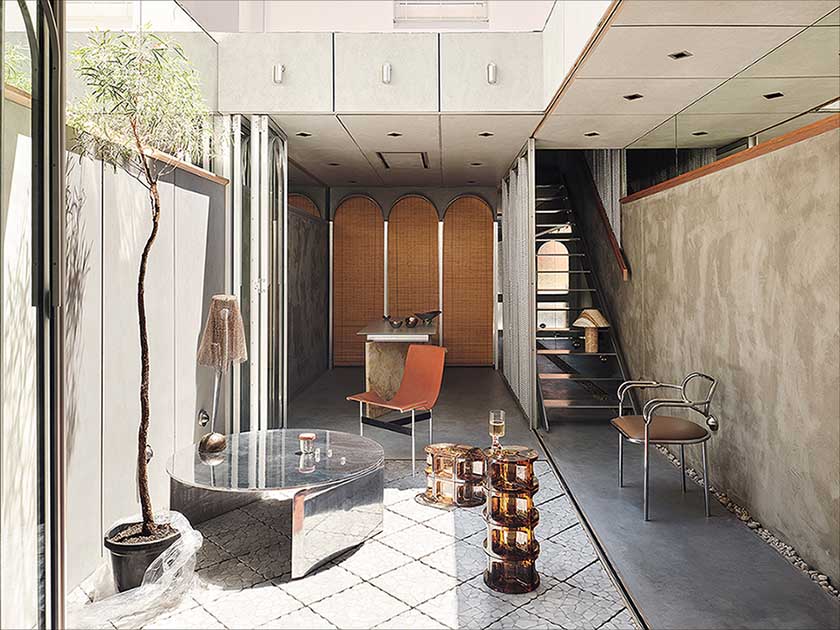
Project photography: David Wheeler.
IDEA 2024 is proudly brought to you by our sponsors Miele, Cult, Crafted Hardwoods, Neolith, Halliday + Baillie, Krost, MillerKnoll, Laufen, ForestOne, Zenith, Designer Rugs, and supported by our event partners Axolotl, Four Pillars Gin, Moo Brew Beer and Artfull.
A special thank you to our jury chair Clare Cousins, and our jury members Brooke Lloyd, Davina Bester, Graham Charbonneau, Melissa Bright, Michael Alvisse and Manuela Millan.
Get to know the IDEA 2024 Public Space Award Winner, Bates Smart
You Might also Like

Related Stories

© Niche Media 2026