

Utopia Art Centre takes centre stage at Desert Mob 2025
Utopia Art Centre takes centre stage at Desert Mob 2025

Share
Celebrating its 34th year, Desert Mob is one of Australia’s longest-running Indigenous arts and cultural showcase. A key location of this year’s event is Utopia Art Centre, a sun-soaked gallery space in the Arlparra desert.
Bringing together millennia of shared cultural teachings and artistic storytelling, Desert Mob is Australia’s premier presentation of Indigenous and First Nations artists. Managed by Desart, the peak arts body of the Central Australian Aboriginal Arts and Crafts centres, the event has grown to represent 8000 artists since its inception in 1992.
Taking place between 11 September and 26 October in the Northern Territory, the artistic showcase has wider repercussions across the broader Australian cultural landscape.
As Desert Mob curator Hetti Perkins asserts, “The influence of First Nations culture, in all its cultures, is pervasive. If you travel internationally and talk to different people, they all associate Australia with Aboriginal and Torres Strait Islander art.”
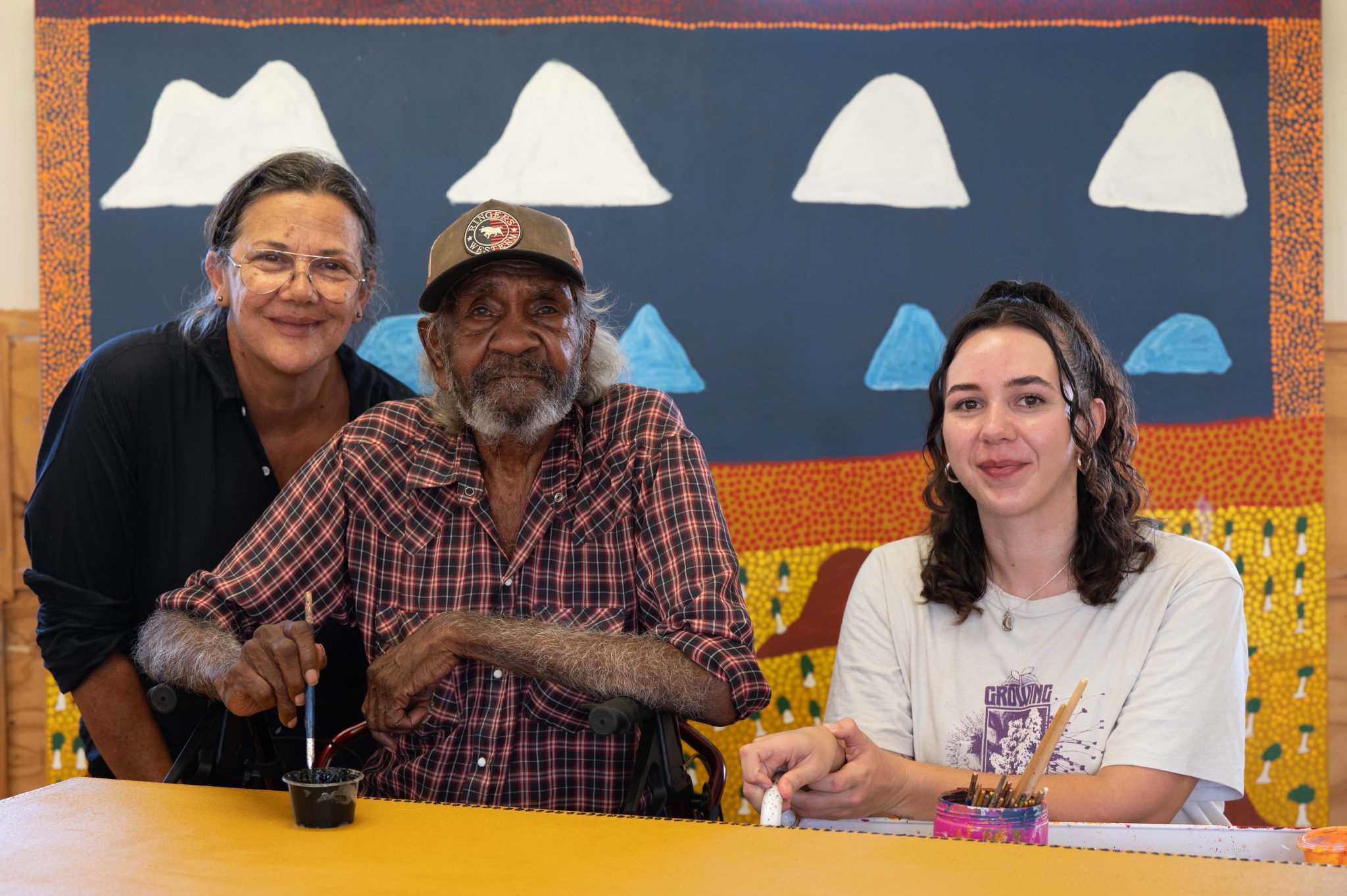
Desert Mob curator Hetti Perkins (left) and fellow curator Aspen Beattie (right), with artist Ned Kelly Jungarrayi at Arlpwe Art & Culture Centre studio, Ali Curung. Photo by Sara Maiorino.
This year’s Desert Mob welcomes the participation of 35 different arts centres, each of them defined by their own specialist inventories and ways of creating art. It is this chorus of different voices, Perkins emphasises, which places Desert Mob as a bridging presence between culture, Country and community.
“You know, it could be stories that have been handed down through generations over millennia, or designs – marks, motifs, things like that – which resonate with meaning. [They hold significance] not only for individuals, but the people who have taken this inherited tradition and made their own individual mark on that tradition,” she says.
Perkins underlines the important roles played by the diverse arts centres, not only from a local standpoint as sources of employment, but also through the cultures and practices they uphold.
“They’re all little engine houses working away out there throughout the desert to maintain our cultural traditions and also be a broker for sharing them. Not only with the wider Australian community, but the world,” she says.
Responsibilities that go beyond the job description
One of the many participating art centres is the newly constructed Utopia Art Centre, operating under the purview of centre manager Molly Burrage and studio coordinator Liam Haley. Much like the nature of Desert Mob itself, the two collaborate extensively and the management responsibilities within the Centre are shared.
“We’re here to support the artists and provide them with materials, making sure that they have a safe environment to work in,” Burrage says. “Although my role primarily entails a lot more admin – making sure artists are getting the ethical sales returns for their work, [for example].”
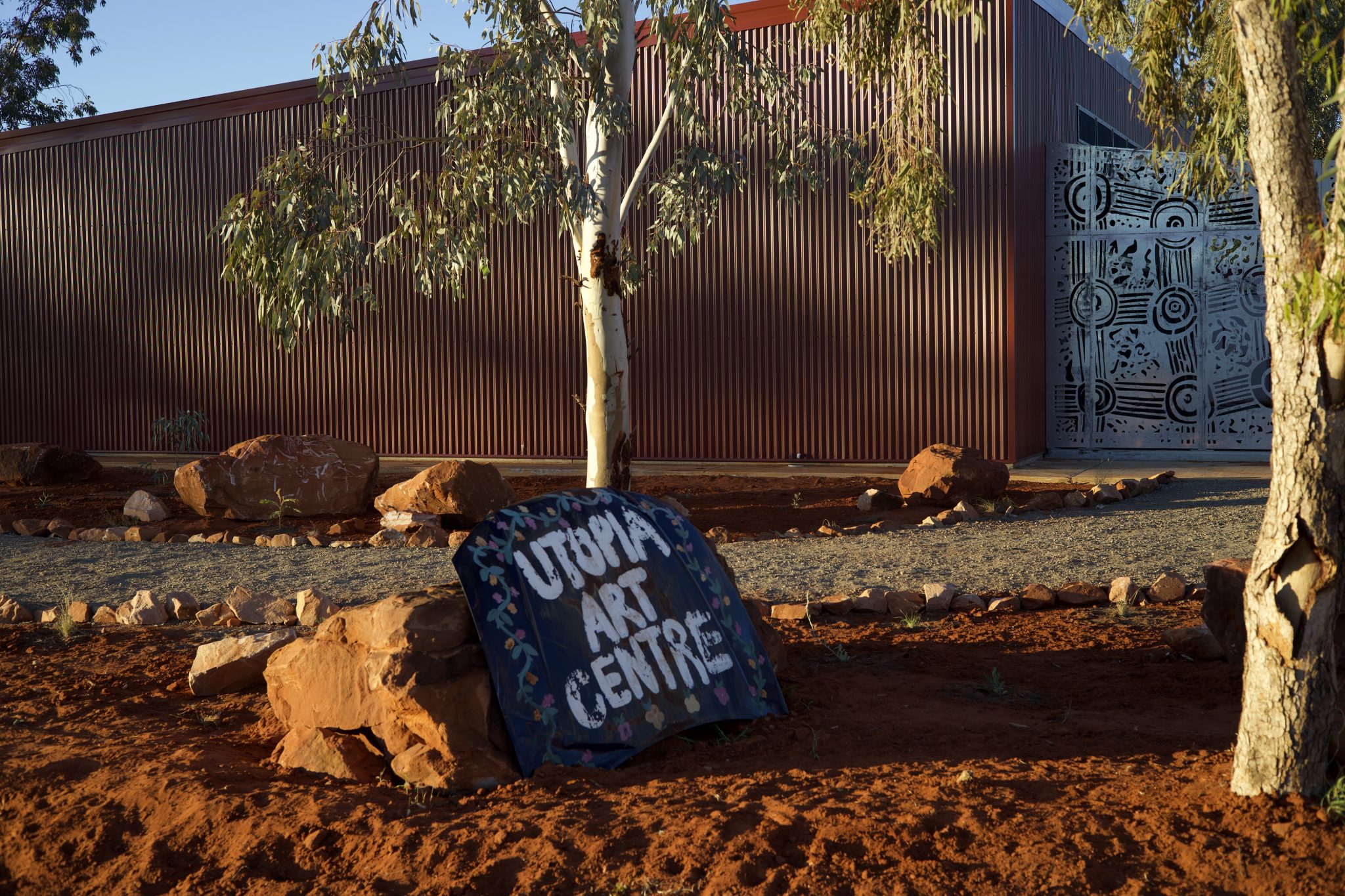
The centre’s welcome sign has a charmingly rustic, homemade quality
As studio coordinator, Haley’s role is hands-on, with a significant focus on material preparation for the artists.
“So that’s canvas stretching, mixing colours, priming canvases – making sure we do have enough materials for our arts workers,” Haley explains. “I’m lucky that the arts workers do help me a lot with that. A new part of my role with the building is gallery coordinator, so I did a little bit of curation alongside Molly for the new gallery space.”
Beyond their official duties at Utopia Art Centre, Burrage and Haley have other responsibilities outside of their employment contracts. As well as getting the newly completed centre up and running, they ensure the art centre provides a safe comfortable environment for artists to paint and share their story.
They also act as the middle ground between the artists they represent and the commercial world. “I think with this new space, it’s also opened up a lot of doors for new artistic possibilities,” Burrage says. “It is quite a big space and it gives the artists an environment where they can expand their creativity beyond painting.”
A challenging new build in the Northern Territory desert
The severe environmental conditions of the Arlparra desert meant that Utopia’s construction process was far from ideal. As Haley notes, “There is a lot of variation here in the Northern Territory – the weather, for one. When it rains, it rains, so the roads become inaccessible. Or when it’s 48 degrees, it’s pretty hard to work in.”
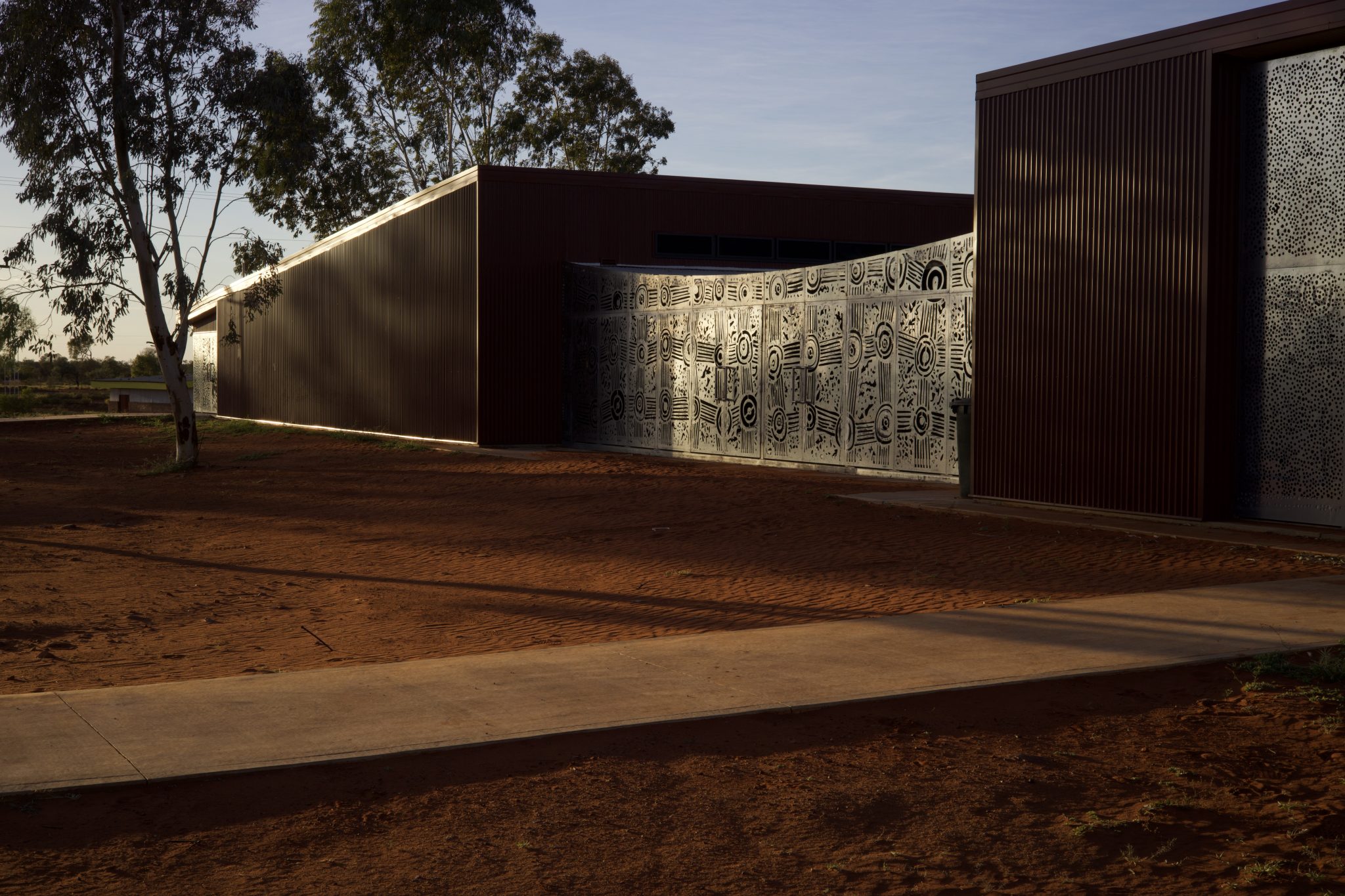
The centre catches the sunlight but its sloped roof, importantly, does not catch excess volumes of water during the area’s rainy season
The location’s remoteness also posed another difficulty, as simply getting materials to the site was an extended logistical challenge. Construction began in April 2023, and what was meant to be a 12-month timeline ballooned into a two-year project before they could even get into the building.
With funding from the Indigenous Land and Sea Corporation, the Central Land Council and the National Indigenous Australias Assocation, the build took place in Alice Springs under construction company Murray River North.
“…Then [we] brought it out on a truck and placed it on the land where the old arts centre was,” Burrage says. “Before this build, there were four dongas, which were the old police station in Arlparra, and then they moved those and replaced those dongers with this new build.”
The new structure is essentially two buildings comprising seven individual concrete slabs, all of which were transported independently on flatbed trucks. Everything came together like a huge Meccano playset, with the doors and windows installed afterwards.
“Those two buildings are joined by a galvanised deck,” says Haley. “It’s actually recycled tires that make up the boards for the deck and that was all built on-site.”
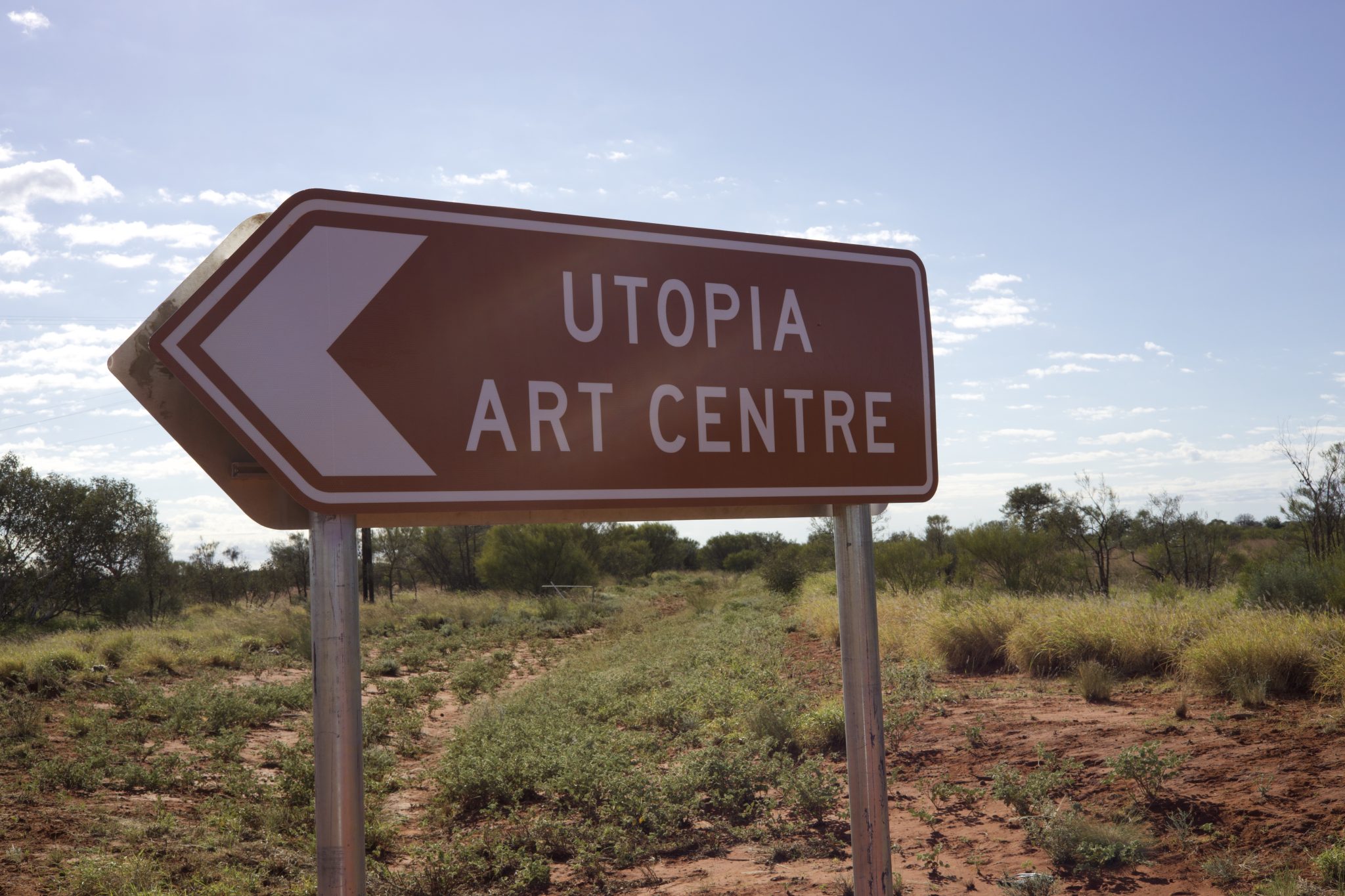
An oasis in the desert, both culturally and literally
Upon viewing the supposedly completed space, Burrage and Haley quickly compiled a very long defect list that needed to be dealt with before moving any displays into the building. As such, the ultimate move-in process was not as simple as merely unlocking the doors and flicking the lights on.
“A lot of the internal fixtures and furniture were fitted out by a local mob in Alice Springs called Rooster Construction,” says Haley. “They’re now taking over a lot of art centre builds and internal fitouts. They made a beautiful hanging system for our unstretched canvas works in the gallery, which is essentially like a drawer-runner system; you can roll the canvas out from an internal display system to view them properly.”
A new gallery space worthy of world-class talent
The primary driver behind the new arts centre was the quality of the artists themselves, according to Utopia Art Centre architect Marni Reti. Many of the artists presented in the centre exhibit internationally, making them worthy of “a space that reflects the high-quality, world-renowned art that is created there,” Reti says.
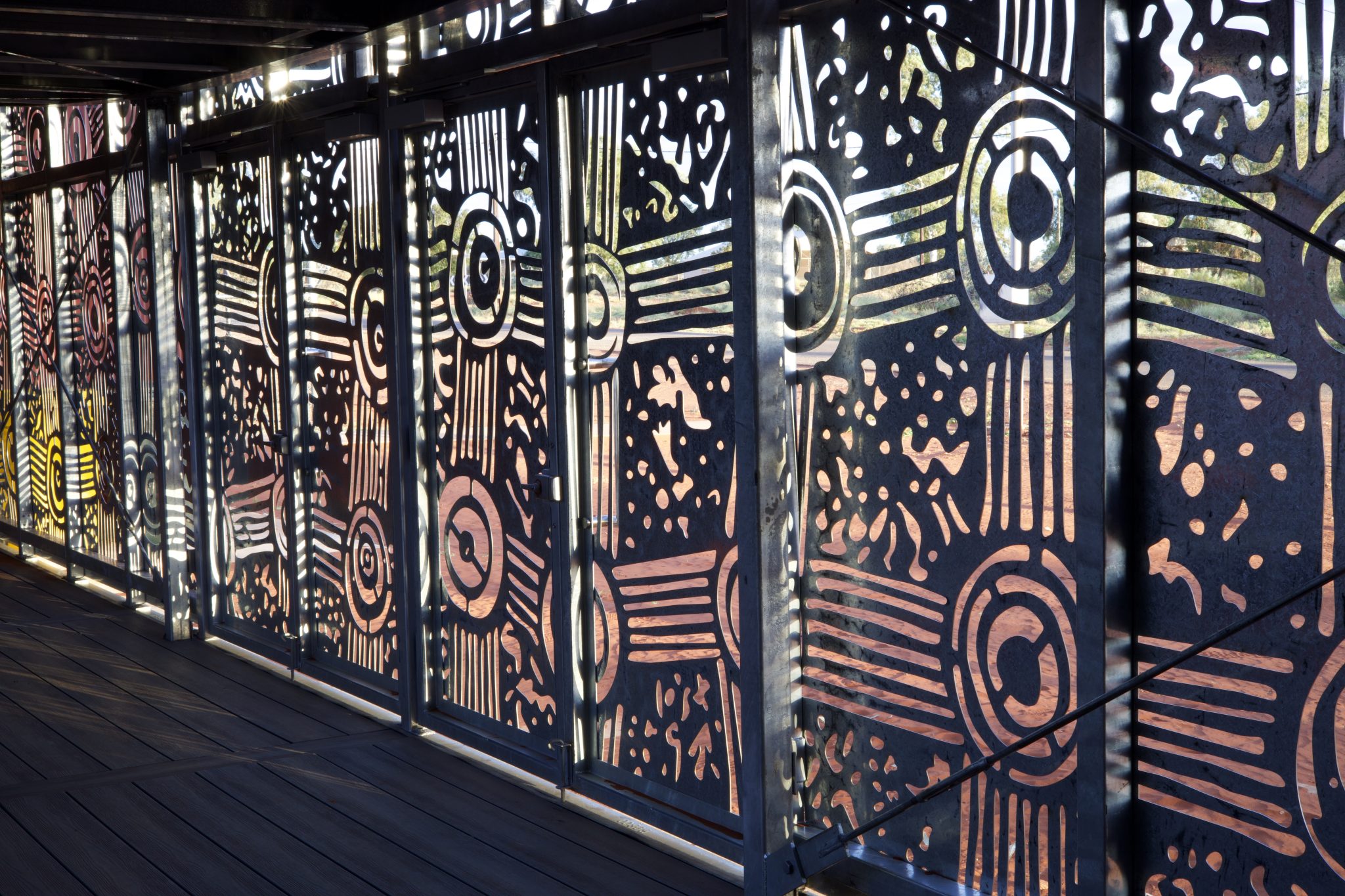
Design accents that purposefully reflect the First Nations arts and culture presented within the centre itself
“The foundation of this project is that the artists need more space – larger areas to create in. They need to be able to circulate through and use that space in a culturally appropriate way.”
Before the new build, the Utopia Arts Centre was little more than an assembly of brick pavers under a Bondor roof, according to Reti. Yet it still drew art enthusiasts from all across Australia. A designated gallery was clearly needed.
“From a design point of view,” Reti outlines, “this culminated in large spaces that allow for adaptability, [to] be used as the community requires [and] to allow cultural protocols to be conducted.”
Constructed of multiple building modules, the Utopia Art Centre is uniquely fitted to allow for the extreme temperature fluctuations across the NT’s dry and hot seasons. The final form of the building facilitates the catchment and redirection of rainwater into the centre’s wider expanses.
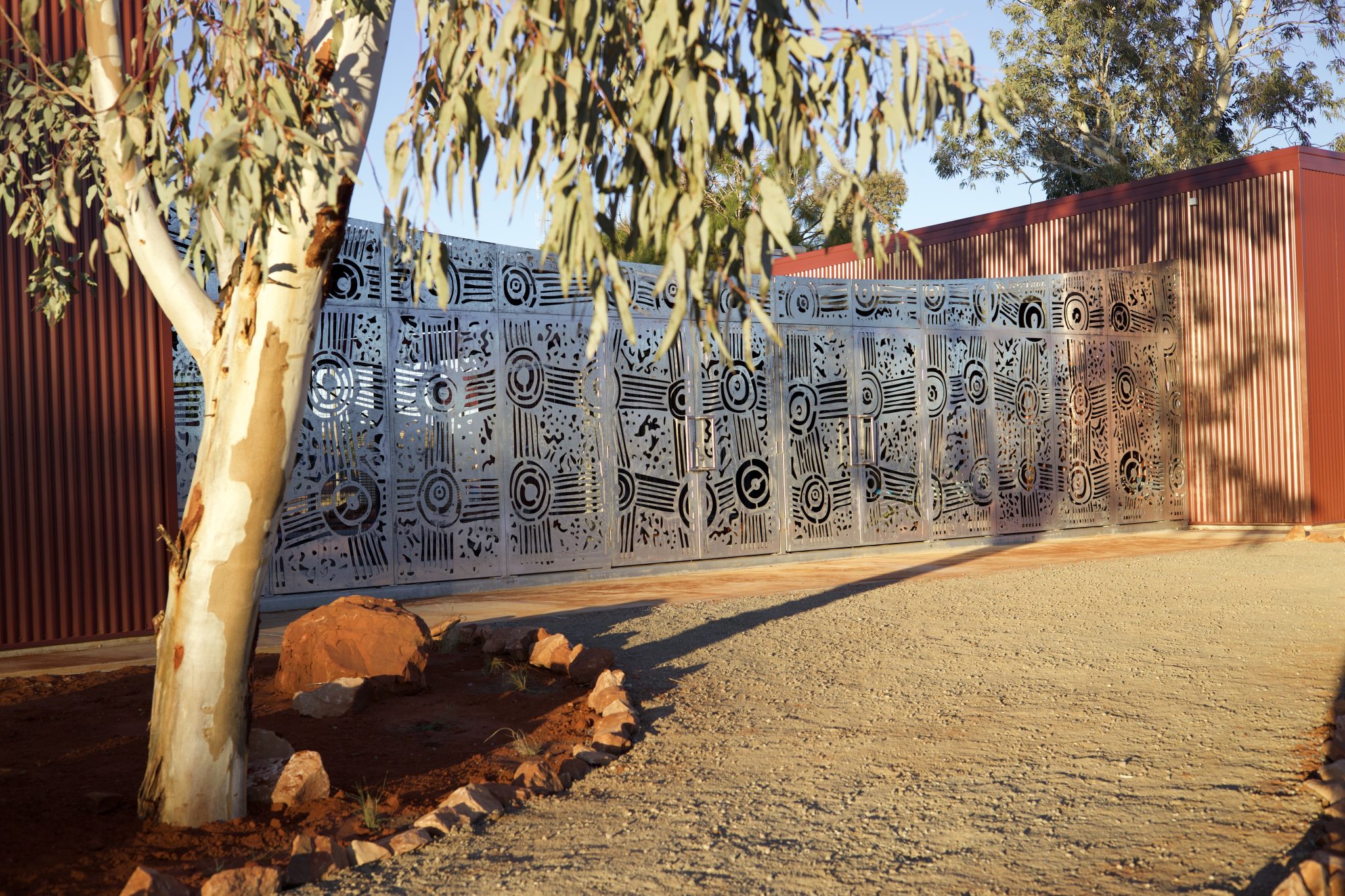
Surrounded by the gentle rustling of dry gum leaves, the centre is a welcome escape from the fierce desert heat
“We work in climatic extremes all across the country, from arid deserts to cyclonic zones,” Reti says. “Architecture should always be reflective and supportive of the existing Country.”
Presenting a world-class array of works by First Nations and Indigenous artists, the Utopia Arts Centre in Arlparra represents an oasis in the desert, both literally and within the wider Australian arts community.
This year’s Desert Mob celebration promises the very best of what this country’s rich, diverse history has to offer – and what the future may hold for this ancient tradition of craftsmanship and storytelling.
Photography courtesy of Utopia Art Centre.
Related: Desert Mob, one of Australia’s longest-running Indigenous art events, returns in 2025
You Might also Like


Related Stories

© Niche Media 2026