
<?xml version="1.0" encoding="UTF-8"?>
<rss version="2.0"
	xmlns:content="http://purl.org/rss/1.0/modules/content/"
	xmlns:wfw="http://wellformedweb.org/CommentAPI/"
	xmlns:dc="http://purl.org/dc/elements/1.1/"
	xmlns:atom="http://www.w3.org/2005/Atom"
	xmlns:sy="http://purl.org/rss/1.0/modules/syndication/"
	xmlns:slash="http://purl.org/rss/1.0/modules/slash/"
	>

<channel>
	<title>Australian Design Review</title>
	<atom:link href="http://www.australiandesignreview.com/feed" rel="self" type="application/rss+xml" />
	<link>http://www.australiandesignreview.com</link>
	<description>Just another WordPress site</description>
	<lastBuildDate>Thu, 17 May 2012 03:36:13 +0000</lastBuildDate>
	<language>en</language>
	<sy:updatePeriod>hourly</sy:updatePeriod>
	<sy:updateFrequency>1</sy:updateFrequency>
	<generator>http://wordpress.org/?v=3.2.1</generator>
		<item>
		<title>HaKa office, Rotterdam</title>
		<link>http://www.australiandesignreview.com/interiors/19899-haka-office-rotterdam</link>
		<comments>http://www.australiandesignreview.com/interiors/19899-haka-office-rotterdam#comments</comments>
		<pubDate>Thu, 17 May 2012 01:53:42 +0000</pubDate>
		<dc:creator>Online Editor</dc:creator>
				<category><![CDATA[Interiors]]></category>
		<category><![CDATA[clean tech]]></category>
		<category><![CDATA[doepel strijkers]]></category>
		<category><![CDATA[haka]]></category>
		<category><![CDATA[rotterdam]]></category>
		<category><![CDATA[the netherlands]]></category>

		<guid isPermaLink="false">http://www.australiandesignreview.com/?p=19899</guid>
		<description><![CDATA[From an abandoned 1930s industrial building in Rotterdam, Doepel Strijkers Architects conjures up a new headquarters for some of the world’s leading clean-tech companies.]]></description>
			<content:encoded><![CDATA[<p>The port of Rotterdam can be a pretty grim and depressing place. Over the second half of the 20th century, in response to the increasing size of ocean-going vessels, harbour activity in what was once the world’s biggest and busiest port gradually shifted westwards towards the North Sea. Left behind were docks, quays and warehouses deemed too small to serve any role for the shipping industry in the age of the super tanker. Urbanists and architects responded with urban renewal proposals to develop the once thriving waterfronts and quaysides. Abandoned industrial structures were converted to house new functions, or simply demolished to make way for something else.</p>
<div id="attachment_19902" class="wp-caption aligncenter" style="width: 653px"><a href="http://www.australiandesignreview.com/wp-content/uploads/2012/05/Doepel-Strijkers-Haka-Rotterdam-2.jpg" rel="lightbox[19899]"><img class="size-full wp-image-19902" title="Doepel-Strijkers-Haka-Rotterdam-2" src="http://www.australiandesignreview.com/wp-content/uploads/2012/05/Doepel-Strijkers-Haka-Rotterdam-2.jpg" alt="" width="653" height="600" /></a><p class="wp-caption-text">The entrance to the &#39;recycle offices&#39; at HaKa</p></div>
<p>&nbsp;</p>
<p>One notable example of a disused industrial structure that has survived, infused with new life, is the HaKa building. Completed in 1932, to a design by architect Herman Mertens, this imposing structure was built as the headquarters of the Handelskammer (hence the abbreviation HaKa), a cooperative wholesalers’ society set up in 1914 to supply affordable and good quality foodstuffs to the working class. The HaKa building housed not only the society’s offices, but also the facilities for producing, packaging and dispatching the goods. Details such as the stained glass windows in the stairwells clearly reflect the confidence of the Dutch cooperative movement. Even the concrete-framed structure was the first of its kind in the Netherlands. The narrowness of the available site (just 15 metres wide) sandwiched between the road and the quayside prompted the decision to cantilever all upper floors by 2.3 metres on both sides, thereby increasing the width of the 100-metre-long building by 4.6 metres. Conveyer belts, lifts, slides and chutes carried goods from the factory and packaging spaces to the storage areas on the ground floor, which is level with the loading height of the freight trains that used to stop right in front of the building.</p>
<div id="attachment_19903" class="wp-caption aligncenter" style="width: 557px"><a href="http://www.australiandesignreview.com/wp-content/uploads/2012/05/Doepel-Strijkers-Haka-Rotterdam-3.jpg" rel="lightbox[19899]"><img class="size-full wp-image-19903" title="Doepel-Strijkers-Haka-Rotterdam-3" src="http://www.australiandesignreview.com/wp-content/uploads/2012/05/Doepel-Strijkers-Haka-Rotterdam-3.jpg" alt="" width="557" height="600" /></a><p class="wp-caption-text">The reception area, made easily and cheaply from recycled timber and glass</p></div>
<p>&nbsp;</p>
<p>For three decades, the wholesalers operated from the building, but by the 1960s such companies that served the needs of workers were in decline as the modern day supermarket started to emerge and replace the corner grocery stores everywhere. The society ceased operations in 1962 and the building became just another industrial structure that had seen better days, a reminder of a bygone era when the city’s harbour was a bustling centre of transhipment and industry. Renovated in the late 1980s, the building continued to be partly occupied by various companies, but its heyday had long since passed. Even so, it remained a powerful monument to Dutch functionalist architecture.</p>
<p>A new chapter in the life of this landmark building started in 2009, with the launch of a plan to turn the HaKa building into a new campus for clean-tech companies. The building’s owners joined forces with Stadshavens Rotterdam, an agency set up to promote innovative and sustainable businesses, as well as urban transformation in the city’s harbour area. Together they set up Clean Tech Delta, a joint venture involving public and private agencies active in the area of clean technology. Elaboration of the plan for the HaKa building was entrusted to Urban Breezz, a firm that specialises in breathing new life into industrial, heritage-listed sites and inner cities. Real estate expert, Ben ten Hove of Urban Breezz, came up with a plan to turn the building into a ‘Living Lab’ for start-up firms, agencies and authorities active in the field of water, energy and clean technologies – so that they could effectively share expertise and pool their resources.</p>
<div id="attachment_19904" class="wp-caption aligncenter" style="width: 936px"><a href="http://www.australiandesignreview.com/wp-content/uploads/2012/05/Doepel-Strijkers-Haka-Rotterdam-4.jpg" rel="lightbox[19899]"><img class="size-full wp-image-19904" title="Doepel-Strijkers-Haka-Rotterdam-4" src="http://www.australiandesignreview.com/wp-content/uploads/2012/05/Doepel-Strijkers-Haka-Rotterdam-4.jpg" alt="" width="936" height="600" /></a><p class="wp-caption-text">Timber platforms provide shared workspaces within the building</p></div>
<p>&nbsp;</p>
<p>The project encompassed a complete fitout of the building’s ground floor and reception area, an exhibition space, auditorium, kitchen/pantry, various meeting rooms and a large, flexible office space. Given the brief, the knowledge-driven workforce and the demands of such infrastructure, the building now allows its multiple tenants to focus on their core businesses and objectives.</p>
<p>According to ten Hove, it’s a way of working that would seem to be the way forward in today’s economy. “The old style economy was all about strictly hierarchical organisations, clear division of tasks and following commands from management,” he explains. “This initiative is all about the ‘new world of work’ in which people and organisations need to be far more adaptable. I want to gather enthusiastic people here to form a breeding ground for new thinking. And that calls for an atmosphere conducive to creativity.”</p>
<div id="attachment_19905" class="wp-caption aligncenter" style="width: 936px"><a href="http://www.australiandesignreview.com/wp-content/uploads/2012/05/Doepel-Strijkers-Haka-Rotterdam-5.jpg" rel="lightbox[19899]"><img class="size-full wp-image-19905" title="Doepel-Strijkers-Haka-Rotterdam-5" src="http://www.australiandesignreview.com/wp-content/uploads/2012/05/Doepel-Strijkers-Haka-Rotterdam-5.jpg" alt="" width="936" height="600" /></a><p class="wp-caption-text">The main meeting room, constructed from reclaimed doors</p></div>
<p>&nbsp;</p>
<p>This creative flair is interestingly reflected by the space that has ultimately been redesigned by Doepel Strijkers Architects, a forward-thinking practice run by architect Duzan Doepel and interior architect Eline Strijkers. Both designers spent a period working at MVRDV in the early 1990s before opening their own independent offices. In 2007, they joined forces, and began covering more ground as a design duo, taking on projects from interior design to architecture to wider-reaching urban strategies. Research, particularly in the area of sustainability, quickly became – and to this day remains – an integral component of their work. Given the opportunity to conceptualise around this particular brief offered them the chance to use strategies and tactics seldomly used in mainstream, traditional practice, but the overall concept clearly embodied their own ethos to re-think as a design team. It was carte blanche.</p>
<div id="attachment_19906" class="wp-caption aligncenter" style="width: 936px"><a href="http://www.australiandesignreview.com/wp-content/uploads/2012/05/Doepel-Strijkers-Haka-Rotterdam-6.jpg" rel="lightbox[19899]"><img class="size-full wp-image-19906" title="Doepel-Strijkers-Haka-Rotterdam-6" src="http://www.australiandesignreview.com/wp-content/uploads/2012/05/Doepel-Strijkers-Haka-Rotterdam-6.jpg" alt="" width="936" height="600" /></a><p class="wp-caption-text">The auditorium. Working with Van Gansewinkel, a waste disposal firm, the architects sourced wood, glass and metal locally for reuse at HaKa</p></div>
<p>&nbsp;</p>
<p>Together with Van Gansewinkel, a waste disposal firm, the designers sourced wood, glass, metal and plastics from newly demolished homes, glasshouses, factories and schools in and near Rotterdam, and then developed a series of interior objects that could be made cheaply and easily – created with as minimal a carbon footprint as possible. In the former factory space, to one side of the main entrance, are platforms made of the timber formwork from a brick kiln factory. Perched on these platforms are the workstations of the first pioneering tenants in the building. Sheets of glass framed in aluminium profiles, all salvaged from greenhouses, enclose the adjacent kitchen. Then there’s the main, and quite surreal, meeting room – with four walls made of nothing but old, reclaimed doors. On the other side of the main entrance, in what was the old office area of the wholesalers, is an exhibition space featuring display cases made, just like the kitchen, of glass sheets and aluminium profiles from the greenhouses, along with a series of benches made of sandwich-panel doors from a demolished pre-war housing scheme nearby.</p>
<p>In the auditorium, rows of seating as well as the stage and retractable lecterns are all made of timber construction beams. Separating the auditorium and the exhibition area is a partition wall – made of repurposed and colour-coordinated clothes stacked on panels with wheels. The idea for this design element was to enable flexibility and repositioning when needed. That said, all objects could be reconfigured over time in response to the changing demands of tenants, according to Doepel Strijkers Architects’ new scheme.</p>
<div id="attachment_19907" class="wp-caption aligncenter" style="width: 936px"><a href="http://www.australiandesignreview.com/wp-content/uploads/2012/05/Doepel-Strijkers-Haka-Rotterdam-7.jpg" rel="lightbox[19899]"><img class="size-full wp-image-19907" title="Doepel-Strijkers-Haka-Rotterdam-7" src="http://www.australiandesignreview.com/wp-content/uploads/2012/05/Doepel-Strijkers-Haka-Rotterdam-7.jpg" alt="" width="936" height="600" /></a><p class="wp-caption-text">Much of the construction and assembly was done on-site by people in rehabilitation programs</p></div>
<p>&nbsp;</p>
<p>Still, going beyond the intent of good functionality, it is the sourcing and applied use of the materials that makes this space stand out as it does. Almost all of these materials were taken from structures demolished close to Rotterdam, thereby reducing the energy required for transport. Indeed, only the timber from the brick kiln factory had to travel a distance that, at 188 kilometres, can be considered long by Dutch standards. The greenhouse materials travelled fewer than 30 kilometres, wood underlayment just six kilometres, and the clothing a mere 650 metres from a depot just around the corner. The architects also worked with Van Gansewinkel to calculate the effects of using demolition material, the transport costs and all final processing costs. After calculating the carbon footprint, the analysed technical aspects of reusing these materials allowed the designers to assess the potential of applying these strategies to the building sector at large.</p>
<div id="attachment_19908" class="wp-caption aligncenter" style="width: 936px"><a href="http://www.australiandesignreview.com/wp-content/uploads/2012/05/Doepel-Strijkers-Haka-Rotterdam-8.jpg" rel="lightbox[19899]"><img class="size-full wp-image-19908" title="Doepel-Strijkers-Haka-Rotterdam-8" src="http://www.australiandesignreview.com/wp-content/uploads/2012/05/Doepel-Strijkers-Haka-Rotterdam-8.jpg" alt="" width="936" height="600" /></a><p class="wp-caption-text">The acoustic wall, made from repurposed and colour-coordinated clothes</p></div>
<p>&nbsp;</p>
<p>The notions of ‘Cradle to Cradle’ and the logic of Waste=Food have fundamentally altered how designers think about materials and waste, and perhaps not only as an experiment, this project clearly illustrates that certain resourceful capacities are within reach. That is, of course, if a resourceful team is at work and fully behind the concept and implementation. The knowledge acquired by the architects and other partners in this case offers insight into the potential of re-applying this strategy in many other projects.</p>
<p>Today, the redevelopment of the HaKa site is part of a much wider initiative, advocating an alternative strategy for the spatial, economic and social transformation of the 1600-hectare port area in the city known as Stadshavens (Dutch for ‘city docks’). And, although case specific to Rotterdam for now, the lessons learned and the ideas developed by Doepel Strijkers Architects could easily be applied elsewhere.</p>
<div id="attachment_19909" class="wp-caption aligncenter" style="width: 559px"><a href="http://www.australiandesignreview.com/wp-content/uploads/2012/05/Doepel-Strijkers-Haka-Rotterdam-9.jpg" rel="lightbox[19899]"><img class="size-full wp-image-19909" title="Doepel-Strijkers-Haka-Rotterdam-9" src="http://www.australiandesignreview.com/wp-content/uploads/2012/05/Doepel-Strijkers-Haka-Rotterdam-9.jpg" alt="" width="559" height="600" /></a><p class="wp-caption-text">The podium inside the auditorium, constructed from timber construction beams</p></div>
<p>&nbsp;</p>
<p>If the design and conceptual intent weren’t enough, the social dimension of this work is even further reflected in how the objects were handmade – almost everything was carried out on-site by people on rehabilitation programs, including prisoners supervised by their probation officers. The architects in this case ensured that all interior elements could be made by people with minimal building skills or training. “Reusing building components and ensuring that inexperienced people could assemble the objects dictated another vocabulary of forms and easy assembly techniques,” explains Strijkers. “In fact, things like the acoustic separation wall were so labour-intensive that they wouldn’t have been possible otherwise. Here, we were able to maximise quality at minimum expense.”</p>
<p>The ambition of this project to promote the recycling of material and adaptive reuse tactics has significantly boosted the practical expertise of Doepel Strijkers in realising such an innovative design approach, which to date has been rewarded with several nominations, including a string of high profile design awards locally in the Netherlands (the Dutch Design Awards, the Great Indoor Awards and the Lensvelt de Architect interior prize). And now that the ground floor has been so warmly received, Urban Breezz is turning its attention to the floors above, which will all be fitted out by other architects for firms working in the field of clean technology.</p>
<p>Yet, for all the noble ambitions of social responsibility, eliminating waste and fostering a new work ethos, the new interior of the HaKa co-op convinces simply on the strength of the sculptural and textural quality of the big pieces arranged inside this old industrial shell, as if they were artworks in a museum. The warm tones of the woodwork, the see-through kitchen framed in aluminium, the grid of fluorescent tubes extending overhead and – most striking of all – the colour gradients in the soft, sound-absorbent walls of old clothing&#8230; all bear evidence to the fact that our environments are effectively changing for the better, if we so choose them to. In doing so, however, Doepel Strijkers Architects here proves a fundamental capacity to not only seek efficiency, but indeed provide a high degree of excitement and aesthetic appeal in the process.</p>
<p><a href="http://www.doepelstrijkers.com/" target="_blank">www.doepelstrijkers.com</a></p>
]]></content:encoded>
			<wfw:commentRss>http://www.australiandesignreview.com/interiors/19899-haka-office-rotterdam/feed</wfw:commentRss>
		<slash:comments>0</slash:comments>
		</item>
		<item>
		<title>Prometheus light</title>
		<link>http://www.australiandesignreview.com/objects/19858-prometheus-light</link>
		<comments>http://www.australiandesignreview.com/objects/19858-prometheus-light#comments</comments>
		<pubDate>Thu, 17 May 2012 00:31:48 +0000</pubDate>
		<dc:creator>Online Editor</dc:creator>
				<category><![CDATA[Objects]]></category>
		<category><![CDATA[christopher boots]]></category>
		<category><![CDATA[designex 2012]]></category>
		<category><![CDATA[prometheus]]></category>
		<category><![CDATA[the nest]]></category>

		<guid isPermaLink="false">http://www.australiandesignreview.com/?p=19858</guid>
		<description><![CDATA[Australian lighting designer Christopher Boots creates an intriguing pendant light crafted from bronze and quartz crystals.]]></description>
			<content:encoded><![CDATA[<p>Designed by Australian industrial designer Christopher Boots, Prometheus is an elegant pendant light inspired by Greek mythology. Named for Prometheus, a titan that stole fire from the Gods and gave it to mankind, the light resembles a ring of fire – creating a sense of drama and intrigue.</p>
<p>The design is a contemporary re-interpretation of the traditional crystal chandelier, featuring a dimmable warm white LED that gives the light a soft glow. A circular ring of hand-rubbed bronze is adorned with quartz crystals, which have been attached to the bronze using rare-earth magnets. The delicate looking piece can be hung with quartz crystals facing up like a crown, or down as the Sword of Damocles.</p>
<p>Having trained as an industrial designer at Swinburne University of Technology in Melbourne, Boots worked for lighting designer Geoffrey Mance &#8211; learning to explore alternative materials and processes to create surprising designs. In early 2011, Boots began his own practice, with an early body of work that demonstrates the designer&#8217;s interest in working with traditional materials such as bronze, iron, copper and quartz.</p>
<p>Prometheus is part of the Simple range, a lighting collection that was included in the Nest – an area at designEX 2012 showcasing of the work of 20 independent Australian designers.</p>
<p><a href="http://www.christopherboots.com/" target="_blank">www.christopherboots.com</a></p>
]]></content:encoded>
			<wfw:commentRss>http://www.australiandesignreview.com/objects/19858-prometheus-light/feed</wfw:commentRss>
		<slash:comments>0</slash:comments>
		</item>
		<item>
		<title>Clipsal</title>
		<link>http://www.australiandesignreview.com/sponsor/19854-clipsal</link>
		<comments>http://www.australiandesignreview.com/sponsor/19854-clipsal#comments</comments>
		<pubDate>Wed, 16 May 2012 06:55:48 +0000</pubDate>
		<dc:creator>Online Editor</dc:creator>
				<category><![CDATA[Sponsor]]></category>
		<category><![CDATA[clipsal]]></category>
		<category><![CDATA[light switches]]></category>
		<category><![CDATA[schneider electric]]></category>

		<guid isPermaLink="false">http://www.australiandesignreview.com/?p=19854</guid>
		<description><![CDATA[Let your imagination run wild with Clipsal’s extensive collection of electrical accessories, Australia's largest range of switches.]]></description>
			<content:encoded><![CDATA[<p>Because finishing touches matter, Clipsal provides you with an extensive selection of premium electrical accessories to suit any interior design.</p>
<p>Clipsal&#8217;s latest, most innovative range of switches and dimmers, Saturn OneTouch, has clean, straight architectural lines with a glass look fascia and utilises electronic switch and dimmer technology to provide unique touch operation.</p>
<p>If a splash of colour is what you&#8217;re after, the striking Strato 8000 Series is perfectly suited to contemporary interior styling. Featuring a minimal, low profile design and square modular look, the range is available with interchangeable coloured surrounds, including metallic finishes, bold, bright colours as well as various shades of white.</p>
<p>For more information and to view the entire range of switches visit <a href="http://www.clipsal.com/imagination" target="_blank">www.clipsal.com/imagination</a></p>
]]></content:encoded>
			<wfw:commentRss>http://www.australiandesignreview.com/sponsor/19854-clipsal/feed</wfw:commentRss>
		<slash:comments>0</slash:comments>
		</item>
		<item>
		<title>2012 Brisbane Architecture Awards</title>
		<link>http://www.australiandesignreview.com/news/19866-2012-brisbane-architecture-awards</link>
		<comments>http://www.australiandesignreview.com/news/19866-2012-brisbane-architecture-awards#comments</comments>
		<pubDate>Wed, 16 May 2012 05:00:47 +0000</pubDate>
		<dc:creator>Online Editor</dc:creator>
				<category><![CDATA[News]]></category>
		<category><![CDATA[AIA awards 2012]]></category>
		<category><![CDATA[arkhefield]]></category>
		<category><![CDATA[owen and vokes]]></category>
		<category><![CDATA[queensland regional aia awards]]></category>

		<guid isPermaLink="false">http://www.australiandesignreview.com/?p=19866</guid>
		<description><![CDATA[Owen and Vokes and Arkhefield win the top awards at the Australian Institute of Architects’ 2012 Brisbane Regional Architecture Awards.]]></description>
			<content:encoded><![CDATA[<p>A transformed worker’s cottage in inner Brisbane and a bold new restaurant development on the city’s South Bank have been awarded top honours at the Australian Institute of Architects’ (AIA) 2012 Brisbane Regional Architecture Awards.</p>
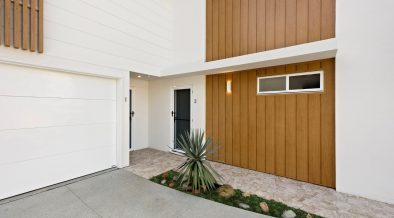
<p>Owen and Vokes’ Four-Room Cottage, a remodelled worker’s cottage in the inner suburbs of Brisbane, was named House of the Year. The project’s name refers to the typical floorplan common to this housing model, featuring four equally sized rooms arranged around a central corridor.</p>
<p>Jurors described the project as an “inspired translation of a traditional four-room cottage into a six-room one, with a perimeter circulation spine providing access to multiple service spaces, kitchen and external rooms which devolves into a series of garden terraces.”</p>
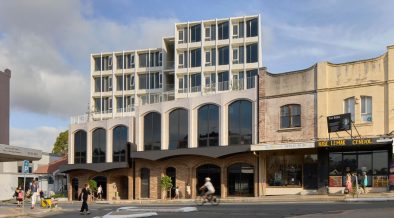
<p>Arkhefield’s River Quay on Brisbane’s South Bank, meanwhile, was presented with the John Dalton Award for Building of the Year. This project provides a new restaurant destination for the city, complemented by a new public space along the banks of the Brisbane River.</p>
<p>Jurors said of Arkhefield’s project: “River Quay is a commercial success both due to the quality of restaurants it has attracted and to the diversity of dining experiences it offers within a distinct and cohesive overall collective. It generates intimate scale for dining and civic scale through its soaring roofscapes [and] materially and spatially enriches its river and gardens setting.”</p>
<p>The Brisbane regional awards attracted a significantly larger number of projects than Queensland’s other regional awards, with 34 commendations presented from a shortlist of 118 entries.</p>
<p>Owen and Vokes also received commendations for their Windsor Stone Cottage (Heritage category) and Chelmer Pool House (Residential Architecture – Houses category). Arkhefield, too, received multiple commendations, with other successful projects including the Fitzgibbon Core Apartments (Residential Architecture – Multiple Housing), Stokehouse (Interior Architecture) and Satou House (Residential Architecture – Houses).</p>
<p>Donovan Hill was commended for The Lantern, My Own Private Neon Oasis (Art and Architecture) and National School Pride – Cannon Hill State School (Small Project Architecture), while HASSELL received commendations for Esquire Restaurant (Interior Architecture) and the Cross River Rail Detailed Feasibility Study (Urban Design).</p>
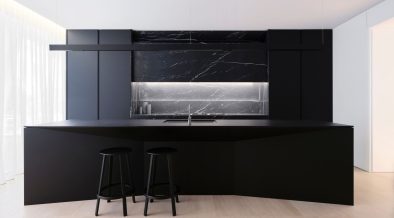
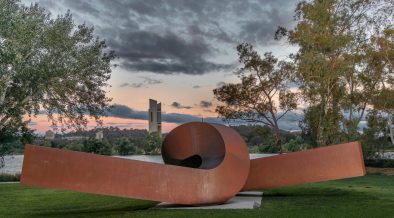
<p><strong>Images</strong> (1) &amp; (2): Four-Room Cottage by Owen and Vokes. Photos by Jon Linkins (3) River Quay by Arkhefield. Photo by Arkhefield  (4): River Quay by Arkhefield. Photo by John Gollings</p>
]]></content:encoded>
			<wfw:commentRss>http://www.australiandesignreview.com/news/19866-2012-brisbane-architecture-awards/feed</wfw:commentRss>
		<slash:comments>0</slash:comments>
		</item>
		<item>
		<title>2013 AIA Architecture Conference Directors announced</title>
		<link>http://www.australiandesignreview.com/news/19841-2013-aia-architecture-conference-directors-announced</link>
		<comments>http://www.australiandesignreview.com/news/19841-2013-aia-architecture-conference-directors-announced#comments</comments>
		<pubDate>Tue, 15 May 2012 07:34:54 +0000</pubDate>
		<dc:creator>Online Editor</dc:creator>
				<category><![CDATA[News]]></category>
		<category><![CDATA[experience]]></category>
		<category><![CDATA[john de manincor]]></category>
		<category><![CDATA[material]]></category>
		<category><![CDATA[national architecture conference]]></category>
		<category><![CDATA[natural artifice]]></category>
		<category><![CDATA[sandra kaji-o'grady]]></category>

		<guid isPermaLink="false">http://www.australiandesignreview.com/?p=19841</guid>
		<description><![CDATA[Sandra Kaji-O’Grady and John de Manincor appointed as Creative Directors of the 2013 AIA National Architecture Conference.]]></description>
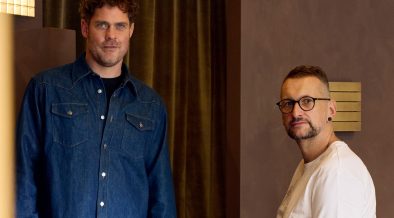
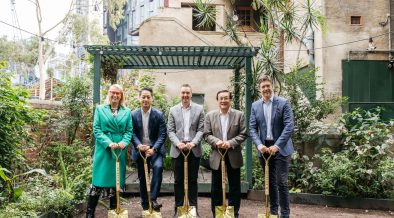
			<content:encoded><![CDATA[<p>Academic Sandra Kaji-O’Grady and architect John de Manincor have been announced as the Creative Directors of next year’s Australian Institute of Architects’ (AIA) National Architecture Conference.</p>
<p>Kaji-O’Grady, Professor of Architecture at the University of Sydney, and de Manincor, founding director of De Manincor Russell Architecture Workshop (DRAW), said the 2013 theme would be ‘Material’ – an idea that has evolved from their own research into the topic.</p>
<p>The Sydney-based duo said following the announcement: “Those working in the industry are all too familiar with traditional building materials. Our intent is to go beyond what is known, to stimulate a reconsideration of ‘material’. Given the opposition between the material and the conceptual – between doing and thinking – we want to restore theory to questions of materiality.”</p>
<p>The conference will explore a number of different contemporary material experiments and applications, with speakers encompassing architectural practitioners as well as researchers working in material laboratories.</p>
<p>The couple added: “Creative disagreement and discussion about architecture is central to our partnership. We consider debate and open-ended enquiry to be an essential part of architectural culture and are confident that this approach will enrich the 2013 National Architecture Conference.”</p>
<p>The 2013 conference, Material, will be held in Melbourne from 30 May until 1 June, co-located with designEX.</p>
<p><strong>Image</strong> Sandra Kaji-O&#8217;Grady and John de Manincor, photo by Adam Russell</p>
]]></content:encoded>
			<wfw:commentRss>http://www.australiandesignreview.com/news/19841-2013-aia-architecture-conference-directors-announced/feed</wfw:commentRss>
		<slash:comments>0</slash:comments>
		</item>
		<item>
		<title>Architectural Leader</title>
		<link>http://www.australiandesignreview.com/jobs/19833-architectural-leader</link>
		<comments>http://www.australiandesignreview.com/jobs/19833-architectural-leader#comments</comments>
		<pubDate>Tue, 15 May 2012 07:11:12 +0000</pubDate>
		<dc:creator>job_poster</dc:creator>
				<category><![CDATA[Jobs]]></category>

		<guid isPermaLink="false">http://www.australiandesignreview.com/?p=19833</guid>
		<description><![CDATA[A key position for a top-notch architect looking to progress to Director, working in the Perth office of one of the country's largest firms.]]></description>
			<content:encoded><![CDATA[<p>One of Australasia&#8217;s largest architectural firms is on the lookout for a top-notch architectural leader. This role is perfect for those interested in career progression into a Director role where they can take ownership.</p>
<p>This renowned firm specialises in mixed-use developments, retail, entertainment and lifestyle, hotels, residential, commercial offices, civic, education and health. The role offers a fantastic chance to showcase your architectural prowess and leadership qualities.</p>
<p>For more information please contact Fleur Sutherland at Bespoke Careers on (03) 9663 1188 or email fleur.s@bespokecareers.com.</p>
]]></content:encoded>
			<wfw:commentRss>http://www.australiandesignreview.com/jobs/19833-architectural-leader/feed</wfw:commentRss>
		<slash:comments>0</slash:comments>
		</item>
		<item>
		<title>Revit skilled Interior Designer</title>
		<link>http://www.australiandesignreview.com/jobs/19775-revit-skilled-interior-designer</link>
		<comments>http://www.australiandesignreview.com/jobs/19775-revit-skilled-interior-designer#comments</comments>
		<pubDate>Tue, 15 May 2012 06:37:39 +0000</pubDate>
		<dc:creator>job_poster</dc:creator>
				<category><![CDATA[Jobs]]></category>

		<guid isPermaLink="false">http://www.australiandesignreview.com/?p=19775</guid>
		<description><![CDATA[A role for an interior designer or architectural technician with Revit experience, working on the Royal Adelaide Hospital.]]></description>
			<content:encoded><![CDATA[<p>This notable international design practice is seeking an interior designer or architectural technician to join the team for a 12 month fixed term contract in Adelaide to work on The Royal Adelaide Hospital.</p>
<p>The ideal candidate needs to be proactive and able to work well within a team environment, manage their time well and be available for an immediate start. You must have at least intermediate Revit skills and have a strong technical background. Previous experience in the health sector is preferred. This is a high profile job with great opportunity for exposure!</p>
<p>For further information please do not hesitate to contact Fleur Sutherland at Bespoke Careers on (03) 9663 1188 or email inbox@bespokecareers.com. Job ID: 13534</p>
]]></content:encoded>
			<wfw:commentRss>http://www.australiandesignreview.com/jobs/19775-revit-skilled-interior-designer/feed</wfw:commentRss>
		<slash:comments>0</slash:comments>
		</item>
		<item>
		<title>Personal Assistant to Director</title>
		<link>http://www.australiandesignreview.com/jobs/19716-personal-assistant-to-director</link>
		<comments>http://www.australiandesignreview.com/jobs/19716-personal-assistant-to-director#comments</comments>
		<pubDate>Tue, 15 May 2012 06:26:06 +0000</pubDate>
		<dc:creator>job_poster</dc:creator>
				<category><![CDATA[Jobs]]></category>

		<guid isPermaLink="false">http://www.australiandesignreview.com/?p=19716</guid>
		<description><![CDATA[A position for an experienced PA to support the Director of this top tier practice in Melbourne.]]></description>
			<content:encoded><![CDATA[<p>A top tier, cutting edge architecture studio is actively looking to appoint an experienced personal assistant to support the director.</p>
<p>You will have a minimum of 4 years&#8217; experience as a PA, with a positive, proactive attitude. You will be required to provide a superior level of secretarial, clerical admin support, extensive diary management and general assistance to the director. A high-standard of administration and organisational skills are essential. You will have the capacity to prioritise and alleviate the Principal’s workload as much as possible. You must work well under pressure and have the ability to exceed expectations. You will be required to offer excellent verbal and written communication skills and be well presented. It is essential that you are proficient within Microsoft Office and Outlook. A working knowledge of the Adobe suite is an<br />
advantage. Previous experience within the design industry is highly advantageous.</p>
<p>This role is for an immediate start!</p>
<p>For further information, please contact Kate or Karamea @ Bespoke on (03)9663 1188 or email your CV through to inbox@bespokecareers.com</p>
]]></content:encoded>
			<wfw:commentRss>http://www.australiandesignreview.com/jobs/19716-personal-assistant-to-director/feed</wfw:commentRss>
		<slash:comments>0</slash:comments>
		</item>
		<item>
		<title>Tax Breaks for Green Buildings scrapped</title>
		<link>http://www.australiandesignreview.com/news/19801-tax-breaks-for-green-buildings-scrapped</link>
		<comments>http://www.australiandesignreview.com/news/19801-tax-breaks-for-green-buildings-scrapped#comments</comments>
		<pubDate>Tue, 15 May 2012 06:17:20 +0000</pubDate>
		<dc:creator>Online Editor</dc:creator>
				<category><![CDATA[News]]></category>
		<category><![CDATA[federal budget]]></category>
		<category><![CDATA[GBCA]]></category>
		<category><![CDATA[green buildings]]></category>
		<category><![CDATA[norman disney young]]></category>
		<category><![CDATA[retrofitting]]></category>

		<guid isPermaLink="false">http://www.australiandesignreview.com/?p=19801</guid>
		<description><![CDATA[Green Building Council of Australia and the AIA speak out against the Federal Government’s decision to scrap retrofitting program.]]></description>
			<content:encoded><![CDATA[<p>The GBCA has said the Australian Government is reneging on a commitment to reduce carbon emissions, with the proposed Tax Breaks for Green Buildings program dropped from the Federal Budget, announced last week.</p>
<p>The $1 billion retrofitting program had been proposed as part of a series of measures to complement the carbon price, and was designed to provide businesses with an incentive to improve the energy efficiency of their existing buildings.</p>
<p>Under the scheme, businesses would have been able to claim a one-off bonus tax deduction of up to 50 percent of the cost of their investments in eligible assets or capital works. The program was initially scheduled to commence from 1 July 2011, but had been postponed until 1 July 2012.</p>
<p>“The decision to scrap the Tax Breaks for Green Buildings program is extremely disappointing. The Gillard Government is backing away from a 2010 election promise and abandoning its commitment to provide incentives for green buildings,” said the Chief Executive of the Green Building Council of Australia, Romilly Madew.</p>
<p>“Buildings represent the fastest, most cost-effective opportunity to reduce our greenhouse gas emissions. The Tax Breaks for Green Buildings program was an essential component of the package of complementary measures designed to drive energy and material efficiencies within the built environment,” Ms Madew said.</p>
<p>The Australian Institute of Architects had also expressed concern about the consequences of scrapping the program in the lead-up to the budget announcement. Institute CEO David Parken said earlier this month: &#8220;This scheme goes a long way in securing a reduction in carbon emissions, but also has the potential to create thousands of much needed jobs in the building and construction industry.</p>
<p>&#8220;To delay or indeed drop the scheme would be counterproductive to Australia’s commitment to reducing greenhouse gas emissions and a blow to the green jobs sector.”</p>
<p><strong>Image</strong> 485 LaTrobe Street Melbourne, a recent green retrofit completed by engineering consultancy Norman Disney Young. Projects like this would have qualified for the Tax Breaks for Green Buildings program, had it gone ahead.</p>
]]></content:encoded>
			<wfw:commentRss>http://www.australiandesignreview.com/news/19801-tax-breaks-for-green-buildings-scrapped/feed</wfw:commentRss>
		<slash:comments>0</slash:comments>
		</item>
		<item>
		<title>Royal Children’s Hospital</title>
		<link>http://www.australiandesignreview.com/architecture/19756-royal-children%e2%80%99s-hospital</link>
		<comments>http://www.australiandesignreview.com/architecture/19756-royal-children%e2%80%99s-hospital#comments</comments>
		<pubDate>Mon, 14 May 2012 00:29:32 +0000</pubDate>
		<dc:creator>Online Editor</dc:creator>
				<category><![CDATA[Architecture]]></category>
		<category><![CDATA[bates smart]]></category>
		<category><![CDATA[billard leece]]></category>
		<category><![CDATA[healthcare]]></category>
		<category><![CDATA[hospital]]></category>
		<category><![CDATA[RCH]]></category>
		<category><![CDATA[royal children's hospital]]></category>

		<guid isPermaLink="false">http://www.australiandesignreview.com/?p=19756</guid>
		<description><![CDATA[Melbourne's new Royal Children's Hospital is a design benchmark, reviving a tradition of world-leading medical architecture from Australia. Incorporating a respect for landscape and the psychological benefits of artful interior design, it is a project of considerable integrity and skill.]]></description>
			<content:encoded><![CDATA[<p>When the Royal Children’s Hospital (RCH) opened on its present site in 1963, it was an efficient, air-conditioned cream-brick slab that failed to take advantage of the site’s exposure to Royal Park. Although an icon in the community’s eye, it barely seemed to address the psychological needs of sick children. Banishing nature, it was typical of the hermetically sealed slabs associated with hospitals of the era.</p>
<p>Fast forward nearly 50 years, where ideals of light, air and landscape have returned to Australian hospital building, becoming key drivers of the new RCH’s form and finish, as well as its masterplanning, internal organisation, wayfinding strategies, interior design and artwork. Considering the scale of this $1 billion project, the concept developed by the BLBS Joint Venture (Billard Leece Partnership and Bates Smart Architects) achieves remarkable design integrity across a vast campus.</p>
<p>An early hurdle was the controversial siting of the new building adjacent to the existing facility. Community concerns were raised about public parkland being lost, but while the old hospital occupied 4.1 hectares, the response took up exactly the same area, progressively demolishing the old complex so that parkland remains untouched. Even during construction, builders’ huts were arranged around existing eucalypts, and community opposition gradually turned to support.</p>
<div id="attachment_19759" class="wp-caption alignnone" style="width: 936px"><a href="http://www.australiandesignreview.com/wp-content/uploads/2012/05/Bates-Smart-Billard-Leece-Royal-Childrens-Hospital-2.jpg" rel="lightbox[19756]"><img class="size-full wp-image-19759" title="Bates-Smart-Billard-Leece-Royal-Childrens-Hospital-2" src="http://www.australiandesignreview.com/wp-content/uploads/2012/05/Bates-Smart-Billard-Leece-Royal-Childrens-Hospital-2.jpg" alt="" width="936" height="600" /></a><p class="wp-caption-text">The facade of sun-shading leaf/petals. Photo by John Gollings</p></div>
<p>&nbsp;</p>
<p>The project’s masterplanner, Ron Billard, employed a fundamental planning strategy: using the sloping site to locate the Emergency Department just below grade at Flemington Road, along with all public parking and services. The result is a complete absence of ugly service roads ringing the complex. The building’s main face to Flemington Road floats like a tree canopy, adorned with sun-shading ‘leaf/petals’ in colours that change from red to green, while the massive Outpatients block is bisected by a series of courtyard gardens. On the quiet northwest side of the site, in discrete star-shaped inpatient blocks, each bedroom has the salubrity of a hotel and a courtyard view, or of Royal Park. Each corridor ends in a glazed sitting bay. It may still be hermetically sealed, but there is the prospect of nature, surprisingly for a city building.</p>
<div id="attachment_19761" class="wp-caption aligncenter" style="width: 303px"><a href="http://www.australiandesignreview.com/wp-content/uploads/2012/05/Bates-Smart-Billard-Leece-Royal-Childrens-Hospital-4.jpg" rel="lightbox[19756]"><img class="size-full wp-image-19761" title="Bates-Smart-Billard-Leece-Royal-Childrens-Hospital-4" src="http://www.australiandesignreview.com/wp-content/uploads/2012/05/Bates-Smart-Billard-Leece-Royal-Childrens-Hospital-4.jpg" alt="" width="303" height="432" /></a><p class="wp-caption-text">Main Street: a light-filled, experiential environment. Photo by Shannon McGrath</p></div>
<p>&nbsp;</p>
<p>The hospital’s internal organisational spine, the broad, light-filled ‘Main Street’, terminates in a landscaped garden mound with views beyond to Royal Park. Running the length of Main Street is ‘Sky Garden’, five delicate, mobile-like leaf canopies by artist Jade Oakley. These design strategies were directed towards how an ill child might feel, nullifying pain not just with medical care but also with normalising environmental and experiential measures. Families were considered, too. When a child is in hospital, visitors invariably include not just parents but also brothers, sisters and often grandparents, which means public visitor numbers can be very high. The hospital had to incorporate memorable visual cues and expansive and appropriate group seating for families – it had to be a place where people would want to come. According to Bates Smart’s Kristen Whittle, director of design on the project, “Evidence-based design in a children’s hospital calls for designed ‘distractions’”, so the design team produced interior experiences for children that are magical, tactile and engaging. Thankfully, they’ve avoided the cloying Disneyland aspect of much 1990s hospital design, instead striking an unusual balance, an appeal to both the innocent and sophisticated.</p>
<div id="attachment_19760" class="wp-caption aligncenter" style="width: 303px"><a href="http://www.australiandesignreview.com/wp-content/uploads/2012/05/Bates-Smart-Billard-Leece-Royal-Childrens-Hospital-3.jpg" rel="lightbox[19756]"><img class="size-full wp-image-19760" title="Bates-Smart-Billard-Leece-Royal-Childrens-Hospital-3" src="http://www.australiandesignreview.com/wp-content/uploads/2012/05/Bates-Smart-Billard-Leece-Royal-Childrens-Hospital-3.jpg" alt="" width="303" height="432" /></a><p class="wp-caption-text">Alexander Knox&#39;s sculpture, Creature. Photo by Shannon McGrath</p></div>
<p>&nbsp;</p>
<p>On entering the six-storey Main Street – with its blonde-plywood lower-level walls, balcony reveals and ceilings, and upper levels of white – there is an immediate sense of ‘Scandinavian’ calm. The information counter is a dramatic, white-polished squiggle, a piece of ‘art’. To the right, children are drawn immediately to the giant two-storey, cylindrical fish tank. It’s a ‘distraction’, yes, but also a vertical marker for the Emergency Department on the level below. Beyond is the Creature, a huge, multi-coloured sculpture by Melbourne artist Alexander Knox, and another cue for visitors emerging from the public carpark below, a directional marker towards Outpatients.</p>
<div id="attachment_19762" class="wp-caption aligncenter" style="width: 936px"><a href="http://www.australiandesignreview.com/wp-content/uploads/2012/05/Bates-Smart-Billard-Leece-Royal-Childrens-Hospital-5.jpg" rel="lightbox[19756]"><img class="size-full wp-image-19762" title="Bates-Smart-Billard-Leece-Royal-Childrens-Hospital-5" src="http://www.australiandesignreview.com/wp-content/uploads/2012/05/Bates-Smart-Billard-Leece-Royal-Childrens-Hospital-5.jpg" alt="" width="936" height="600" /></a><p class="wp-caption-text">A giant fishtank serves as a wayfinding marker. Photo by Shannon McGrath</p></div>
<p>&nbsp;</p>
<p>This major intersection delineates an axis of courtyards and adjoining waiting area pods before the major outpatient waiting area. There, in the final courtyard, children and parents can enjoy the meerkat enclosure, another ‘distraction’ and a special collaboration between the RCH and Zoos Victoria. Such markers help visitors navigate the vast scale of the complex, and each interior scheme relates in colour, texture and introduced artwork (many done by children) to the flora and fauna of eight Victorian landscapes, from Port Phillip Bay to alpine Victoria. This child-friendly wayfinding device was produced by Melbourne illustrator Jane Reiseger and coordinated by Mark Healey of Bates Smart, the lead interior designer.</p>
<div id="attachment_19764" class="wp-caption aligncenter" style="width: 936px"><a href="http://www.australiandesignreview.com/wp-content/uploads/2012/05/Bates-Smart-Billard-Leece-Royal-Childrens-Hospital-7.jpg" rel="lightbox[19756]"><img class="size-full wp-image-19764" title="Bates-Smart-Billard-Leece-Royal-Childrens-Hospital-7" src="http://www.australiandesignreview.com/wp-content/uploads/2012/05/Bates-Smart-Billard-Leece-Royal-Childrens-Hospital-7.jpg" alt="" width="936" height="600" /></a><p class="wp-caption-text">Designed distractions help children through the hospital process. Photo by Shannon McGrath</p></div>
<p>&nbsp;</p>
<p>In 1950 G.E. Kidder Smith, writing on Hjalmar Cederström’s Southern Hospital in Stockholm, questioned “whether a building as enormous as this does not begin to become inhuman by its very mass and to so dominate both the patient and the town that its size begins to defeat itself”. By contrast, the RCH is legible, easy to navigate and tranquil. When I visited, it was buzzing with people. Light, air and landscape, long heralded virtues for a healthy body, were everywhere in evidence. Remarkably, every child I saw seemed genuinely happy to be there.</p>
<p>&nbsp;</p>
<div id="attachment_19766" class="wp-caption aligncenter" style="width: 936px"><a href="http://www.australiandesignreview.com/wp-content/uploads/2012/05/RCH-elevations.jpg" rel="lightbox[19756]"><img class="size-full wp-image-19766" title="RCH elevations" src="http://www.australiandesignreview.com/wp-content/uploads/2012/05/RCH-elevations.jpg" alt="" width="936" height="600" /></a><p class="wp-caption-text">Royal Children&#39;s Hospital elevations</p></div>
<p>&nbsp;</p>
<div id="attachment_19767" class="wp-caption aligncenter" style="width: 419px"><a href="http://www.australiandesignreview.com/wp-content/uploads/2012/05/RCH-floorplan.jpg" rel="lightbox[19756]"><img class="size-full wp-image-19767" title="RCH_Ground Floor Plan_Revised_RevB" src="http://www.australiandesignreview.com/wp-content/uploads/2012/05/RCH-floorplan.jpg" alt="" width="419" height="540" /></a><p class="wp-caption-text">Ground floor plan</p></div>
<p>&nbsp;</p>
]]></content:encoded>
			<wfw:commentRss>http://www.australiandesignreview.com/architecture/19756-royal-children%e2%80%99s-hospital/feed</wfw:commentRss>
		<slash:comments>1</slash:comments>
		</item>
	</channel>
</rss>